Let’s stay in touch with the ShipHero Blog.
.webp)
Warehouse management systems make daily warehouse operations efficient. And wave planning is at the heart of it.
As part of the supply chain industry where efficiency is of utmost importance, the fast-paced environment of warehouse management requires every aspect of operations to work on schedule. This is where wave planning comes into play and brings efficiency to the table.
It integrates with warehouse management systems and streamlines end-to-end warehouse operations to meet customer expectations of fast shipping and real-time updates.
Wave planning batches orders for optimized picking routes, shipping, and priority. It supports operational workflows and integrates with warehouse wave picking strategies to maximize productivity, reduce errors, and improve overall daily warehouse output.
This turns warehouse operations into an organized process of handling and systematizing hundreds of orders a day.
Applying the best practices for wave management allows for maximum efficiency in managing daily warehouse operations. Start with these:
Not all orders need to be shipped at the same time. Some can wait, others can’t. Strategic planning means prioritizing orders based on shipping deadlines to ensure they are shipped out and delivered on time. This increases customer satisfaction and overall operational efficiency. To better understand the core workflows that make this strategy effective, explore how we have explained the six key warehouse processes.
Accessing real-time data allows you to monitor every wave that’s happening, from orders getting picked up to those that are delayed. This lets you take action accordingly, especially when spotting issues as they are happening.
Downtimes are red flags in wave management. They are equal to unproductivity and possible shipment delays, both affecting operations to meet quotas and customer satisfaction.
Reduce idle time in operations with these methods:
High-demand periods like holidays, promotions, and occasional spikes can cause chaos, especially if you don’t have a plan in place. That chaos can overwhelm your normal operations and lead to delays and unsatisfied customers.
Avoid this by ensuring scalability for peak periods with effective wave planning:
If you’re preparing your warehouse for high-volume fulfillment, it may be worth exploring how automated warehouse picking systems can make wave execution more efficient and adaptable.
Warehouses have different zones to which pickers are assigned.
Having specific picking zones gives structure to the picking process, making it easier to execute even through high-volume orders.Having defined picking zones helps:
Wave management gives you the flexibility to adapt quickly when an unexpected change occurs during operations.
A common issue often faced in wave management is the sudden changes in order volume. This disrupts the flow of current waves and may have an avalanche effect on the whole operation if not solved immediately.
Here’s how wave management adjusts operations to meet demand fluctuations:
A warehouse management system creates an overall plan that controls the flow of a warehouse's production. Using tools and automation, a WMS simplifies and streamlines wave management to execute warehouse operations from fulfillment to packing and delivery.
The main difference between wave planning and wave management is that the former is where the strategizing happens, while the latter is the execution and overseeing that the plan takes place.
Wave planning is the strategic part of grouping what orders should be fulfilled together, setting the time for wave releases, and adjusting them based on warehouse capacity and labor availability.
Wave management is the main operational part where the production happens. It tracks the real-time progress of wave execution to ensure things are running smoothly according to plan.
The main difference between digital and wholesale waves lies in their order size, wave planning, and operational goal. Due to their differences, each wave type requires different planning and strategy.
Digital waves service the B2C channel, are high in volume, and often have small, single-item orders that require urgent or same-day deliveries. The wave strategy used is frequent and short for flexibility. For this wave type, warehouse managers use WMS-integrated mobile devices for tech support
Meanwhile, wholesale waves are for bulk orders, often for retail distribution, resellers, or B2B supply chains. Wholesale waves have a lower order volume with large shipments and more flexible timelines.
Yes, it can be used if they have large volumes of orders per day, orders with time-blocked pickups, or group orders with shipping deadlines.
Yes. eCommerce and retail, grocery and food distribution, healthcare and pharmaceutical, industrial supply, and consumer packaged goods industries are industries that benefit from wave planning. These are industries with high order volume, delivery sensitivity, and high operational complexity.
Yes, wave management is designed to make warehouse operations, including same-day shipping, possible. Wave management creates a structure that speeds up the order fulfillment, speeding up the process for all warehouse operations, such as same-day shipping.
.webp)

In today’s competitive market, efficient warehouse operations can be the difference between scaling up or falling behind. Whether you’re a 3PL, a brand managing your fulfillment in-house, or a brand relying on a fulfillment partner, optimizing warehouse performance isn’t extravagant—it’s necessary to stay competitive, profitable, and ready for the busiest seasons. This guide will walk you through key areas to evaluate and practical steps to streamline operations, cut costs, and maximize efficiency.Identify
Before you can improve, you need to measure. The first step in improving your warehouse operations is understanding the Key Performance Indicators (KPIs) that matter most.
Monitoring these KPIs helps you stay ahead of potential issues, ensure customer satisfaction and reduce operational expenses—especially as peak seasons approach.
Once you’ve identified your KPIs, it’s time to dig into order fulfillment efficiency. Efficient order processing is essential for maintaining customer satisfaction and staying competitive.
By refining your order fulfillment processes, you can minimize costly bottlenecks and improve your ability to scale when demand is high, such as during the holiday rush.
Is your warehouse space working for you or against you? Proper space utilization can help you cut costs and improve efficiency.
Leveraging a Warehouse Management System (WMS) like ShipHero can help you better organize your inventory, ensure faster retrieval and optimize space usage.
After optimizing your space, the next focus should be on inventory accuracy and turnover rates. Inventory accuracy can make or break your fulfillment operation. Miscounts lead to delays, customer complaints, and lost revenue.
Quick Tip: Monitoring inventory turnover rates gives insight into how quickly products move through your warehouse. A high turnover rate indicates a healthy operation, while slow-moving items waste resources.
With inventory accuracy under control, the next key step is to evaluate labor productivity. Is your workforce operating at its best? Tracking labor productivity will help uncover inefficiencies.
In many cases, introducing automation tools, such as robotics, can increase throughput while reducing errors, helping you scale your operation without adding staff.
Technology is your best friend when it comes to warehouse optimization. To truly supercharge your warehouse, you must embrace it.
The right tools reduce costly mistakes and ensure your operation remains future-proof.
No matter how well your warehouse runs, customer satisfaction is the true measure of success.
Prioritizing customer satisfaction helps build trust, essential for encouraging repeat business and sustaining your brand’s growth.
Even the best-run warehouses can benefit from regular performance audits. Don’t let inefficiencies go unnoticed—regular performance audits help catch potential bottlenecks before they become problems.
Did You Know? Regular audits are crucial to continuously improving your operations and avoiding costly issues down the line.
Having the right fulfillment partner can make a big difference. ShipHero offers comprehensive solutions to ensure your warehouse operates efficiently, whether you manage your fulfillment or work with a 3PL. ShipHero technology is designed to streamline operations, cut costs, and support 3PLs and in-house brands as they handle complex fulfillment.
Optimizing your warehouse performance is essential for staying competitive. Now that you know what metrics to track and how to improve, it’s time to put your warehouse operations to the test.
Run our Savings Calculator today to see how much you could optimize and save!
.webp)

If you're looking for the best 3PL companies in Canada, you've come to the right place. This article will introduce you to some of the top players in the industry and provide valuable insights into the world of third-party logistics in Canada.
Before going into the specifics, it’s important to understand what third-party logistics or 3PL is.
In simple terms, 3PL refers to the outsourcing of supply chain management functions to a specialized company. These companies handle various aspects of logistics like transportation, warehousing, and distribution on behalf of their clients.
By entrusting their logistics operations to a 3PL provider, businesses can focus on their core competencies while benefiting from the expertise and resources of the 3PL company. It's a win-win situation that has gained popularity across industries.
In the transportation arena, 3PL providers play a crucial role ensuring the smooth movement of goods from one location to another. They have extensive networks of carriers and can negotiate favorable rates that save their clients money. Additionally, 3PL companies have the expertise to optimize routes, track shipments in real-time, and handle any unexpected issues that may arise during transit.
Warehousing is another area where 3PL providers excel. Most have strategically located warehouses equipped with state-of-the-art technology and systems to efficiently store and manage inventory. This helps businesses reduce their warehousing costs and benefit from extra scalability and flexibility. With advanced inventory management systems, businesses have real-time visibility into their stock levels, ensuring timely replenishment and minimizing stockouts.
And beyond transportation and warehousing, 3PL provider services can include order fulfillment, packaging, labeling, and even customer support. By leveraging these additional services, businesses can enhance their overall supply chain operations and improve customer satisfaction.
A key advantage of partnering with a 3PL provider is access to their expertise and industry knowledge. 3PL companies are always up to date on the latest trends, regulations, and best practices in logistics. They can provide valuable insights and recommendations to optimize supply chain processes across many industries.
Another benefit of working with a 3PL provider is scalability. With a 3PL partner, businesses can easily scale up or down their logistics operations without significant investments in infrastructure or resources. They can adapt quickly to market demands and seize new opportunities.
In conclusion, third-party logistics, or 3PL is the outsourcing of supply chain management functions to specialized companies. These companies handle transportation, warehousing, and distribution on behalf of their clients, letting businesses focus on their core competencies. 3PL providers offer expertise, cost savings, scalability, and value-added services, making them an attractive option for businesses across industries.
To have a better understanding of how 3PL companies operate and the diversity of services they offer, consider reading our comprehensive overview of 3PL companies, which provides insights into selecting the right partner for your logistics needs.
In Canada, the 3PL market is vibrant and competitive. With its vast geographical area and robust trade relationships, the country presents numerous opportunities for logistics companies.
Canadian 3PL providers offer a wide range of services, catering to industries like retail, e-commerce, manufacturing, and healthcare. From managing inventory and order fulfillment to overseeing transportation networks, these companies play a vital role in the supply chains of businesses across the country.
The 3PL market in Canada is constantly evolving to meet the changing demands of businesses. As companies seek to optimize their supply chains and provide seamless customer experiences, the role of 3PL providers becomes increasingly important.
A Key factor driving this growth is the rapid expansion of e-commerce. As more and more Canadians turn to online shopping, businesses need efficient and reliable logistics solutions to fulfill customer orders quickly and accurately.
Canadian 3PL companies offer a comprehensive range of services to meet the specific needs of their clients. Common services include:
These services can be tailored to suit small startups, large corporations, and everything in between. By leveraging the expertise of 3PL providers, companies can streamline their operations and gain a competitive edge in the market.
To explore the specific services provided by third-party logistics providers and how they can transform your supply chain, explore our detailed discussion on 3PL services, offering a closer look at how these services streamline operations for businesses of all sizes.
Partnering with a 3PL company in Canada offers several benefits for businesses:
Overall, partnering with a 3PL company in Canada is transformative for businesses, offering a pathway to reduce operational costs, enhance efficiency, achieve scalability, maintain a focus on core business areas, and leverage expert insights.
These combined benefits create a formidable foundation for businesses to thrive and expand in the highly competitive Canadian marketplace.
Small and medium-sized enterprises seeking to capitalize on these benefits should explore our detailed guide on 3PL for small businesses. This resource is tailored to help smaller companies understand how to effectively utilize 3PL partnerships to enhance their logistics operations and support growth.
Several 3PL companies in Canada stand out for their industry expertise, reliability, and customer satisfaction::
Each of these 3PL companies in Canada brings its unique strengths to the table, from extensive national networks and fast delivery capabilities to specialized services and global reach. Choosing the right 3PL partner depends on a business’s specific logistics needs, growth goals, and the strategic value the 3PL can provide in facilitating efficient and effective supply chain operations.
If you're considering partnering with a 3PL company in Canada, here are a few steps to get started:
In conclusion, the best 3PL companies in Canada offer a range of services to optimize supply chains and fulfill the unique logistics needs of businesses. By partnering with a reputable 3PL provider, businesses can unlock new efficiencies, lower costs, and gain a competitive advantage in the Canadian market.

The cost of 3PL services in Canada varies based on factors such as the scope of services required, volume of shipments, and industry-specific needs. It's best to request quotes from multiple providers to get an accurate estimate.
Absolutely. 3PL providers offer scalable solutions, making them suitable for businesses of all sizes. Small businesses can leverage the expertise and resources of 3PL companies to optimize their logistics operations and compete more effectively in the market.
Choosing the right 3PL partner requires careful consideration. Look for companies with experience in your industry, a strong track record, and the ability to meet your specific requirements. Conducting thorough evaluations and interviews will help you gauge compatibility and make an informed decision.
Yes, many 3PL providers in Canada can handle international logistics. They can handle customs clearance, freight forwarding, and global transportation, ensuring a smooth flow of goods across borders.
Absolutely. Many 3PL companies in Canada specialize in niche industries, such as healthcare and pharmaceuticals. They have the necessary certifications, infrastructure, and experience to ensure compliance with industry regulations and safely handle critical goods.
.webp)

A 3PL Warehouse Management System (WMS) is a software solution that helps companies manage and optimize their warehouse operations. It provides a centralized platform for handling tasks such as inventory management, order fulfillment, shipping, and receiving.
It’s an essential tool for third-party logistics providers that lets them efficiently manage their clients' warehouse operations.
A key challenge third-party logistics providers face is managing the vast amount of inventory stored in their warehouses. The 3PL Warehouse Management System addresses this challenge by providing a comprehensive set of tools and functionalities to effectively manage and control warehouse operations.
At its core, the 3PL WMS is a software application that integrates with the existing warehouse infrastructure and automates various processes like inventory management, order fulfillment, and shipping. It provides real-time visibility into inventory levels. And it helps logistics providers optimize storage space and ensure accurate stock levels.
Moreover, the 3PL WMS enables efficient order processing by automating tasks like order picking, packing, and labeling. It provides warehouse staff with detailed instructions on how to fulfill each order, and this minimizes errors while improving overall productivity.
Another key feature of the 3PL WMS is its ability to track and trace goods throughout the warehouse. By using barcode scanning or RFID technology, the system can accurately track the movement of inventory from the moment it arrives at the warehouse to the moment it leaves for delivery.
Furthermore, the 3PL WMS offers advanced reporting and analytics capabilities. They can generate reports on key performance indicators like order accuracy, on-time delivery, and inventory turnover. This helps businesses identify areas for improvement.
In addition to these core functionalities, the 3PL WMS can be customized to meet the specific needs of different industries and clients. For example, it can support temperature-controlled storage for perishable goods or provide specialized picking algorithms for eCommerce fulfillment.
In conclusion, the 3PL Warehouse Management System is a powerful tool that enables third-party logistics providers to efficiently manage their clients' warehouse operations. By automating key processes and providing real-time visibility into inventory, the system helps improve productivity, accuracy, and customer satisfaction. It’s an indispensable asset for logistics providers in today's complex and competitive business environment.
To further understand the scope and benefits of third-party logistics, explore our detailed guide on 3PL services, which highlights how these services streamline operations and enhance efficiency.
Implementing a 3PL Warehouse Management System can bring numerous benefits to a company.
Firstly, it provides real-time visibility into stock levels and locations to reduce the risk of stockouts and minimize excess inventory.
Secondly, a 3PL WMS improves order fulfillment efficiency by automating processes like order picking and packing. This leads to faster order processing times and improved customer satisfaction.
Additionally, a 3PL Warehouse Management System lets companies optimize their warehouse space utilization. By providing insights into optimal storage locations and recommending efficient picking routes, it maximizes the storage capacity and minimizes unnecessary movement.
Lastly, a 3PL WMS enhances supply chain visibility by providing real-time tracking and reporting tools. This lets companies monitor the flow of goods, identify bottlenecks, and make data-driven decisions to improve overall efficiency.
Ecommerce businesses require specialized inventory management solutions to meet the dynamic demands of online retail. Learn more about ecommerce inventory management software that complements 3PL WMS for seamless integration and enhanced efficiency.
A good 3PL Warehouse Management System offers a range of features to support warehouse operations. These features include:
Choosing the right inventory management software is crucial for optimizing warehouse operations. Discover the best inventory management software options that can seamlessly integrate with 3PL WMS to provide comprehensive inventory control.
When considering a 3PL Warehouse Management System, it's important to assess the specific requirements of your business. Some key considerations include:
A key advantage of a 3PL Warehouse Management System is real-time visibility into warehouse operations.
Companies can access up-to-date information on inventory levels, order statuses, and overall performance at any time so businesses can quickly identify and address bottlenecks.
Following these steps will help you carefully plan and integrate a 3PL Warehouse Management System:
When choosing a 3PL Warehouse Management System, it's important to consider the following factors:
The cost of a 3PL Warehouse Management System can vary depending on factors like the size of your business, the features you want, and the vendor you choose. Some vendors offer pricing models based on the number of users or the volume of goods processed. Request quotes from different vendors and consider the long-term ROI when evaluating the cost of a 3PL WMS.

A 3PL WMS helps companies manage and optimize warehouse operations, including inventory management, order fulfillment, and reporting.
A 3PL Warehouse Management System can improve inventory accuracy, order fulfillment efficiency, warehouse space utilization, and supply chain visibility.
Key features include inventory tracking and management, order management, picking and packing optimization, real-time reporting tools, and system integration capabilities.
The cost varies depending on factors like the size of the business, desired features, and the vendor chosen. It's important to request quotes and consider long-term ROI.
.webp)

Many businesses turn to third-party logistics (3PL) companies for their shipping, warehousing, and fulfillment needs, but it can be overwhelming to choose the right 3PL provider for your business with so many available options. Any of these five 3PL companies would be a great place to start:
If you know what a 3PL is and why you might need it, then you have five places to start your search. If you don’t know much about 3PLs, keep reading.
Third-party logistics refers to the outsourcing of logistics activities to a specialized company. These companies handle tasks such as transportation, warehousing, inventory management, and order fulfillment on behalf of their clients. By partnering with a 3PL provider, businesses can streamline their supply chain processes and focus on their core competencies.3PL companies offer a wide range of transportation services. They generally have a network of carriers and can negotiate favorable rates for shipping goods. By road, air, rail, or sea, these companies have the expertise to ensure that products reach their destination efficiently and on time. They also handle all the necessary documentation and customs clearance, taking the burden off the businesses.Warehousing is another crucial aspect of logistics that 3PL companies excel in. They have strategically located warehouses equipped with the latest technology and infrastructure to store goods safely and efficiently. These warehouses are often equipped with advanced inventory management systems that allow businesses to track their inventory in real-time. This ensures that businesses always have visibility into their stock levels and can fulfill customer orders promptly.Inventory management is a complex task that requires careful planning and execution. 3PL companies have dedicated teams that specialize in managing inventory. They use sophisticated software systems to track stock levels, monitor expiration dates, and optimize storage space. By outsourcing this function to a 3PL provider, businesses can minimize the risk of stockouts and reduce carrying costs.Order fulfillment is the final step in the logistics process, and 3PL companies play a crucial role in ensuring orders get delivered accurately and on time. 3PL companies often have efficient order processing systems in place to handle everything from picking and packing to labeling and shipping. With their expertise, businesses can provide their customers with a seamless and reliable order fulfillment experience.Overall, partnering with a 3PL provider offers numerous benefits for businesses. It lets the business tap into the expertise and resources of a specialized logistics company, optimize their supply chain, and improve customer satisfaction. By outsourcing logistics activities, businesses can focus on their core competencies and gain a competitive edge in the market.If you're new to the concept of third-party logistics and curious about the breadth of services they offer, our comprehensive overview on 3PL services breaks down everything from warehousing to order fulfillment, equipping you with the knowledge to make informed decisions.
3PL companies come in all shapes and sizes, offering a wide range of services to cater to different business needs. While some 3PL providers specialize in specific industries or regions, others offer comprehensive solutions that can be tailored to any business. The top 5 best 3PL companies on our list have proven track records, extensive networks, and a reputation for delivering exceptional results.
eCommerce businesses, retailers, manufacturers, and distributors are among the industries that commonly use 3PL providers. Startups and small businesses often choose 3PL companies to handle their logistics needs so they themselves can focus on growth and core competencies. Larger corporations also benefit from outsourcing logistics tasks; they can streamline their operations and gain access to specialized expertise. Startups and small businesses often face unique challenges in logistics and supply chain management. Dive deeper into how a 3PL can be a game-changer for small businesses by visiting our detailed guide on 3PL services for small businesses, offering insights to streamline your operations and focus on growth.
The top 5 best 3PL companies mentioned above excel in certain core competencies that set them apart from their competitors. These core competencies include:
When choosing a 3PL provider, it is crucial to consider their fulfillment center locations and warehousing capabilities. The top 5 best 3PLs above have strategically located warehouses across the country, allowing for faster and more cost-effective shipping. These companies have invested in state-of-the-art warehousing facilities that prioritize efficiency, security, and scalability.
eCommerce businesses rely heavily on effective supply chain management to ensure timely order fulfillment. The top 5 best 3PL companies integrate seamlessly with popular eCommerce platforms such as Shopify, WooCommerce, and Amazon. They also support multiple sales channels, including marketplaces like eBay and social media platforms. By leveraging the capabilities of these 3PL providers, eCommerce businesses can enhance their customer experience and boost sales.
When selecting a 3PL provider, consider their track record of customer satisfaction. The top 5 best 3PL companies have a proven history of delivering a high level of service and exceeding customer expectations. They have earned positive reviews and testimonials from their clients, showcasing their commitment to excellence.
If you decide to partner with a 3PL provider, the onboarding process is generally straightforward. It typically involves:
By following these steps, you can start leveraging the benefits of 3PL services and optimizing your supply chain management.
While selecting a 3PL provider, avoid these common mistakes that can lead to poor service or unsatisfactory results:
By being aware of these common mistakes, you can make an informed decision and select a reliable and suitable 3PL provider.
The cost of 3PL services can vary depending on the volume of shipments, storage requirements, and the complexity of logistics operations. 3PL providers typically use a pricing structure that includes fixed costs like warehousing fees, and variable costs based on the services used. Carefully review the pricing details provided by potential 3PL providers so you know it aligns with your budget.

In conclusion, partnering with a reputable 3PL company can significantly optimize your supply chain and enhance your overall business operations. The top 5 best 3PL companies stand out due to their extensive networks, advanced technology, superior customer service, and customizable solutions. When choosing a 3PL provider, consider factors such as industry expertise, technology capabilities, and customer satisfaction. By avoiding common mistakes and understanding the pricing structure, you can make an informed decision and select the right 3PL provider for your business.
3PL stands for Third-Party Logistics. It refers to the outsourcing of logistics and distribution by companies to third-party firms that specialize in warehousing, transportation, and fulfillment services. These third-party providers manage all or a significant portion of a company's logistics functions, allowing businesses to focus on other areas without the need for extensive logistics infrastructure or expertise.
While it is not mandatory, utilizing a 3PL company can provide numerous benefits, particularly for businesses that require efficient supply chain management.
Consider factors such as reputation, industry expertise, technology capabilities, and customer satisfaction when selecting a 3PL provider. Additionally, ensure their services align with your specific business needs.
.webp)

When preparing goods for shipment, the packing station is a crucial stage that requires careful attention to detail. Optimizing packing flow and station setup ensures accuracy and speed, thus reducing mistakes and improving the overall efficiency of your fulfillment operation. This article will discuss the importance of packing station setup and flow in successful order fulfillment.
We recommend following a few basic principles.
Watch one of our informative videos where our CEO, Aaron Rubin, shares valuable insights on setting up a successful packing station - right here! Some principles he discusses include minimizing touches, maintaining one-direction flow, and avoiding the use of keyboards and mice.
Determine the primary goal and select the appropriate tools and materials. If you're working at a shipping station, your tasks may include combining orders, performing final quality checks, packaging, addressing and labeling, generating a manifest, and staging.
You can develop a packing station tailored to your requirements by organizing and defining these tasks. Planning final checks to ensure the products are of the highest quality is essential. Identify the locations where the inspections will occur and devise a strategy to manage damaged or defective items.
To optimize your fulfillment process, pay close attention to the flow of your packing station. Ensure that the products are moving clearly and consistently throughout each stage of the packing process. One way is by implementing signs or arrows dictating the proper directions. Additionally, designing your packing station for a seamless transition between each step can lead to a more efficient work environment.
When setting up your workstation, consider how items will be received. Will they come in via a conveyor belt system, or will you need a manual or cart-based system? If you're using a conveyor belt, it's best to have a custom standalone workbench over it.

When setting up a packing station in your warehouse, there are two factors for you to begin with - proximity and materials. It's important to position the packing station close to the picking areas. This will allow for swift movement of items from picking to packing, minimizing delays.
When it comes to materials, prioritize the items used most often. Ensure your packing area has an adequate supply of commonly used items so your employees can keep the orders moving smoothly.
Having the appropriate equipment and tools to create a practical packing station is important. Some essential items to include are:
Once you have the appropriate tools and equipment, your packing station will be fully equipped to handle any shipment promptly.
When planning the layout of a packing station, it is crucial to consider ergonomics. Properly arranging goods and materials reduces the risk of work-related injuries, while worker morale and productivity can be increased.
The necessary tools and materials should be easily accessible to the packer and organized by the frequency and sequence of their use. Remember to include features such as optimal workstation height, sufficient lighting, and comfortable seating.
It's crucial to prioritize the replenishment process, which is often overlooked but can significantly impact operations. You can make the most of your replenishment process by following best practices and choosing the most suitable method for your specific needs.
Also, remember to have a solid emergency plan for replenishment needs. You can streamline this process by configuring triggers in your WMS for automatic re-ordering or using collaborative robots to assist with picking and restocking.
It's essential to maintain an organized and easily accessible stock of packing supplies and tools for your workers. Remember to replenish these items from behind the packing station to avoid hindering workflow in the front.

To guarantee accurate order fulfillment, utilizing technology that automates processes and integrates with warehouse management systems is essential. This can include automated sorting and routing of packages, which can help reduce errors and prevent bottlenecksWe strive to enhance the packing process with inventive solutions, including one-touch and hands-free pack stations. By minimizing the handling of items, we can optimize the process.
We provide adaptable pack stations that cater to different requirements.
Handheld barcode scanners have undoubtedly changed the warehouse picking and packing game. However, there's no denying the lag between scanning barcodes and continuing work can be incredibly frustrating, adding unnecessary seconds to each order. To overcome this inefficiency, our team searched high and low for a non-wearable option that was both durable and cost-effective. Our solution came from an unlikely source: the gaming industry. With the Xbox® adaptive game controller, we found a way to streamline our packing stations without breaking the bank. When paired with the Logitech® button kit and some innovative open-source software, this controller has revolutionized how we pack orders.

As we have seen, the packing station is an important component of any order fulfillment process. It is essential to consider principles such as minimizing touches, maintaining one-direction flow, and avoiding keyboard or mouse use when designing a packing station setup. Furthermore, having the necessary equipment and tools available and being mindful of ergonomic design considerations facilitates accuracy. By integrating warehouse management systems with automation technologies, companies can ensure effective order fulfillment while minimizing errors. Ultimately, it's important to take stock of your current workflow and processes to identify opportunities for improvements that could give your organization an edge in the ever-evolving eCommerce landscape. Now it’s time to ask yourself: How does your packing station add up to the competition?

.webp)

Pick methods and totes are essential when considering how best to approach warehouse management. The size, layout, and overall condition of a warehouse all play critical roles in determining which strategies can work optimally for enhanced picking accuracy and efficiency. In this blog post, we'll explore the pick methods we use at ShipHero, tips to optimize your picking, and best practices for tote organization.
As a warehouse manager, you know that pickers are the backbone of your operation. They are the ones who spend the majority of their time on the warehouse floor, selecting and passing off goods to packers. It's no surprise that the picking process can account for up to 55% of your operation costs. To minimize these costs, streamline the picking process as much as possible. With the right tools, your pickers can work more efficiently, making the process a breeze.
ShipHero's pick methods are designed to maximize efficiency and productivity. Utilizing the multi-item batch function, we pick multiple orders with different quantities of products into unique totes. This process streamlines the picking and packing process, saving you time and increasing your output, eliminating the need to revisit the same product location multiple times in a single shift.
As a result, pick rates are faster, and your business can scale more efficiently. Improved employee morale is another benefit, as workers are empowered to work smarter, not harder.
Picking accuracy and speed are critical for a 3PL, and while we may be biased, we suggest using ShipHero WMS for a smooth and precise picking process. The mobile app prompts you to choose a number of totes, and visual clues such as color coding make it easy to pick items for different orders. Scanners confirm that the right item is placed in the correct tote for each order. You can find an entire video walk-through on how we use multi-item batch picking right here!
When it comes to batch picking, single-item batches require a slightly different approach. Despite picking multiple orders, each order only contains one item. What sets it apart is that these items can vary in size and shape.
So how do you efficiently pick these orders? A cart with a bin and a tote barcode can come in handy. You can sort the smaller items into the bin, while the rest can go onto the cart. With this method, you can maximize your picking efficiency and ensure that the correct items get to their destinations.
When it comes to single-item batch picking, it's important to have a specific process to ensure orders are picked efficiently and quickly. While it may seem straightforward, there are nuances to consider. Our app is designed to guide users to the correct location and helps them scan barcodes to select the required items quickly. This method can help complete a high volume of orders in just a few minutes. Watch our video to see precisely how single-item batches work.
The location of your inventory storage, the type of shelving you use, and the location of your picking stations all affect accuracy and efficiency. Here are some simple tips for optimizing your picking process:
Efficient tote organization in the warehouse is crucial for companies to maximize their productivity. Totes are an excellent solution for transporting and storing items that vary in size and weight. They can also help streamline the picking and packing process with the pick-to-tote method. However, it's not just about having totes on hand. To truly master the organization of totes in the warehouse, you must also focus on effectively labeling and categorizing the items within each tote according to their bin location to minimize the risk of errors and optimize the workflow.
At ShipHero, we prefer plastic totes for their durability, stackability, and space-saving features. We also find them to be an excellent choice for these additional reasons.
If you're serious about warehouse organization, mastering bin location is crucial. The two most common methods of bin labeling are standard and serpentine rack labeling. With standard labeling, each rack, shelf, and bin gets a unique ID with numbers and letters reflecting aisle, rack, level, and bin. This method works well for straightforward warehouse layouts. However, if your warehouse is more dynamic, you might prefer serpentine rack labeling. It differs in that labeling follows a zigzag path up and down each aisle. Mastering bin location will help boost warehouse efficiency and accuracy regardless of your chosen strategy.
It's a good idea to follow industry standards when organizing your shelves. This will help things run smoothly and avoid problems. It can also prevent the need to constantly rename things and make it easier for people who pick items from the shelves.
A tote-picking system offers numerous benefits. One advantage is dedicating a picking function to a specific area. With totes that can easily accommodate a range of items, pickers can focus solely on getting the pick right without worrying about sorting or organizing their items in multiple boxes.
This reduces operator travel and the required movements, allowing employees to complete more orders quickly and efficiently. Using well-labeled totes, dividers, and bins to subdivide inventory makes picking and sorting through large quantities of small items easy, further increasing productivity. With a tote-picking system, operators can concentrate on what matters: picking.
Take a look at how your warehouse processes are performing, and continually strive for improvement. Quite often, utilizing pick methods such as batching multi-items or single-items, together with the proper tote organization, is what makes the most significant difference.
With ShipHero, you can rest assured that you're in good hands; our expertise ensures that your picking process is optimized for maximum efficiency and profitability. We understand that this is a big undertaking for any business owner--that’s why we provide many resources to make this transformation as seamless as possible. So, is your warehouse as efficient as it can be? If not, reach out to the ShipHero experts – we’ll be more than happy to assist you!

.webp)

Efficient warehouse flow is crucial for any warehouse to run smoothly. A well-managed warehouse ensures products are received, stored, and distributed seamlessly. In this blog post, we’ll go over the basics of warehouse flow, from receiving to outbound packaging, and why optimizing each step is essential. Whether you’re a warehouse expert or a curious reader, this blog post will provide valuable insights into warehouse operations.
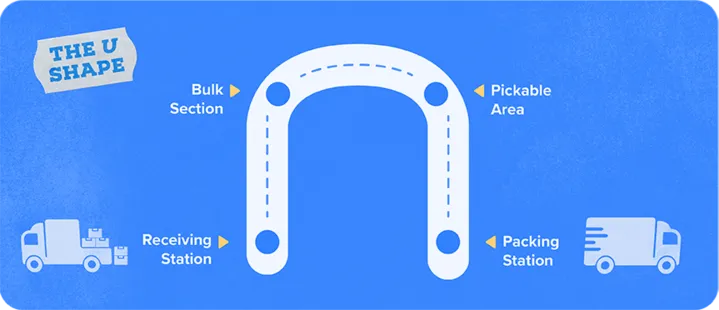
Most warehouses have a square or rectangular shape with receiving and outbound doors on one side, creating a U-shaped flow. There is usually ample space between the dock and receiving area, where products are sorted. Having more room than you need to avoid congestion or delays will come in handy.
Once products are ready to be received, they are taken to the receiving station. This can include fixed or mobile stations, depending on the volume of products being handled. Receiving is a critical aspect of warehousing, and nothing gets past the receiving station if it has not been checked or labeled. Items that pass inspection are ready to be put away, while non-compliant items are labeled accordingly.
The next step in warehouse flow is the bulk section. This is where the overstock pallets are stored until they are needed. From there, products move to the pickable area, where pickers select items for packing. As inventory is moved out of the warehouse, items are moved from the bulk section to the pickable area, where pickers can easily access them.
Pickers typically move around the warehouse with carts, selecting individual units from bins. Once all necessary items have been selected, they move to the packing station. This is where orders are finalized, labeled, and packed into boxes.
After preparing your packages, they will be taken to the outbound dock to be shipped. We typically use collapsible bulk containers for storing outbound items. Choosing a reliable shipping method is important to ensure safe and secure delivery. We recommend reputable options like USPS or FedEx.
An efficient warehouse layout is vital for a successful logistics operation. The layout plays a significant role in productivity, cost-effectiveness, and customer satisfaction, making it an essential factor to consider when setting up a warehouse. Let's look at the various aspects that an optimized warehouse layout can improve.
Understanding warehouse flow is critical to running a successful operation. Utilizing the U-shape flow model and optimized warehouse layout can provide numerous benefits, such as faster material transit time, enhanced productivity, cost optimization, and more. It’s also important to recognize the impact of technology on efficient fulfillment delivery and provide an environment that is safe for employees. Having the proper infrastructure makes a big difference in improving customer experiences and ultimately attaining business success.
If you want to visualize efficient warehouse flow, click here to watch our detailed walkthrough videos for further insights into best practices for warehouse operations.

.webp)

Shipping costs can quickly add up and devour your budget, but it doesn’t have to be this way. The trick is to avoid common pitfalls that lead to inefficient processes and additional charges. In this post, we'll explore some common mistakes that should be avoided at all costs to save money on fulfillment - equipping you with the know-how needed for sound business decisions moving forward.

Did you know that 5% of invoices contain errors and inaccuracies? The root causes of these mistakes are often common shipping issues like accessorials and late fees. When rate errors go undetected, a shipper may be overcharged an average of 3%-5% of the total invoice.
For example, if you look at the FedEx Invoice below, the total charges are $1,831.17. If 5% of those charges are riddled with inaccuracy, then you'd be paying $92 in unnecessary overages - which adds up.

These costs are not always clear-cut and can fluctuate depending on the carrier. Our in-depth article on accessorial charges outlined three key lessons businesses can use to minimize mistakes and unexpected fees.
See more details in our guide to managing accessorial charges.
Inefficient systems can often delay the clearing of invoices, which results in unnecessary late fees. For example, both UPS and FedEx have instituted late payment fees. To avoid incurring these fees, make sure that payment is received by UPS within 14 days of the invoice due date and for FedEx, within 15 days of the invoice date. If payment is not received by the due date, both carriers charge a late payment fee of 6% of the total past-due balance. FedEx places delinquent accounts on cash-only status, which could cause delays in your shipments and the loss of applicable discounts.
Shipping companies are responsible for ensuring an effective system to avoid late charges and penalties. Failure to meet the terms of the agreement can also result in carriers charging additional interest fees.
When a shipper hires a transportation company to move their goods, an invoice or bill is created for each job. These documents contain important information about the shipment, the services provided, and any additional services rendered. For carriers, it compiles all charges from every Bill of Lading associated with the shipment.

Shipping errors are an unfortunate reality in the fulfillment industry. Every 3PL wants to ensure a seamless pick, pack, and ship process, but mistakes can and do happen. It's important to be vigilant and watch for common errors.
Small mistakes in measurements, dimensions, and packaging can lead to expensive surcharges for shipping. Even slight errors can cause significant charges to accumulate. It's important to remember that shipping fees are calculated based on the greater value of weight or size, which means DIM weight can also affect shipping fees. Measuring and weighing packages accurately is crucial to avoid these unnecessary expenses.
UPS, for example, if your package dimensions don’t match your labels, the mislabeled packages will be subject to a shipping correction fee. If you get charged with a shipping charge correction audit fee, you’ll have to pay the greater of the following:
So, invest in a reliable scale and WMS to avoid incorrect estimates and unnecessary fees. This will ensure your measurements match your carrier's, reducing the risk of unexpected charges. Giving incorrect delivery details might seem insignificant, but it can quickly snowball into a logistical nightmare.
Rather than trying to save money by using cheap materials or skimping on protective measures, investing in better packaging will ultimately save you money in the long run by reducing re-shipping fees caused by transit damage.
Keep packages as small as possible and minimize inserts to minimize your costs further. Standardizing packaging is also important in reducing costs, helping you to streamline the process and minimize materials. Following these tips can significantly reduce your packaging costs without compromising quality. With so much at stake, taking shipping accuracy seriously is essential.

To avoid high shipping costs, diversify your carrier mix. Relying solely on one carrier may leave you vulnerable if they face capacity issues, raise prices, or go out of business. Without other options, you may have to pay expensive fees to ship your goods.
Cost Effective: To save on shipping costs, choose carriers that fit your budget and take advantage of available deals and discounts. Comparing rates on a single platform is easy and helps you make informed decisions. Let the software do the work for you.
Saves Time: Input package details into your WMS and let technology compare rates from various carriers. You'll have diverse shipping options to select the most affordable and efficient.
Reduces Disruptions: Using a multi-carrier platform can prevent shipping delays by seamlessly switching to another carrier if one experiences trouble.
Handling Unique Scenarios: When you use multiple carriers, it's possible to choose a more affordable option for free shipping and give customers the choice to upgrade for faster delivery times.
When managing logistics operations, using a warehouse management system is not just a nice-to-have; it's a must. Manually determining the cheapest rate based on address, weight/dimensions, and shipping speed is tedious and complex. Not to mention the risk of shipping errors and lost time.
With ShipHero’s Rate Shopping, you can access the most up-to-the-minute shipping rates from major carriers. Buy the label at the cheapest price. It's time to take advantage of a WMS.
A WMS is not just about the convenience of having everything in one place - but the benefits of automation. By reducing the need for personnel in the shipping process, companies can save money, reduce processing time, and improve accuracy. With fewer jobs for staff, there’s also less risk of data entry errors and lower costs because you need less help to run your 3PL.
By utilizing warehouse management software, you can accomplish the following:

To manage carrier costs accurately, it's essential to take the time to verify that invoices are correct and up-to-date and ensure that your fulfillment systems are processing payments promptly. It's also important to consider the non-monetary shipping costs, including accurate measurements, dimensions, and packaging. This can help you avoid costly surcharges and ensure your deliveries are successful. Finally, implementing a warehouse management system can save you time, prevent shipping delays, compare prices, and reduce errors.

.webp)

Are your outbound shipping costs eating your 3PL’s profits? Today, we will cover five critical factors affecting your shipping costs and provide actionable tips to help you reduce them. We'll give insights on everything from delivery speed to special handling fees to ensure you make operational decisions that save time and money.

For products shipped domestically within the US, two key factors come into play: the destination zone and the package's weight.
Carriers have established nine zones across the US, with the origin address as Zone 1. Your shipping fees increase as your package moves further from its origin. Here are the current zones with their mileage differences from the source.
When it comes to shipping packages, weight matters, it's a simple concept: the heavier the package, the more you'll have to pay to get it where it needs to go. But it's not just about weight; the package's dimensions also play a significant role.
It’s a tricky balance - you want your package to be the right size to hold your products but not so large that it triggers DIM weight surcharges. Investing in a packaging design strategy is worth the time to determine the optimal package size and weight to avoid unnecessary expenses. It's a small step that can significantly impact your bottom line.

If you're not taking advantage of duty relief programs for international shipping, you're leaving money on the table. The numbers don't lie - Section 321 alone can save you up to 20% on duty fees, and that's a significant amount. So, what exactly is Section 321 all about?
Section 321 of the Trade Facilitation and Trade Enforcement Act has revolutionized the eCommerce shipping costs for shippers from Canada or Mexico sending goods into the U.S. to individual customers. With tax and duty exemptions, faster clearance, and reduced paperwork, shippers have remarkable advantages at their fingertips.
Section 321's duty-free entry for goods valued at $800 USD per person per day is a smart way for businesses to grow, as it offers savings for brands looking to get their items to American consumers. While certain products are restricted, these regulations should not deter businesses from enjoying the benefits Section 321 can bring.

The persistent and aggressive growth in eCommerce demands a seamless process to satisfy customers’ needs, and delivery speed is an essential aspect of any business that hopes to keep up with customer demands in today's marketplace.
Margin integrity is crucial if you want to stay profitable. At ShipHero, we understand that maintaining a delicate balance between cost and delivery speed is essential for our margins to remain healthy. It hasn't been an easy process, and we've made our fair share of mistakes.
Nevertheless, we've learned that customers expect two-day delivery from Amazon but are generally willing to wait three to four days for other businesses. However, specific expectations, such as real-time tracking, still need to be met.
90% of customers want immediate updates and real-time order visibility. Adopting technological solutions can improve delivery experiences and lower consumer inquiries.
32% of global shoppers will abandon their carts if an estimated shipping time is too long. Rising standards are forcing 3PLs and carriers to reevaluate traditional distribution models.
Get ahead of the trend by utilizing micro-fulfillment centers (MCFs) to cut delivery times. MCFs are strategically placed in urban areas and stocked with popular products, making it easy for customers to pick up their online orders. This gives shippers the flexibility to meet rising consumer expectations promptly.
Although setting up these local centers can be challenging and pricey, it pays off in the long run by reducing shipping costs and providing an efficient and cost-effective service. Leading 3PL companies are already reaping the benefits of this strategy and improving their overall performance.
Last-mile delivery accounts for 53% of the total shipping cost, and 3PLs simply can't afford to miss the mark here. The final stage of the delivery process is where customer satisfaction and profitability are either made or broken. Unfortunately, too many managers responsible for supply chain and digital functions face significant challenges in this crucial area.
But fear not; there are solutions. By partnering with the right players, businesses can meet and exceed their customers' expectations while boosting their bottom line. That's why we offer Veho's efficient and cost-effective last-mile delivery solutions.
By prioritizing necessary orders and reducing failed deliveries, Veho can make money while delivering the high level of service customers deserve while saving your 3PL money on last-mile delivery.

When it comes to the efficiency of a warehouse, it's essential to have a well-oiled team handling the packing process. After all, warehouse teams can make or break the whole operation. Here are some questions to ask yourself regarding your teams.
Training is crucial for a proficient team, minimizing staff turnover, and boosting profits. It should cover SOPs, equipment handling, inventory management, customer order systems, and obtaining certification for specific tasks.
Regularly assess your packing station's efficiency to identify areas for improvement and reduce labor costs. Implement one-touch stations and focus on ergonomic design and workflow to optimize productivity and reduce errors.
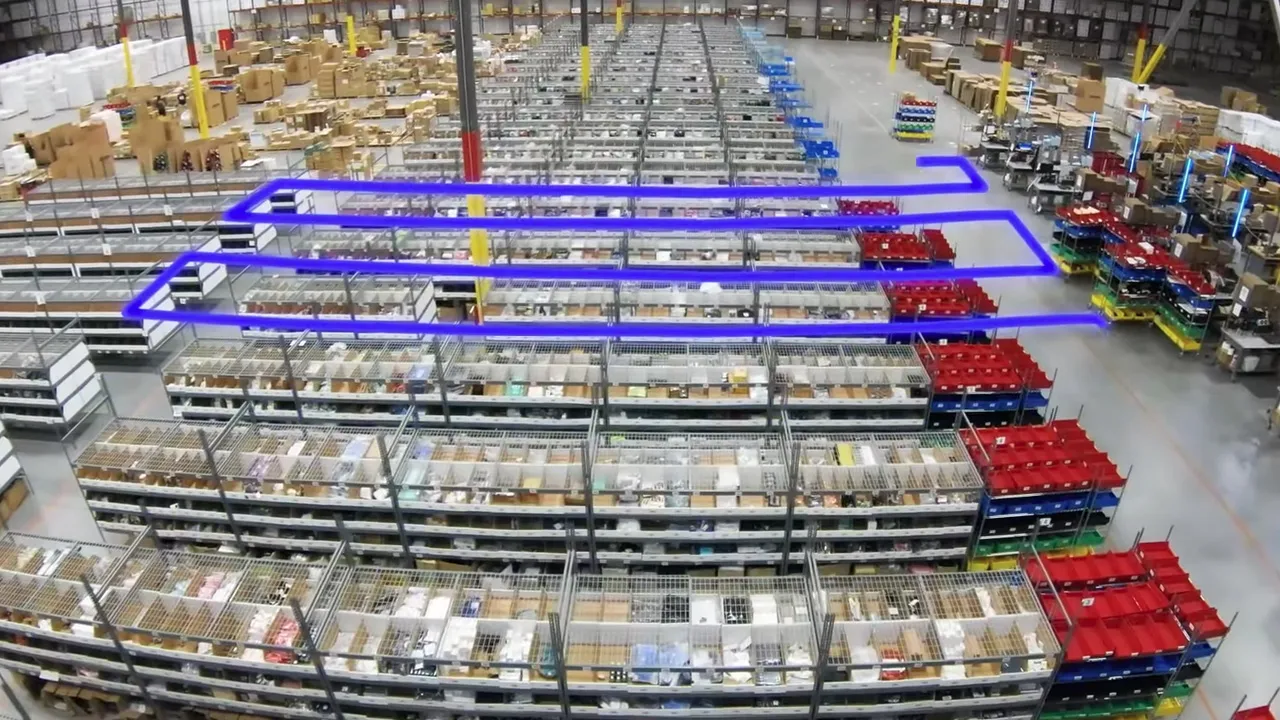
Optimizing your picking paths might be the key to unlocking higher profit margins for your business. It's simple – a slower picking process leads to increased picking costs, inevitably leading to higher product prices for your customers.
While a 95% to 98% order accuracy rate may seem reasonable, it still allows for a 2% margin of error or potentially even worse outcomes. These errors can result in significant financial losses for your warehouse.
Fortunately, implementing warehouse automation can reduce human error and improve inventory control. This will significantly enhance picking accuracy, bringing it closer to 100% and ultimately saving you money by reducing mistakes and mispicks.
Measuring data is crucial to improve business operations. Knowing your warehouse's key performance indicators (KPIs) is essential. Collecting and analyzing the correct data identifies inefficiencies and avoidable expenses. You'll need to track everything from receiving through shipping to get a complete picture of your operations.
Here are a few KPIs to consider:


As a shipper, you're no stranger to handling fees for hazardous materials and fragile items. But did you know that these fees can have both advantages and disadvantages? Let's take a closer look at how they can impact your bottom line.
Shipping hazmat and fragile items can be profitable, but shippers must address customer concerns and competition while complying with regulations.
When it comes to shipping fragile items, there's no room for error. After all, damaged items don't just impact your bottom line - they can also significantly affect your reputation. That's why taking proactive steps is essential to ensure your items arrive at their destination in one piece. One way to do this is by enlisting the help of your special projects team to assemble kits or pre-assemble your items.

Surcharges are a necessary evil in shipping and logistics, so they can be the bane of your bottom line if you're not careful. That's why it's essential to be informed and proactive about the different types of surcharges your product lines may encounter.
Navigating outbound shipping can be a complex and costly process for 3PL operators. Negotiating base rates with carriers is just the beginning; understanding accessorial charges and selecting the best base rate based on package specifications is key to mitigating costs. The challenge lies in the surcharges associated with specialized services, which can drive up costs and make it challenging to predict expenditures.
Additionally, general rate increases can significantly impact carrier base rates for 3PLs. However, the right approach and tools can reduce shipping expenses. By utilizing shipping cost strategies, analyzing costs, and planning, surcharges can be minimized.

It is important to be mindful of shipping charges, as they can quickly add up and cut into your profits. One way to reduce these costs is by considering the size and weight of your parcels. Oversized boxes or improper packaging can result in higher fees. Look for carriers that offer the correct type of flat-rate shipping or the fees that make the most sense for you and your products.
Additionally, be aware of dim weight pricing (as we discussed at the top of this article), which considers the box's length, height, and weight. This can sometimes result in extra fees for light packages that take up a significant amount of truck space.
Reducing shipping charges is crucial for businesses of all sizes, and optimizing warehouse operations can help achieve this goal. Proper software training is essential to maintain consistency with the packing team and reduce unnecessary costs.
A warehouse management system (WMS) like ShipHero can provide automation that streamlines business operations, but it needs to be used accurately. Your WMS training program should cover all aspects of the hardware and software and the different methods used to manage goods efficiently within the warehouse. By emphasizing the importance of WMS training and implementing consistent warehouse practices, your business can reduce shipping costs and improve overall efficiency.
Troubleshooting internal errors such as incorrect scales and improperly stocked packing stations can also enable you to minimize touchpoints and increase automation. With automation rules, packers can always use the appropriate box when shipping specific products. These steps allow you to confidently assert control over your shipping process and save valuable business resources.
We offer a variety of automation rules to help businesses save money on shipping charges. Our VIP customer treatment rule ensures that your most valuable customers receive a gift SKU or marketing insert with their orders, express shipping, and prioritized order processing. Our pre-sale item rule helps businesses save by setting a partial shipping flag for orders that exceed a specific dollar amount.
Additionally, SKU-specific notes can be assigned to certain items, which is handy for fragile items that require special handling. Finally, we automate box type selections, streamlining the packing process and saving businesses time and money on shipping. With the proper automation rules, businesses can significantly reduce shipping charges and improve their bottom line.
To summarize, consider all five critical factors mentioned in this post to reduce your outbound shipping costs: destination and origin, delivery speed, warehouse team processes, special handling fees, and surcharges.
With the right tools and expertise, you can ensure that your 3PL profitability remains reliably on track. And with hard work and dedication to intelligent decisions about outbound shipping strategies—increasing or decreasing delivery speeds or minimizing surcharge risks— you should be more than capable of achieving your goals.
It takes a lot of work, but investing time now to craft an efficient system for managing outbound shipments will pay off down the line. To start managing your outbound shipments efficiently today, try a ShipHero demo and get a jump start on reducing those shipping costs!

About ShipHero: We make it simple for you to deliver your eCommerce. Our software helps you run your warehouse, and our outsourced shipping solutions eliminate the hassle of getting your products to your customers. With thousands of brands and 3PLs relying on us daily, we’re here to help with all your logistics needs.
Let us know how we can help you today by scheduling a call HERE.