
.svg)

Let’s stay in touch with the ShipHero Blog.


.webp)
The ShipHero Model Context Protocol (MCP) connects supported AI clients directly to your live ShipHero data, so warehouse teams can ask questions and get specific answers from their own account. It is built for day-to-day operational checks, including inventory levels, open orders, shipment status, holds, returns, purchase orders, and exceptions. For ShipHero customers, it is available at no additional charge and runs on existing API credits.
Every order, shipment, inventory movement, hold, return, and purchase order creates data inside ShipHero. Your warehouse information is right there, but getting to it can be a slow, complex process.
Before the ShipHero MCP, answering a specific operational question often meant logging in, finding the right report, applying the right filters, exporting data, or asking the one person on the team who knew where to look.
Even when the answer was simple, like a quick inventory check, it could turn into a 20 to 45 minute task. A customer question could sit half a day while someone pulled the right numbers. That delay adds friction to the floor. It slows decisions. It keeps teams waiting on data they already own.
The ShipHero MCP gives supported AI clients secure, read-only access to live ShipHero data.
That means operators can ask questions in plain English and get answers from their actual account, not from a generic help article or static knowledge base. A chatbot can tell you where to find a number. The ShipHero MCP can return the number itself.
It works with MCP-enabled AI clients, including Claude, ChatGPT, Cursor, and Codex. Connect it once, authenticate access, and your team can start asking operational questions from the AI tool they already use.
The workflow is simple:
The MCP does not replace ShipHero. It makes the data inside ShipHero easier to reach when your team needs a fast answer.
The ShipHero MCP is designed for everyday operational questions, such as:
If the data lives in your ShipHero account, the MCP gives your team a faster way to ask for it.
Speed matters, but safety matters too.
The ShipHero MCP is read-only by design. It can retrieve information from your account, but it cannot create orders, modify records, delete data, or change warehouse settings.
That gives teams a practical way to use AI for operational visibility without risking accidental account changes. Operators can ask. Managers can check. 3PL teams can answer client questions faster.
The data becomes easier to use, while the records stay protected.
For founders, the MCP can turn a quick inventory check into a simple question.
For operations leads, it can surface shipment status, holds, exceptions, and low-stock SKUs without digging through reports.
For 3PL operators, it can help answer client questions faster, using live account data instead of manual follow-up.
The result is a faster way to reach the information already inside ShipHero.
The ShipHero MCP is available to all ShipHero customers at no additional charge. It runs on existing API credits, so specific questions help keep usage efficient.
To get started, visit developer.shiphero.com or contact your ShipHero account representative.
ShipHero MCP is a read-only connection between supported AI clients and your live ShipHero data. It lets users ask operational questions in plain English and receive answers from their actual ShipHero account.
A chatbot usually answers from fixed, generic information. ShipHero MCP connects to live account data, so it can return specific answers about your orders, shipments, inventory, holds, returns, and other ShipHero records.
ShipHero MCP works with AI clients that support the Model Context Protocol, including Claude, ChatGPT, Cursor, and Codex.
No. ShipHero MCP is read-only. It can query data, but it cannot create, update, or delete records in your ShipHero account.
No. The MCP is built for operators and can be connected from a supported AI client in minutes. Developers may use more advanced tools for deeper analysis, but most day-to-day users can work directly with the MCP.
Yes. ShipHero MCP is available to ShipHero customers at no additional charge and runs on existing API credits.
Transitioning to a new Warehouse Management System (WMS) is a high-stakes decision that often triggers concerns regarding downtime, data integrity, and workforce adaptation. As warehouses prepare for 2026 growth, understanding these common hurdles—and the technical solutions that resolve them—is essential for a successful migration. This guide addresses the five primary barriers to adoption and how a high-velocity infrastructure ensures a seamless transition.
Warehouse operators frequently hesitate to upgrade due to perceived risks that can halt operations. These challenges typically include:
To clear these hurdles, a structured implementation strategy is used to prioritize data density and entity clarity.
In the competitive eCommerce landscape, staying stagnant with manual workarounds is often more costly than the transition itself. Moving to a high-velocity WMS converts your warehouse from a cost center into a growth engine by providing Labor Efficiency and ROI through automated routing and reduced authentication friction.
Because the platform is built for the floor worker, features like Workforce Hero allow seasonal temps and new staff to be authenticated and productive in under an hour.
No. High-velocity infrastructure increases visibility by providing Total Real-Time Control. Managers can monitor exactly what is in the Hospital queue and track replenishment in real-time from a single dashboard.
Before going live, a ground-up audit is performed using cycle counting tools. The system's architecture ensures that every movement on the floor is synchronized with sales channels instantly, maintaining 99.9% accuracy.
Picture a packer at Peak Season. A box is in front of them, a product in each hand, and somewhere on a cluttered desk there's a mouse they need to find to confirm the order. They look down. They hunt. They click. Then they do it again. Thousands of times a day.
That moment of friction is small. But it is never just one moment. Multiply it across your entire pack line, across an entire shift, and you are looking at a measurable and largely invisible drag on your total throughput.
Tap-to-Pack is a purpose-built hardware controller designed by ShipHero to eliminate digital friction at the packing station. It connects via USB-C, requires no drivers or additional software, and syncs automatically with the ShipHero WMS packing app. This new system is now available at the ShipHero Store.
Instead of navigating a screen with a keyboard and mouse, packers execute every high-frequency command — such as selecting box sizes, printing labels, finalizing orders, flagging exceptions — with a single physical tap on one of eight programmable buttons.
Key specifications:
Most warehouses are running 2026 operations on 1990s peripheral standards. The keyboard and mouse were designed for spreadsheets and emails, not high-volume fulfillment. When used at a packing station, they create three compounding problems:
The problem is not your people. It is the tools you are asking them to use.
Tap-to-Pack introduces a "Rodent-Free" packing standard: a workflow where the packer's hands stay on the product, their eyes stay on the work, and the software fades into the background.
The device guides the packer through two feedback systems:
ShipHero customers running Tap-to-Pack are already seeing a 90% reduction in on-screen interactions and a significant increase in the number of orders packed per hour, without adding headcount or changing their warehouse layout.
One of the hardest challenges in fulfillment is absorbing volume quickly, especially during Peak Season, when temporary staff need to reach target productivity fast.
Because Tap-to-Pack's interface is physical and intuitive, there is almost nothing to teach. Pick up the product, follow the light, tap the button. New packers can reach target productivity in minutes rather than hours.
The system is also modular:
Whether you are a growing DTC brand or a high-volume 3PL, Tap-to-Pack is designed so your hardware never becomes a ceiling on what your team can do.
Tap-to-Pack is a programmable, industrial-grade hardware controller that connects to the ShipHero WMS and allows warehouse packers to execute packing station commands, such as printing labels, selecting boxes, and completing orders. All with a single physical button press, eliminating the need for a keyboard and mouse.
The device connects via USB-C and syncs automatically with the ShipHero WMS packing app. It is a true plug-and-play solution: no drivers, no background software, and no manual configuration required.
Yes. Buttons are configurable for a range of packing actions, including Print Label, Complete Order, Select Box Size, and the Hospital function, which flags a problematic order and keeps the line moving without stopping to resolve it on screen.
The system is fully modular. Connect up to two additional 8-button hubs to the Main Hub for a total of 24 programmable buttons, supporting even the most complex multi-step packing workflows.
Tap-to-Pack devices require ShipHero Packing App v1.0 or higher. The current release is v1.1.0.
Imagine running a warehouse where orders are picked quickly, inventory is accurate, and all operations run smoothly without any errors or delays. Thanks to Artificial Intelligence, this can now become a reality with ease.
AI is transforming warehouse management by enhancing efficiency, intelligence, and the ability to meet the rapid demands of today’s eCommerce-driven market.
ShipHero is pioneering this revolution with its AI-powered warehouse solutions, setting new industry benchmarks. This article explores ShipHero’s AI Picking feature, highlighting how it’s transforming warehouse management and enhancing operational efficiency.
The integration of AI technologies, including machine learning, robotics, and predictive analytics, is revolutionizing warehouse operations, driving significant improvements in efficiency, accuracy, and overall performance. These innovations are optimizing processes across various areas, from inventory management to order fulfillment. Below are the key benefits of AI in warehouse management.
A combination of AI technologies is shaping smarter warehouse systems to help revolutionize warehouse management.
ShipHero has taken AI integration to the next level with its AI Picking feature, designed to significantly improve warehouse efficiency. This feature automates the picking process, reducing the reliance on manual labor and enhancing productivity in ways that were once thought impossible.
Let’s dive deeper into how ShipHero’s AI Picking works and the advantages it offers.
AI Picking optimizes warehouse operations in two key ways:
The AI Picking feature delivers a wide range of benefits:
The transformative power of AI extends far beyond just picking. AI is also revolutionizing other aspects of warehouse management, driving improvements in operational efficiency, inventory management, and safety.
AI automates tasks, reducing errors and increasing speed. Automated sorting and real-time inventory tracking ensure accuracy, while real-time monitoring helps managers adapt and ensure timely deliveries.
AI plays a vital role in maintaining accurate inventory levels. By leveraging predictive analytics, AI can forecast demand and optimize stock levels, helping warehouses avoid both stockouts and overstock situations. This leads to better inventory management and fewer disruptions in supply chains.
AI-driven systems can monitor warehouse conditions to ensure safety and compliance with industry regulations. These systems can analyze warehouse data and predict potential hazards before they occur, proactively reducing risks and ensuring a safer working environment.
AI technologies are playing a transformative role in the supply chain and logistics sectors by improving efficiency, reducing costs, and enhancing decision-making.
These intelligent systems effortlessly manage supply chain processes by using data to optimize operations, predict trends, and automate routine tasks. This ultimately reshapes everything, from how goods are moved to stored and delivered.
The future of warehouse management looks promising with greater automation and efficiency, but future warehouse digitization brings challenges, such as high upfront costs and the need for skilled personnel.
AI-powered drones, autonomous robots, and IoT integration are smart warehouse technologies that are revolutionizing warehouse operations. Drones will deliver goods quickly, while robots automate sorting and transportation, thereby reducing the need for manual labor.
IoT and AI integration will enable real-time monitoring and optimization of operations. Smart technology in warehouses is leading to fully automated systems that are faster, scalable, and need minimal human input.
While AI offers immense benefits, businesses must also consider certain challenges. High initial investments in AI technology, data security concerns, and the need for skilled personnel are just a few of the hurdles that must be addressed.
However, with a strategic approach, companies can eliminate the challenges and embrace AI’s full potential to boost accuracy in picking and improve overall warehouse operations.
AI minimizes error by automating tasks like inventory tracking, order picking, and sorting, ensuring greater accuracy and efficiency.
Yes, AI-driven predictive analytics can predict demand, track inventory levels, and improve supply chain efficiency by forecasting needs with greater accuracy to help businesses stay ahead of trends and market fluctuations.
AI solutions are becoming more cost-effective thanks to cloud-based services and subscription pricing models. These options make AI technology more accessible to small businesses, allowing them to take advantage of its benefits without large upfront costs.





If you’re a small or medium business owner that takes credit card payments online, you’ve probably heard of Square even if it’s not your preferred payment platform. They’ve been all over the news as a success story of a company that grew from a niche manufacturer of payment processing hardware for small merchants into a $100-billion-plus financial ecosystem.And if you’re a client of Square Online or thinking about becoming one, then you know you need a strong, reliable fulfillment partner to complement the ease of use Square Online offers. Because if only two of the three elements of your customers’ experience with you are operating at peak efficiency (shopping and paying), and the third (fulfillment) is lacking, you’re playing with fire:
Before getting into the best fulfillment options for Square Online users, below is a quick recap for new eCommerce entrepreneurs. If you’re a veteran in the eCommerce space, skip down to “How We Choose the Best Square Fulfillment Companies.”
Square is a mobile payment processing app and card reader, and the very first of its kind, which is why the adoption rate was so high.Overnight, Square (and then Square Online) let anyone accept credit card payments with their phones or tablets. And that “anyone” included those who up until that point only knew their business as a cash business like farmers’ market and flea market vendors.Square was also unique when it launched because it didn’t require contracts, commitments, applications or monthly fees. All you needed was an email address and knowledge of how the Square dashboard works.Today, Square Online is a complete revenue collection system for vendors on and offline; every account holder is enabled to accept online orders, ring up orders at POS and receive payments through the Square dashboard.
Order fulfillment is a quick way to describe the process of receiving a purchase order from a customer, processing that order and getting the purchased product to the purchaser. The fulfillment process begins when a customer’s order is received and ends when that customer receives their order.When the customer receives the item or items they ordered in the time they were promised, this is considered positive fulfillment. If a hiccup anywhere along the fulfillment chain disrupts the process and the customer either receives their package late or doesn’t get what they asked for, this is considered negative fulfillment.
Square (and Square Online) makes fulfillment extremely easy for anyone from the Square dashboard.From your Square dashboard that you can integrate into your site, you can set up curbside pickup or shipping fulfillment for any item. And you can set up a shipping fee if you see fit. Alternatively, you can use Square Online to build your own eCommerce site with a fulfillment option.Either way, once you’re ready to accept orders with Square Online, you can choose your fulfillment method form the Square dashboard: fulfill yourself (i.e., you find the item, wrap it, box it and add arrange for curbside pickup or prepare the shipping label, ship it and track the shipment to make sure it gets to your customer), or you can bring in a third-party logistics (3PL) company for fulfillment.
A 3PL order fulfillment provider will set the fulfillment method and handle the entire fulfillment process. It’s a massive headache off your plate and it gives you back hours of time per week (or more depending on how much you sell and how many shipping labels you have to produce) to put towards growing your business.Some 3PLs will be software to help you pick, pack, create shipping labels and ship items purchased by your customers. Others own and operate their own warehouses to store your products and ship from there. And a few (like ShipHero) offer both.
As mentioned above, the big benefit of using a 3PL for eCommerce fulfillment is getting rid of a huge pain in the neck, which you can do right from the Square dashboard.The fulfillment process has so many moving parts and so much that can go wrong along the way that entire college-level courses are dedicated to it. And if you run an eCommerce business, you’re most likely too busy to take it. This would put you in a disadvantageous position if things went off the rails.With a 3PL behind the scenes, whatever happens wouldn’t be your problem. And if the worst did happen, you’d know you had real experts in the field to respond, react and fix the issue before it cost you a customer.Find out more about ShipHero’s fully-outsourced Fulfillment Solution now.
Like in almost every other business-to-business service market, the 3PL options for fulfillment are plentiful and varied, with many pretenders for every one contender. That’s why it’s important to be diligent in your research before selecting a 3PL fulfillment partner for your eCommerce business.
This is the biggest one because failure here can lead directly to lost business (as stated above). You should definitely be looking for a 3PL that offers some sort of same-day delivery, as 41 percent of consumers are willing to pay a charge for same-day delivery.
On the surface, you’ll pay more for 3PL fulfillment than if you were to do it yourself. But if time is money, the investment in self-fulfillment is substantial. So, the goal when finding a 3PL is to spend less than you’d spend doing it yourself. Only you know that number, but be steadfast getting under it.
Less than one in 10 products bought in bricks-and-mortar stores are returned. Online, it’s close to 30 percent. So, the effectiveness of your returns process is very important for operations, but also for customer retention: 92 percent of consumers surveyed said they would buy again if the product return process was easy.
Once you’ve narrowed down your list of possible 3PL vendors, you’d be wise to look under the hoods of each to make sure they can work with Square Online and the Square dashboard, and that they are in fact a fulfillment expert for Square Online. How well they execute the fulfillment type they promise will dictate their value to you.
This is obviously the most important part. If a 3PL provider can’t plug into Square Online or the Square dashboard, they’re of no use to you whatsoever.
You never want your 3PL to keep you from growing, so you have to trust them to know everything about where you want to start selling next, and how to follow or adjust their fulfillment type to handle those orders.
Often overlooked in 3PL selection is smoothness across the fulfillment process, and this starts with an interface that everyone along the line can use. And be picky. Find something you know will work for you and your team, where the transaction fees are minimal or non-existent, and that works with the Square dashboard.
You have many order fulfillment partner choices, so choosing one can be tough. Fortunately, we can help with that. Here are the criteria we use when choosing the best Square fulfillment companies:
ShipHero was founded by a former eCommerce entrepreneur who was frustrated with the shipping software options available and decided to do something about it.
As mentioned above, the big pro ShipHero has going for it is the choice you have to either use their software to ship from your warehouse, or to let them ship your items from their warehouse, giving you back days of time by the end of every year.
Right now, the perceived knock on ShipHero is that it’s not a market leader yet. But that’s changing quickly.
ShipHero Fulfillment offers flat rate shipping costs that includes picking, packing, shipping, mailing supplies and postage. Pricing is more competitive without shipping zones and costs are more predictable.Find out more about ShipHero’s fully-outsourced Fulfillment Solution now.
ShipStation is a web-based order management and shipping software. They don’t have their own warehouses, but their software is used in North America, Europe and Australia.
They offer six tiers up to $229.99/month based on how much you think you’re going to ship.
ShipBob is another web-based platform in the ShipStation family, and it has a built-in analytics cruncher.
Shipping costs are customized per client.
A shipping solution for small- to medium-sized businesses with a small business, homespun feel.
It has an intricate inventory tracking tool, which works well for eCommerce companies with multiple SKUs.
Overall, the features aren’t as robust as others.
Pricing is definitely competitive, but you get what you pay for.
Shipedge has a suite of products to manage the entire order management lifecycle, supply chain and logistics in one centralized platform.
Easy to integrate with most platforms.
Not the most user-friendly interface.
Pricing is modular.Find out more about ShipHero’s fully-outsourced Fulfillment Solution now.
Printful is a 3PL fulfillment company primarily for eCommerce apparel companies, and specifically apparel creators.
You can use Printful to design your own products
Pricing is customized
If you’re a Square Online customer, you clearly care about quality and about giving your customers the best possible experience. By choosing the right 3PL shipping partner, you complete the loop.
Top 10 Best Order Fulfillment for AmazonTop 10 Best Order Fulfillment Partners for WalmartTop 10 Order Fulfillment for eBayTop 10 Best Order Fulfillment Options for WixTop 10 Best Order Fulfillment Partners for ChannelAdvisorTop 6 Best Order Fulfillment Partners for WooCommerceTop 10 Best Order Fulfillment Options for BigCommerceTop 10 Best Order Fulfillment Options for SquarespaceTop 10 Best Order Fulfillment Options for eCommerce Sellers
.svg)
Whether you're a fledgling micro-enterprise or an established brick-and-mortar store, eCommerce platforms like WooCommerce are becoming more of a necessity in today's "always online" world. And one essential component of running a successful eCommerce platform is order fulfillment. After all, order fulfillment is what allows your products to get to your customers.Here, we look at one of the best order fulfillment partners for one of the most popular eCommerce platforms out there, WooCommerce.
WooCommerce is a free, open-source eCommerce plugin for WordPress. It allows anyone with a WordPress account to set up and manage an online business. As a flexible eCommerce platform, WooCommerce can be customized in a myriad of ways with its built-in features, including inventory management, order tracking, customer engagement, secure payments and delivery status – and with various integrations as well.
Order fulfillment refers to the process of receiving, assembling, packing and shipping orders to their respective buyers and other related tasks such as:
Order fulfillment is a necessary component of running a WooCommerce Shop, as it is what brings orders to customers and keeps them satisfied.
Because WooCommerce is primarily focused on providing small businesses with an online platform, it doesn't have a robust order fulfillment system.WooCommerce Shipping is a built-in fulfillment system that is accessible via the main dashboard. From the WooCommerce dashboard, store managers can manage inventory, prepare orders, automate tax calculations and live shipping rates, and print and manage DHL and USPS labels.
Essentially, a WooCommerce order fulfillment provider would take the whole fulfillment process out of your hands and allow you to focus on the other facets of running your online business.Order fulfillment partners take over tasks like inventory management, order picking and packing, shipping, delivery tracking, and sometimes even storage. A reputable fulfillment service will have the necessary infrastructure in place to pick, pack and ship your orders quickly and efficiently.
By outsourcing your WooCommerce order fulfillment to a third-party provider, you free up valuable time and resources that can be better spent on other areas of your business. But the benefits don't stop there.Here are a few more reasons to outsource your order fulfillment:
Renting and operating a warehouse can take a sizable chunk out of your overhead costs. And if you're building a business from the ground up, you may not even have the money to cover warehousing in the first place. The last thing you'll want is to have to store your products at home. This is where an eCommerce fulfillment center can help. A lot of fulfillment service providers now offer warehouses to store their clients' products for a minimal fee. This fee often covers storage, maintenance and manpower.
Many order fulfillment providers partner up with shipping carriers to send orders out in bulk and cut costs on deliveries. As bulk shipments are cheaper than single orders, fulfillment providers can offer cheaper rates for the same or even faster delivery times.
As your business grows, you'll either have to expand your workforce or increase your current employees' workload. The former can take a lot of time (and money), while the latter can take a toll on your employees' productivity and overall happiness. With an outsourced fulfillment service provider, however, you can simply request a plan upgrade and boost your fulfillment capacity to handle increased demand.
Forget about having to train and monitor your order fulfillment team's performance. Fulfillment services hire, train and supervise their crew members so that they can deliver the best service to their clients. And should you experience any issues with your supply chain, you can fall back on the opinions of experts who are equipped to handle these kinds of things.ShipHero is here to fulfill all your eCommerce shipping needs. Take a look at our order fulfillment services.
There are dozens of order fulfillment service providers out there. How do you decide which one is right for you? Before you settle on a partner, make sure to consider the following factors first:
Due in part to Amazon's 2-day shipping offer, eCommerce customers have grown to expect their online orders to arrive at lightning speed. When screening fulfillment providers, prioritize ones with decent track records in terms of delivery times. And if a business can't promise fast order turnaround times, they should at least try to stick to their delivery estimates. Look for a fulfillment provider that can at least hit their delivery range consistently.
Looking for a long-term commitment? A good fulfillment provider will offer better rates for businesses that are looking for long-term partnerships and that have massive inventories.
When screening fulfillment providers, watch out for hidden fees like monthly minimum fees, warehouse fees, fees for storing, handling, and restocking returned items, and assembly fees. Some service providers may issue penalties for items that are not labeled correctly, exceed weight limits, or use incorrect packaging materials.Other special services that you may have to pay for (depending on your business) include cold storage and special handling.
Order fulfillment services must be able to handle product returns and exchanges without putting customers under any undue stress. A good return process makes customers feel valued and improves their satisfaction with your business even if they were initially dissatisfied with their initial delivery.
Here are three things to ask about when shopping around for a long-term order fulfillment partner:
You have to make sure that your chosen partner uses software that can be integrated with your WooCommerce platform. This eliminates manual data entry, data silos, miscommunications and issues due to human error. It'd be best to find a fulfillment partner that can integrate with several different platforms. That way, if you decide to switch platforms down the line, you won't have to let go of your current fulfillment service provider.If you’re looking to switch your eCommerce platform, look for a fulfillment partner that integrates with one of the following options: Squarespace, BigCommerce, Wix, ChannelAdvisor and Square.
Multichannel order fulfillment allows merchants to send out their products from one warehouse to multiple storefronts. This eliminates the need to establish warehouses for each location, saving businesses money in the process.
You'll want an order fulfillment system that is intuitive and user-friendly for all kinds of users, whether they're tech-savvy or not. Today, most order fulfillment systems allow store managers to monitor and manage everything from inventory to shipping from one centralized dashboard.
Before we get to our list of the best WooCommerce fulfillment companies on the market, take a look at the criteria we used to narrow down our options:
These are our top picks for the best WooCommerce fulfillment partners today:
ShipHero is an order fulfillment partner and warehouse management software that promises high-speed delivery (3.5 days on average) and end-to-end order fulfillment at lower-than-average costs.ShipHero has eight warehouses located across the US and Canada, meaning that even small businesses can reach a larger volume of customers faster through the service. ShipHero also offers PostHero integration, which allows shop owners to track packages to their destinations. This lets them provide more accurate delivery dates to their customers.Pros
Cons
PricingShipHero offers no zone pricing and a flat rate that includes pick, pack, postage, materials and shipping. Contact them for a customer quote.
Ordoro is an all-in-one multichannel fulfillment platform that offers shipping management, order management and inventory management for complex fulfillment workflows. Pros
Cons
PricingThe Ordoro Starter plan is free of charge. The Express plan starts at $59/month and can accommodate unlimited users.
Dropified is a web-based dropshipping software that supports the eCommerce platforms Shopify, gearbubblePRO, CommerceHQ, and WooCommerce. Unlike the other fulfillment providers on this list, Dropified focuses on dropshipping and comes with several dropshipping-specific features. For example, it provides users with direct access to wholesalers who can dropship for your business.Pros
Cons
PricingDropified offers a 14-day free trial to all first-time users. Plans start at $39.17/month billed annually.
Red Stag Fulfillment offers cloud-based order fulfillment for both B2C and B2B online retailers. This fulfillment service provider offers picking, packing, kitting and returns.Pros
Cons
PricingRed Stag does not provide pricing information on its website. You'll have to request a quote to learn more.
Byrd offers "scalable and digital" eCommerce fulfillment and aims to support the growth of online shops through its international logistics network.Byrd offers a wide range of services, from warehousing and real-time inventory to efficient picking and packing to shipping and return management.Pros
Cons
PricingByrd does not provide pricing information on its website. You'll have to request a quote to learn more
ShipBob touts itself as a "global omnifulfillment solution". It boasts over 30 distribution centers across six countries and a 99.96% on-time delivery rate. Pros
Cons
PricingShipBob’s website has a calculator to help you estimate order fulfillment prices. For more detailed pricing breakdowns, request a quote.
WooCommerce is a great platform for small business owners and entrepreneurs, but it's just one part of running a successful online business. You need a great platform that can handle order fulfillment and get your products out the door and into the hands of your customers as efficiently as possible.That’s why we put together this list of the best WooCommerce fulfillment providers. We hope it will help you choose the right partner to take care of your order fulfillment needs.
Top 10 Best Order Fulfillment for AmazonTop 10 Best Order Fulfillment Partners for WalmartTop 10 Order Fulfillment for eBayTop 10 Best Order Fulfillment Options for WixTop 6 Best Order Fulfillment Options for SquareTop 10 Best Order Fulfillment Partners for ChannelAdvisorTop 10 Best Order Fulfillment Options for BigCommerceTop 10 Best Order Fulfillment Options for SquarespaceTop 10 Best Order Fulfillment Options for eCommerce Sellers
To fulfill orders in WooCommerce, you must first check to make sure you have the items in stock. Next, you've got to package your items, add labels, ship them out and send a tracking number to your customers.
Yes, WooCommerce has built-in inventory management capabilities.
WooCommerce Dropshipping helps users send automated order notification emails to wholesale dropshippers when new orders come in. This automates order fulfillment of dropship orders.
Are you using BigCommerce for your business? Or, are you thinking about using BigCommerce? We don’t blame you. In fact it’s one of the most trusted eCommerce softwares on the market with a highly rated industry leading customer satisfaction team. This SaaS software can put you ahead of the game when it comes to your online store and it integrates with multiple different softwares your business can utilize.
If you haven’t heard of BigCommerce, this software provides retailers with a SaaS platform to serve all their eCommerce business. The software includes many customizable services such as online store creation and search engine optimization for businesses of all sizes. BigCommerce is a company who isn’t satisfied with “good enough”. They continually strive to push the boundaries of eCommerce offerings and have won several awards in doing so. No matter what the structure of your business looks like, this solution can work with all business models including multi-storefront, headless commerce, B2B, wholesales, omnichannel, international, and commerce-as-a-service. They offer both enterprise and essential solution offerings so you can pick the package which works best for you and your business. And the open API offers users the ability to tie other softwares for their business needs directly into BigCommerce. If you’re unsure about the purchase of this software, BigCommerce provides you with key insights into their product before you buy so you know exactly what to expect from the software. With this 17 minute product tour video you get deep insight into the product itself.
This is a platform to use if you want to customize your eCommerce solution to fit your way of doing things. Their goal is to offer business owners flexibility, scalability, and the speed and agility needed to protect and grow sales. They even claim that by using BigCommerce, many leading brands have seen significantly lower TCO (total cost of ownership) which gives your product better value in the long run. Perhaps one of the best features of BigCommerce is the Apps Marketplace. Here you can find 100s of apps and integrations which can help your business with anything from advertising to email marketing. And if you have any issues along the way they offer many forms of customer support including a live chat, phone support, email support, and a listing of common questions with their resolutions. Order management for your business is simple with their order management workflow that starts at receiving an order. It has a built-in list of order statuses which represent the stages within the fulfillment process, and of course the stages can be re-labeled to fit the workflows your business uses. Which means any fulfillment process you currently have, or want to build, will be achievable within this platform.
But at the end of the day, BigCommerce is only a software solution. You still need to decide how best to fulfill your customers' orders. Especially as you grow or experience seasonal spikes it’s important to have a fulfillment option which can scale as you need it to. This is why we have curated a list below of some of the best order fulfillment services for you as a seller if you use BigCommerce.
This is a great option if you want to dump the headache of running your own warehouse or if you need technology to help streamline your warehouse processes. With both a steller warehouse management system (WMS) and a fully outsourced fulfillment option, their clients get peace of mind. The warehouse management system (WMS) streamlines your warehouse's entire processes and procedures to increase efficiency and help your team become more effective. The WMS also helps you get rid of manual processes and lost paperwork, confusing fees, and bland generic packaging. Plus, they offer a highly rated Client Support team so you work with a fulfillment expert to help you with any questions or concerns on your supply chain. Overall, whether you want to outsource your order fulfillment or need software to streamline your processes, they have the industry knowledge to help.
This is a great solution when looking at your order fulfillment. They have a quick setup with BigCommerce which allows you to connect your store and delineate your inventory to Cahoot fulfillment locations. In terms of order volume you can start small, then as you grow you can add product inventory in any Cahoot fulfillment center where your products are popular. They have high fulfillment standards and reliable same-day fulfillment Monday through Saturday. Working with them will get you automatic order routing and fulfillment, free and fast shipping options, a nationwide shipping network, and visibility into each delivery. They want to help you level the playing field against marketplaces like Amazon and Walmart who create high shipping expectations with fast and free shipping options for their clients and can help you do so within your own store.
You can sync your BigCommerce store directly with ShipMonk. Account creation takes seconds and your account is free until you start shipping products from their warehouse. They are a great fulfillment solution for high growth brands who need an elastic fulfillment solution. With their inventory portal, you can identify best selling SKUs and receive restock alerts. Plus they understand shopping cart abandonment is often due to high shipping costs, so they negotiate great shipping rates for those on their platform. And they are not limited to the type of product they can help you fulfill as they have experience with many products from clothing to food and beverage products. In addition, they continually and heavily invest in warehouse automation technology. This means your business will get the advantage of quicker fulfillment at cheaper costs as this technology continues to improve.
With a direct integration into BigCommerce, Verde Fulfillment is another good choice. Their cloud-based system gives you real-time access to many features including back orders. They can also help your business with all the frustrating product returns, especially because you want your customers to have the best experience possible when they have to return something. In addition their inventory management system is intuitive and smart as it’s updated in real-time. And, as you know, limiting SKUs in your supply chain is important. With Verde you can set inventory alarms which automatically help you to know when a product has low value and you can quickly disable it from your shop. Their goal is to offer your clients the best experience possible so they will become repeat customers.
New to the BigCommerce App Marketplace, you can integrate with the Amazon Multi-Channel Fulfillment (MCF) network in order to fully automate your fulfillment. This gives your BigCommerce orders the power of reliable Amazon fulfillment, even if you don’t sell directly on the Amazon site. With the Amazon MCF network you’ll get faster shipping, your customers will receive delivery promises at check out, and you can benefit from automatic inventory placement. These are Amazon-backed delivery dates so your customers know they will arrive ontime. Plus with Amazon MCF you can set customer price rules in order to have control over the cost of shipping. You can even replace Amazon’s rate with a rate of your own, or offer free shipping options.
Streamline Fulfillment will connect directly to your BigCommerce store and handle your order fulfillment, shipping, and supply chain management on a global scale. When you sign on with Streamline an expert will work with you to analyze every part of your fulfillment process. In this consultation they will listen to your future plans and needs, while gaining an understanding of where you are currently at in your logistical journey. Together they will work with you to improve these processes so your company can save time and money. Which means you will get a tailored approach to your fulfillment specific to the needs of your business. For them an intimate relationship with their clients is important as they hope to be a partner their clients can trust to help them grow their business.
With Fenix Commerce, you get an AI-powered solution which streamlines the order experience. It has API’s for easy integration and supports all major eCommerce platforms, including BigCommerce. They can help you reduce shipping costs because their software can intelligently select the cheapest shipping providers which will get an order to its destination within the necessary shipping window. Plus the platform can route orders to specific fulfillment centers so you can optimize your inventory management by keeping products within customer proximity. And if you need to get set up quickly they can have you up and ready to go in as little as two days. Which means you have quick data to help you make high quality logistical decisions for your company. They specifically seek to help retailers and DTC brands provide a high quality experience to their customers.
This order fulfillment solution allows you to fulfill your orders with 2-day and next day delivery. They handle your port to porch logistics with the goal to help businesses of all sizes offer competitive shipping. With their vast network you can keep your product within 100 miles of your customers. And they understand that your business may require multiple fulfillment and logistics services in order to fill your business needs. With them you can mix and match logistical services as you build out your company's future. Plus, if you like the idea of Amazon’s MCF fulfillment, Deliverr’s transparent pricing model is competitive with Amazon’s MCF network. And the prices you see with the cost calculator on their site includes receiving, picking and packing, order handling, packaging, and shipping to any destination in the US.
This order fulfillment software works with BigCommerce and is available via Order Desk. It’s a ready-to-use integration which doesn’t require in-depth knowledge to set up. With ShipWire you get access to order entry directly from BigCommerce to ShipWire automatically, order tracking with expected delivery dates, multi-ship support to handle multiple shipping address on an order, order sync daily, and an inventory sync from ShipWire to BigCommerce four times a day. ShipWire is also a global fulfillment solution so it’s a great option if you have customers outside of the US. They specifically work to fulfill orders within eCommerce, direct-to-customer, retail, and dropship channels. Plus they have been operating for over 40 years! Which gives you a marid of logistical expertise at your fingertips.
This is a great easy to use platform for eCommerce brands. The Flowspace has a connected network of fulfillment centers nationwide which allows you omnichannel fulfillment at scale. With their software you can retain customer data, beat customer expectations, and support your omnichannel eCommerce. You can connect your brand with a one click integration and begin optimizing your inventory with the Network Optimization algorithm. This helps you identify the fulfillments centers needed for your business and can help you to determine how best to allocate your inventory. They make fulfillment easy by handling the process of picking, packing, and shipping your product. And it connects everything in one place offering an eCommerce command center where you can organize your orders and inventory, and gain customer insights.
When it comes to customer retention and shopping cart abandonment, every eCommerce store is looking for ways to improve the customer experience. If you use an order fulfillment system alongside your BigCommerce store you can streamline those processes and give your clients a high quality experience. Companies who ship faster and share tracking information along the way build customer retention. This is why the fulfillment solution you choose is such an important choice. Aside from your store, it’s one of the most palpable processes within your business a customer will experience. And if you use one of the above fulfillment services, you get the chance to leverage the knowledge of logistical industry experts who are as dedicated to quality as you are.
Top 10 Best Order Fulfillment for AmazonTop 10 Best Order Fulfillment Partners for WalmartTop 10 Order Fulfillment for eBayTop 10 Best Order Fulfillment Options for WixTop 6 Best Order Fulfillment Options for SquareTop 10 Best Order Fulfillment Partners for ChannelAdvisorTop 6 Best Order Fulfillment Partners for WooCommerceTop 10 Best Order Fulfillment Options for SquarespaceTop 10 Best Order Fulfillment Options for eCommerce Sellers
ChannelAdvisor helps you keep track of your inventory, products and orders across several eCommerce platforms at once. However, you need to partner up with the right order fulfillment service to make the most out of ChannelAdvisor and unlock the true potential of your eCommerce business.Read on for the best order fulfillment partners you can work with to maximize ChannelAdvisor’s strengths!
ChannelAdvisor is an eCommerce service that helps you manage multiple eCommerce platforms to boost sales. It does so by assisting your marketing efforts and refining your eCommerce strategies to ensure your products reach a wider audience.
Order fulfillment is when an eCommerce seller takes a customer order, processes it according to the customer’s needs and delivers the product to the customer. Order fulfillment is essential because it’s how a business gets products to customers. If your order fulfillment process is inefficient, you’ll likely see dissatisfied customers and lost sales.
ChannelAdvisor doesn’t have an in-house order fulfillment process. However, its platform supports third-party order fulfillment partners by providing an order management dashboard. This dashboard that consolidates your marketplace and warehouse data to make them easier to access.ChannelAdvisor also offers a shipping management dashboard that connects to your warehouses and shipping networks. By monitoring this dashboard, you can ensure all products are sent on time.
A ChannelAdvisor order fulfillment provider essentially takes over the entire process from you. Your order fulfillment partner will be responsible for your products from arrival at their warehouse until they’re received by the customers.
The main benefits of using an eCommerce fulfillment service are cost savings and scalability. Here are six benefits you can get by working with order fulfillment services:
Operating your own warehouse is time-consuming and expensive, especially if you run a large eCommerce business. Most order fulfillment services provide warehouses to store your products, meaning you only need to pay their fees instead of bankrolling an entire warehouse and its utilities.
Order fulfillment companies usually have deals with shipping carriers because they ship hundreds or even thousands of packages per day. Because bulk shipments tend to be cheaper, these fulfillment companies can pass savings onto you, the client.
Expanding your business while running your own order fulfillment operations means you have to either hire more people or give existing employees more work. You don’t have to do either of those if you work with order fulfillment services because you can simply upgrade your subscription to increase your fulfillment capacity.
Nobody can be an expert in all business areas, so you must work with the right people to cover your blind spots. By working with an order fulfillment service, you can count on their expertise to identify and address issues on your supply chain.ShipHero is here to fulfill all your eCommerce shipping needs. Take a look at our order fulfillment services.
Before picking your order fulfillment partner for ChannelAdvisor, it pays to research and make the right choice. Here are four criteria to think about when picking your order fulfillment company:
Naturally, speed is one of the most important things an order fulfillment company can offer. Today’s customers and clients expect fast order turnaround times and may turn to other businesses if they can’t get it. Make sure you pick an order fulfillment company that delivers to customers punctually.
Storage and fulfillment fees matter because the more products you store and ship, the higher these fees will be. Consider picking a fulfillment company that charges lower fees if you plan on storing and shipping many products.
The fulfillment company’s monthly subscription and annual fees may not be the only things you’re paying when working with them. Sometimes there may be additional hidden costs that may impact your bottom line considerably. Ask your fulfillment company about any extra costs and consider whether they’re worth it. Cheap fulfillment partners aren’t necessarily the best choice. Choose one that offers reasonable prices and the services you need without compromising quality.
If a product is defective or doesn’t fulfill the customer’s expectations, they may return it. Order fulfillment services must know how to handle returns to ensure a painless process for the customer. This means your order fulfillment service provider must contact the customer, receive the product, document the cause and send a replacement product.
Working with a fulfillment partner requires commitment, so you must choose the right partner that caters to your needs. Here are three things to ask about when looking for an order fulfillment partner:
Different businesses sell on different eCommerce platforms. To ensure you don’t encounter problems when processing orders, ensure that your fulfillment partner can integrate seamlessly with ChannelAdvisor. Some major eCommerce platforms to ask about are Squarespace, BigCommerce, Wix, WooCommerce and Square.
Multichannel order fulfillment means you can use one warehouse to process orders from all your storefronts instead of having a warehouse for each channel. Naturally, order fulfillment companies that integrate fulfillment across all physical and online channels can save you a lot of money, which is why it’s an essential consideration when picking partners.
Many order fulfillment companies provide dashboards and software to help you manage inventory and warehousing. An important consideration when choosing these partners is finding one that offers the easiest software to use, which minimizes time spent training and lets you process orders as quickly as possible.
You have many order fulfillment partner choices, so choosing one can be tough. Fortunately, we can do that for you. Here are the criteria we use when choosing the best ChannelAdvisor fulfillment companies:
Without further ado, here are some of the best ChannelAdvisor fulfillment companies to work with today:
ShipHero is an order fulfillment partner that offers high-accuracy order fulfillment and efficient warehouse management services with flat-rate fees, free of any hidden costs.Pros
Cons
PricingShipHero offers single-rate pricing for all lower 48 states with no setup or hidden fees. Visit our pricing page to discuss customized order fulfillment pricing for your company.Request an order fulfillment quote from ShipHero today!
Shipwire operates a global fulfillment network to help your eCommerce business sell to customers worldwide.Pros
Cons
PricingShipwire doesn’t publicly post its pricing information. Contact a customer service representative for more details.
Red Stag Fulfillment offers a full suite of eCommerce order fulfillment and third-party logistics (3PL) services for online sellers. Pros
Cons
PricingYou have to get a quote from Red Stag to get information about its pricing plans. You can also sign up for a 30-day free trial.
TrueCommerce is a cloud-based order fulfillment service that offers integrations with all aspects of your supply chain, so you don’t have to purchase any additional software. Pros
Cons
PricingContact a TrueCommerce representative to get pricing information. You can also book a free demo by completing the form on its website.
With over 30 distribution centers in six countries, ShipBob helps your eCommerce company sell anywhere in the world. It also boasts a 99.96% on-time delivery rate, meaning your merchandise will be well-handled.Pros
Cons
PricingYou can use the calculator on ShipBob’s website to estimate order fulfillment prices. For more detailed pricing breakdowns, request a quote.Choose ShipHero for all your order fulfillment needs.
ShipBots offer pre-built integrations with eCommerce platforms so you can capture orders from your sales channels in no time at all. It also boasts best-in-class customer support teams to ensure you get a solution if a problem comes up.Pros
Cons
PricingStorage with ShipBots starts at $9/week per pallet or $1.25/week per bin. Prices for receiving, picking, packing and shipping vary depending on the volume of orders you handle.
Rakuten Super Logistics’ 3PL services guarantee next-day shipping with 100% order accuracy for all your products. Its wide delivery network also ensures customers get their items within one or two days.Pros
Cons
PricingRakuten Super Logistics doesn’t post its prices publicly, but you can request a quote by completing a form on its website.
ShipMonk provides various services like order management, inventory management, purchase tracking and packaging to simplify your B2B and B2C fulfillment processes. Pros
Cons
PricingShipMonk uses a volume-based pricing model that you can calculate on its online calculator. You can also get a custom quote by contacting a sales representative.
Boasting over 105,000 clients, SPS Commerce provides cloud-based supply chain solutions that let you easily share product information, get insights into retail data and improve logistics efficiency.Pros
Cons
PricingSPS Commerce doesn’t publish pricing information on its website. Contact its sales team to get a free quote.Experience lightning-fast eCommerce fulfillment with ShipHero today!
eFulfillment Service aims to be one of the most affordable 3PLs in the business with low fees, freight discounts and zero long-term storage fees. However, its numerous 3PL provider awards show that while affordable, it doesn’t mean this company offers bad service.Pros
Cons
PricingYou can get a quote from eFulfillment Service by completing a form on its website.
Choosing the right order fulfillment partner for ChannelAdvisor is crucial to unlocking its full potential. Combining ChannelAdvisor’s insight and marketing assistance with robust order fulfillment services means you know what products to sell, how to market them and get them to customers on time. Additionally, you can gain insights from ChannelAdvisor’s reporting tools to see whether or not your products are selling well.
Top 10 Best Order Fulfillment for AmazonTop 10 Best Order Fulfillment Partners for WalmartTop 10 Order Fulfillment for eBayTop 10 Best Order Fulfillment Options for WixTop 6 Best Order Fulfillment Options for SquareTop 6 Best Order Fulfillment Partners for WooCommerceTop 10 Best Order Fulfillment Options for BigCommerceTop 10 Best Order Fulfillment Options for SquarespaceTop 10 Best Order Fulfillment Options for eCommerce Sellers
The realities of the COVID-19 pandemic mean that more people are taking advantage of eCommerce than ever before to avoid hitting the stores. Unfortunately, a rise in online shopping tends to result in a corresponding jump in returns. According to a survey by the National Retail Federation and Appriss Retail, the average online returns rate last year was 20.8 percent – that represents a 2 percent increase over the previous year.
While returns are a fact of life in the eCommerce world, having the right returns management system can make a significant difference when it comes to your company’s reputation and profitability. Not only can an inefficient returns process in your warehouse damage customer relations, but it can also result in extra work for your staff and affect your bottom line. As winter and the holiday season approach, discover how ShipHero can help optimize your warehouse for returns.
Returns management is a crucial part of any warehouse system. Whereas traditional logistics refers to the process of delivering products to your clients, reverse logistics involves transporting goods from clients back to their point of origin. At this point, previously purchased inventory can be resold, refurbished, or in some cases trashed or recycled. Not only does optimizing the returns process in your warehouse allow you to retain value, but it also provides valuable insight into which items are being sent back regularly and why.
Whether you handle returns management internally or outsource this job to a third party, optimizing warehouse operations is crucial to maintaining your customer base and your bottom line. Here are some tips for improving your system before the holiday season.
When assessing the returns process in your warehouse, one of the first steps is quantifying why goods are coming back to you. Businesses can cut costs by addressing some of the main issues, such as product quality, shipping damages, sizing confusion, and items not arriving as pictured online. Correcting some of these problems can save your company money while also improving your reputation with customers.
Of course, not all returns are controllable. However, automating warehouse processes can go a long way toward cutting costs while also improving efficiency. By utilizing new technologies like automated order picking and autonomous mobile robots (AMRs), companies can streamline putaway processes and restock popular items faster. As a bonus, these systems help improve accuracy and cut down on in-aisle traffic while freeing team members up to focus on tasks requiring a human touch.
Busy modern companies may struggle to handle all their logistics in house. If returns are overwhelming your business, it may be time to consider using a warehouse management system like the one available through ShipHero. Along with providing insight into which products are being returned and why, the software allows for easy integration with eCommerce platforms and vendors. As a bonus, businesses enjoy access to the most up-to-the-minute shipping rates from major carriers, so they don’t pay more getting returns out the door.
When it comes to returns management, today’s businesses have a lot on their plates. The fact is that every returned good has an impact on your bottom line. Over time, businesses that don’t find ways to optimize warehouse returns through technology and automation may find themselves raising prices to combat the lost income. By reducing unnecessary returns and repackaging items for resale as quickly as possible, companies can keep profits high while ensuring their online reputation stays positive.
Talk to our software experts today and learn more about how our warehouse software is built for eCommerce brands to optimize their warehouse and Returns management.

Aaron Rubin, Founder & CEO
ShipHero
About the author: Aaron Rubin is the Founder & CEO of ShipHero. He is responsible for planning and executing the overall vision and strategy of the organization. Rubin’s greatest strengths are leadership, change management, strategic planning and a passion for progression. He is known for having his finger on the pulse of ShipHero’s major initiatives, his entrepreneurial spirit, and keen business acumen. His leadership of ShipHero is grounded in providing excellent customer service that drives improved business operations. His passion for ShipHero comes from the culture and his ability to have an impact on the lives of employees, customers, partners, and investors.
.jpg)
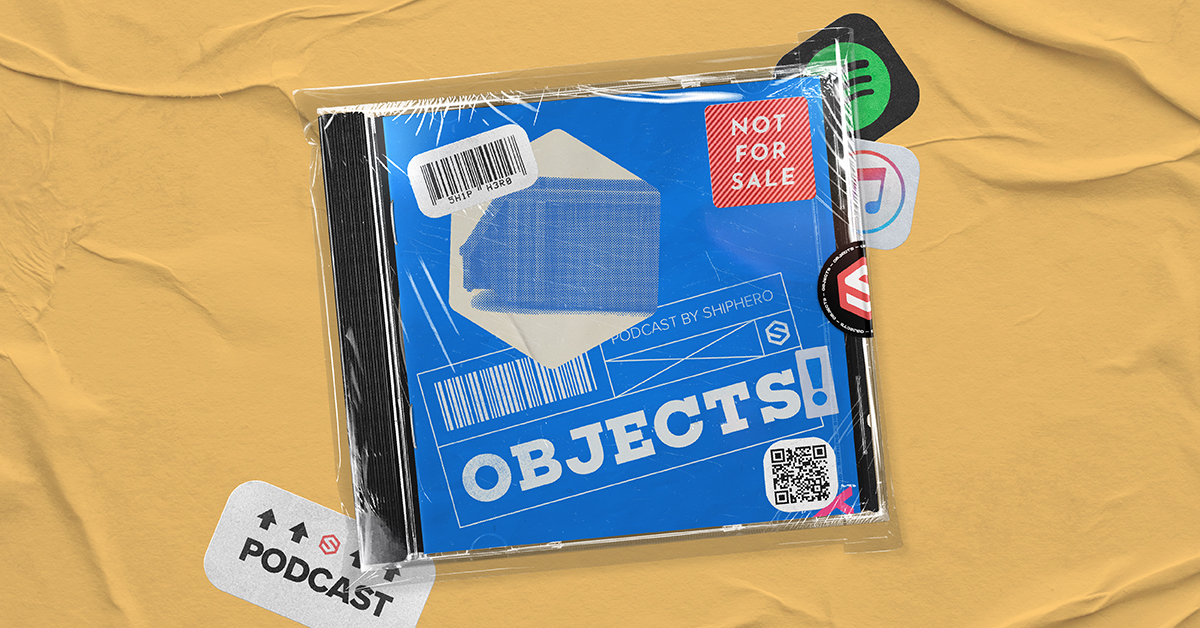
It's hard to believe that our little podcast, Objects! With ShipHero, has reached its season finale already. But what a season it's been! From laughter to tears, we've navigated the ups and downs of being an entrepreneur with the help of ten inspiring guests who have launched successful products in the eCommerce industry. We feel grateful to have been able to share our guests' journeys and learn from their experiences—cheers to all our fellow entrepreneurs out there crushing it every day. Keep launching, keep learning, and keep growing. Which podcast episode was your favorite?
Which one inspired you? Let’s recap on a very successful season one and the fabulous guests we had along the way!
Digital sensors. Who knew? Not these guys, until they discovered a way to make and sell digital sensors that measure humidity, temperature, and other environmental conditions. It turns out there are all sorts of people and businesses who need these sensors. So the entrepreneurs turned their creative consultancy into a thriving business, making and selling digital sensors to everyone from individuals to major corporations. What started as a simple idea has turned into something pretty amazing. Become a fan of SensorPush by listening to our podcast.
If you're feeling lost or adrift, take a page from Nick and Jonathan's book and start selling something. It can be anything from your consultant skills or your story. The important thing is that you get started somewhere, and the rest will follow. Check out our interview with Nick and Jonathan from SensorPush to hear more about their entrepreneurial journey.
If you're curious about the world of EDC, listen to our podcast with special guest Yong-Soo Chung. In this episode, you'll learn about the community's origins and what motivates people to seek out the best-made versions of unremarkable items. You'll also hear hilarious stories about knives (you might even want to start carrying one yourself). Who knows? Maybe after listening to this episode, you'll be inspired to launch your own online store for everyday carry enthusiasts.
Stefanie Taylor is the perfect example of a leader who knows how to read her market and adapt. She’s taken her 3rd generation retail jewelry company from $3M annual revenue to over $20M by being bold and pivoting her business model when necessary. If you want to learn more about being a successful entrepreneur, listen to our podcast with Stefanie herself.
If you're in the market for a good cry, listen to our podcast with special guest Chat Razdan. The founder of a healthcare fashion brand, Razdan, is radically changing how hospital gowns and other medical devices look and feel. He founded his company without any experience in healthcare OR fashion, proving that anyone can make an impact in this industry. So pull up a chair, grab some tissues, and enjoy the story of one man's mission to make healthcare more comfortable for everyone.
The world is a big place, but it can be even bigger if you're willing to explore. I think that's what our guest today was trying to say when he told us how far his journey has taken him - from Wall Street right into coding school and then onto taking tests selling headphones on Amazon! Listen up because this podcast could give insight to anyone who doesn't know where their passions lie or how they should use them as an income source with a special guest: Yong-Soo Chung.
As a self-taught entrepreneur, Anna Dee quickly learned that the best way to succeed was to dive in and figure things out as they came. Starting with handmade items on Etsy, she soon expanded her offerings and developed her website for her now wildly popular dildo business. That little venture turned into five successful companies, including a warehouse, online store, and community, where she teaches others about entrepreneurship and maintaining a positive mindset. Be sure to listen to this fun podcast about extraordinary and unique products.
Say hello to Nick O'Brien, the quintessential entrepreneur who didn't let a global pandemic stop him from achieving his dreams. He co-founded a phone case company in quarantine and navigated the challenges of setting up a Shopify site and finding a manufacturing partner. And if that wasn't impressive enough, his company even got featured on Good Morning America! How did he do it? Get ready to take some notes from this podcast and turn your quarantine ideas into a real business.
Meet Chioma and Uchenna, the entrepreneurial sisters behind the booming African-inspired fashion brand Cee Cee’s Closet NYC. From humble beginnings selling their wares at pop-up shops to being featured on NYC billboards, these ladies know how to make a splash in the business world. So how do they turn social media content into brand loyalty? It's all about authenticity and connecting with their audience on a personal level. The sisters share key lessons learned during their journey, like the importance of taking risks and staying true to your mission.
Erica Rankin is the mastermind behind Brodough, a vegan cookie dough company taking over Canada with its delicious and healthier-for-you treats. What started as a mere idea in Erica’s head blossomed into a full-fledged business, despite her lack of prior entrepreneurial experience. In this interview, we get to hear about Erica’s journey and learn some valuable tips for aspiring entrepreneurs. So if you’re looking for some culinary inspiration or just want to hear a delicious success story, be sure to give this podcast episode a listen.
Even if you're not in the market for a smoking apparatus, Rich's story is exciting and provides insight into what it takes to be a successful entrepreneur. He has over 20 years of experience in the retail industry, which gives him the knowledge and skills necessary to design, manufacture, and market his products. If you are looking for inspiration or want to learn more about what it takes to start your own business, check out this episode of Objects! with ShipHero.
It's always exciting to see and hear about successful entrepreneurs constantly blazing their trails and setting new goals. They serve as examples of what is possible and inspire us to think outside the box and push ourselves to do better. So go ahead and check out some of their stories, and remember-- entrepreneur or not-- never stop dreaming big.
Be sure to subscribe and follow Objects! With ShipHero on both iTunes and Spotify for even more success stories in season two. Thanks for tuning in!
—
Objects! with ShipHero is a detailed, 360' exploration of eCommerce and shipping one object at a time. John Wakim, your new host and ShipHero Head of Partnerships, will drill into the details to help you make sense of this world. If you have an object that you want to profile, please send a note to John Wakim at pitch@shiphero.com.
Click HERE to Listen on iTunes. Click HERE to Listen on Spotify.
About the host: John Wakim is the Head of Partnerships at ShipHero and Host of the Objects! With ShipHero podcast. As an early-stage entrepreneur with experience in SaaS, eCommerce, and retail, John has a diverse background. His innate ability to embrace challenges head-on makes him an early adopter at heart. No matter if he's working alone, with an in-house or remote team, with a vendor, or with an agency, John can wear many hats and roll up his sleeves and work relentlessly to meet goals.
You can all relate to scrolling through Facebook when an article about some college kid who started a billion-dollar company pops up in your feed. You think, "that could be me if I just went to college." And so the never-ending cycle of regret begins. But what if I told you that you don't need an ivy league school degree to start your own business? Today we'll meet Allen Walton, founder of spyguy.com – a company he started from nothing! So how did he do it?Keep reading his recent interview with ShipHero’s podcast host, John Wakim, to find out.
Meet Allen Walton, the founder of SpyGuy.com, a one-stop shop for all your covert surveillance needs. His story isn't your typical success narrative. He didn't have a burning passion for spy gear or attend a prestigious university before starting his company.Allen spent much of his time during young adulthood pondering his next move. He wasn’t interested in business or entrepreneurship. Though he had been exposed to a business, doing the grunt work was actually what excited him. But after wasting a few years at his parent’s house, indulging in the World of Warcraft video game, fate was ready to step in and get him to the next level.While spy gadgets may not have been his top career choice, he stumbled upon a job that turned out to be quite an education. Allen applied for a position at the local spy shop at his parent's insistence and was lucky enough to snag an on-the-spot interview with the store owner.“It just seemed like an interesting opportunity, and you know, security cameras and installations and stuff for businesses and whatnot. I was like, okay, this is kind of up my alley. I like Electronics; I'm tech-savvy. I think James Bond is cool, and maybe I'll meet some cool people working here.” Allen said.
When he first stumbled into sales, it was purely by chance. However, Allen quickly realized that he had a knack for it and became curious about the strategies and techniques behind successful selling. Thus began his passion for personal growth and self-improvement. Allen read books, studied the industry, and became more motivated to excel in his job and continue developing his skills. In fact, not having a natural passion for sales has been a blessing in disguise. Without any predetermined expectations or beliefs about what selling should be like, he can approach each situation with an open mind and continuously strive to improve himself. The bottom line is that passion can definitely drive success, but sometimes, having the drive and determination to improve can lead to impressive accomplishments.Working in retail taught him more about customer interactions and merchandising than any college class could. As he was moved from store to store, he observed how managers interacted with customers and laid out products appealingly. It may seem like a small detail, but how products are displayed can make a big difference in sales. He learned how to approach customers, effectively merchandise products, and create an overall welcoming shopping experience. Who knew a spy shop could be such a valuable learning experience? His time there taught him more than how to pick locks or install surveillance equipment - it taught him the importance of finding the right solution for each individual's unique situation.
When Allen started selling spy gear, he was just another cog in the machine. But his natural talent and drive quickly propelled him to the rank of manager in only 18 months. That is until a popular TV reality show producer came along and saw potential in Allen's skills. Suddenly, he found himself as CEO of their online spy store - talk about a career change! While it may not have been the path he planned, Allen proved that hard work and determination could lead to success in unexpected ways. But, when the show he was working on ended, he found himself jobless and without a plan. Rather than letting it get him down, he saw it as an opportunity to pursue his passion. He started selling spy gear online and found success for four years before deciding to branch out on his own. Starting a business from scratch can be daunting, but thankfully he had a leg up on the competition. With pre-existing relationships with suppliers and an understanding of what products sell well, Allen hit the ground running with the online store. When his eCommerce business started, he knew they were doing well with their regular customers and word-of-mouth marketing, but they knew they needed to expand. So, he took a shot in the dark and hired a friend to handle SpyGuy’s Google ad campaigns. The results were insane - in just 18 months, he was able to drive to over a million dollars in sales. They fine-tuned our campaigns and targeted the perfect keywords, leading to a significant increase in revenue.
Being a successful entrepreneur in a niche market can be challenging. As much as Allen loves what he does, he knows it's essential to constantly strive for growth and change. He is currently focused on improving operations and hitting financial goals. He plans to hand off the reins to someone else and move on to his next venture. Stagnation is the enemy of progress, after all. But while he may be looking toward the future, Allen will never forget the experiences and lessons that got him where he is today. The age-old question of "follow your passion or make a pragmatic decision" boils down to an individual's priorities. While following your passion may not always yield the most remarkable financial security, it often brings satisfaction and a more profound sense of purpose. On the flip side, chasing the almighty dollar may seem like a safe bet, but it can lead to long-term dissatisfaction and even regret. And then there's the third option - taking the path of least resistance. But let's be honest - is there any real reward in opting for mediocrity and complacency? As they say, fortune favors the bold. So why not live life on your terms and follow what truly lights a fire in your soul? After all, you only have one shot at life - why not make every moment count?—Objects! with ShipHero is a detailed, 360' exploration of eCommerce and shipping one object at a time. John Wakim, your new host and ShipHero Head of Partnerships, will drill into the details to help you make sense of this world. If you have an object that you want to profile, please send a note to John Wakim at pitch@shiphero.com.Click HERE to Listen on iTunes. Click HERE to Listen on Spotify.About the host: John Wakim is the Head of Partnerships at ShipHero and Host of the Objects! With ShipHero podcast. As an early-stage entrepreneur with experience in SaaS, eCommerce, and retail, John has a diverse background. His innate ability to embrace challenges head-on makes him an early adopter at heart. No matter if he's working alone, with an in-house or remote team, with a vendor, or with an agency, John can wear many hats and roll up his sleeves and work relentlessly to meet goals

Between priority shipping demands and expected free returns offers, it’s no secret that clients today want more from the businesses they shop. In light of these requirements, the technology used in warehouses is more important than ever. Luckily, smart warehousing means that companies have options when it comes to staying competitive. From inventory counting drones to the use of AI in logistics, smart warehouse technologies offer a number of benefits, including improved productivity, greater accuracy, and fewer accidents on the job.
Among the many benefits of smart warehousing technologies is the opportunity to protect your workforce from harm. By optimizing warehouse processes and utilizing AI where possible, companies can keep mistakes to a minimum while cutting down on accidents and injuries. In fact, studies show that utilizing warehouse robots could reduce both lifting injuries and those resulting from physical fatigue.
Just as smart tech protects workers, it can also lower your operating costs. By leveraging automation, businesses can empower their human labor team to focus on more specialized and technical tasks while also cutting picking errors. With current rates standing between 1 and 3 percent, companies that don’t go smart risk draining profitability by a whopping 13 percent overall.
The good news is that the technology used in warehouses can go a long way toward helping your business better serve its clients while benefiting your bottom line. By simplifying the picking and packing process, you can empower your team to do more in less time while cutting costs company wide. Here are some of the ways automation and AI in logistics and supply chains are helping companies like yours achieve their goals.
Smart warehousing technologies can give you access to critical warehouse data at the click of a button. An end-to-end warehouse management system like the one available through ShipHero offers expedited reporting, real-time statistics, and superior planning abilities. As a bonus, companies can streamline and automate many warehouse functions, allowing them to distribute labor where it can do the most good. The end result is both improved warehouse flexibility and better relationships with employees, suppliers and clients.
Incorporating automation and AI in logistics can have a big benefit on your bottom line. Also known as AGVs, automatic guided vehicles allow for the efficient storage of heavy materials while helping companies automate the receiving process. According to a report by PwC, the digitization and automation of these processes have the potential to reduce logistics costs nearly 50 percent by 2030. As a bonus, utilizing more autonomous guided vehicles can help protect your workers from injuries on the job, including muscle strains, falls, slips and repetitive motion injuries.
Inventory counting drones are another way for businesses to use technology to their advantage. Not only can drones easily scan barcodes and RFID tags, but they can also alert warehouse workers about the number of units in stock at any given time. The end result is that inventory disparities are found faster and with less effort from staff. Additionally, drones can help boost safety and minimize the number of dangerous tasks performed by workers.
There’s a reason that new technologies often make a big splash when they are first introduced. The amount of work they can do, and the amount of stress they can take off the labor force is astonishing.
Smart warehousing technologies can have a profound impact on your bottom line. By incorporating AI and warehouse drones into your current management, you can save on costs while doing your part to protect the people who have helped make your business the success it is today.
If you want to find out more about ShipHero’s smart Warehouse Management Software, we invite you to talk to one of our sales team members today.
Maggie M. Barnett, Esq., is the COO of ShipHero
About the author: Maggie M. Barnett, Esq., is the COO of ShipHero. She is responsible for planning and executing the overall operational, legal, managerial and administrative procedures, reporting structures and operational controls of the organization. Barnett’s greatest strengths are leadership, risk mitigation, change management and a passion for business transformation. She is known for her expertise in delivering operational excellence and an ability to provide guidance and mitigating risk. Her leadership of ShipHero is grounded in a servant mentality, always doing the right thing for our stakeholders. Her passion for ShipHero comes from the ability to drive operational excellence throughout the organization impacting the lives of our employees, customers, and partners.
When you’re running an eCommerce business, an important factor in online success is keeping your inventory organized. The best way to do this is by using a coding system. SKU in supply chain management and eCommerce is an essential tool that helps business owners know exactly what’s in stock in their inventory.
In a competitive market, eCommerce businesses have to keep up with the desires of their clients, which means it’s imperative to keep products relevant and accessible. This has to include having a clear picture of available inventory since clients want to be sure their desired product is available before making a purchase.
The acronym SKU stands for stock keeping unit. It’s a digital method used to track products by converting data about each product into a combination of letters and numbers that can be tracked by computer software.
This is an efficient identification system that uses information that’s unique to your business and helps to differentiate products from each other. It makes it easy for your team to locate and identify products being sold through your eCommerce shop.
Each business can design its own structure of SKU identifiers. These identifiers refer to key pieces of information based on a product’s most important characteristics such as:
The information provided by SKUs provides a lot of important information such as sales data and what products need to be reordered. As products are sold and SKUs are scanned, it’s easy to see which items are selling well and which variations of the same product are more popular.
Businesses retain historical data on the SKU level. This is crucial to inventory management because SKUs allow you to track the movement of inventory and to know exactly where a particular product is at any given time.
When an item is sold, it’s automatically removed from inventory. This makes it easy to determine what items need to be restocked. Data on SKUs also provides information on product popularity and sales trends.
SKUs meaning isn’t the same as UPCs (universal product codes). Most people are familiar with UPCs, the barcodes that can be read by a scanner. While SKUs are scannable codes just like UPCs, there are some key differences between the two. These differences include:
UPCs are always 12 numbers and always include barcodes. SKUs may be printed with or without a barcode and may vary in length.
SKU productivity refers to evaluating the effectiveness of your SKUs by comparing the number of SKUs that are live on your site to the number that resulted in sales. Before doing this comparison, deduct items that have been returned.
Calculating SKU productivity gives you important information about products that don’t sell as well as expected. It makes it possible to get a better idea of what your customers are looking for so that you can satisfy demand and keep your product selection relevant. Low-performing SKUs can be swapped out for those that customers are more interested in.
From the client’s perspective, one reason to limit SKUs in the supply chain is that too many SKUs mean too many options. While consumers don’t want to be limited to only a few choices, they also don’t want to be bombarded with so many options that it’s impossible to make a decision.
An SKU level that’s too high may lead to analysis paralysis on the part of consumers as they try to select a product from a large number of choices. Another reason to limit SKUs is the manpower required to maintain too many SKUs. In eCommerce, each item often requires uploading images, videos and product descriptions, which can be a time-consuming task, especially if a large number of SKUs don’t lead to sales.
Your eCommerce team’s focus must be on products and SKUs that are most apt to lead to sales. A lower number of SKUs with higher quality images and more detailed descriptions is likely to lead to better results.
With information about SKU trends, decisions can be made about possibly purchasing fewer of the products that aren’t selling as well and more of those that are most in demand. Using SKUs helps eliminate guesswork. Whether your eCommerce business is large or small, SKUs in supply chain management are a vital tool for effectively managing your inventory.
To find out more about ShipHero's fully outsourced fulfillment solution, talk to one of our Fulfillment Experts today.
About ShipHero
ShipHero is a US-based, leading solution provider in the fast growing eCommerce fulfillment space. ShipHero served over $5 billion of eCommerce orders in 2020 and is growing rapidly. ShipHero provides warehouse management software for brands that operate their own warehouses as well as outsourced fulfillment as a service from ShipHero owned and operated North American warehouses. Some notable customers include Universal Music Group, Glossier and Canadian Tire. ShipHero is a Shopify Plus partner and more than 10% of Shopify Plus stores globally use ShipHero.
Operations management in eCommerce refers to what goes on behind the scenes to make an eCommerce company successful. A big part of operations management is inventory management, which is an essential part of running a profitable business.
Effectively managing your inventory means having a good grasp on what items are in your inventory and how they should be stocked going forward. The 80-20 rule in inventory management can give insight into what products are in demand and which are delivering the most profitability.
The Pareto Principle is a well-known concept that states that approximately 80 percent of results come from 20 percent of causes. There are many possible applications of this principle in the business world.
In eCommerce inventory management, the 80/20 rule shows that 20 percent of a company’s inventory generates 80 percent of sales. If you apply this rule to your current inventory, the next step is to determine what products are in the 20 percent that are generating most of the sales or profits. Shelves should be stocked with these products at all times.
Clearly, eCommerce businesses need to increase the on-hand stock of items that fall in the 20 percent range of what is considered high-performing inventory. At the same time, decisions have to be made about how to manage inventory that may not be performing as well.
For products that aren’t in the 20 percent that are most profitable, consider those that are in the middle of the range and think about what needs to change to make these items more appealing to clients. Those that have been identified as the least effective performers may need better marketing or may need to be replaced with different products.
There are many examples of ways the 80-20 ratio may be applicable in the business world and in everyday life. Consider a few of them:
The main thing to be learned from the 80/20 rule is to look for the smallest things that are producing the biggest results. Work toward eliminating the 80 percent that’s not producing the results you’re looking for, or look at what changes could make a difference.
Decisions must be made in operations management that affect the future results of a company. Using the 80/20 rule can provide important insights into many aspects of your eCommerce business. It’s a powerful guideline that can help managers identify where success and profitability are coming from and what strategies may need to be revised.
Analyze data and trends to find out the top 20 percent of categories such as best-selling products and sales that are improving. Are the items that are the top sellers the same as the items that are delivering the most profitability? Consider what items in the bottom 20 percent could be discontinued without creating a lot of client dissatisfaction.
When the 80/20 rule is applied to inventory, the insights gained can help you to fine-tune your inventory planning strategies and better align your decisions with the desires of your clients. This knowledge helps you to have a better idea of what items should be kept in stock.
Keep in mind that the 80/20 rule is a guideline but it’s not a guarantee. New products and services shouldn’t be discarded too quickly. Products that haven’t made it into the top 20 percent may still have the potential to generate profits somewhere down the line with the proper marketing on social media or other sources.
Using the 80/20 rule provides reliable timely data that can be used to improve profitability and reduce costs. Eliminating products that are selling poorly can reduce inventory held in warehouses and the costs associated with them.
Applying the 80/20 rule to operations and inventory decisions in eCommerce isn’t something that should be applied only once. Continuously monitor what products are boosting profits and what changes might lead to better results. Work to identify the 20 percent of business resources that are producing 80 percent of your results and focus most of your efforts on optimizing that 20 percent.
To find out more about ShipHero's fully outsourced fulfillment solution, talk to one of our Fulfillment Experts today.
Click HERE to Schedule a Meeting with Our Sales Team.
About ShipHero
ShipHero is a US-based, leading solution provider in the fast growing eCommerce fulfillment space. ShipHero served over $5 billion of eCommerce orders in 2020 and is growing rapidly. ShipHero provides warehouse management software for brands that operate their own warehouses as well as outsourced fulfillment as a service from ShipHero owned and operated North American warehouses. Some notable customers include Universal Music Group, Glossier and Canadian Tire. ShipHero is a Shopify Plus partner and more than 10% of Shopify Plus stores globally use ShipHero.



.svg)