
.svg)

Have you been considering outsourcing order fulfillment? Learn what 3PL fulfillment is, why it's important and how it works with this ultimate guide from ShipHero.
.svg)
Third-party logistics (3PL) is one of the ways that a company can outsource order fulfillment. An eCommerce order fulfillment process starts when a customer submits the order and finishes when the product reaches their door.
What seems like a simple process can become quite complex depending on the storage location of your company's inventory, the customer's location, the size of the order and the timetable for delivery. It becomes even more complicated when you factor in the potential for returns.
Suppose you can't handle your eCommerce fulfillment in-house. In that case, it's probably time to outsource and let a third-party logistics company take over.
Keep reading to learn everything you need to know about 3PLs.
3PL companies are companies that offer various eCommerce logistics processes to online businesses. Some services they offer include warehousing, inventory management and order fulfillment.
3PL involves the business, the logistics provider and the shipping carrier. In simple terms, a 3PL provider offers logistics services to manage certain aspects of a company's shipping operations. 3PLs are renowned for their logistics industry expertise and can help companies better fulfill orders to keep their customers happy.
Some people think 3PLs and freight brokers are essentially the same. However, 3PL companies are more active than freight brokers because they take over your fulfillment operations. Meanwhile, freight brokers only connect you to shipping carriers without touching your products.
A 3PL becomes integrated into the company's inventory storage and transportation procedures. Rather than storing, packaging and shipping orders, companies hire a 3PL to manage the entire process. The 3PL owns or leases its storage and transportation assets to fulfill the client's orders remotely, ensuring you can focus on growing your business.
Third-party supply chain models first appeared in the 1970s when intermodal marketers took packages from businesses and brought them to rail stations for delivery. People developed 3PL software to help companies manage inventory and deliveries as the field grows. Nowadays, all kinds of businesses, from Fortune 500 to small businesses, use third-party logistics.
Here are the benefits of working with a 3PL company:
Third-party logistics companies often have connections in the sector, meaning they have better access to vendors and can negotiate higher discounts for you. By partnering with them, you can use their contacts and influence to reduce shipping supply and warehousing expenses, ultimately saving you money.
Many third-party logistics service experts have decades of combined experience in the industry. When you hire a 3PL company, you get access to this expertise to get insights on transport documentation, shipping regulations and other logistics issues. They can also answer your questions about how to increase operational efficiencies.
Running an in-house logistics division takes a lot of time and money. By hiring a 3PL company, you can instead focus on core business processes like developing marketing materials and improving sales channels. Better yet, you can do this without dedicating any internal staff or resources to run an in-house logistics division.
3PLs provide custom-made services based on your company's needs and performance. If your business grows and product orders increase, you can sign them for a more significant contract with more benefits. Conversely, considering downscaling your business, you can opt out of some of their services.
Working with a 3PL company helps you save time. You save time not only by streamlining various supply chain operations but also by being proactively aware of any potential issues in the supply chain. Addressing these issues early on means you don’t need to spend a lot of time fixing them after the damage is done.
Many 3PL companies offer all-in supply chain and logistics management, which means they handle your entire supply chain. This means your entire supply chain and logistics operation is handled by one party, reducing the chance of miscommunication and mistakes. It’s also more efficient since all the information flows within one organization instead of many.
Customers want to get their purchased items on time. Working with a 3PL company helps you get products to customers on time, increasing their satisfaction. Many 3PL companies also offer returns management, restoring customer satisfaction when they receive defective items.
As the name implies, 3PL involves three parties that help bring products to the market. Here are the three parties involved in the 3PL model:
The business is your company – you're responsible for producing goods and running the eCommerce business. Once people buy your products, you send the orders to your logistics company.
The logistics company is the intermediary between your company and the shipping providers. Third-party logistics companies offer many services, including warehousing, packaging and inventory management.
The shipper carries your products to physical stores or the buyers' doors. Major shippers include USPS, UPS and DHL.
A 3PL can scale and customize its services according to the client's specific needs. The client still retains some oversight when managing shipping operations. Before signing a contract, you can outline what services you want the 3PL to provide and what services you will maintain in-house. As your business grows, your 3PL provider can take over a significant role in expanding your supply chain and procurement operations.
Here's an overview of the services a 3PL typically provides:
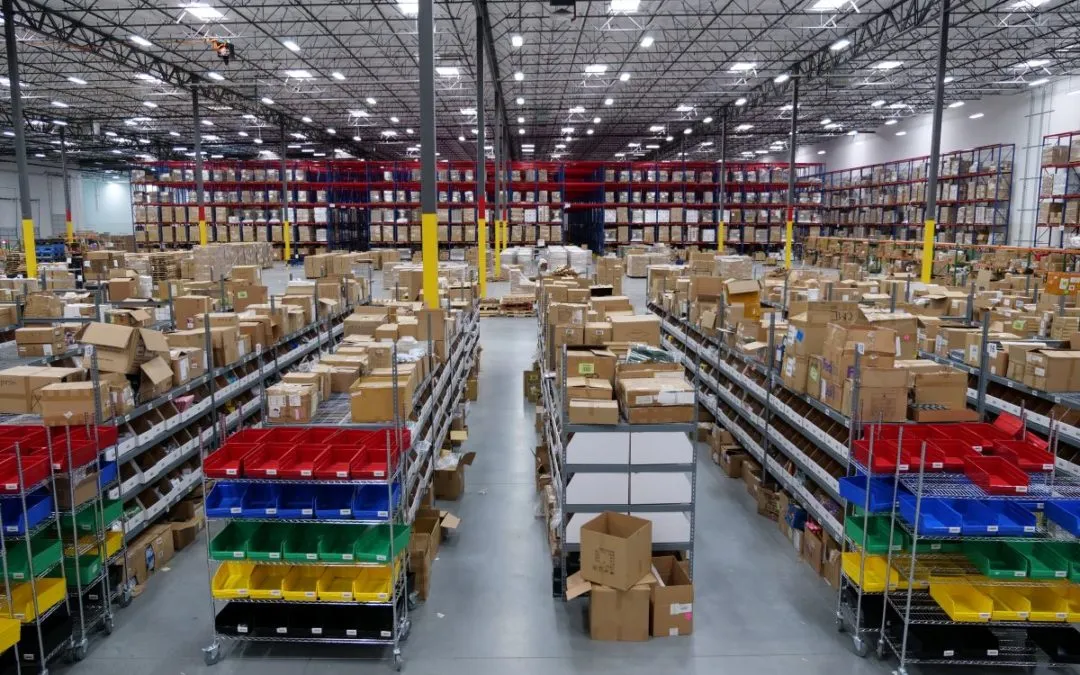
3PL companies provide warehouse spaces to handle order fulfillment for multiple companies in one place. This improves efficiency and reduces costs because they don't have to switch between numerous warehouse locations to finish orders. Moreover, you don't have to lease warehouse space, buy forklifts, or rent trucks to handle your merchandise.
Managing inventory involves more than simply storing your company's products. Integrative technology also syncs your inventory with your online store in real-time, so you can track inventory and predict demand to avoid sell-outs. Your 3PL also helps organize items with multiple parts into proper categories, ensuring nothing is misplaced.
Most 3PL providers have fulfillment centers across the country to store your products. 3PL companies distribute your inventory across the country to ensure fast shipment times.
A 3PL automatically routes orders to fulfillment centers based on the customer's location. 3PLs use extensive automation to save hundreds and thousands of dollars on inventory distribution, raising their clients' profits.
Alongside storage, 3PL companies assign staff to pick products for each order and package them for delivery.
Once the products are picked and packaged, the 3PL forwards them to a shipping carrier for delivery. Different 3PLs work with other carriers, and a good 3PL will choose the one that offers the best price and delivery speed. Some 3PLs even work with local carriers for less than truckload (LTL) shipping for local orders.
By partnering with a 3PL, your company can offer expedited shipping options to your customers since fulfillment centers send out orders daily. 3PLs often negotiate discounts with carriers like FedEx, DHL, USPS and others to offer faster delivery speeds at a manageable cost.
In addition to handling the shipping process, a 3PL will also manage the tracing and tracking process. Customers will receive shipping information to track their orders throughout the fulfillment process.
Not only do 3PLs offer shipment services, but they can also provide reverse logistics to handle returns. A 3PL can provide customers with return labels to drop the item off with a carrier for return to the fulfillment center.
Again, when you sign a contract with a 3PL company, you can customize its services according to your business's needs. An experienced 3PL provider will be able to handle the logistics of the entire supply chain from when your customer submits their order to when it arrives on their doorstep.
So you can visualize what this looks like, here is an outline of the order fulfillment process from a 3PL provider's perspective:
A 3PL needs inventory to complete customer orders, so your first act should be moving inventory to their warehouse. Depending on your business size, your inventory may be divided into several fulfillment centers. Each 3PL has its process for receiving and storing inventory. Most providers can customize this service according to the client's needs.
Depending on the 3PL's software, your partner may get the orders automatically, or you may have to send them manually. After placing the order, the 3PL starts the order fulfillment process by packing the items at the warehouse and then passes it to the next stage of the supply chain for packaging.
Once the 3PL has picked up all ordered items, they are prepared for delivery.S
tandard shipping materials for your products include cardboard boxes, poly mailers, bubble wrap, packing tape and bubble mailers. The best 3PL company can balance package protection and small dimensional weight so your products arrive safely and within budget.
Some 3PL companies charge extra for packing material, but others fold the costs into the service fee. Depending on your working relationship, 3PL companies may also let brands customize their packaging.
After the products are prepared, they're handed off to a courier for final delivery.
Some 3PLs partner with specific shipping carriers, while other companies have a rotation of transportation services to get the best deals. Either way, 3PL partners are responsible for brokering deals with freight forwarders to bring you the best rates. The courier fleet usually picks items up from your 3PL partner's warehouses.
The order process doesn't always finish once the package is delivered to the customer's door. Specifically, product returns can get complicated if you manage inventory stock levels yourself. When you're working with a 3PL partner, they receive all returned products to be restocked, scrapped, or processed.
To make the return process more manageable, you can ask the 3PL company to provide shipping labels for every package. Customers can fill them out and return their packages if something goes wrong.
It should be clear by now that 3PL partnerships benefit companies, but how do you determine whether yours will? Keep reading to learn the signs that it's time to hire a 3PL.
3PLs are needed when you can't handle order fulfillment by yourself. Unless you're running a small retail business out of your garage with no more than a dozen orders a week, the chances are good that your company could benefit from hiring a 3PL provider. To help you decide, here is an overview of the advantages associated with working with a third-party logistics provider:
Still unsure whether hiring a 3PL provider is the next logical step for your business? Here are some of the top reasons to hire a third-party logistics provider:
There is nothing magical about the number “100” – the point is that your company is receiving more orders than you can efficiently manage in-house. Shipping a large volume of items per month means your team spends more time and effort fulfilling orders than doing core business tasks. Once you've reached over 100 shipments per month, it's a good idea to hire a 3PL company to support your operations.
Any retail company's goal is to have enough orders that it becomes necessary to increase inventory levels. Of course, when this happens, you'll need space to store all of that extra inventory. Rather than dealing with this predicament each time you add a new product to your store, turn over storage logistics to a 3PL.
Suppose you're currently managing your order fulfillment in-house. In that case, you may struggle to make it to the post office even once a day, let alone often enough to give your customers expedited shipping options. With a 3PL handling your order fulfillment logistics, you can suddenly offer one-day, two-day and maybe even same-day delivery.
Working with 3PL providers isn't cheap, but it could save you loads of time and money. Instead of spending a lot to lease storage space and build an in-house logistics division, consider hiring a 3PL so you can spend the savings on building your business. Additionally, 3PL services speed up product deliveries and give you a competitive advantage.
Every good business person is forward-thinking. From the moment you start your business, you should know where you want to go and how you want to get there. Suppose you expand your offerings throughout the country or around the globe. In that case, a 3PL can help you get there with inventory distribution services. For example, some 3PLs can leverage 2-day or overnight shipping to help eCommerce businesses keep up with Amazon and other giants.
Hiring a 3PL provider to manage your supply chain's logistics is smart if any or all of the signs above are coming into play. Before you start shopping around for a 3PL, however, you should take a moment to consider whether doing so is enough. You may want to consider taking things one step further and hiring fourth-party logistics service providers – keep reading to learn more.
First and foremost, you should know that 3PLs and 4PLs are professional, hired services that help businesses like yours plan and execute inventory management and order fulfillment logistics. You get much more flexibility than you would if you managed fulfillment in-house.
As you well know by now, a third-party logistics provider is a company that handles the logistics of your company's supply chain and order fulfillment processes. Depending on how much control you want to hand over to your 3PL, they can do everything from storing and managing your inventory to picking, packing and shipping your orders. They can even handle the returns management process for you.
A fourth-party logistics provider adds another element to the equation, combining various resources and technologies to optimize your supply chain's design and execution. You can still keep your 3PL to manage the day-to-day details of order fulfillment. Still, a 4PL will become the “control tower” that oversees supply chain management. They will supervise your 3PLs and any other resources or providers you use to ensure your supply chain operates smoothly, efficiently and cost-effectively. For businesses that want total supply chain visibility, a 4PL provider can be a great option.
The critical difference between a 4PL and a 3PL is that many 3PLs are asset-based – they own or lease equipment and warehouses that they use to provide services. As such, a 3PL is concerned with its costs and may not always seek the best deal for you if it means a better deal for them. In contrast, a 4PL's only concern is integrating and optimizing your supply chain operations.
A third-party logistics provider can offer many services, though many focus on specific supply chain solutions. As a business, this might mean hiring multiple 3PLs to fulfill your supply chain's different aspects – this is when hiring a 4PL may come in handy.
Here is a quick overview of the different types of 3PL providers you may come across:
As part of your transportation 3PL search, you need to consider several factors, including the company's location, where your customers are located, delivery timelines, shipping methods, service options and pricing and discounts. This type of 3PL deals with shipping inventory between locations.
The most common type of 3PL is warehouse and distribution-based. These providers handle the storage, shipment and returns of your orders. When considering a warehousing 3PL, you'll need to consider the number of locations and their geographical locations, the pricing model for storage, negotiated shipping rates, delivery insurance, daily cutoffs for order fulfillment and management tools.
Once your company expands beyond the eight or nine-figure mark in annual revenue, you may want to bring a financial 3PL on board to help you optimize your operations for the industry and to evaluate current trends. These 3PLs offer freight auditing, cost accounting, bookkeeping, tracking, tracing and inventory management.
Now that you better understand the different types of 3PL providers, you may wonder how much it costs to hire a 3PL. Third-party logistics pricing depends on the services you require and the scope. Several factors that determine 3PL pricing include:
In addition to considering these individual costs, you should also know that most 3PLs offer three pricing models. Here is a quick overview of their differences:
When choosing a 3PL provider, consider all aspects, including costs. Keep reading to receive some additional tips for selecting a 3PL provider.
If you've decided that hiring a third-party logistics provider is the next logical step in expanding your business, congratulations! Now comes the hard work – choosing the perfect provider to meet your business's current needs while offering room for growth.
Here are some simple tips to keep in mind when choosing a 3PL provider:
Naturally, you want to find the best 3PL provider for your company. That’s probably easier said than done, though. There are many pitfalls to avoid when choosing a 3PL company to work with.
Here, we’ll cover six mistakes you should be wary of when picking a 3PL company.
One of the goals of outsourcing fulfillment is saving money, but that doesn’t mean you should cheap out on a 3PL company. You shouldn’t choose a 3PL company just by choosing the one with the lowest upfront costs because it may cost you more in the long run.
Many 3PL companies can offer low upfront costs because they don’t use the latest technologies or provide less client support. If your chosen 3PL company isn’t doing its best to satisfy your logistics needs, your customer satisfaction may also suffer. Consider spending more upfront to gain long-term benefits instead of short-term savings.
Just like any partnership, you need to be clear about what you expect out of your 3PL partner. Here's what you should do before signing a deal:
Choosing a 3PL company with fulfillment centers close to you means you’ll have an easier time surveying your inventory and checking out its operations. But it’s even more important that your 3PL’s fulfillment centers be close to your customer base to reduce shipping time and costs.
3PL companies don’t understand your business unless you tell them, so you need to inform them of any changes in seasonal demand. They may have difficulty managing inventory if you don’t communicate when your products are most or least in demand. Remember to give your 3PL partner advanced notice of demand spikes to ensure they have enough inventory on hand to meet customer demands.
Communication is key when working with a 3PL partner, and sharing information relevant to your logistics operation is part of it. You need to trust your 3PL partner with essential information about your logistics operations, so they won’t be in the dark and can provide the best services.
Your interview with a prospective 3PL partner generally informs how they run their business. If the representative exhibits a customer-first attitude and goes out of the way to accommodate your needs, that can be a good sign of how they’ll treat your customers. Conversely, if the representative treats you badly, the company may do the same to your customers.
There are dozens of 3PL companies vying for your business, so choosing one is challenging. To help you decide, here are four premiere 3PL company options for your eCommerce and small business:
ShipHero is one of the best third-party logistics services for online retailers providing order fulfillment for more than 4,000 eCommerce businesses. Here are some of the benefits you'll get when partnering up with ShipHero:
ShipHero also integrates with major eCommerce platforms like Shopify Plus, BigCommerce, Shopify, Amazon and WooCommerce.
ShipBob is a third-party logistics company that helps you ship products worldwide. It promises shipping to all areas of the world through fulfillment centers in North America, Australia and Europe.
ShipBob offers these 3PL services:
ShipBob offers integrations with major eCommerce platforms like Shopify, BigCommerce and Squarespace.
Whitebox offers end-to-end 3PL services to help your products go from the factory floor to the buyers' doorstep. Whitebox even has an in-house advertising agency to help you market your business.
The services offered by Whitebox include:
FedEx Fulfillment is the 3PL subsidiary of FedEx, which offers third-party logistics to small businesses. It boasts excellent customer service and a resource hub to help new business owners learn entrepreneurship.
Here are the services you'll get from FedEx Fulfillment:
Choosing the right 3PL company can help you cut costs and improve efficiency. Follow these tips to pick the right 3PL provider:
Once you've narrowed your list to a few different 3PL options, it's time to start digging deeper to find the best match for your company. Before talking to any 3PL in-depth, ensure they have and sign a non-disclosure agreement to protect your company.
In addition to talking to the 3PL's representatives, you should also ask for references in the industry to determine whether the company has a solid track record and a positive reputation. Over time, it will become clear whether any of the 3PLs on your list are the right fit for your company or not.
Of course, the most important matter when choosing a 3PL partner is the value it offers. Find a 3PL company that caters to your order fulfillment needs at a reasonable price.
Finding the perfect third-party logistics partner that will keep your company's best interests in mind may not be a quick and easy process. Still, it is important that you do it right.
For help finding a 3PL provider, check out our online directory or contact ShipHero directly to learn how we can help you with fulfillment.

A 3PL is different from a fulfillment company in the services it offers. Most fulfillment companies only pack and ship your packages. Meanwhile, a 3PL company takes over your entire logistics operations, from warehousing to shipping. Many 3PLs even offer extra services like returns processing and inventory management.
3PL companies can help small businesses and large businesses alike. The scale of service is the major difference between 3PL for small and large businesses.
For small businesses, a 3PL company may only need to handle a relatively small amount of items with limited variety. Conversely, 3PLs working with large businesses may handle a wide range of products at larger volumes.
That said, the end result is still the same. Partnering with a 3PL increases your logistics efficiency to save money and get products to customers quicker.
Third-party logistics involves handing your logistics operations over to another company. A third-party logistics company usually offers warehousing, shipping and inventory management services.
The main difference between 3PL and 4PL is the number of parties involved. A 3PL company still works under your management to handle your inventory and shipments. In contrast, a 4PL company contracts different 3PL providers to take your products.
The main benefits of working with 3PLs are cost and time savings. You also gain access to their expertise. You don't have to train in-house logistics employees to handle warehousing and shipping.
.webp)

On September 1, 2026, Descartes Systems Group announced its acquisition of Extensiv for approximately $120 million. What was announced, what usually follows deals like this, and the questions Extensiv customers should put to their vendor before renewal.
.svg)



.svg)



.webp)