
shiphero Blog

Warehouse Operations

Let’s stay in touch with the ShipHero Blog.

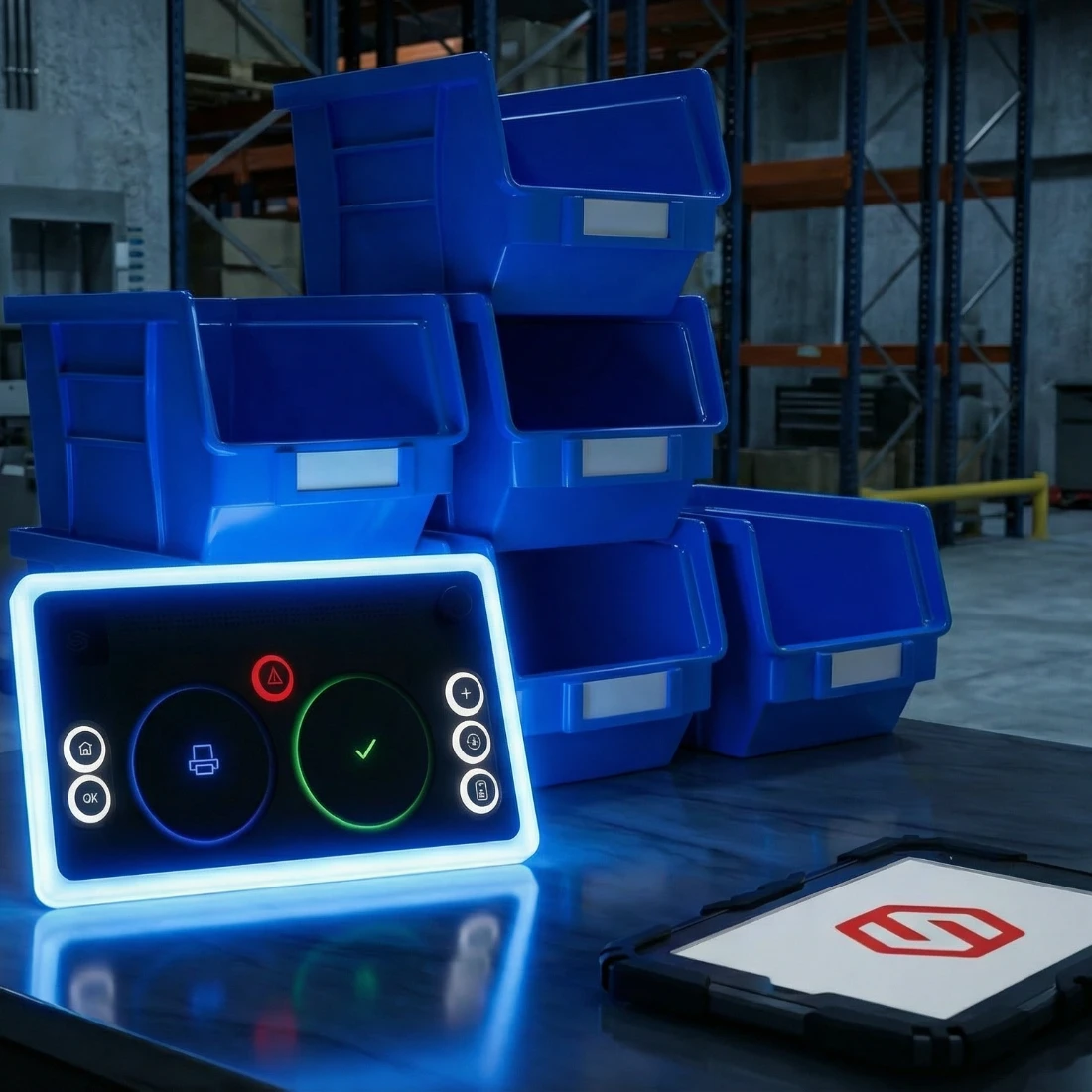
Shiphero logo on a grey backgroundStack of blue plastic storage bins next to a glowing Tap-to-Pack  device and a tablet with a red ShipHero logo on a warehouse table.
March 2, 2026

Meet Tap-to-Pack: Eliminate Packing Errors and Speed Up Your Pack Line

Picture a packer at Peak Season. A box is in front of them, a product in each hand, and somewhere on a cluttered desk there's a mouse they need to find to confirm the order. They look down. They hunt. They click. Then they do it again. Thousands of times a day.

That moment of friction is small. But it is never just one moment. Multiply it across your entire pack line, across an entire shift, and you are looking at a measurable and largely invisible drag on your total throughput.

What Is Tap-to-Pack?

Tap-to-Pack is a purpose-built hardware controller designed by ShipHero to eliminate digital friction at the packing station. It connects via USB-C, requires no drivers or additional software, and syncs automatically with the ShipHero WMS packing app. This new system is now available at the ShipHero Store.

Instead of navigating a screen with a keyboard and mouse, packers execute every high-frequency command — such as selecting box sizes, printing labels, finalizing orders, flagging exceptions — with a single physical tap on one of eight programmable buttons.

Key specifications:

  • Connects via USB-C, plug-and-play
  • 8 programmable buttons on the Main Hub, expandable to 24
  • Integrated LED strips for visual confirmation (green = success, red = error)
  • High-fidelity audio cues to support eyes-on-product workflows
  • Industrial-grade, rugged build for warehouse environments
  • Compatible with the ShipHero WMS packing app (v1.0 or higher required for Tap-to-Pack devices)

Why Keyboards and Mice Fail in Warehouses

Most warehouses are running 2026 operations on 1990s peripheral standards. The keyboard and mouse were designed for spreadsheets and emails, not high-volume fulfillment. When used at a packing station, they create three compounding problems:

  1. Divided attention. Packers must split focus between the physical product in their hands and a digital UI on a screen. This is what we call screen-stare fatigue. That is: a constant, low-level attention split that accumulates across every single order.
  2. Flow state interruptions. When a packer has to hunt for a cursor or navigate a multi-step UI, they lose their rhythm. At scale, those micro-interruptions translate into a significant reduction in orders packed per hour.
  3. Input errors. The further a packer's attention drifts from the product, the higher the risk that a wrong item ships. A mispack costs you twice:  once to resolve it, and once in the customer relationship it damages.

The problem is not your people. It is the tools you are asking them to use.

How Tap-to-Pack Works

Tap-to-Pack introduces a "Rodent-Free" packing standard: a workflow where the packer's hands stay on the product, their eyes stay on the work, and the software fades into the background.

The device guides the packer through two feedback systems:

  • LED strips: A green pulse confirms a successful action. A red alert stops an error before the box is sealed.
  • Audio cues: High-fidelity sound signals reinforce every action without requiring the packer to look at a screen.

ShipHero customers running Tap-to-Pack are already seeing a 90% reduction in on-screen interactions and a significant increase in the number of orders packed per hour, without adding headcount or changing their warehouse layout.

Scaling Your Pack Line With Tap-to-Pack

One of the hardest challenges in fulfillment is absorbing volume quickly, especially during Peak Season, when temporary staff need to reach target productivity fast.

Because Tap-to-Pack's interface is physical and intuitive, there is almost nothing to teach. Pick up the product, follow the light, tap the button. New packers can reach target productivity in minutes rather than hours.

The system is also modular:

  • Start with 8 buttons on the Main Hub for core packing workflows
  • Expand to 16 or 24 buttons by connecting additional hubs as workflows grow in complexity
  • Configurable per station — buttons can be mapped to the actions most relevant to each packing role

Whether you are a growing DTC brand or a high-volume 3PL, Tap-to-Pack is designed so your hardware never becomes a ceiling on what your team can do.

Frequently Asked Questions

What is ShipHero Tap-to-Pack? 

Tap-to-Pack is a programmable, industrial-grade hardware controller that connects to the ShipHero WMS and allows warehouse packers to execute packing station commands, such as printing labels, selecting boxes, and completing orders. All with a single physical button press, eliminating the need for a keyboard and mouse.

How does Tap-to-Pack connect to the ShipHero WMS? 

The device connects via USB-C and syncs automatically with the ShipHero WMS packing app. It is a true plug-and-play solution: no drivers, no background software, and no manual configuration required.

Can I customize what each button does? 

Yes. Buttons are configurable for a range of packing actions, including Print Label, Complete Order, Select Box Size, and the Hospital function, which flags a problematic order and keeps the line moving without stopping to resolve it on screen.

What if I need more than 8 buttons? 

The system is fully modular. Connect up to two additional 8-button hubs to the Main Hub for a total of 24 programmable buttons, supporting even the most complex multi-step packing workflows.

What version of the ShipHero packing app is required? 

Tap-to-Pack devices require ShipHero Packing App v1.0 or higher. The current release is v1.1.0.

Read more
Arrow icon
Warehouse Operations
Shiphero logo on a grey background
October 9, 2024

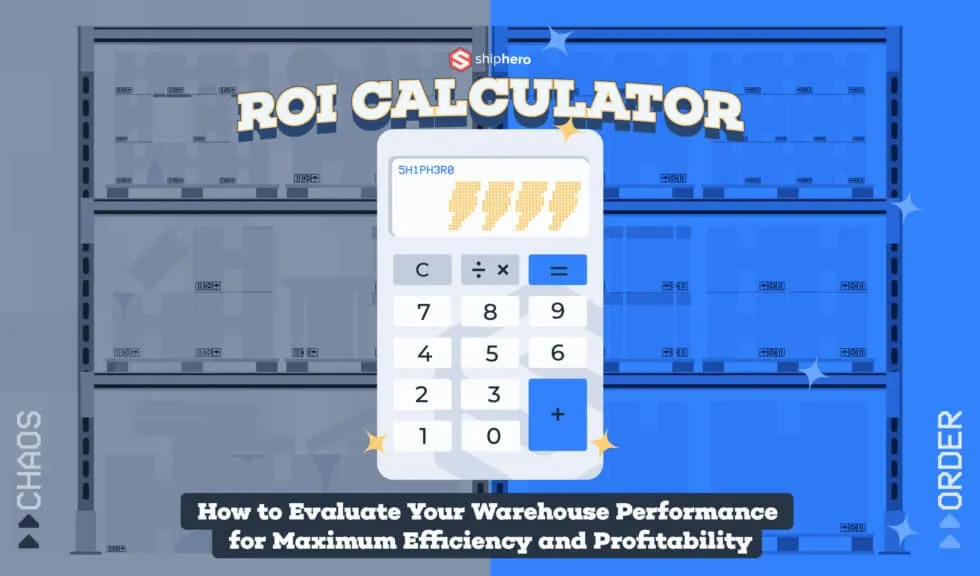
How to Evaluate Your Warehouse Performance for Maximum Profitability

In today’s competitive market, efficient warehouse operations can be the difference between scaling up or falling behind. Whether you’re a 3PL, a brand managing your fulfillment in-house, or a brand relying on a fulfillment partner, optimizing warehouse performance isn’t extravagant—it’s necessary to stay competitive, profitable, and ready for the busiest seasons. This guide will walk you through key areas to evaluate and practical steps to streamline operations, cut costs, and maximize efficiency.Identify

Your Key Performance Indicators (KPIs)

Before you can improve, you need to measure. The first step in improving your warehouse operations is understanding the Key Performance Indicators (KPIs) that matter most.

  • For 3PLs: Focus on on-time shipping, cost per order, inventory accuracy, and warehouse utilization to keep clients satisfied and control costs.
  • For Brands:
    • With In-House Fulfillment: Prioritize order fulfillment cycle time, picking accuracy, and labor productivity to ensure smooth operations and timely deliveries.
    • With Outsourced Fulfillment: Keep a close eye on your 3PL’s service-level agreements (SLAs), inventory visibility, and shipping accuracy.

Monitoring these KPIs helps you stay ahead of potential issues, ensure customer satisfaction and reduce operational expenses—especially as peak seasons approach.

How Efficient Is Your Order Fulfillment?

Once you’ve identified your KPIs, it’s time to dig into order fulfillment efficiency. Efficient order processing is essential for maintaining customer satisfaction and staying competitive.

  • For 3PLs: Streamlining your fulfillment processes helps retain and attract clients.
  • For Brands:
    • With In-House Fulfillment: Faster picking and packing mean faster deliveries, improving customer satisfaction.
    • With Outsourcing: Ensure your 3PL meets expected order turnaround times to avoid customer frustration.

By refining your order fulfillment processes, you can minimize costly bottlenecks and improve your ability to scale when demand is high, such as during the holiday rush.

Maximizing Your Warehouse Space

Is your warehouse space working for you or against you? Proper space utilization can help you cut costs and improve efficiency.

  • For 3PLs: Maximize storage to lower the cost per order and ensure you get the most out of your space.
  • For Brands:
    • With In-House Fulfillment: Keep fast-moving products accessible and avoid dead stock to streamline operations.
    • With Outsourcing: Ensure your 3PL is using space efficiently, as poor organization can increase costs.

Leveraging a Warehouse Management System (WMS) like ShipHero can help you better organize your inventory, ensure faster retrieval and optimize space usage.

Are Your Inventory Counts Accurate?

After optimizing your space, the next focus should be on inventory accuracy and turnover rates. Inventory accuracy can make or break your fulfillment operation. Miscounts lead to delays, customer complaints, and lost revenue.

  • For 3PLs: Inaccurate inventory counts can cause delays and upset clients.
  • For Brands
    • With In-House Fulfillment: Stockouts or overstocks hurt customer satisfaction and tie up capital.
    • With Outsourcing: Make sure your 3PL provides transparent, accurate reporting.

Quick Tip: Monitoring inventory turnover rates gives insight into how quickly products move through your warehouse. A high turnover rate indicates a healthy operation, while slow-moving items waste resources.

Assess Warehouse Labor Productivity

With inventory accuracy under control, the next key step is to evaluate labor productivity. Is your workforce operating at its best? Tracking labor productivity will help uncover inefficiencies.

  • For 3PLs: Measuring labor efficiency helps you control costs and meet client expectations.
  • For Brands:
    • With In-House Fulfillment: Productivity tracking helps you pinpoint areas for improvement.
    • With Outsourcing: Evaluate how effectively your 3PL workforce manages your orders.

In many cases, introducing automation tools, such as robotics, can increase throughput while reducing errors, helping you scale your operation without adding staff.

Leverage Technology to Boost Performance

Technology is your best friend when it comes to warehouse optimization. To truly supercharge your warehouse, you must embrace it.

  • For 3PLs: Use WMS like ShipHero to manage operations for multiple clients, provide real-time data, and improve order accuracy.
  • For Brands:
    • With In-House Fulfillment: Leverage ShipHero’s WMS to get full visibility into your warehouse operations and stay on top of inventory management.
    • With Outsourcing: Make sure your 3PL uses advanced technology, such as RFID and AI-powered sorting systems, to reduce errors and speed up workflows.

The right tools reduce costly mistakes and ensure your operation remains future-proof.

Is Customer Satisfaction Driving Your Metrics?

No matter how well your warehouse runs, customer satisfaction is the true measure of success.

  • For 3PLs: On-time shipping and order accuracy help secure long-term client contracts.
  • For Brands:
    • With In-House Fulfillment: Accurate, timely deliveries directly impact customer loyalty and retention.
    • With Outsourcing: Hold your 3PL to the same standards your brand promises customers.

Prioritizing customer satisfaction helps build trust, essential for encouraging repeat business and sustaining your brand’s growth.

Conduct Regular Performance Audits

Even the best-run warehouses can benefit from regular performance audits. Don’t let inefficiencies go unnoticed—regular performance audits help catch potential bottlenecks before they become problems.

  • For 3PLs: Conduct quarterly audits to stay ahead of client expectations.
  • For Brands:
    • With In-House Fulfillment: Audit before and after peak seasons to ensure readiness.
    • With Outsourcing: Regularly review your 3PL’s performance to ensure they meet expectations.

Did You Know? Regular audits are crucial to continuously improving your operations and avoiding costly issues down the line.

Find the Right Fulfillment Partner

Having the right fulfillment partner can make a big difference. ShipHero offers comprehensive solutions to ensure your warehouse operates efficiently, whether you manage your fulfillment or work with a 3PL. ShipHero technology is designed to streamline operations, cut costs, and support 3PLs and in-house brands as they handle complex fulfillment.

Ready to See the Savings?

Optimizing your warehouse performance is essential for staying competitive. Now that you know what metrics to track and how to improve, it’s time to put your warehouse operations to the test.

Run our Savings Calculator today to see how much you could optimize and save!

Read more
Arrow icon
3PL Warehouse Management
Warehouse Operations
Shiphero logo on a grey background
April 2, 2024

WMS Logistics: Streamlining Warehouse Operations

In today's fast-paced business world, efficiency is key. When it comes to warehouse operations, businesses want ways to improve productivity and reduce costs. Warehouse Management Systems (WMS) logistics is good for both.

In this article, we will explore what WMS logistics is all about, its key features and processes, as well as the benefits and challenges of implementing a WMS to streamline your warehouse operations.

What is Warehouse Management Systems (WMS) Logistics?

Warehouse Management Systems (WMS) logistics refers to the software and processes used to manage and optimize warehouse operations. It involves a combination of technology, strategies, and tools designed to support the day-to-day activities of a warehouse.

From tracking inventory and managing orders to optimizing space utilization and improving shipping efficiency, WMS logistics provides a holistic approach to warehouse management.

Effective warehouse management is crucial for businesses of all sizes and industries. With the increasing complexity of supply chains and the growing demand for faster and more accurate order fulfillment, organizations are turning to WMS logistics to streamline their warehouse operations and gain a competitive edge in the market.

A key component of WMS logistics is inventory management. A WMS system allows warehouse managers to accurately track and control inventory levels, ensuring that the right products are available at the right time. This helps prevent stockouts and overstock situations, and it also improves demand forecasting and planning.

By having real-time visibility into inventory levels, warehouse managers can make informed decisions regarding purchasing, storage, and order fulfillment.

In addition to inventory management, WMS logistics also encompasses order management.

With a WMS system in place, organizations can efficiently process and fulfill customer orders. The system automates order processing, which reduces the chance of errors and delays. It also enables efficient order picking and packing, optimizing the use of warehouse space and minimizing the time required to fulfill orders. All this results in faster order fulfillment and improved customer satisfaction.

Another aspect of WMS logistics is space utilization optimization.

Warehouse space is a valuable asset, and effective space management is essential for maximizing storage capacity and operational efficiency. A WMS system provides tools and features to optimize your space, like slotting algorithms that determine the most efficient location for each product based on factors like demand, size, and weight.

By optimizing space utilization, warehouses can store more products, reduce handling costs, and improve overall productivity.

Furthermore, WMS logistics plays a crucial role in improving shipping efficiency. With a WMS system, organizations can streamline the shipping process by automating tasks like carrier selection, label printing, and documentation. This saves time, reduces errors, and improves the accuracy of shipments.

A WMS system can integrate with transportation management systems (TMS) to provide end-to-end visibility and control over the entire supply chain, from warehouse to customer.

In conclusion, Warehouse Management Systems (WMS) logistics is a comprehensive approach to warehouse management that encompasses various processes and technologies. By implementing a WMS system, organizations can optimize inventory management, streamline order processing, maximize space utilization, and improve shipping efficiency.

With the increasing complexity and competitiveness of the business landscape, WMS logistics has become a necessity for organizations looking to stay ahead in the market.

While we delve into the intricacies of WMS logistics here, it's also valuable to understand how these systems specifically benefit third-party logistics providers. For an in-depth look at 3PL-specific WMS solutions and how they cater to the unique needs of 3PL operations, check out our dedicated article.

Understanding Warehouse Management Systems (WMS)

At its core, a WMS is a software system that helps businesses automate and streamline their warehouse operations. It acts as a central hub that connects various aspects of warehouse management, such as inventory control, order fulfillment, and shipping.

By leveraging real-time data and analytics, a WMS enables businesses to make informed decisions and optimize their warehouse processes.

There are several key modules and processes that make up a WMS:

  1. Inventory management: A WMS provides real-time visibility into your inventory, allowing you to track stock levels, monitor product movement, and manage replenishment.
  2. Order management: With a WMS, you can efficiently process and fulfill customer orders, ensuring timely delivery and reducing order errors.
  3. Picking and packing: The WMS optimizes the picking and packing process, suggesting the most efficient routes and methods to minimize labor and time.
  4. Shipping and tracking: A WMS streamlines the shipping process by generating shipping labels, coordinating carrier pickups, and providing real-time tracking information to customers.

Key Features and Processes of a WMS

A WMS comes with a range of features and processes that help streamline warehouse operations. Some key features include:

  • Real-time data: A WMS provides up-to-date information on inventory levels, orders, and shipments, enabling businesses to make accurate decisions.
  • Barcode scanning: By using barcode scanning technology, a WMS eliminates manual data entry and reduces errors, improving overall efficiency.
  • RFID integration:  A WMS enables automatic identification and tracking of inventory, increasing visibility and control.
  • Automated workflows: A WMS automates repetitive tasks such as order processing and inventory replenishment, freeing up time for more strategic activities.

These features, when combined with efficient processes, can significantly improve warehouse operations. For example, implementing a wave picking strategy, where multiple orders are picked at once, can reduce travel time and increase productivity.

Benefits of Implementing a WMS

The implementation of a WMS brings a wide array of benefits to warehouse operations. Let's take a closer look at some key advantages:

  • Inventory accuracy: With a WMS, you can achieve higher levels of inventory accuracy, reducing stockouts, overstock situations, and order errors.
  • Increased productivity: By automating manual tasks and optimizing warehouse processes, a WMS can significantly improve productivity and throughput.
  • Better customer service: With real-time inventory information and efficient order processing, a WMS enables businesses to provide faster and more accurate customer service.
  • Cost savings: Efficient use of labor, better use of space, and fewer errors all contribute to cost savings for businesses using a WMS.

These benefits improve the day-to-day operations of a warehouse and positively impact the overall bottom line of a business.

Managing a multi-client warehouse requires a WMS that's built to handle the complexity and variety of needs. Dive deeper into the key features of WMS for 3PLs and multi-client fulfillment, providing further context on how these systems enhance operational efficiency.

Challenges and Limitations of Traditional Warehouses

While traditional warehouses have served businesses well for many years, they come with their own set of challenges and limitations. Some of the common challenges include:

  • Lack of visibility: Traditional warehouses often struggle with visibility into inventory, leading to inefficiencies in order fulfillment and replenishment.
  • Manual processes: Paper-based processes and manual data entry can introduce errors and slow down warehouse operations.
  • Inaccurate inventory levels: Without real-time tracking, it is challenging to maintain accurate inventory levels, leading to stockouts or overstock situations.
  • Poor space utilization: Traditional warehouses often have suboptimal space utilization, resulting in wasted storage space and inefficient picking processes.

By implementing a WMS, businesses can overcome these challenges and unlock the true potential of their warehouse operations.

The Future of WMS and Logistics

The future of WMS and logistics is exciting, with advancements in technology and evolving customer expectations shaping the industry. Some of the trends and developments to watch out for include:

  • Integration with eCommerce platforms: As eCommerce continues to grow, WMS will integrate seamlessly with platforms like Shopify and Amazon to streamline the order fulfillment process.
  • Automation and robotics: Robotics and automation technologies will play a significant role in warehouse operations, improving productivity and reducing labor costs. For those new to warehouse management systems or seeking to understand their basic functionality, 'WMS for Dummies' offers a straightforward explanation. Visit our guide on WMS basics to get acquainted with how these systems can transform your logistics operations from the ground up.
  • Analytics and AI: Advanced analytics and artificial intelligence will help  businesses find valuable insights from warehouse data.
  • IoT and real-time tracking: The Internet of Things (IoT) will enable real-time tracking of inventory and assets, providing unparalleled visibility and control.

As technology continues to advance, businesses that embrace these trends and adopt innovative WMS solutions will gain a competitive edge in the market.

Choosing the Right WMS for Your Business

Several considerations should go into choosing the right WMS for your business:

  1. Size and complexity of your warehouse: Assess the size of your warehouse and the complexity of your operations to determine the features and functionality required.
  2. Integration capabilities: Ensure that the WMS has seamless integration capabilities with your existing systems, such as ERP and eCommerce platforms.
  3. Scalability: Look for a WMS that can scale with your business, accommodating future growth and changes in your warehouse operations.
  4. User-friendly interface: A user-friendly interface is crucial for easy adoption and training of your warehouse staff.

By carefully evaluating these factors and considering your specific business needs, you can select the best WMS solution that aligns with your warehouse operations.

A banner for the footer of a blog that asks that for more information, you can contact us at ShipHero

Key Takeaways

Warehouse Management Systems (WMS) logistics play a vital role in streamlining warehouse operations. By leveraging technology and efficient processes, businesses can achieve higher levels of productivity, accuracy, and customer service. WMS provides real-time data, automates workflows, and optimizes inventory management.

Challenges of traditional warehouses like lack of visibility can be mitigated with a WMS. And as technology continues to advance, the future of WMS and logistics holds tremendous opportunities for businesses to stay competitive.

By choosing the right WMS for your business, you can unlock the full potential of your warehouse operations.

Frequently Asked Questions

What is WMS logistics?

WMS logistics refers to the software and processes used to manage and optimize warehouse operations. It involves technology, strategies, and tools designed to support day-to-day warehouse activities.

What are the key features of a WMS?

Some key features of a WMS include real-time data, barcode scanning, RFID integration, and automated workflows.

What are the benefits of implementing a WMS?

Implementing a WMS can lead to benefits such as inventory accuracy, increased productivity, better customer service, and cost savings.

What are the challenges of traditional warehouses?

Some challenges of traditional warehouses include lack of visibility, manual processes, inaccurate inventory levels, and poor space utilization.

What does the future hold for WMS and logistics?

The future of WMS and logistics involves integration with eCommerce platforms, automation and robotics, analytics and AI, IoT and real-time tracking.

How do I choose the right WMS for my business?

Consider factors such as the size and complexity of your warehouse, integration capabilities, scalability, and user-friendly interface when choosing a WMS for your business.

Read more
Arrow icon
WMS
Warehouse Operations
Shiphero logo on a grey background
December 1, 2023

Exploring Special Projects | Warehouse Operating System Series

Managing a warehouse is about more than picking, packing, and shipping. Special projects set you apart from your competition, pad your bottom line, and help your organization to operate more efficiently and achieve its goals.

This article will discuss the role, types, mechanics, benefits, challenges, and considerations involved in special projects.

Understanding Special Projects

A special project is any request outside the normal pick-pack, receiving, or shipping processes. These requests could range from designing a custom packaging solution for a new product line to relabeling a batch of products.

In any warehouse operation, special projects can play a crucial role in helping a business adapt and innovate in response to new challenges or opportunities. By taking advantage of special projects, companies can stay ahead of the curve, improve their processes, and maintain a competitive edge.

Types of Special Projects

  1. Kitting: Packing multiple products under one SKU is known as kitting. Kitting combines two or more related items into one neat package or bundle. Instead of forcing customers to browse numerous options, kitted bundles make getting what they want effortless.
  2. FBA or Walmart Prep: Some 3PLs offer Walmart and FBA prep services for inbound receiving rules, including ASIN labeling, order packaging, and fulfillment center shipping.
  3. Wholesale/Retail Order Prep: 3PLs can provide transportation, order fulfillment, and inventory management services such as warehousing, distribution, shipping, handling, and tracking.
  4. Inventory Removal or Disposal Request: When a client wants items stored in a fulfillment center, returned, recycled, or thrown away.
  5. Barcoding Products: Barcode printing is time-consuming, but special projects can optimize the process by considering space, accuracy, and speed.  

Process Optimization in Warehousing

The demand for companies to produce more with less has never been more pressing. Process optimization in a warehouse minimizes room for error, resulting in increased productivity and decreased operational expenses.

Using technology integration, companies can leverage predictive analytics to better forecast seasonal trends in demand and allocate resources accordingly.

The Mechanics of Special Projects

Every stage of setting up for special projects demands attention to detail, from project planning to monitoring and evaluation. With the right mechanics, special projects in the warehouse can be executed confidently and efficiently.

Project Planning

Work orders are critical for project planning in ShipHero facilities, providing a solid foundation for successful execution. With the ability to attach vital project details like images, videos, and documents, this feature ensures that every aspect of the project is accounted for, minimizing the chance of errors. You can easily track inventory movements in real-time, update progress, and assign tasks.

Watch our video walkthrough right here to learn more about work orders.

Execution

Collaboration between people with unique expertise is key to the success of these projects. Investing in employee training and development is also crucial, as it ensures your team has the knowledge and skills needed to tackle any project.

Implementing new technologies like WorkforceHero can connect employees with special projects, track data and locations in real-time, and follow your team's progress. WorkforceHero informs decisions more comprehensively, reduces idle time by allowing you to pre-assign tasks ahead of your team's arrival, and alerts potential improvements.

With the ability to track person-hours dedicated to each job or project, you’ll never forget to bill a client again.

Monitoring and Evaluation

Monitoring and evaluating metrics is important to ensure a warehouse operates smoothly and enables prompt and effective action to prevent supply chain failure.

It's also essential to have a sophisticated system that can analyze and interpret large amounts of data, such as ShipHero WMS and our WorkforceHero. By continually striving for improvement and being adaptable to changing circumstances, your warehouse can thrive and maintain its effectiveness over the long term.

Watch our video walkthrough right here to learn more about WorkforceHero.

Benefits of Special Projects in a Warehouse

Prepping for special projects in a warehouse can offer several benefits to enhance overall efficiency, productivity, and operations.

  1. Process Improvement: Analyze and improve workflows to increase efficiency and reduce costs.
  2. Capacity Expansion: Improve warehouse capacity for special projects by optimizing storage space, implementing new shelving systems, or reorganizing inventory.
  3. Technology Integration: Use automation, robotics, or WMS to streamline operations and reduce errors.
  4. Inventory Accuracy: Update tracking and management systems to improve inventory accuracy, reduce stocking problems, and lower costs.
  5. Cost Reduction: Optimize processes to reduce labor and storage costs.
  6. Customer Satisfaction: Better warehouse operations resulting from special projects can improve order accuracy, faster order fulfillment, and shorter delivery times, enhancing customer satisfaction.
  7. Flexibility and Scalability: Special projects can make the warehouse more adaptable to changing business needs and market demands.
  8. Resource Allocation: Special projects help identify resource needs and allocate them more effectively, whether labor, equipment, or technology investments.
  9. Competitive Advantage: Special projects can give a competitive advantage by improving warehouse operations for faster response times, lower costs, and better service.
  10. Employee Development: Special projects improve employee skills and cross-train them, which can increase job satisfaction.

By implementing special projects in a warehouse, businesses can reap many benefits that improve operations, reduce costs, and enhance their competitiveness.

Challenges and Considerations

Special projects in warehouse operations are a unique challenge that requires effective project management.

The primary challenge is time. Effective time management through proper planning, scheduling, and monitoring to meet the deadline is essential.

Then, the project scope must be well-defined, with specific goals and deliverables outlined to ensure focus and desired outcomes.

Finally, it is essential to keep in mind the significant cost constraint. The project expenses include several factors, including monetary fees, labor, vendors, and quality control.

Workforce Training

A specific aspect to consider is the potential for workforce training and development. Warehouse workers can easily take on new challenges by providing specialized training.

The commitment and expertise of a well-trained warehouse team make them a valuable asset, enabling your business to stay ahead of the competition and be prepared for any unforeseen challenges.

Integration with Existing Systems

Warehouse operations can be complex and challenging, from managing space and inventory to mitigating risk and preparing for unexpected fluctuations in demand. Tackling these challenges is easy with the help of a warehouse management system (WMS).

As a smart nerve center for your warehouse, a WMS can provide powerful insights and optimizations that streamline your operations, protect your inventory, and drive profits.

Integration with existing systems is key, and ShipHero offers powerful integrations that ensure every part of your warehouse is covered, giving you visibility into all corners of your operation.

With ShipHero on your side, you can overcome any challenge and take your warehouse operations to new heights.

Harness the Power of Special Projects

Special projects can have a significant impact on your warehouse operations. Optimize your processes, collaborate with your team, and train your workforce to ensure their success.

While special projects can improve efficiency, enhance customer satisfaction, and increase competitiveness, they can be challenging to implement without proper workforce training and WMS integration. Evaluate your current approach and invest in advanced WMS integration for long-term success.

A banner for the footer of a blog that asks that for more information, you can contact us at ShipHero

Key Takeaways

  • Special projects are requests outside the normal pick-pack, receiving and shipping processes.
  • Special projects include kitting, FBA or Walmart prep, wholesale/retail order prep, inventory removal or disposal requests, and barcoding products.
  • Process optimization minimizes room for error and increases productivity with new technology integration.
  • The mechanics of a special project involve project planning with work orders, execution with team collaboration and training, and monitoring/evaluating to assess outcomes.
  • Benefits include process improvement, capacity expansion, technology integration, cost reduction, customer satisfaction, flexibility/scalability, resource allocation, competitive advantage, and employee development.
  • Challenges and considerations involve expectations management, clearly defining the project scope, and highlighting cost constraint awareness.
  • Workforce training and WMS integration are key to successful execution.
Read more
Arrow icon
Warehouse Operations
Shiphero logo on a grey background
September 1, 2023

Packing Flow and Station Setup | Warehouse Operations

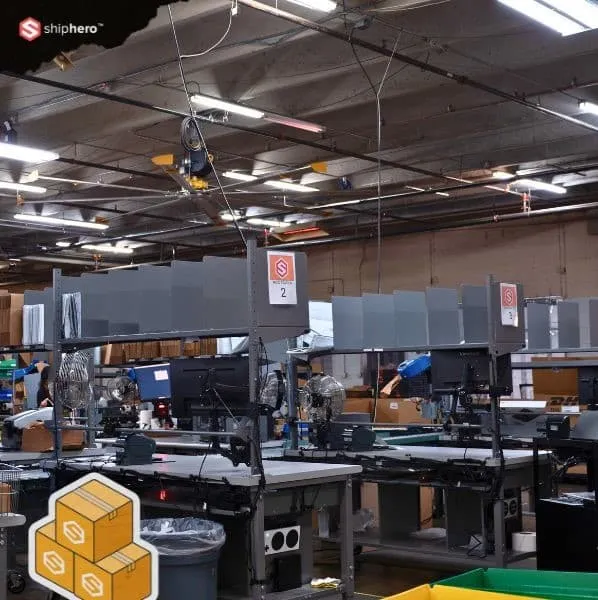
When preparing goods for shipment, the packing station is a crucial stage that requires careful attention to detail. Optimizing packing flow and station setup ensures accuracy and speed, thus reducing mistakes and improving the overall efficiency of your fulfillment operation. This article will discuss the importance of packing station setup and flow in successful order fulfillment.

Key Principles and Purpose

We recommend following a few basic principles.

  1. Avoid rushing to pack orders; take the time to check items before fulfillment to reduce the likelihood of returns.
  2. Store order preparation supplies in one location for quicker packaging and prevent potential order delays or losses.
  3. Designate a storage area for packaged products before shipping.

Watch one of our informative videos where our CEO, Aaron Rubin, shares valuable insights on setting up a successful packing station - right here! Some principles he discusses include minimizing touches, maintaining one-direction flow, and avoiding the use of keyboards and mice.

The Purpose of a Packing Station Setup

Determine the primary goal and select the appropriate tools and materials. If you're working at a shipping station, your tasks may include combining orders, performing final quality checks, packaging, addressing and labeling, generating a manifest, and staging.

You can develop a packing station tailored to your requirements by organizing and defining these tasks. Planning final checks to ensure the products are of the highest quality is essential. Identify the locations where the inspections will occur and devise a strategy to manage damaged or defective items.

Packing Station Flow

To optimize your fulfillment process, pay close attention to the flow of your packing station. Ensure that the products are moving clearly and consistently throughout each stage of the packing process. One way is by implementing signs or arrows dictating the proper directions. Additionally, designing your packing station for a seamless transition between each step can lead to a more efficient work environment.

When setting up your workstation, consider how items will be received. Will they come in via a conveyor belt system, or will you need a manual or cart-based system? If you're using a conveyor belt, it's best to have a custom standalone workbench over it.

Setting Up an Effective Packing Station

When setting up a packing station in your warehouse, there are two factors for you to begin with - proximity and materials. It's important to position the packing station close to the picking areas. This will allow for swift movement of items from picking to packing, minimizing delays.

When it comes to materials, prioritize the items used most often. Ensure your packing area has an adequate supply of commonly used items so your employees can keep the orders moving smoothly.

Essential Packing Station Equipment and Tools

Having the appropriate equipment and tools to create a practical packing station is important. Some essential items to include are:

  • Packaging Materials: Boxes, bubble wrap, packing peanuts, envelopes, labels, stationery, and void fill.
  • Tools: Heat sealer, stapler gun, glue, and scales.
  • Quality Control Tools: Weigh scales, computers, monitors, printers, scanners, label printers, and barcode scanners.

Once you have the appropriate tools and equipment, your packing station will be fully equipped to handle any shipment promptly.

Ergonomic Design Considerations for Packing Station Setup

When planning the layout of a packing station, it is crucial to consider ergonomics. Properly arranging goods and materials reduces the risk of work-related injuries, while worker morale and productivity can be increased.

The necessary tools and materials should be easily accessible to the packer and organized by the frequency and sequence of their use. Remember to include features such as optimal workstation height, sufficient lighting, and comfortable seating.

Replenishment

It's crucial to prioritize the replenishment process, which is often overlooked but can significantly impact operations. You can make the most of your replenishment process by following best practices and choosing the most suitable method for your specific needs.

Also, remember to have a solid emergency plan for replenishment needs. You can streamline this process by configuring triggers in your WMS for automatic re-ordering or using collaborative robots to assist with picking and restocking.

It's essential to maintain an organized and easily accessible stock of packing supplies and tools for your workers. Remember to replenish these items from behind the packing station to avoid hindering workflow in the front.

The Significance of a Packing Station in Ensuring Error-Free Fulfillment

To guarantee accurate order fulfillment, utilizing technology that automates processes and integrates with warehouse management systems is essential. This can include automated sorting and routing of packages, which can help reduce errors and prevent bottlenecksWe strive to enhance the packing process with inventive solutions, including one-touch and hands-free pack stations. By minimizing the handling of items, we can optimize the process.

We provide adaptable pack stations that cater to different requirements.

Adaptive Packing Stations | A ShipHero Story

Handheld barcode scanners have undoubtedly changed the warehouse picking and packing game. However, there's no denying the lag between scanning barcodes and continuing work can be incredibly frustrating, adding unnecessary seconds to each order. To overcome this inefficiency, our team searched high and low for a non-wearable option that was both durable and cost-effective. Our solution came from an unlikely source: the gaming industry. With the Xbox® adaptive game controller, we found a way to streamline our packing stations without breaking the bank. When paired with the Logitech® button kit and some innovative open-source software, this controller has revolutionized how we pack orders.

Maximize your 3PL and Warehouse Potential

As we have seen, the packing station is an important component of any order fulfillment process. It is essential to consider principles such as minimizing touches, maintaining one-direction flow, and avoiding keyboard or mouse use when designing a packing station setup. Furthermore, having the necessary equipment and tools available and being mindful of ergonomic design considerations facilitates accuracy. By integrating warehouse management systems with automation technologies, companies can ensure effective order fulfillment while minimizing errors. Ultimately, it's important to take stock of your current workflow and processes to identify opportunities for improvements that could give your organization an edge in the ever-evolving eCommerce landscape. Now it’s time to ask yourself: How does your packing station add up to the competition?

A banner for the footer of a blog that asks that for more information, you can contact us at ShipHero
Read more
Arrow icon
3PL Warehouse Management
Warehouse Operations
Shiphero logo on a grey background
August 25, 2023

Pick Methods and Totes | Warehouse Operations

Pick methods and totes are essential when considering how best to approach warehouse management. The size, layout, and overall condition of a warehouse all play critical roles in determining which strategies can work optimally for enhanced picking accuracy and efficiency. In this blog post, we'll explore the pick methods we use at ShipHero, tips to optimize your picking, and best practices for tote organization.
Pick Methods

As a warehouse manager, you know that pickers are the backbone of your operation. They are the ones who spend the majority of their time on the warehouse floor, selecting and passing off goods to packers. It's no surprise that the picking process can account for up to 55% of your operation costs. To minimize these costs, streamline the picking process as much as possible. With the right tools, your pickers can work more efficiently, making the process a breeze.

Multi-Item Batches

ShipHero's pick methods are designed to maximize efficiency and productivity. Utilizing the multi-item batch function, we pick multiple orders with different quantities of products into unique totes. This process streamlines the picking and packing process, saving you time and increasing your output, eliminating the need to revisit the same product location multiple times in a single shift.

As a result, pick rates are faster, and your business can scale more efficiently. Improved employee morale is another benefit, as workers are empowered to work smarter, not harder.

How ShipHero Does It

Picking accuracy and speed are critical for a 3PL, and while we may be biased, we suggest using ShipHero WMS for a smooth and precise picking process. The mobile app prompts you to choose a number of totes, and visual clues such as color coding make it easy to pick items for different orders. Scanners confirm that the right item is placed in the correct tote for each order. You can find an entire video walk-through on how we use multi-item batch picking right here!

Single-Item Batches

When it comes to batch picking, single-item batches require a slightly different approach. Despite picking multiple orders, each order only contains one item. What sets it apart is that these items can vary in size and shape.

So how do you efficiently pick these orders? A cart with a bin and a tote barcode can come in handy. You can sort the smaller items into the bin, while the rest can go onto the cart. With this method, you can maximize your picking efficiency and ensure that the correct items get to their destinations.

How ShipHero Does It

When it comes to single-item batch picking, it's important to have a specific process to ensure orders are picked efficiently and quickly. While it may seem straightforward, there are nuances to consider. Our app is designed to guide users to the correct location and helps them scan barcodes to select the required items quickly. This method can help complete a high volume of orders in just a few minutes. Watch our video to see precisely how single-item batches work.

Tips for Optimizing Your Picking Process

The location of your inventory storage, the type of shelving you use, and the location of your picking stations all affect accuracy and efficiency. Here are some simple tips for optimizing your picking process:

  • Keep unique SKUs separate in storage.
  • Ensure easy access to products for pickers.
  • Assign specific zones for different products. (e.g., hot sellers, seasonal items)
  • Efficiently minimize travel time by batching orders and optimizing your pick paths.
  • Continuously adjust and improve your picking process as your business and inventory evolve.

Tote Organization

Efficient tote organization in the warehouse is crucial for companies to maximize their productivity. Totes are an excellent solution for transporting and storing items that vary in size and weight. They can also help streamline the picking and packing process with the pick-to-tote method. However, it's not just about having totes on hand. To truly master the organization of totes in the warehouse, you must also focus on effectively labeling and categorizing the items within each tote according to their bin location to minimize the risk of errors and optimize the workflow.

Why Use Totes?

At ShipHero, we prefer plastic totes for their durability, stackability, and space-saving features. We also find them to be an excellent choice for these additional reasons.

  1. Easier to clean
  2. Low cost
  3. Durable
  4. Maintenance-free
  5. Efficient
  6. Recyclable

Mastering Bin Location

If you're serious about warehouse organization, mastering bin location is crucial. The two most common methods of bin labeling are standard and serpentine rack labeling. With standard labeling, each rack, shelf, and bin gets a unique ID with numbers and letters reflecting aisle, rack, level, and bin. This method works well for straightforward warehouse layouts. However, if your warehouse is more dynamic, you might prefer serpentine rack labeling. It differs in that labeling follows a zigzag path up and down each aisle. Mastering bin location will help boost warehouse efficiency and accuracy regardless of your chosen strategy.

It's a good idea to follow industry standards when organizing your shelves. This will help things run smoothly and avoid problems. It can also prevent the need to constantly rename things and make it easier for people who pick items from the shelves.

  • Start numbering shelves from the ground up to avoid relabeling shelves as you add height. For example, if you have a four-shelf rack, label the bottom shelf as number one and the top as number four. If you add shelves, the new location will be added on top of shelf four without changing labels.
  • To ensure the system accurately reads alphanumeric locations, it's best practice to use zero for all numbers under ten. For example, use 01, 02, and 03 instead of 1, 2, and 3.
  • Consistency is key. Using an inconsistent labeling method can cause chaos in your system and with your employees. Stick to a consistent approach to avoid confusion and maintain efficiency.

Pick-to-Tote

A tote-picking system offers numerous benefits. One advantage is dedicating a picking function to a specific area. With totes that can easily accommodate a range of items, pickers can focus solely on getting the pick right without worrying about sorting or organizing their items in multiple boxes.

This reduces operator travel and the required movements, allowing employees to complete more orders quickly and efficiently. Using well-labeled totes, dividers, and bins to subdivide inventory makes picking and sorting through large quantities of small items easy, further increasing productivity. With a tote-picking system, operators can concentrate on what matters: picking.

Make 2023 the Year You Upgrade Your 3PL

Take a look at how your warehouse processes are performing, and continually strive for improvement. Quite often, utilizing pick methods such as batching multi-items or single-items, together with the proper tote organization, is what makes the most significant difference.

With ShipHero, you can rest assured that you're in good hands; our expertise ensures that your picking process is optimized for maximum efficiency and profitability. We understand that this is a big undertaking for any business owner--that’s why we provide many resources to make this transformation as seamless as possible. So, is your warehouse as efficient as it can be? If not, reach out to the ShipHero experts – we’ll be more than happy to assist you!

A banner for the footer of a blog that asks that for more information, you can contact us at ShipHero
Read more
Arrow icon
3PL Warehouse Management
Warehouse Operations
Shiphero logo on a grey background
August 11, 2023

Warehouse Layout | Warehouse Operations

The Importance of Efficient Warehouse Flow

Efficient warehouse flow is crucial for any warehouse to run smoothly. A well-managed warehouse ensures products are received, stored, and distributed seamlessly. In this blog post, we’ll go over the basics of warehouse flow, from receiving to outbound packaging, and why optimizing each step is essential. Whether you’re a warehouse expert or a curious reader, this blog post will provide valuable insights into warehouse operations.

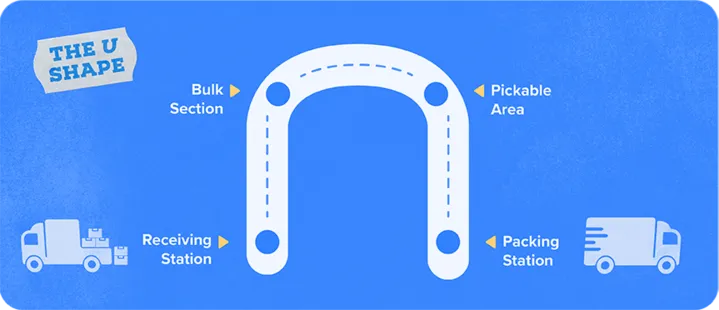
U-Shape Flow - How ShipHero Does It

Most warehouses have a square or rectangular shape with receiving and outbound doors on one side, creating a U-shaped flow. There is usually ample space between the dock and receiving area, where products are sorted. Having more room than you need to avoid congestion or delays will come in handy.

Receiving

Once products are ready to be received, they are taken to the receiving station. This can include fixed or mobile stations, depending on the volume of products being handled. Receiving is a critical aspect of warehousing, and nothing gets past the receiving station if it has not been checked or labeled. Items that pass inspection are ready to be put away, while non-compliant items are labeled accordingly.

Bulk Section

The next step in warehouse flow is the bulk section. This is where the overstock pallets are stored until they are needed. From there, products move to the pickable area, where pickers select items for packing. As inventory is moved out of the warehouse, items are moved from the bulk section to the pickable area, where pickers can easily access them.

Picking and Packing

Pickers typically move around the warehouse with carts, selecting individual units from bins. Once all necessary items have been selected, they move to the packing station. This is where orders are finalized, labeled, and packed into boxes.

Outbound Packages

After preparing your packages, they will be taken to the outbound dock to be shipped. We typically use collapsible bulk containers for storing outbound items. Choosing a reliable shipping method is important to ensure safe and secure delivery. We recommend reputable options like USPS or FedEx.

Why Warehouse Layout is Important

An efficient warehouse layout is vital for a successful logistics operation. The layout plays a significant role in productivity, cost-effectiveness, and customer satisfaction, making it an essential factor to consider when setting up a warehouse. Let's look at the various aspects that an optimized warehouse layout can improve.

  1. Optimized Material Flow: Efficient warehouse layout improves material flow, reducing handling time and movements. This leads to quicker order fulfillment, shorter lead times, and improved customer service.
  2. Enhanced Productivity: A well-planned warehouse layout can boost productivity by reducing the time and energy needed to find, choose, and pack items. This means less travel distance for workers and higher throughput and order processing.
  3. Space Utilization: Layout planning to maximize available space helps reduce storage expenses, keep the area clean, and increase inventory storage capacity.
  4. Safety and Ergonomics: Prioritizing safety when designing warehouse layouts can prevent accidents, protect employees, and reduce damage to goods. Ergonomic warehouse designs can lessen worker fatigue and injuries.
  5. Inventory Accuracy: A good warehouse layout assigns specific locations for each SKU to improve inventory accuracy. This reduces the chances of misplacement or incorrect picking, resulting in more precise inventory counts and less risk of stockouts or overstocking.
  6. Efficient Order Fulfillment: A thoughtfully designed warehouse layout ensures that popular or fast-moving items are strategically placed closer to the shipping area, expediting the picking and packing process for high-demand products.
  7. Adaptability to Changing Needs: Flexible and easily adjustable warehouse layouts are crucial for businesses adapting to new market conditions. Seek arrangements to accommodate changing storage needs, new products, and different order profiles without disrupting ongoing operations.
  8. Integration with Technology: Efficient warehouse layouts that accommodate modern technologies like ShipHero WMS, barcode scanners, and automation are crucial for optimizing productivity, accuracy, and data-driven decision-making.
  9. Cost Optimization: An optimized warehouse layout directly impacts operational costs. You can achieve significant cost savings and allocate resources more strategically by reducing labor, storage, and material handling expenses.
  10. Competitive Advantage: A well-organized warehouse can give businesses a competitive edge by enabling faster order processing and lead times. This leads to better customer service, increasing customer satisfaction and loyalty.

So Many Benefits

Understanding warehouse flow is critical to running a successful operation. Utilizing the U-shape flow model and optimized warehouse layout can provide numerous benefits, such as faster material transit time, enhanced productivity, cost optimization, and more. It’s also important to recognize the impact of technology on efficient fulfillment delivery and provide an environment that is safe for employees. Having the proper infrastructure makes a big difference in improving customer experiences and ultimately attaining business success.

If you want to visualize efficient warehouse flow, click here to watch our detailed walkthrough videos for further insights into best practices for warehouse operations.

A banner for the footer of a blog that asks that for more information, you can contact us at ShipHero
Read more
Arrow icon
3PL Warehouse Management
Warehouse Operations
Shiphero logo on a grey background
April 28, 2023

How to Audit Your Warehouse Technologies and Processes

As a 3PL, warehouse manager, or COO managing the operations of your warehouse, it's essential to understand how to audit warehouse technology and processes. Auditing effectively assesses areas that need improvement while enabling businesses to maximize inventory accuracy and improve efficiency.

By evaluating current warehouse practices, you can quickly identify internal process gaps and explore potential technological solutions that can enable optimization within all activities related to order fulfillment. So, what should be considered when auditing your warehouses? Let’s dive into the specifics so you can apply best practices for successful business operations!

What is a Warehouse Audit?

A warehouse audit comprehensively reviews your warehouse's technology and processes. It systematically and objectively examines your warehouse's operations to identify improvement areas and optimization opportunities. The audit helps you evaluate the effectiveness of your warehouse processes, technology efficiency, and inventory management accuracy.

How to Audit a Warehouse?

Auditing a warehouse requires a systematic and structured approach. The following steps can guide you through auditing your warehouse technologies and processes:

Develop a Warehouse Audit Checklist

Develop a comprehensive warehouse audit checklist that covers all aspects of your warehouse operations. Your audit checklist should include all relevant areas, such as receiving and put away, order picking, packing and shipping, inventory management, and technology systems. This checklist will serve as a roadmap for your audit, ensuring you cover all the necessary areas.

Evaluate the Warehouse Layout and Design

A warehouse's layout and design can significantly impact how efficient your operations are, regardless of what type of warehouse you have. Consider factors such as aisle width, storage density, and the flow of goods through your warehouse to ensure it is optimized to meet your needs.

Review Receiving and Put Away Processes

Receiving and putaway are two essential functions that play a vital role in the daily operations of a warehouse and should be audited regularly to ensure that they are working correctly and efficiently. To achieve this, you should ensure that the receiving team thoroughly examines all incoming shipments and stores them in the correct location once they are inspected.

Analyze Order Picking Processes

Warehouse operations depend heavily on order picking, and inefficient processes can lead to errors and delays. You must analyze your order picking processes to ensure they are optimized for speed, accuracy, and proper procedures, as well as the right technology to help your employees complete their tasks as efficiently as possible.

Assess Packing and Shipping Processes

The packaging and shipping processes are essential components of warehouse operations that must be evaluated to ensure they are efficient and error-free. In addition, it is important to ensure that your packers use the correct packaging materials and follow the proper packing procedures throughout the process.

Review Inventory Management Processes

To ensure a successful warehouse operation, you will need to confirm that your inventory tracking systems are up-to-date and that your warehouse staff is properly managing stock levels in your warehouse.

Evaluate Warehouse Technology Systems

As modern warehouse operations have become more technical and complex, you will need to evaluate your technology systems to ensure they are working correctly and fully integrated with your warehouse processes. You will also want to ensure that your technology systems are up-to-date and optimized for the needs of your warehouse.

Warehouse Audit Procedures

If you are planning to conduct a warehouse audit, the procedures will differ depending on your specific needs and the complexity of the operations in your warehouse. However, following some general guidelines can provide you with some helpful guidance to ensure that your audit is thorough and effective:

  • Define the Scope of Your Audit

The scope of your warehouse audit should be clearly defined, including the specific aspects of your operations that you plan to examine. This will allow you to concentrate your audit on the most critical areas and ensure all aspects of your warehouse operations have been covered.

  • Assign Responsibilities

The first thing that needs to be done is to assign tasks to the individuals responsible for leading, performing, and implementing any changes that need to be made due to the audit.

  • Conduct the Audit

During the audit, it is important to take detailed notes and document any areas of concern or opportunities for improvement so that you can refer back to them later. Ensure you follow your warehouse audit checklist to cover all relevant areas.

  • Analyze the Results

Utilize your audit checklist and notes as a guide for analyzing your audit results. Be sure to include key stakeholders in the process to identify any areas of concern or opportunities for improvement.

  • Develop an Action Plan

After you have analyzed the situation and identified the areas you are concerned about, it is time to develop an action plan to help you address them. Your action plan should be specific, measurable, achievable, relevant, and time-bound to address these areas.

  • Implement Changes

As part of your action plan, implement the changes identified and monitor their effectiveness. Make sure to communicate any changes to your team, as well as to provide training if necessary.

Position Your Warehouse for Success

Taking the time to regularly audit your warehouse technologies and processes helps ensure that operations are running efficiently and that tasks are being completed accurately. This careful review can also uncover areas for improvement and provide the opportunity to troubleshoot any issues.

To implement a successful audit, define the scope of the audit, assign responsibilities, conduct the audit and analyze the results. Create an action plan, including implementing any necessary changes, for process improvement.

A warehouse management system is extremely beneficial in this process as it streamlines tasks and reduces errors. Give ShipHero a try today and get ultimate control over your inventory with improved visibility into daily activities - perfect for performing an absolutely successful audit!

A banner for the footer of a blog that asks that for more information, you can contact us at ShipHero

About ShipHero: We make it simple for you to deliver your eCommerce. Our software helps you run your warehouse, and our outsourced shipping solutions eliminate the hassle of getting your products to your customers. With thousands of brands and 3PLs relying on us daily, we’re here to help with all your logistics needs.

Read more
Arrow icon
Warehouse Operations
WMS
Shiphero logo on a grey background
April 21, 2023

Applying IoT in Warehouse Management

In today’s digital age, the Internet of Things (IoT) revolutionizes how businesses manage their warehouses. With the rise of smart technologies, warehouse management is now more efficient and cost-effective than ever before. Let’s look at IoT and how it can be applied to warehouse management.

What is IoT?

In simple terms, IoT is a network of physical devices interconnected to the Internet, enabling them to capture and transmit data.

IoT devices are changing how warehouses operate by providing an unprecedented level of real-time data analysis. eCommerce businesses and 3PLs can use this real-time data to track inventory movements, monitor environmental conditions, and inform business decisions.

As such, IoT devices are a significant development for warehouse management, leading to increased accuracy, efficiency, and improved overall operations.

Benefits of IoT in Warehouse Management

We can already see the massive benefits of using IoT in warehouse management. Not only does it provide a precise method of inventory management, but it also increases safety and security, decreases costs and waste, and makes data easily accessible for analytics purposes. Let’s dig a little deeper into the benefits of IoT in warehouse management - exploring what advantages could be awaiting you just around the corner.

Improved Inventory Management

When it comes to warehouse management, detailed data analytics can be a game changer. IoT solutions allow you to monitor every action and process all data, even for individual products in specific locations.

This wealth of information allows you to forecast what's needed and what needs to be improved in scheduling your inventory effectively. Optimizing your warehouse space and minimizing the time it takes to locate products can drastically improve your business's efficiencies. With the right data analytics tools and strategies, you can stay one step ahead and develop a solid plan for future inventory success.

Real-Time Monitoring and Tracking

Beacon technology can achieve real-time monitoring and tracking of products. These small devices have an in-built battery that allows for continuous Bluetooth connectivity, enabling the precise tracking of assets. With this technology, businesses can streamline inventory management and better understand the movement of their products.

Increased Operational Efficiency

With the help of IoT devices, businesses can increase their operational efficiency and streamline inventory and warehouse management. Automating these processes minimizes costs, saves time, and improves overall performance.

Through real-time data analysis and intelligent insights from IoT, businesses can identify areas for improvement and make informed decisions that further optimize their operations. By utilizing these advancements, companies can reduce their expenses on labor and increase their productivity, ultimately leading to a more profitable outcome.

Reduced Costs and Waste

Reducing costs and waste has become a top priority for businesses. Implementing IoT warehouse solutions can go a long way in achieving this goal. By monitoring conditions and providing predictive maintenance, these solutions help detect early symptoms of equipment defects, thus reducing risks, downtime, and accidents.

In addition to mitigating potential losses, intelligent warehouses are highly efficient in resource utilization, resulting in increased revenue and reduced management expenses. As such, it's easy to see why more and more companies are turning to IoT solutions to optimize their warehouse operations.

Enhanced Safety and Security

By expanding the use of smart sensors, warehouses can prevent accidents caused by human error. These sensors can alert workers to potential hazards such as overloaded racks or close encounters with forklifts.

Smart locks, cameras, and motion sensors can prevent fraudulent activities and product theft, enhancing security measures. These technological advancements can limit the risk of unforeseen circumstances and provide a secure environment for employees to work and maintain inventory. Enhanced safety and security measures benefit the company and ensure the well-being of those included in every step of the process.

IoT Applications in Warehouse Management

IoT applications, such as inventory tracking and sensor networks, have revolutionized warehouse management, resulting in more efficient and accurate inventory management. These applications have transformed traditional warehouse operations by allowing managers to track inventory, monitor equipment, and optimize processes in real time. Let’s look at the IoT applications in warehouse management and discover what opportunities await us!

Inventory Tracking

Warehouse management is an essential component of any company's operations, and with the advent of IoT technology, the process has never been more efficient. One such application is RFID technology for tracking inventory. Unlike barcodes, RFID tags can store an enormous amount of data such as size, manufacturer, expiry date, serial number, production line, and much more.

Plus, RFID readers can scan up to 200 tags at once, a rate far superior to traditional barcode scanning methods. The result is improved inventory tracking and efficient management, ultimately reducing costs and increasing customer satisfaction.

Sensor Networks

Another significant advancement is using sensor networks to monitor temperature, humidity, and other environmental factors. This technology enables warehouse managers to better track the goods in and out, ensuring that products are stored under optimal conditions.

Integrating these sensors into the supply chain allows managers to follow items in any delivery step and monitor the temperature and humidity in transit. Sensors are also commonly deployed for light movement, moisture, and temperature sensing. Companies can proactively minimize supply chain risk by adopting sensors to moniter driver life.

Automated Guided Vehicles (AGVs)

Another approach to improving warehouse productivity is autonomous technology, such as automated guided vehicles (AGVs). They navigate an IoT warehouse using floor stickers, LiFi technology, vision cameras, and wires. The quickest route to any location is calculated by automated guided vehicles, and the inventory is restored without human supervision.

Predictive Maintenance

Predictive maintenance is a technology that uses IoT sensors to monitor equipment and machines' working conditions. Combining this data with powerful machine learning algorithms can prevent breakdowns of forklifts or other material handling equipment, ensuring optimum production and minimal maintenance costs and downtime.

The smart sensors collect information about temperature, humidity, and leaks. A server can send commands to adjust HVAC systems or engage actuators automatically while connected to one system. This technology provides a valuable solution to the issue of costly, unexpected repairs that disrupt workflow and ultimately lead to losses in profits.

Revolutionizing Warehouse Management

The Internet of Things has revolutionized warehouse management, and the undeniable advantages should be explored, especially as it relates to inventory tracking, cost reduction, efficiency, and security.

The success of businesses today comes down to understanding customers’ needs and ensuring that suitable systems are in place to increase productivity and efficiency. IoT technologies offer many advantages when implemented correctly, and it has opened a new era of possibilities for warehouse management.

Our ultimate goal at ShipHero is to help warehouse managers maximize their operations by offering a platform that simplifies processes and helps them stay ahead of the competition. So, don’t let your business wallow in outdated operational systems when you could be one step ahead with the leading WMS!                                                                                                                                                                                            

A banner for the footer of a blog that asks that for more information, you can contact us at ShipHero

About ShipHero: We make it simple for you to deliver your eCommerce. Our software helps you run your warehouse, and our outsourced shipping solutions eliminate the hassle of getting your products to your customers. With thousands of brands and 3PLs relying on us daily, we’re here to help with all your logistics needs.

Let us know how we can help you today by scheduling a call HERE.

Read more
Arrow icon
Warehouse Operations
3PL Warehouse Management
WMS
Shiphero logo on a grey background
April 14, 2023

Digital Twins: The Future of Warehouse Automation?

In today's competitive automation market, managers and COOs are tasked with making decisions that will enable their 3PL to stay ahead of the curve. By leveraging digital twins, warehouses can meet ever-changing customer demands and save time and money. In this blog post, we'll explore how digital twinning works and examine if it could be the future of automated warehousing for your 3PL.

What are Digital Twins?

A digital twin is a virtual replica of a physical warehouse that can be as simple or complex as needed. For example, suppose your warehouse workers move a pallet from one area of the warehouse to another. In that case, it shows in real-time on your digital twin software by gathering real-time data from sensors within the facility.

The use of digital twin technology allows for better oversight of the performance of an asset (a warehouse in this case), identification of potential faults, and informed decision-making regarding maintenance and the asset's lifecycle.

Essentially, digital twins are computer programs that take real-world data and produce simulations or predictions of how a physical object or system will be affected by those inputs.

That way, you can optimize your operations without experimenting in the physical space. Plus, digital twins can act as prototypes for products that don't even exist yet. They're a powerful tool for 3PLs who want to stay on the cutting edge of automation technology.

The Importance of Automation

Finding enough skilled workers to keep pace with demand is challenging for most warehouse operations. Fortunately, we're in the midst of a technological evolution allowing us to automate many of these processes.

Thanks to the Internet of Things (IoT) and artificial intelligence (AI) breakthroughs, warehouses can now handle changing eCommerce demands. Warehouse automation is now mainstream, and businesses that don't invest in it risk being left behind.

The Benefits of Digital Twins for Warehouse Automation

Digital twins connect assets with data to create a complete picture of what's happening. They allow teams to collaborate more effectively and make better decisions by analyzing past and present conditions and predicting future issues. Using simulation and 3D visualization, companies can understand how different scenarios might play out before they even happen. Just look at some of the benefits of digital twins.

  1. Improved efficiency: Using digital twins can identify inefficiencies in the warehouse operation and suggest improvements, such as optimizing the warehouse layout, reducing worker travel time, and reducing order picking and packing time.
  2. Predictive maintenance: Monitoring equipment health and predicting when maintenance is required can reduce equipment downtime and extend its lifespan with digital twins.
  3. Real-time monitoring: Digital twins allow warehouse managers to monitor inventory. Warehouse managers can use digital twins to track inventory levels in real-time and detect any errors in real-time, improving visibility and reducing errors.
  4. Risk reduction: A digital twin can identify risks and hazards in a warehouse, such as collision risks, allowing managers to mitigate them.
  5. Cost reduction: Using digital twins, warehouses can improve profitability by optimizing processes and workflows.

Challenges of Digital Twins in Warehouse Automation

One big hurdle is how disruptive the adoption process can be for an organization. Digital twins can transform the way warehouses operate, but getting there involves change that touches many areas of a company. It's like going through a renovation -- the result can be amazing, but the construction process can be pretty disruptive.

  1. Data quality: To be effective, digital twins require accurate and current data. Simulated results can be inaccurate when the data is incorrect or incomplete.
  2. Complexity: Developing and maintaining digital twins can take significant time and resources, requiring specialized skills and knowledge.
  3. Integration: Integrating digital twins can be challenging, requiring careful planning and execution.
  4. Cost: Implementing digital twins requires the use of hardware, software, and trained staff, all of which can be costly.

The Future of Digital Twins and Warehouse Automation

As eCommerce continues to increase, companies are scrambling to find ways to stay ahead of the competition in the fulfillment game. And that's where digital twins and warehouse automation come in. They have the potential to revolutionize the way warehouses operate, making them faster and more efficient than ever before.

But the impact of digital twins doesn't stop there. The technology has already proven itself in industries ranging from healthcare to manufacturing, and even entire cities are starting to leverage it for more intelligent infrastructure. It's safe to say that the future of digital twins is something to keep an eye on, as it will continue transforming how we live and work.

As we move into this digital age, these virtual counterparts of people, products, equipment, buildings, and cities become increasingly prevalent. From facility management to vehicle customization, digital twins provide a revolutionary path to streamline and optimize warehouse operations. The eagerness for cutting-edge technologies will only propel digital twins' capabilities further in such endeavors.

Leveraging Digital Twins

Digital twins are a powerful technology that can revolutionize warehouse automation, and it’s no surprise, given all of the advantages they offer. Utilizing digital twins enables warehouses to streamline all aspects of tracking inventory, which, in turn, virtually eliminates human error from the equation. Ultimately, digital twins have the potential to become an industry standard for warehouse automation capabilities quickly.

ShipHero’s WMS is a comprehensive solution that helps retailers leverage comprehensive inventory and order management to reach peak efficiency channel-wide. With its user-friendly interface, deep integrations, and customizations, ShipHero can help you free up your warehouse team’s valuable time so they can work on high-value tasks instead of manual data entry. Click now to learn how to integrate ShipHero’s WMS in your warehouse!                                                                                                                                                                                                                                                                                                                            

A banner for the footer of a blog that asks that for more information, you can contact us at ShipHero

About ShipHero: We make it simple for you to deliver your eCommerce. Our software helps you run your warehouse, and our outsourced shipping solutions eliminate the hassle of getting your products to your customers. With thousands of brands and 3PLs relying on us daily, we’re here to help with all your logistics needs.

Let us know how we can help you today by scheduling a call HERE.

Read more
Arrow icon
WMS
Warehouse Operations
No results.