
.svg)

Find out what digital twins are, how they can help optimize your warehouse operations, and why 3PLs should stay on top of the latest automation technology.
.svg)
In today's competitive automation market, managers and COOs are tasked with making decisions that will enable their 3PL to stay ahead of the curve. By leveraging digital twins, warehouses can meet ever-changing customer demands and save time and money. In this blog post, we'll explore how digital twinning works and examine if it could be the future of automated warehousing for your 3PL.
A digital twin is a virtual replica of a physical warehouse that can be as simple or complex as needed. For example, suppose your warehouse workers move a pallet from one area of the warehouse to another. In that case, it shows in real-time on your digital twin software by gathering real-time data from sensors within the facility.
The use of digital twin technology allows for better oversight of the performance of an asset (a warehouse in this case), identification of potential faults, and informed decision-making regarding maintenance and the asset's lifecycle.
Essentially, digital twins are computer programs that take real-world data and produce simulations or predictions of how a physical object or system will be affected by those inputs.
That way, you can optimize your operations without experimenting in the physical space. Plus, digital twins can act as prototypes for products that don't even exist yet. They're a powerful tool for 3PLs who want to stay on the cutting edge of automation technology.
Finding enough skilled workers to keep pace with demand is challenging for most warehouse operations. Fortunately, we're in the midst of a technological evolution allowing us to automate many of these processes.
Thanks to the Internet of Things (IoT) and artificial intelligence (AI) breakthroughs, warehouses can now handle changing eCommerce demands. Warehouse automation is now mainstream, and businesses that don't invest in it risk being left behind.
Digital twins connect assets with data to create a complete picture of what's happening. They allow teams to collaborate more effectively and make better decisions by analyzing past and present conditions and predicting future issues. Using simulation and 3D visualization, companies can understand how different scenarios might play out before they even happen. Just look at some of the benefits of digital twins.
One big hurdle is how disruptive the adoption process can be for an organization. Digital twins can transform the way warehouses operate, but getting there involves change that touches many areas of a company. It's like going through a renovation -- the result can be amazing, but the construction process can be pretty disruptive.
As eCommerce continues to increase, companies are scrambling to find ways to stay ahead of the competition in the fulfillment game. And that's where digital twins and warehouse automation come in. They have the potential to revolutionize the way warehouses operate, making them faster and more efficient than ever before.
But the impact of digital twins doesn't stop there. The technology has already proven itself in industries ranging from healthcare to manufacturing, and even entire cities are starting to leverage it for more intelligent infrastructure. It's safe to say that the future of digital twins is something to keep an eye on, as it will continue transforming how we live and work.
As we move into this digital age, these virtual counterparts of people, products, equipment, buildings, and cities become increasingly prevalent. From facility management to vehicle customization, digital twins provide a revolutionary path to streamline and optimize warehouse operations. The eagerness for cutting-edge technologies will only propel digital twins' capabilities further in such endeavors.
Digital twins are a powerful technology that can revolutionize warehouse automation, and it’s no surprise, given all of the advantages they offer. Utilizing digital twins enables warehouses to streamline all aspects of tracking inventory, which, in turn, virtually eliminates human error from the equation. Ultimately, digital twins have the potential to become an industry standard for warehouse automation capabilities quickly.
ShipHero’s WMS is a comprehensive solution that helps retailers leverage comprehensive inventory and order management to reach peak efficiency channel-wide. With its user-friendly interface, deep integrations, and customizations, ShipHero can help you free up your warehouse team’s valuable time so they can work on high-value tasks instead of manual data entry. Click now to learn how to integrate ShipHero’s WMS in your warehouse!

About ShipHero: We make it simple for you to deliver your eCommerce. Our software helps you run your warehouse, and our outsourced shipping solutions eliminate the hassle of getting your products to your customers. With thousands of brands and 3PLs relying on us daily, we’re here to help with all your logistics needs.
Let us know how we can help you today by scheduling a call HERE.
.webp)
Explore the top 3PL companies in Canada and learn how third-party logistics providers play a vital role in optimizing supply chains. Discover the benefits of partnering with a 3PL, key services offered, and steps to start working with a 3PL in Canada.
.svg)
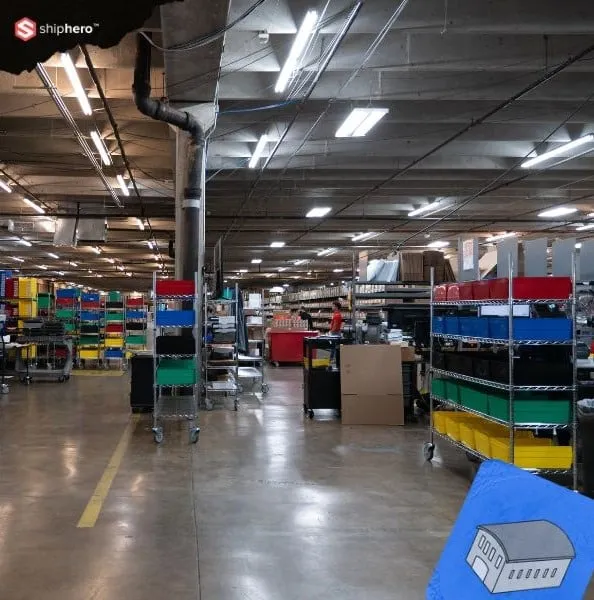
Discover the top 5 best third-party logistics (3PL) companies for your business needs, offering extensive networks, advanced technology, and superior customer service. Learn about the benefits of 3PL services, how to choose the right provider, and avoid common mistakes.
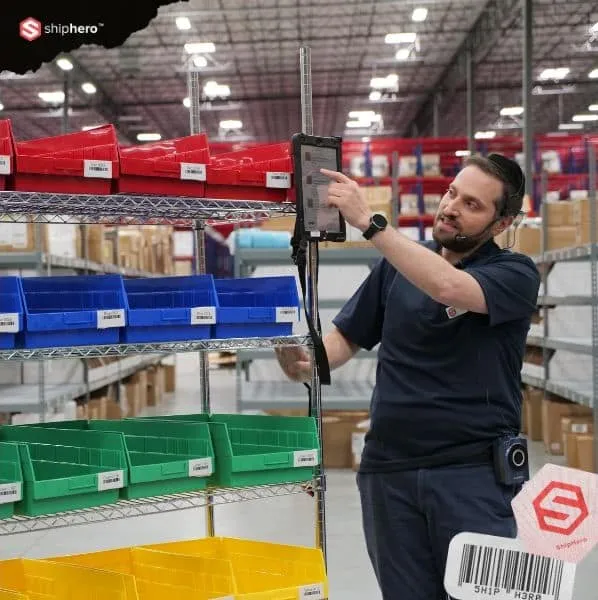
Discover the role, benefits, key features, requirements, and implementation of a 3PL Warehouse Management System (WMS) for optimizing warehouse operations. Learn about scalability, integration, real-time visibility, and customization options to choose the best solution for your business.

On September 1, 2026, Descartes Systems Group announced its acquisition of Extensiv for approximately $120 million. What was announced, what usually follows deals like this, and the questions Extensiv customers should put to their vendor before renewal.



.svg)



.webp)