
Let’s stay in touch with the ShipHero Blog.
.webp)
[embed]https://www.youtube.com/watch?v=qrfYPK_aLuc[/embed]Hello, Nicholas here!It isn’t easy to ship lots of orders correctly from a warehouse. When shipping orders, the items need to be picked first before putting them into a package and printing that shipping label. This is a complete guide on how to use the ShipHero Mobile app to pick many orders, using the single-item batch feature. The app figures out the pick list, optimizes the picking route and confirms items that are picked by scanning the product barcode and placed into a single tote ready for the packer to ship.ShipHero provides industry-leading warehouse management software for ecommerce, and outsourced shipping if you’re hands-off. We make sure over 4,000 brands and 3PLs the world over deliver ecommerce every day.
.webp)
We hope everyone had a wonderful Thanksgiving and are at least halfway through filtering your email inbox of the BFCM bombardment! Now, here’s a fun fact: around the same time the first Thanksgiving was held in the 17th century, the subscription business model was also first pioneered by publishers of books and periodicals, where travelling salespeople would go door-to-door to convince readers to sign up for continual editions! At the time, this was viewed as a wild derivation from the traditional business model that favored one-off transactions to instead emphasize recurring transactions and payments. Fast forward to today, as brands have progressively searched for ways to improve their holistic shopping experience and nurture relationships with their customers, it seems that they have figuratively taken a page out of these pioneer’s books and forged the rise of the new Subscription Economy.
The Subscription Economy is the term used to describe the trend of otherwise traditional businesses shifting to a subscription business model, where they offer recurring use or access of their product or service, whether monthly, yearly, seasonal or otherwise, rather than the traditional, one-time transaction. A myriad of prestigious companies have successfully employed this business model such as content streaming services like Netflix or Hulu, fitness centers and gyms, software companies like Dropbox, recurring subscription box companies like BirchBox, and more recently, traditional product companies that typically sell goods on a fixed cadence; for example, GNC for vitamins AKA “Subscribe and Save”.
With the recent introduction of Shopify’s Subscription APIs, online e-commerce brands using Shopify can now offer product subscriptions and completely transform how they engage with their customer base. This type of business model typically produces a long-term contract and relationship with a customer, allowing businesses to offer steep discounts for loyal customers that sign up for pre-determined and scheduled purchases.
Let’s briefly list the benefits of the subscription business model and then discuss how your business can make the shift to offer product or service subscriptions.
For reference, some examples of business models that have successfully employed the subscription model include:
Brands and businesses that have utilized the subscription business model have reported better customer relationships, better aggregate data, and better diversity in product offerings.
Most large companies report that brand new costumes only generate 15 to 25% percent of their revenues, which means that return customers generate the bulk of the revenue. Focusing on return customers and subscribers allows companies to lower the acquisition costs of targeting a new audience, while also cultivating brand loyalty.
As reported by Shopify, modeling and storing subscription data allows merchants to offer benefits like recurring revenue reports on active subscribers, new subscribers, and churned subscribers. This allows your company to better engage with your audience and create targeted content along the customer journey.
Many large brands report developing separate marketing strategies for subscribers and non-subscribers, as well as strategies to convert non-subscribers to subscribers including email campaigns and targeted discounts for subscription and account creation.
Utilizing the subscription model, a single product could be sold in multiple ways, such as selling the good as a one-time purchase as well as a subscription, including bundles or cross-selling. Bundling, cross-selling and subscriptions gives brands the creative freedom to understand how their customers would prefer to engage with their products and services.
Once you have decided to build a subscription model for your business, here are three simple steps to get you on your way!
When shifting to a subscription business model, subscription pricing and incentives are the most important and complex aspect to consider, because it directly drives the three basic growth strategies: acquire new subscribers, increase engagement and revenue per existing customers, and reduce customer turnover. A fixed subscription price can often be counterproductive because it foregoes the plethora of opportunity for flexible and creative pricing strategies.
Many brands choose to develop pricing strategies according to the factors that matter most to their business. For example, if your business aims to optimize quantity of engagement, customize the pricing to incentivize more usage (e.g., unlimited usage deals). Alternatively, if you want to increase your average order quantity, set subscription pricing that pushes subscribers to order in bulk at a set schedule with discounted prices. Finally, if customer loyalty is your desired result, consider developing reward programs or additional “points” for those that choose to subscribe at checkout.
As you can see, the subscription model offers endless opportunities for flexibility and creativity in customer engagement. There are also freemium options, early bird offers, free trials, bundles and more. Consider your business goals and start with a simple pricing tier, then adjust as you learn from your subscribers what they want!
Cultivating strong customer relationships are absolutely essential in the subscription business model. Of course getting new subscribers is important, but in the Subscription Economy the bulk of customer transactions are alterations to active subscriptions like subscription renewals, suspensions, add-ons, upgrades, terminations and more.
As such, brands must provide customers with an intuitive method to manage their accounts throughout the subscription lifecycle. For this reason, Shopify has released a suite of APIs with webhooks to link to your app, thereby giving your subscribers all they need to manage their active subscriptions.
Successful subscription businesses must rely on their automated processes and enterprise-grade systems to scale their subscription models to provide around-the-clock customer support and business continuity. Subscription-based companies, or those that want to start offering subscriptions, absolutely need seamless integrations with commerce systems, payment gateways, as well as fulfillment and logistics companies.
For that reason, warehouse management software companies like ShipHero integrate directly with Shopify to allow your brand to get as creative as possible with your product and service offerings, all while ensuring the reliable fulfillment capabilities that your customers have come to expect.
Not to mention, creating and shipping customized bundles, kits or bulk orders can get complicated and expensive through traditional fulfillment methods. That’s why ShipHero offers BulkShip: an intuitive interface to design preassembled bundles of products, such as a makeup kit you'd buy at CVS, or a more complex bundle that would get assembled at fulfillment. A good example of this could be a clothing subscription, where the customer selects the sizes, and then the kit is assembled, as Nicholas shows in the video link here.
By offering a subscription service, your brand will most likely be selling a variety of items in a variety of ways, so BulkShip allows brand owners to group orders quickly and pick a lot of the same product at once, making the fulfillment process quick and efficient.
Happy holidays from all of us at ShipHero! And if you like our blogs, be sure to Like & Subscribe ;)
.webp)

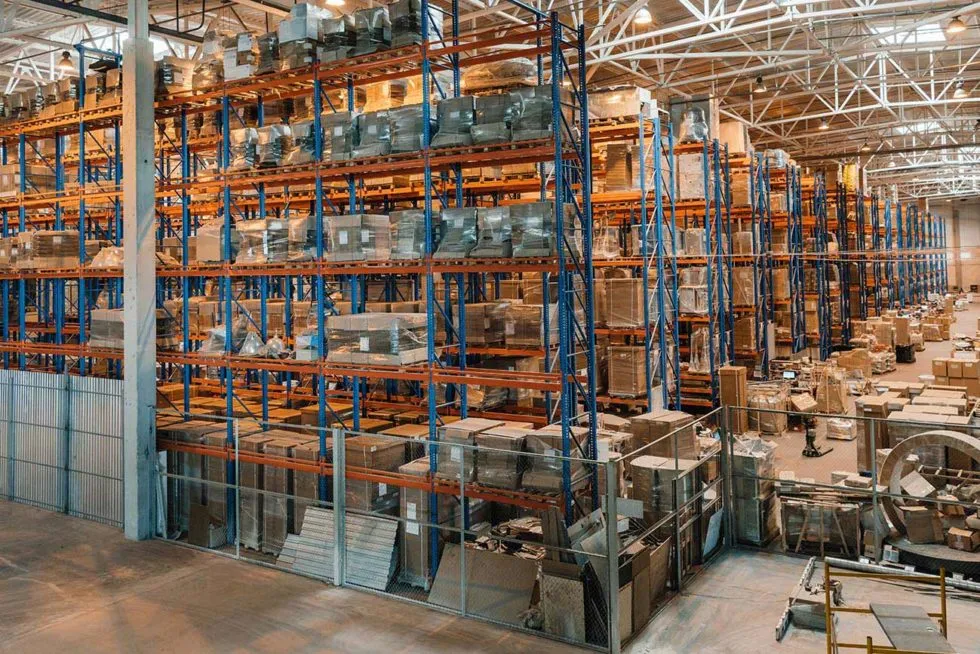
When it comes to ecommerce businesses, order fulfillment is the name of the game. The speed and accuracy with which you fill orders is one of the key factors in your long-term success. If you want to succeed you need to properly store and organize your inventory, so it can be picked, packed, and shipped with the greatest efficiency, speed, and accuracy.

That’s where warehouse optimization comes into play.
Warehouse optimization is not a process that should be implemented without careful thought. Before you can take steps to optimize your warehousing layout and process, you need to have a thorough understanding of what you’re currently working with and the limitations. Once you’re able to identify weaknesses and areas of unmet need, you can start getting into the details of optimizing your new warehouse layout.
In this article, we’ll walk you through the practical aspects of optimizing your warehouse layout starting with choosing the right warehouse space and brainstorming ideas for your ideal warehouse layout. We’ll also talk about how to implement your plan and provide tips for optimizing the different stages of the order fulfillment process.
The goal of any business is to grow – it’s really that simple. Depending what type of business you’re running, the steps you take to accomplish that growth may differ. What all successful ecommerce businesses have in common, however, is an efficient order fulfillment process and, in most cases, that means a warehouse with a layout optimized for maximum efficiency.
If your business has grown to the point where you are considering purchasing or leasing a warehouse space, congratulations! Before you make the switch, however, there are a few things to think about.
First and foremost, are you really ready to make the switch?
Before you start looking around for a bigger warehouse space, you need to be sure that you really need it and that you can afford to run it. It might make sense to move to a larger warehouse space, for example, if your sales have started to exceed your storage capacity for inventory. It might also make sense to move to a different warehouse if you’re expanding into a new market. Take the time to think about whether making a switch is really the smartest choice for your business and, if it is, the next step is to carefully choose a warehouse space.
The first thing you’re going to be looking for when evaluating warehouse spaces is, of course, size. You need a warehouse large enough to hold your current inventory and to leave room for growth without being so large that you sacrifice efficiency. After size, you need to think about the little details that will really make a difference in your day-to-day operations.
Aaron Rubin, CEO of Ship Hero, suggests that even the smallest details like the type of flooring matters. In an interview with EcommerceFuel.com Rubin said, “The next most important thing that people don’t think about is the floor. You want something with a smooth, not pitted concrete floor.” He goes on to say that cheap flooring can produce dust that covers your products and pitted floors can damage rolling carts.
Here are some of the other key elements to consider when choosing a warehouse space:
Now that you understand when the right time is to make the switch and what to consider when choosing, let’s discuss what to think about before you start planning your warehouse layout.

Once you’ve chosen your warehousing space, next comes the task of planning the layout. Before you start getting into the details of planning your warehouse layout, however, there are a few things you need to consider. First and foremost, why is it even important to optimize how your warehouse layout?
As mentioned above, the speed, efficiency, and accuracy with which you fill your orders will determine whether your business lives or dies. The order fulfillment process can be fairly complex, so you need to really think through the details for picking, packing, and shipping. If you want to maximize profitability, it all starts with proper warehouse planning. When planning your warehouse, you’ll need to set up certain areas to make sure that your picking and packing process goes smoothly.
Here are some of the areas you’ll need to work into your warehouse layout:
In addition to knowing which stations you’ll need and where to place them in your warehouse, you also need to plan around existing structures. For example, if your warehouse doesn’t have a loading dock, you’ll need to adjust your plan and create separate sections for inbound and outbound inventory. If there are walls or support structures in the middle of your warehouse, you’ll need to think carefully about the placement of your stations to prevent staff from having to navigate around them dozens of times a day which can reduce speed and efficiency.

Once you’ve thought through some of the details for optimizing your warehouse, next comes the stage in which you actually do the detailed planning. You’ve already thought about which stations you’ll need and whether there are any existing obstacles to work around – now is the time when you put those details together to actually map your layout for optimal efficiency.Here are some simple steps to complete as you start organizing your warehouse layout:
Throughout the planning process, it helps to have a clear objective in mind. Ask yourself what the main goal is that you want to accomplish by optimizing your warehouse layout. Do you want to maximize your use of space by optimizing your shelving and storage practices? Do you want to cut down on travel time by being mindful of how you arrange your inventory and packing stations? Do you want to increase your warehousing efficiency by cutting out unnecessary products and processes?
If you can identify the primary goal for optimizing your warehouse, it will help you make the right choice in all of the decisions you make along the way.
Creating a detailed warehousing plan is one thing, but implementing it is something else entirely. Optimizing your warehouse means optimizing the different stages in the order fulfillment process. Your primary goal at all times is to get the right products to the right customers in the shortest amount of time. Optimizing warehousing processes including receiving, picking, packing, and shipping is the way to do it.
Here are some simple tips for optimizing your warehouse operation along all the various stages of the order fulfillment process to ensure maximum efficiency:
When it comes to optimizing your warehouse flow, it all starts the moment your product enters the warehouse. When products are received, they are checked for damage, mis-picks, and quantity so your staff will need plenty of space to perform these tasks without impeding the in-flow of new inventory. To make receiving as quick and painless as possible, your warehouse should have a loading dock – this will save time as pallets can be loaded directly from the truck into the warehouse instead of being removed from the pallets and delivered in smaller loads. Having a loading dock versus not is the difference between a one-man job and a multi-person job. Don’t count on the delivery driver to help.
In this stage of the order fulfillment process, pickers receive orders and then pick the products for packing. Where you store your inventory, the type of shelving you use, the locations of your picking stations, are all factors that affect accuracy and efficiency. Here are some simple tips for optimizing your picking process:
Optimizing your picking process is not something you do once – you should be making adjustments as your business grows and your inventory changes.
This stage of the order fulfillment process needs to be completed as quickly and accurately as possible. The best place to start in optimizing this stage of the process is to place your packing location near the shipping location to minimize travel time. You should also limit the types of packing materials you use, so pickers are able to assemble each order efficiently.
It doesn’t matter how fast and efficient your picking and packing process is if your shipping provider can’t keep up. It pays to have connections with multiple providers, so you can offer your customers the best price on a variety of shipping speeds. Plus, if one of your providers falls through, you’ll always have a backup, so you don’t risk losing a sale. When it comes to optimizing your shipping process, have a designated shipping station so orders can be picked up, scanned in, and shipped out quickly all in one place.

If you’re moving from in-house order fulfillment to purchasing or leasing a warehouse space for the first time, you’re in a great position. Starting from scratch may take time, but it gives you the opportunity to plan everything from the very beginning to optimize your layout and maximize profits. If you find yourself making adjustments to your warehouse layout as your business grows, you may face some limitations, but there are still things you can do to make improvements.
Here are some ways you can improve an existing warehouse layout:
In the short term, making these and other adjustments to your warehouse layout could be costly both in terms of time and money. Depending how much you need to change, you may even need to shut down operations for a few days. To minimize the damage and maximize your benefits, do all of your thinking ahead of time until you have a detailed plan that you can put in place as quickly and as efficiently as possible. Though you may lose money on the time it takes to incorporate these changes; if you do it right, the payoff will be well worth it down the line.
ShipHero provides outsourced, quality order fulfillment services. Find out more here.