
.svg)

Let’s stay in touch with the ShipHero Blog.


.webp)
The ShipHero Model Context Protocol (MCP) connects supported AI clients directly to your live ShipHero data, so warehouse teams can ask questions and get specific answers from their own account. It is built for day-to-day operational checks, including inventory levels, open orders, shipment status, holds, returns, purchase orders, and exceptions. For ShipHero customers, it is available at no additional charge and runs on existing API credits.
Every order, shipment, inventory movement, hold, return, and purchase order creates data inside ShipHero. Your warehouse information is right there, but getting to it can be a slow, complex process.
Before the ShipHero MCP, answering a specific operational question often meant logging in, finding the right report, applying the right filters, exporting data, or asking the one person on the team who knew where to look.
Even when the answer was simple, like a quick inventory check, it could turn into a 20 to 45 minute task. A customer question could sit half a day while someone pulled the right numbers. That delay adds friction to the floor. It slows decisions. It keeps teams waiting on data they already own.
The ShipHero MCP gives supported AI clients secure, read-only access to live ShipHero data.
That means operators can ask questions in plain English and get answers from their actual account, not from a generic help article or static knowledge base. A chatbot can tell you where to find a number. The ShipHero MCP can return the number itself.
It works with MCP-enabled AI clients, including Claude, ChatGPT, Cursor, and Codex. Connect it once, authenticate access, and your team can start asking operational questions from the AI tool they already use.
The workflow is simple:
The MCP does not replace ShipHero. It makes the data inside ShipHero easier to reach when your team needs a fast answer.
The ShipHero MCP is designed for everyday operational questions, such as:
If the data lives in your ShipHero account, the MCP gives your team a faster way to ask for it.
Speed matters, but safety matters too.
The ShipHero MCP is read-only by design. It can retrieve information from your account, but it cannot create orders, modify records, delete data, or change warehouse settings.
That gives teams a practical way to use AI for operational visibility without risking accidental account changes. Operators can ask. Managers can check. 3PL teams can answer client questions faster.
The data becomes easier to use, while the records stay protected.
For founders, the MCP can turn a quick inventory check into a simple question.
For operations leads, it can surface shipment status, holds, exceptions, and low-stock SKUs without digging through reports.
For 3PL operators, it can help answer client questions faster, using live account data instead of manual follow-up.
The result is a faster way to reach the information already inside ShipHero.
The ShipHero MCP is available to all ShipHero customers at no additional charge. It runs on existing API credits, so specific questions help keep usage efficient.
To get started, visit developer.shiphero.com or contact your ShipHero account representative.
ShipHero MCP is a read-only connection between supported AI clients and your live ShipHero data. It lets users ask operational questions in plain English and receive answers from their actual ShipHero account.
A chatbot usually answers from fixed, generic information. ShipHero MCP connects to live account data, so it can return specific answers about your orders, shipments, inventory, holds, returns, and other ShipHero records.
ShipHero MCP works with AI clients that support the Model Context Protocol, including Claude, ChatGPT, Cursor, and Codex.
No. ShipHero MCP is read-only. It can query data, but it cannot create, update, or delete records in your ShipHero account.
No. The MCP is built for operators and can be connected from a supported AI client in minutes. Developers may use more advanced tools for deeper analysis, but most day-to-day users can work directly with the MCP.
Yes. ShipHero MCP is available to ShipHero customers at no additional charge and runs on existing API credits.
Transitioning to a new Warehouse Management System (WMS) is a high-stakes decision that often triggers concerns regarding downtime, data integrity, and workforce adaptation. As warehouses prepare for 2026 growth, understanding these common hurdles—and the technical solutions that resolve them—is essential for a successful migration. This guide addresses the five primary barriers to adoption and how a high-velocity infrastructure ensures a seamless transition.
Warehouse operators frequently hesitate to upgrade due to perceived risks that can halt operations. These challenges typically include:
To clear these hurdles, a structured implementation strategy is used to prioritize data density and entity clarity.
In the competitive eCommerce landscape, staying stagnant with manual workarounds is often more costly than the transition itself. Moving to a high-velocity WMS converts your warehouse from a cost center into a growth engine by providing Labor Efficiency and ROI through automated routing and reduced authentication friction.
Because the platform is built for the floor worker, features like Workforce Hero allow seasonal temps and new staff to be authenticated and productive in under an hour.
No. High-velocity infrastructure increases visibility by providing Total Real-Time Control. Managers can monitor exactly what is in the Hospital queue and track replenishment in real-time from a single dashboard.
Before going live, a ground-up audit is performed using cycle counting tools. The system's architecture ensures that every movement on the floor is synchronized with sales channels instantly, maintaining 99.9% accuracy.
Picture a packer at Peak Season. A box is in front of them, a product in each hand, and somewhere on a cluttered desk there's a mouse they need to find to confirm the order. They look down. They hunt. They click. Then they do it again. Thousands of times a day.
That moment of friction is small. But it is never just one moment. Multiply it across your entire pack line, across an entire shift, and you are looking at a measurable and largely invisible drag on your total throughput.
Tap-to-Pack is a purpose-built hardware controller designed by ShipHero to eliminate digital friction at the packing station. It connects via USB-C, requires no drivers or additional software, and syncs automatically with the ShipHero WMS packing app. This new system is now available at the ShipHero Store.
Instead of navigating a screen with a keyboard and mouse, packers execute every high-frequency command — such as selecting box sizes, printing labels, finalizing orders, flagging exceptions — with a single physical tap on one of eight programmable buttons.
Key specifications:
Most warehouses are running 2026 operations on 1990s peripheral standards. The keyboard and mouse were designed for spreadsheets and emails, not high-volume fulfillment. When used at a packing station, they create three compounding problems:
The problem is not your people. It is the tools you are asking them to use.
Tap-to-Pack introduces a "Rodent-Free" packing standard: a workflow where the packer's hands stay on the product, their eyes stay on the work, and the software fades into the background.
The device guides the packer through two feedback systems:
ShipHero customers running Tap-to-Pack are already seeing a 90% reduction in on-screen interactions and a significant increase in the number of orders packed per hour, without adding headcount or changing their warehouse layout.
One of the hardest challenges in fulfillment is absorbing volume quickly, especially during Peak Season, when temporary staff need to reach target productivity fast.
Because Tap-to-Pack's interface is physical and intuitive, there is almost nothing to teach. Pick up the product, follow the light, tap the button. New packers can reach target productivity in minutes rather than hours.
The system is also modular:
Whether you are a growing DTC brand or a high-volume 3PL, Tap-to-Pack is designed so your hardware never becomes a ceiling on what your team can do.
Tap-to-Pack is a programmable, industrial-grade hardware controller that connects to the ShipHero WMS and allows warehouse packers to execute packing station commands, such as printing labels, selecting boxes, and completing orders. All with a single physical button press, eliminating the need for a keyboard and mouse.
The device connects via USB-C and syncs automatically with the ShipHero WMS packing app. It is a true plug-and-play solution: no drivers, no background software, and no manual configuration required.
Yes. Buttons are configurable for a range of packing actions, including Print Label, Complete Order, Select Box Size, and the Hospital function, which flags a problematic order and keeps the line moving without stopping to resolve it on screen.
The system is fully modular. Connect up to two additional 8-button hubs to the Main Hub for a total of 24 programmable buttons, supporting even the most complex multi-step packing workflows.
Tap-to-Pack devices require ShipHero Packing App v1.0 or higher. The current release is v1.1.0.
Imagine running a warehouse where orders are picked quickly, inventory is accurate, and all operations run smoothly without any errors or delays. Thanks to Artificial Intelligence, this can now become a reality with ease.
AI is transforming warehouse management by enhancing efficiency, intelligence, and the ability to meet the rapid demands of today’s eCommerce-driven market.
ShipHero is pioneering this revolution with its AI-powered warehouse solutions, setting new industry benchmarks. This article explores ShipHero’s AI Picking feature, highlighting how it’s transforming warehouse management and enhancing operational efficiency.
The integration of AI technologies, including machine learning, robotics, and predictive analytics, is revolutionizing warehouse operations, driving significant improvements in efficiency, accuracy, and overall performance. These innovations are optimizing processes across various areas, from inventory management to order fulfillment. Below are the key benefits of AI in warehouse management.
A combination of AI technologies is shaping smarter warehouse systems to help revolutionize warehouse management.
ShipHero has taken AI integration to the next level with its AI Picking feature, designed to significantly improve warehouse efficiency. This feature automates the picking process, reducing the reliance on manual labor and enhancing productivity in ways that were once thought impossible.
Let’s dive deeper into how ShipHero’s AI Picking works and the advantages it offers.
AI Picking optimizes warehouse operations in two key ways:
The AI Picking feature delivers a wide range of benefits:
The transformative power of AI extends far beyond just picking. AI is also revolutionizing other aspects of warehouse management, driving improvements in operational efficiency, inventory management, and safety.
AI automates tasks, reducing errors and increasing speed. Automated sorting and real-time inventory tracking ensure accuracy, while real-time monitoring helps managers adapt and ensure timely deliveries.
AI plays a vital role in maintaining accurate inventory levels. By leveraging predictive analytics, AI can forecast demand and optimize stock levels, helping warehouses avoid both stockouts and overstock situations. This leads to better inventory management and fewer disruptions in supply chains.
AI-driven systems can monitor warehouse conditions to ensure safety and compliance with industry regulations. These systems can analyze warehouse data and predict potential hazards before they occur, proactively reducing risks and ensuring a safer working environment.
AI technologies are playing a transformative role in the supply chain and logistics sectors by improving efficiency, reducing costs, and enhancing decision-making.
These intelligent systems effortlessly manage supply chain processes by using data to optimize operations, predict trends, and automate routine tasks. This ultimately reshapes everything, from how goods are moved to stored and delivered.
The future of warehouse management looks promising with greater automation and efficiency, but future warehouse digitization brings challenges, such as high upfront costs and the need for skilled personnel.
AI-powered drones, autonomous robots, and IoT integration are smart warehouse technologies that are revolutionizing warehouse operations. Drones will deliver goods quickly, while robots automate sorting and transportation, thereby reducing the need for manual labor.
IoT and AI integration will enable real-time monitoring and optimization of operations. Smart technology in warehouses is leading to fully automated systems that are faster, scalable, and need minimal human input.
While AI offers immense benefits, businesses must also consider certain challenges. High initial investments in AI technology, data security concerns, and the need for skilled personnel are just a few of the hurdles that must be addressed.
However, with a strategic approach, companies can eliminate the challenges and embrace AI’s full potential to boost accuracy in picking and improve overall warehouse operations.
AI minimizes error by automating tasks like inventory tracking, order picking, and sorting, ensuring greater accuracy and efficiency.
Yes, AI-driven predictive analytics can predict demand, track inventory levels, and improve supply chain efficiency by forecasting needs with greater accuracy to help businesses stay ahead of trends and market fluctuations.
AI solutions are becoming more cost-effective thanks to cloud-based services and subscription pricing models. These options make AI technology more accessible to small businesses, allowing them to take advantage of its benefits without large upfront costs.





I am excited to announce that ShipHero has raised a funding of $50 million from investor, Riverwood Capital, which will propel our expansion. I am pleased to say that this enables us to serve you even faster, and better - empowering you to achieve growth with your ecommerce business.This is our first institutional capital and values ShipHero at $225 million. All the funds went into the company, no employees sold stock as part of this transaction and I will retain majority ownership and control of the company. Where we are today.ShipHero serves over $5 billion in annual ecommerce orders for thousands of merchants. Over 30,000 merchant employees use ShipHero to do their job every day. We take our responsibility to provide a high quality solution for ecommerce fulfillment seriously. We put our customers first and work to continuously improve ShipHero by offering new features and enhancements that elevate how people define a warehouse management system; quality and reliability are paramount.What does this investment announcement mean for you?I am thrilled about what this funding will enable for our customers. The resources give us the opportunity to make your work easier and faster while saving you money.
Thank you to our employees and customers.The fundraising is a result of the work we’ve done as a company. Thank you to everyone at ShipHero for doing your best work. I appreciate you. Thank you to our customers. We only exist because of the faith you put in us and we only grow because of the good things you tell other business owners about us.With gratitude,Aaron RubinFounder & CEO, ShipHero
.svg)
In the subtle words of The New York Times headline, “Chaos Strikes Global Shipping”. What does it mean by that exactly?
Swing by your local department store, grocery store or electronics store, and you're bound to notice empty shelves. Previously, people blamed COVID-19 panic buyers for emptying store shelves because they stripped stores clean of essentials like toilet paper and water bottles. However, the current empty shelf crisis comes from suppliers that can’t keep up with demand due to lower production, shipping delays and labor shortages.
As a result, consumers are seeing widespread shortages of goods, from shoes to cars and everything in between. In this post, we'll take a closer look at the empty shelf crisis, the industries that are impacted the most and what the future may hold for the shipping industry.
There are many empty Walmart shelves in 2022 because of the Omicron variant, winter storms and supply chain problems. Here's a quick dive into each of those reasons:
The Omicron variant of COVID-19 was discovered in November 2021 and caused a new American COVID wave in early 2022. Many Walmart stores temporarily closed for deep cleaning due to rising cases, which meant people had fewer stores to shop at – ultimately resulting in empty shelves across many locations.
Mid-January 2022 saw a winter storm plague much of the Southern, Mid-Atlantic and Northeastern United States. Heavy snowfall and blocked roads caused food shortages in affected areas, resulting in low stocks almost everywhere.
Unfortunately, some lingering supply chain issues in 2021 carried over to 2022. Many stores have resorted to importing extra grocery items on chartered cargo ships to ease these shortages.
The empty shelf crisis is largely caused by the COVID-19 pandemic destabilizing the entire shipping industry. There’s some irony to this shipping crisis because, while consumer demand and spending increased, suppliers couldn’t keep shelves stocked to capitalize on these opportunities.
While the pandemic majorly contributed to shipping delays, other immediate factors have also directly impacted the industry:
Recent shortages of shipping containers have driven up the cost of goods delivered from China. CNBC reports that this caused shipping costs to rise by 300%, and logistics companies are struggling to keep up with shifting demands.
For example, the Apple iPhone was generally shipped by air, but the container shortage forced suppliers to ship these products via sea containers. Multiplied across industries, the shift to ocean freight congested sea routes, and the issues in the Suez Canal certainly exacerbated things.
During the pandemic, the number of dockworkers and truck drivers decreased, causing massive delays in shipping and delivery. As a result, the gig economy stepped in, providing temporary and part-time gig workers for warehouse and fulfillment center work.
One of the more talked-about shortages is the microchip shortage, which limited the manufacture of new cars and many electronic devices. Other product and material shortages due to the pandemic, such as a recent deficit of aluminum, have impacted the domestic transport of canned food and soft drinks.
The Suez Canal blockage is a symptom of the industry's problems as a whole. According to Bloomberg, the lack of available workers caused many loading docks to become overwhelmed, resulting in massive shipping delays.
These shipping delays are wreaking havoc within the retail industry, affecting the ability of domestic shippers and 3PLs to fulfill their eCommerce orders. Many American companies are paying up to ten times the usual price of shipping products across the ocean.
The following industries have seen the most impact:
While this doesn't impact your local shelves per se, the automotive industry is being hit hard by a lack of available materials – most specifically the microchips used to control the fuel injection system, cruise control and other electronic systems aboard today's automobiles. As a result, car dealers have struggled to maintain inventory, and consumers are seeing the price of used cars increase.
The chip shortage also impacted electronics companies, including Sony, Apple and Microsoft. A recent fire at a Japanese plant has only exacerbated this chip shortage, meaning we may see a deficit in electronic merchandise for the foreseeable future.
Additionally, a lack of reliable containers has prevented popular electronics companies from reliably shipping products such as laptops, flat-screen TVs and even cell phones.
Since Americans couldn't go on vacation during the lockdown, they typically sank their money into fancy new entertainment systems. The industry did its best to keep up, but, ultimately, the laws of supply and demand collided at the port.
Both Steve Madden and Crocs have expressed concern about the supply chain bottlenecks happening because of the global shipping crisis. Nike usually paid $2,000 to ship a 40-foot container of sneakers. Now, shipping this same container costs $15,000 to $20,000.
The pandemic has affected aluminum manufacturers, preventing them from producing familiar brands of canned fruit and soft drinks. With transportation and logistics problems also slowing domestic shipping down, many grocery stores may not stock popular canned goods for the foreseeable future.
Naturally, the pandemic had us all reaching for the hand sanitizer. While the shipping issue doesn't directly impact these products, it could still be a while before the cleaning industry recovers from the demands it experienced during the height of the pandemic.
Many online are panicking about the Great Ammo Shortage of 2021. Plus, America hasn't been uniformly affected by the current shipping crisis, so what’s absent from the shelf of your local supermarket may vary on a weekly basis.
Meanwhile, Amazon sellers are experiencing more profits than ever before, as more people turn to online shopping during times of store shortages. If you’re selling online, don’t forget to stock up on shipping supplies so you can fulfill your orders.
Industry leaders are uncertain as to when the shipping crisis will be resolved. Some problems, like the microchip shortage, are simply a matter of production, but the availability of shipping containers and reliable shipping companies may take a bit longer to sort itself out. So, what can you expect while suppliers are scrambling to meet demand?
Unfortunately, consumers can expect to pay more for the products they've come to rely on. Automobiles, electronics and particular brands of shoes may be harder to come by, and when you do, you may find yourself paying a higher sticker price.
For retailers, this highlights the need for a reputable logistics company. Because shortages can play havoc with your inventory, you need 3PL software to assist in warehousing and inventory services to stay on top of product levels, re-ordering schedules and more.
The right company can ensure that you keep your word to your valued customers, providing order fulfillment during a time of increased economic instability.
Many retailers are giving careful consideration to how to handle the 2021 holiday rush. The time to build inventory is now, so you can be fully prepared when the season comes. The retail ecosystem is bound to look different, but if companies are diligent, they can ride out this storm and come out stronger than ever.
Supply chain resilience is your ability to continue normal business activities even when your order fulfillment and supply chain are disrupted unexpectedly. With a resilient supply chain, you can weather the storm of low stock and shipping delays without too many hitches.
Work with 3PL providers to improve your supply chain resilience. For instance, Amazon FBA users often work with ShipHero for FBM to keep products in stock and offer diverse order fulfillment options.
Check out our previous blog for best practices on building your resilient supply chain.
Suppliers have had issues both producing and transporting goods over the past year and events like the Suez Canal blockage have only added to the "chaos." Consumers should expect shortages of automobiles, canned produce, cleaning supplies, shoes and more. In these uncertain times, having a robust and resilient logistics and fulfillment network is vital to keep your consumers' trust.
That's why ShipHero provides retail brands and 3PLs with powerful capabilities to handle their shipping needs and build a resilient supply chain.
Due to global events like the ongoing pandemic and reduced production capacity, essential items like groceries and feminine hygiene products are predicted to be in short supply during 2022. You can also expect shortages in aluminum and advanced microchips, which means high electronic prices, as we’ve seen with the recent PlayStation 5 price hikes in certain markets.
Shipping delays and low industry productivity cause empty shelves. However, factors like inclement weather and the COVID pandemic can worsen these shortages.
-About ShipHero:
We make it simple for you to deliver your eCommerce. Our software helps you run your warehouse, and our outsourced shipping solutions eliminate the hassle of getting your products to your customers. With over 5,000 brands and 3PLs relying on us daily, we’re here to help with all your logistics needs.


The Future of Luxury E-commerce
In a joint press release on Wednesday, two mega corporations from distinctly seperate industries announced a first-of-its-kind strategic partnership that may define the future of luxury e-commerce.
French luxury goods giant, LVMH, has entered into a 5-year deal with Google Cloud to leverage artificial intelligence and machine learning technologies to sell products for their elite brands like Louis Vitton, Christian Dior, Tiffany, Marc Jacobs, and top-shelf alcohol brands like Moët and Hennessy.
Will this make it more affordable?
HAHAHAHA. HAHAHA. LOL. Good one, no. But the AI will be used to collect customer data and deliver personalized experiences to their high-end customers when they shop online. Not only that, the technology will also be used to update their IT infrastructure, improve their demand forecasting, and optimize their inventory management across stores.
Take a page out of their golden book.
This partnership brings new-age data analytics capabilities to a historically white-glove, high-touch market. The pandemic-fueled lockdowns have accelerated the need for luxury brands to execute their e-commerce shopping model and help their consumers adapt to changes; for instance, not being able to touch and see their high-priced items before they buy.
LVMH Managing Director Anonio Belloni said, “The last 18 months have been transformational,” and made clear the “need to leverage data.” The goal is to make a customer’s experience “more fluid.”
Without this sort of in-person interaction and added customer service, luxury brands must compensate with a smooth and considerate online retail experience. This includes making sure the logistics and supply chain consistently and reliably pulls through on delivery.
Freedom!
This week, both the Senate and the House passed a bill that would make Juneteenth (AKA Freadom Day) a national holiday, and now just needs one more signature from the President. This holiday commemorates the day in 1865 when slavery officially ended in the US, and would be the first federal holiday added to the US calendar since 1983. Many organizations like Mastercard, the NFL, and others have embraced the holiday by giving employees the day off.
A Peloton of Creepers
On Wednesdaya, McAfee warned that the Peloton Bike+, along with other public bikes in gyms and hotels, could be compromised with a USB to allow hackers access to forward-facing cameras. All hackers need is physical access to the bike to install fake Netflix or Spotify apps. Peloton then issued a software update and press release to prevent this type of unauthorized access, but if anyone wants to actually watch me sweat/cry/spin to Adele, I’ll allow it.
Generally Electric Motors
General Motors announced increases to its electric and autonomous spending to $35B by 2025, a 30% increase from targets announced last November.
Convenience Vs. Carbon
Expedited shipping and last mile delivery grew with the pandemic-led convenience craze. Now that consumers are returning their focus to sustainability, brands and 3PLs must balance convenience vs. carbon footprint. But how? The answer… read our latest blog to discover why carbon-neutral shipping is changing the e-commerce industry, and how your brand can offer it today.
How E-Commerce Brands Thrive In the Chinese Market
Despite China’s developing economy and huge population, their market is notoriously difficult for foreign businesses to survive, particularly those with a physical presence. Popular companies like Walmart, Home Depot, and Mattel have tried and failed to create a steady business in China, due to conflicts with the government, failing to understand their customers, or just bad luck. With 48% of foreign businesses failing in China within their first two years, these tips might save your business when entering the Far East markets.
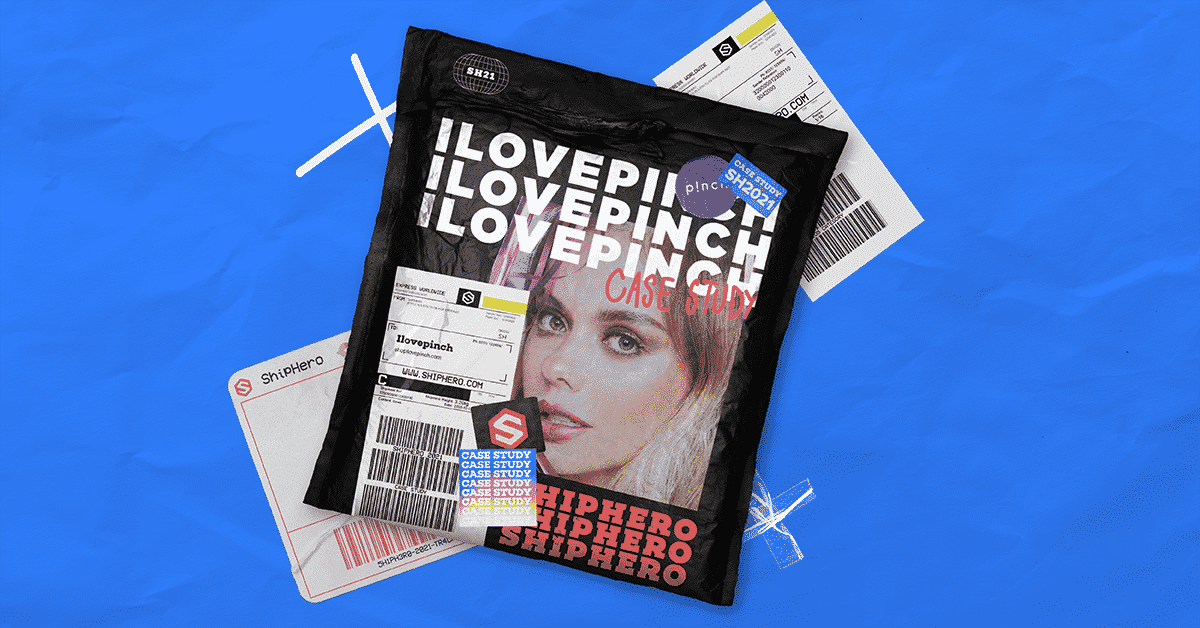
You may have a fully stocked makeup bag with brushes, powders, glues, creams, pencils, primers, and more, but still struggle to get the LATAM look. That’s why ShipHero customer, ILOVEPINCH.com, solves your cosmetic challenges with their 9-step, 10-minute makeup routine for the perfect look, every time.
When their breakthrough cosmetic line and application system first came to market, the ILOVEPINCH.com team struggled to keep up with initial demand. They could only pick, pack and ship 100 orders per day, and the costs from mis-picked products and supply chain errors were adding up. After a trip to a fully functioning fulfillment center, they knew it was time to give their fulfillment operations a complete makeover.
“With ShipHero, we now have a replicable ecommerce fulfillment model that allowed us to grow 3X (300%) during the pandemic, and base our whole business model on an e-commerce distribution channel. Nowadays, it is easy for us to expand our operations, faster and with less investment, to other cities and allow our ecommerce to grow exponentially.” -- Alfonso Atencio, CEO and Co-founder of ILOVEPINCH.com
With the pandemic-led boom in e-commerce, especially for beauty and cosmetics brands, we had to sit down with ILOVEPINCH.com CEO and Co-founder, Alfonso Atencio and learn more about his business and supply chain operations. Read more about our journey together in this case study.
Alfonso, please introduce us to yourself and your business.
My name is Alfonso Atencio, and I'm the CEO and cofounder of ILOVEPINCH.com. We are a DTC cosmetics e-commerce business aiming to disrupt the LATAM beauty industry by making affordable yet high-quality beauty products for Millennials.
All of this, while committed to being cruelty-free and having a sustainable supply chain. We currently have operations in Colombia, USA, Canada and Puerto Rico, and this year we are expanding our operations and fulfillment centers to Mexico and Perú.
What was your fulfillment model before switching to ShipHero?Before ShipHero, logistics was a major pain point for our operations. We handled each order informally, and our logistics department generated a considerable amount of back-office and duplicate activities.
On our best day, we could pick and pack at most 100 orders. We also had more than 5% mistakes on product allocation for orders, and this generated an even more cost due to returns.
What was the moment you knew it was time for a switch?
During the pandemic, online purchase behavior skyrocketed, and we were forced to open a new warehouse and fulfillment center in another city in our country, Bogotá.
Besides the growth, just before COVID started taking over in February 2020, we visited one of Amazon’s FBA centers. Instantly we knew we had to take our logistics to the next level.
It was important for us to control operations, mitigate logistics pain points, and reduce overhead costs for the new warehouse. We wanted to implement technology and achieve efficiency for our inventory management, picking, and packing processes. That was when ShipHero came into the picture, and we were able to take our ecommerce to the next level.
It was easy when you started with such a solid foundation. Why did you choose ShipHero? (besides the sweet puns)
Simply put, easy integration with our e-commerce platform, a user-friendly interface, and a complete order and warehouse management system.
What really set ShipHero apart, was the "coolness" and how seamless the tasks looked on the Endeavour App. We knew we had to pick a platform and WMS that understood and could adapt to the new e-commerce trends, integrations, and mechanics.
Also, another key factor was the ability to create specialized rules and interpretations, so that we could make tailored order fulfillment processes that took into account our own conditions and warehouse setup.
What advantages have you seen since switching to ShipHero?
Since integrating with ShipHero, we have boosted our efficiency. We surpassed our previous maximum of at most 100 orders daily, now being able to pick 250-300 orders a day just with one picker.
ShipHero allows us to virtually control a new warehouse with a small team in another location, which generates considerable savings by decentralizing our operations and reducing freight costs per order.
From an operations perspective, we also drastically reduced our product allocation mistakes, returns and logistics overcharges.
The operational advantages have been numerous, namely:
With ShipHero, we now have a replicable e-commerce fulfillment model, which allowed us to grow 300% during the pandemic and base our whole business model on an e-commerce distribution channel. Nowadays, it is easy for us to expand our operations to other cities faster and with less investment, allowing our e-commerce to scale exponentially.
Follow Alfonso and ILOVEPINCH.com on social media and check out their websites below.
Want to be featured in our case study? If you would like to share with us stories about your ecommerce experiences, whether it’s how you started your business, what opinions you have on the stories we share, or if you just feel like venting… we’re here for you.
Shoot us an email and you could be featured on an upcoming Case Study, our critically-acclaimed weekly news segment The Packet, or if you’re lucky, you could be invited to join one of our many Podcast episodes!
Despite China’s developing economy and huge population, their market is notoriously difficult for foreign businesses to survive, particularly those with a physical presence. Popular companies like Walmart, Home Depot, and Mattel have tried and failed to create a steady business in China, due to conflicts with the government, failing to understand their customers, or just bad luck.
This is actually pretty common across the board. In fact, 48% of foreign businesses fail in China within their first two years, according to the 2013 Australia-China Business Week conference.
China is a bureaucratic one-party state, which means that the lines separating private and public enterprises are very blurry. For this reason, the government tends to own and heavily support Chinese companies, which is one of the reasons why most foreign businesses fail so quickly. They have to jump through bureaucratic hoops, jockey against local competition for market share, and often compete directly with the Chinese government itself.
Despite the fact that e-commerce is estimated to be a $250 billion market for U.S firms in China, in an unexpected twist, smaller DTC companies have had more success in the Chinese market, compared to the likes of major retail brands such as Walmart.
To capture their fair share, international and local companies across industries are partnering up with Chinese e-commerce platforms like JD and TaoBao to create deals that allow the e-commerce platforms to sell their products directly to Chinese consumers. Chinese third-party logistics (3PL) companies are then contracted to help e-commerce companies keep up with their delivery or logistics.
The products are also usually held in Chinese warehouses, waiting for distribution or last-mile delivery from gig workers or delivery companies. In China, order fulfillment must be flexible to keep their customers satisfied. When a customer purchases the product, they only have to use one account due to the e-market's level of integration, and they typically receive it within just a few hours or days.
With 800 million residents in China using internet services, China is the most connected country in the world. As a result, these users are finding the adaptability and accessibility of DTC businesses to be particularly alluring. These businesses, unlike foreign ones, can distribute their products at a moment's notice using local resources and marketplaces, which makes them difficult competition for foreign businesses.
Millions of users visit e-commerce sites like Tmall, JD, and TaoBao to do their daily shopping. It’s become a staple of their everyday life. By leveraging these companies' existing logistics networks, foreign competitors are better equipped make use of China's regional infrastructure.
More and more companies prefer to let local Chinese companies sell their products, rather than investing in the treacherous retail markets. If the customer wants to avoid especially crowded commercial districts, online markets are their best alternative. Most e-commerce companies are using customer behavior data to enhance website layout, presentation, and product lines to make their business more appealing to their customers.
E-commerce is the future of shopping in China, and many other countries as well. In 2019, e-commerce sales in China were estimated to be 36.6% of total sales, which is a huge jump from 12.4% in 2014. By 2023, e-commerce is expected to make up over half of all sales, at 64%.
There still exists a rather large demand for foreign products in China, given their elevated status symbol and expectation of high-quality. However, finding these products can be difficult for Chinese consumers because of the consistent failure of foreign businesses to establish their presence in the Chinese market. Using e-commerce and online shopping, customers can get connected to products they want, which is a win-win for the DTC company, the e-commerce site, and the customer.
Read on to learn some important tips from the most successful DTC brands about what makes their businesses so successful.
Don’t be afraid to use third-party platforms as opposed to your own. Customers in China prefer shopping through platforms like WeChat and Tmall. There is a surprising amount of freedom for brands to make their own space on these platforms.
When asked by Adweek, Allbirds International president Erick Haskell said “It’s not like being on other third-party platforms where it’s hard to control brand presence and pricing. We can run our own retail, have our own ecommerce site [on Tmall].” His statement reflects how, despite popular western perception, Chinese platforms allow plenty of freedom for brands to experiment and express themselves.
Chinese consumers are 10 to 15 years younger than consumers for the same brands in the west. This has a pronounced effect on not just marketing, but how brands present and behave themselves in general. Christina Fontana, the Head of Fashion and Luxury for Tmall, said this about how Chinese customers differ from westerners, “Consumers are very young and demanding. They want to know about brands and their craft. It’s important to tell that story.”
In general, brands will go to great lengths to demonstrate the quality of their products by including extra information about their manufacturing process, materials, location, and work conditions.
Chinese consumers can be very vocal about their purchases. In fact, Fontana says that 80% of all customers on the Tmall platform leave feedback. Feedback has become so vital that the platform now includes a feature that lets brands directly take the feedback they receive and use it in their product development.
The takeaway from all of this is that customers want to be engaged directly with the brand from which they are buying. They want to know that they have a voice in how the product is shaped.
E-commerce brands that want to grow their global empire should find alternate routes in difficult markets like China. With their accessibility, adaptability, and huge inventory of in-demand products, it’s easy to see why more and more brands want to establish an online presence overseas. The question now becomes, will your brand be next to join the success of these DTC businesses?
How the internet got broked :-P~
If you were to be perusing the interwebs early Tuesday morning, you would have immediately noticed something awry. Websites like Amazon, Reddit, Spotify, eBay, Twitch, Pinterest, many news sites, and even government service pages were showing Error: 503 messages, which typically appear when a website is under maintenance. Many took to message boards to find the cause, and even though service was restored before people started hoarding toilet paper again, it wasn’t until 24 hours later that a root cause was identified -- and it turns out that it was a single, Fastly customer… imagine being that person.
No. What’s Fastly?
Fastly is a San Francisco-based cloud computing service provider that effectively makes loading times faster for websites (ah, Fastly, got it.) Yeah, it also optimizes images, videos and other large content to show up quickly when you load a web page. It does this by storing some website data from international websites in local data servers, instead of having to fetch them from faraway host servers every time. This “edge computing” method, which can be thought of as distributed fulfillment but for information, also performs various cybersecurity functions.
So who fudged up? I want names.
Okay psycho. Fastly sits between back-end web servers and the front-facing internet that we see, so any error in their system can cause entire websites to be unavailable.
On June 8, one UNNAMED customer (but pictured at the end) accidentally triggered a bug during a “valid configuration change”, which caused 85% of the company’s network to display errors. Within 60 seconds, the Fastly team identified and disabled the configuration, and within 49 minutes, 95% of the network was operating as normal. Quick work.
Could it happen again?
Fastly announced that it will be taking several steps to avoid outages in the future, including root-cause analyses and a complete evaluation of their bug-fix and deployment processes.
If you feel stressed by more and more companies falling victim to ransomware attacks and now the internet is going down, it may help to step away and take a breather this summer.
Want a free getaway?
Use code SHIPHERO123 at your front door to walk outside and enjoy the roses. Check out this botanical garden directory for roses near you, and tell them ShipHero sent you if you want to confuse the staff.
????Heard it Through Pipeline????
On Monday, the Justice Department announced that federal officials had recovered most of the Bitcoin ransom paid out for the recent Colonial Pipeline ransomware attack. While they did not specify how exactly they were able to track down the funds, feds said that they had recouped 63.7 of the 75 bitcoins ($2.3 million of the $4.3 million), exposing a common misconception that Bitcoin payments cannot be traced.
Ready Player 2
Meet Matt Furlong and George Sherman, Gamestop’s new CEO and CFO respectively, and they’re both Amazon-executive alumni. This move continues to signify the Reddit-obsessed gaming company’s efforts to completely level up their e-commerce business.
Amazon’s Privacy Fine
The Luxembourg data protection commission, the CNPD, has proposed a fine of more than $425 million against Amazon.com for violations against the General Data Protection Regulation (GDPR), which allows these privacy regulators to fine company’s up to 4% of a company’s annual revenue. This fine in particular would represent roughly 2% of Amazon’s reported net income ($21.3 billion), due to the violation being administrative in nature.
The Bezos Bros
TO THE MOON!???? (we’ll stop using this one day)

Relaaaax
Shipping CBD products is now legal across all 50 states, but beware! Companies that want their share of this growing $2.8 billion market must comply with the FDA’s shipping regulations. That’s why we grind up the industry’s best practice and FDA guidance and roll it into this latest how-to guide to grow your CBD business!
Take a ride on the information superhighway!
Did you know: KPIs allow you to organize your company’s data and set specific and actionable goals against them. From social media to shipping logistics, you can use this information to track marketing trends, warehouse inventory, and customer service interactions. Dive into our latest blog for 16 must-track KPIs in 2021!
Best Print-on-Demand Companies of 2021
Whether you hope to make a business out of print-on-demand, want to sell merchandise to spread brand awareness, or think it’d be cool to sell your self-designed “Pfizer Gang” shirts, you must pick the print-on-demand company that’s right for you. In this blog, we explain print-on-demand and identify the top five print-on-demand services as of 2021.
Fleets of cargo planes grow larger, drones soaring the skies replace bike carriers on the ground, and delivery trucks weave through city streets in hectic routes. Why? All for the sake of convenience and speed of delivery for your e-commerce goods.
Recent estimates indicate that e-commerce sales will rise to $5.4 trillion by 2022. At first glance, the carbon-intensive shipping and delivery associated with e-commerce, especially expedited shipping and last mile delivery methods, may seem to contrast our collective value of environmental sustainability. But that doesn’t have to be the case.
In this post, we’ll explore how shipping companies are pursuing new strategies for carbon-neutral shipping and explore what that may mean for the future.
In recent years, terms like “carbon-neutral” and “carbon footprint” have become part of our common vocabulary. But what do they mean? What is carbon-neutral shipping, and why do you need it?
“Carbon” is shorthand for the greenhouse gases associated with climate change; namely, carbon dioxide and methane. A company’s “carbon footprint” refers to the amount of greenhouse gases it puts into the atmosphere. Recent green initiatives have prompted many corporations to reduce their carbon footprint by mitigating their emissions.
Carbon-neutral shipping is an essential strategy for reducing a company’s carbon footprint. On one hand, it’s impossible to eliminate all carbon emissions from the shipping process. But companies can pursue carbon neutrality through various methods.
Carbon-neutral policies protect the environment, but they also offer some immediate, practical benefits to companies who pursue an eco-friendly business strategy. First, many customers prefer to rely on a company that embraces sustainable business practices. That is especially true of millennials and young adults. By some estimates, 87% of customers prefer a company with sustainable business practices.
Additionally, the same sustainable practices that reduce your carbon footprint also work to eliminate waste. So while carbon neutrality may seem like a heavy commitment, it can ultimately help you cut costs while maintaining an eco-conscious customer base.
Currently, it’s simply not feasible to completely eliminate all greenhouse gases that your shipping method produces. But that doesn’t mean it’s hopeless. There are several steps that you can take toward carbon neutrality.
Step 1: Determine Your Emissions
First, you need to determine the impact your company is already having on the environment. The Carbon Fund provides a helpful Business Emissions Calculator that you can use to determine your company’s carbon footprint. You can also break down your carbon footprint by category, which may help you pinpoint the impact your shipping process has on your company as a whole.
Step 2: Re-evaluate Your Packaging
Shipping supplies are essential for protecting e-commerce products during transport. But some of these products do little more than make waste. Did you know that between 1950 and 2015, less than 10% of the world’s plastic was recycled? The rest still clogs our landfills.
Consider investing in recyclable and biodegradable materials, such as the following:
These materials may be an initial financial investment for a shipping company or 3PL, but over time may prove to be more cost-effective than the products you’re currently using.
Step 3: Redesign Shipping Routes
Many logistics companies can help you analyze your shipping routes and find ways to optimize your efficiency. You may even be able to consolidate your shipping needs with third-party LTL carriers.
Step 4: Purchase Carbon Offsets
A carbon offset is any financial contribution to environmental projects and funds. These “carbon credits” can be used to offset the impact of your shipping process. However, this practice is often criticized as merely a financial escape hatch for a company that doesn’t want to make other changes toward sustainability.
Many e-commerce companies and 3PLs already advertise carbon-neutral shipping and delivery, but several notable shipping companies are committed to reducing emissions and pursuing sustainable shipping models.
When you use UPS, you have the option of purchasing carbon offsets to mitigate the environmental impact of the emissions used during the transport. The carbon-neutral option used by UPS is verified by SGS, an inspection, and a verification company, offering one of the most reliable systems for carbon offsets.
FedEx is making a host of changes in the hopes of becoming fully carbon-neutral by 2040. Currently, the company offers carbon-neutral shipping envelopes, and their plans involve electric vehicles, energy-efficient aircraft, and other innovations to achieve sustainability.
ShipHero understands the fast-paced needs of the shipping industry, which is why we provide two-day ground shipping supported by advanced logistics tools powered by AI. Rather than rely on centralized hubs, ShipHero brings products directly to customers’ doorsteps in a shipping method known as distributed fulfillment, which is a proven strategy for minimizing emissions and reducing costs.
Moving forward, we can expect several innovations in emerging technology to lead the way in the first half of the 21st century.
Electric vehicles have already become standard fixtures on America’s highways, and we can imagine that soon these cars will be utilized as an efficient means of shipping. That will drastically reduce, if not eliminate, the carbon released into the atmosphere from combustion engines.
Logistics software will soon govern every company’s delivery route, providing real-time optimization based on traffic patterns, weather conditions, and other considerations relevant to the delivery route.
While many innovations will focus on the trucks and routes themselves, there will be an increased emphasis on the carbon emissions and environmental impact of warehousing facilities. We might even expect federal regulations to stipulate the kinds of packaging and waste produced by shipping facilities, prompting managers and others to pursue sustainable practices at every level of the shipping process.
These innovations may seem like significant investments, but these carbon-neutral strategies are essential for maintaining our environment for future generations. By embracing change today, we leave our children a brighter tomorrow. Cue the American flag… and scene.

Relaaaaax! CBD users can get their vapes, tinctures, lotions and more sent right to their doorstep as shipping stress-reducing CBD products have become legal across all 50 states. But suppliers, take heed: supplement and pharmaceutical companies that want their share of this growing $2.8 billion market must comply with the U.S. Government’s CBD shipping regulations, specifically regarding how much THC can be present in their products.
Companies must closely adhere to CBD shipping guidelines if they want to operate long-term. So if you don't want your CBD business to go up in smoke, be sure to build a detailed strategy for your business, from payment processing to marketing and shipping.
In this article, we get into the nitty-gritty of shipping hemp-based products, including the current state of the market, how to package and ship CBD products and the types of products you can ship out.
Yes, it's legal to ship CBD oil and other CBD products, but only under certain circumstances. These are the main factors to keep in mind:
CBD oil is only legal to ship if it is derived from the hemp plant, a type of cannabis plant that contains less THC than marijuana.
Do keep in mind that, according to US federal law, CBD products can only contain up to 0.3% of THC. Any higher and you're sure to raise red flags.
Selling CBD or other products derived from the marijuana plant is still illegal at the federal level in the US.
If you're wondering what the differences between hemp, marijuana, CBD and THC are, don't fret. Here's a quick explainer:
Marijuana and hemp are essentially the same plants. However, hemp has higher levels of CBD and lower levels of THC, while marijuana has higher levels of THC and lower levels of CBD. THC or tetrahydrocannabinol is the psychoactive agent that is found in cannabis. In short, it's what gets people high. On the other hand, cannabidiol (CBD) is purported to provide relief for depression, anxiety, and PTSD, as well as help users fall asleep.
All hemp products containing cannabidiol oil must be bought from a licensed grower. Each state has its own rules and guidelines on issuing licenses to growers, so make sure you or your supplier are able to secure a license from your state before selling any CBD-based products.
Before you can ship out your CBD products, you must first bring them to a third-party tester to identify the product's chemical makeup. This will allow you to make any claims on the CBD and THC levels in your product.
As CBD sales hit $4.6 billion in 2020, experts forecasted the CBD market to reach $12.64 billion by 2026.
The major growth drivers, according to one report, are rising government approvals of CBD products, increasing cases of chronic pain issues, anxiety, and depression (which CBD is purported to help alleviate), and rising popularity in the cosmetics industry.
One major market trend is the rise in online sales of cannabidiol oil and CBD-containing products. This means more and more people are choosing to have their CBD products delivered straight to their doorsteps rather than going out to buy them at a dispensary.
eCommerce businesses can take advantage of this trend and start catering to those who are reliant on eCommerce to get their CBD products.
Legalized CBD products come in a few different varieties. The market is currently divided by how the supplement is derived from the plant, as well as the method of consumption. For the former, there are three choices available to consumers:
Hemp-derived CBD products are the most in-demand category for e-commerce retailers, driven by hemp’s various healthcare applications.
As medicinal CBD products become more widespread, more research will lead to more uses for it.As for the method of consumption, CBD can be inhaled like traditional marijuana products, or consumed orally through edibles and other consumables. It can also serve as the main ingredient in health and wellness products, such as skin lotion, shampoo, candles, or animal-care solutions.
When shipping CBD products locally, keep the following considerations in mind:
Although shipping CBD products is legal in the United States, keep in mind that not all countries classify CBD as a legal substance. Some countries may even press charges or damage products beyond usability. So, not only will you be risking legal action, but you'll likely see your products go to waste as well.
As such, make sure to check each country's laws and seek legal advice before conducting business globally. eCommerce retailers need to be mindful of this complex legal landscape and adhere to these laws if they don't want to lose their business.
If you're committed to selling CBD products, make sure to keep a legal team close by to review all your statements and advise you on what you can and can't do in certain localities. Remember that CBD and hemp-based products are not accepted in all US states despite not being federally-controlled substances.
If you will merely be distributing CBD products, you need to be diligent about making sure your suppliers follow state laws and shipping regulations. Most carriers are stringent about having both products and suppliers meet their rules on shipping CBD.
When figuring out how to package your CBD products, it is best to find packaging that is odor-resistant, leak-proof, tamper-resistant, and compliant with state regulations. Vacuum-sealed bags and air-tight plastic containers may be your best bet here. To protect your packages from damage during transport, wrap items in thick, cardboard packaging.
When it comes to shipping, bear in mind that each carrier has different guidelines on shipping hemp-derived CBD products via mail.
When shipping through the USPS, you need to meet the following requirements:
To ship via UPS, you must have the following information on hand:
UPS has clear guidelines stating that it will refuse shipment of any marijuana-containing products or CBD products from shops that also sell marijuana products.
DHL allows shipping of CBD products so long as sellers can provide records on state law compliance, laboratory test results indicating THC contents, government licenses, and compliance reports.
Another solution could be to use third-party logistics or fulfillment providers to handle every aspect of your CBD shipping, from storage to shipping. Fulfillment centers reduce the need to rent warehouses out to store your CBD products and take care of state and federal law compliance when shipping.
The CBD market is booming, and eCommerce retailers need to stay ahead of the curve. With so many competitors in this industry though there are still plenty of ways you can get your products noticed! Here are some online marketing tactics you can deploy to smoke your competition.
Note: Pay close attention to FDA guidelines on marketing CBD products.
Search Engine Optimization (SEO) is a vital aspect of marketing CBD products. While it can appear complex and technical at first, SEO can still be more affordable and effective than other, more traditional approaches to marketing.
Building informative and entertaining content is the best way to gain traction in the CBD market. Some examples of CBD content marketing could include:
Word-of-mouth and affiliate marketing are important tools for eCommerce retailers. Affiliate marketing allows you to build relationships with third-party websites that entice clicks back towards your site, while also paying only when someone buys something because of them!
Somewhat related to affiliate marketing, Influencer marketing is another fruitful channel for spreading product awareness. This is mainly carried out on social media platforms and video. With products such as CBD-related goods, the role of influencers is heavily regulated by the FDA to avoid the unintentional spread of misinformation. The influencer needs to be open and transparent about their commercial connection to the CBD manufacturer and retailer.
Finally, email marketing still attracts some of the highest conversion rates of all the digital marketing channels. The customers that have subscribed to your updates are quite possibly the easiest pickings for your company to convert sales, so reward your loyal fanbase with discounts, free shipping, and more to generate quick sales.
The billion-dollar market for CBD products in the US is still expected to grow 10x its current rate by 2025. For eCommerce retailers that deploy a tight marketing and shipping strategy, the growth opportunities are immense, as long as you follow the FDA guidelines and avoid potentially business-ruining shipping infractions.
Run a tighter ship for your CBD online shop – consider outsourcing your fulfillment to a third-party fulfillment center like ShipHero.
The days of slow shipping are over. ShipHero has a quicker delivery speed than other 3PLs and you'll be able to spend less money on it, too! Contact us to find out how the pros get their products into satisfied customers' hands quickly and without breaking your budget or sacrificing quality of service in the process!
Yes, you can mail hemp legally as long as its THC concentration does not go any higher than 0.3%.
You can ship CBD oil internationally to countries that recognize CBD as a legal substance. Not all countries do so, however, and may confiscate or destroy your products.
To know if your supplier's CBD is legal to ship, request a license to grow and produce CBD. You can also conduct third-party lab testing to see if their product's THC levels meet the maximum standard.
-
About ShipHero: We make it simple for you to deliver your eCommerce. Our software helps you run your warehouse, and our outsourced shipping solutions eliminate the hassle of getting your products to your customers. With over 5,000 brands and 3PLs relying on us daily, we’re here to help with all your logistics needs.
Let us know how we can help you today by scheduling a call HERE.
Epic much? As we reported back in February, dirty porch pirates have been running rampant during this e-commerce boom, with 43% of Americans reported having a package stolen, and two-thirds of those victims say they've had packages stolen more than once.
In Europe however, these theft figures are much lower because carriers do not leave parcels unattended on stoops, and mostly require parcel recipients to sign for packages at the door. GASP! And what’s more, if they miss their expected delivery, they must go all the way to the post office to retrieve their item. DOUBLE GASP!
So finding this delicate balance between security and convenience in Europe has been an ongoing battle, until one brave man who would be king threw his hat into the ring. Enter: Poland’s Parcel King.
In a true rags to riches story, Rafal Brzoska has gone from near-bankruptcy to billionaire by not delivering packages to individual houses; rather, his company InPost sets up automated e-commerce lockers the size of refrigerators for convenient pickup. As the legend goes, one of these parcel storage units can do the work of 24 trucks, and Brzoska says: “That’s why lockers are the future.” So it will be done.
Because these storage lockers cost only ~$20,000 to install, InPost wants to put one within “slipper distance” of every home and office in Europe. Storage costs $2 per parcel, and makes pickup quick and easy for shoppers as an easy alternative to home delivery.
Europe’s postal services, UPS, and Amazon all took a different approach in Europe, by recruiting convenience stores and bodegas to handle package pickups and returns. However, without specific infrastructure for parcel delivery, the pandemic-led ecommerce boom has crowded aisles and jammed up these corner stores. And don’t even get them started on product returns.
In January 2021, InPost went public on Amsterdam’s stock exchange, valuing the business at $9.7 billion and giving the Parcel King a net worth of $1.1 billion. His business model has so far proven that lockers are a cheaper, greener alternative to fleets of last-mile delivery trucks. Let’s see if that model has any grounds in busy U.S. metropolitan areas.
Etsy has announced a deal to acquire Depop, the seconhand fashion app that has been considered the “resale home for Gen Z consumers'' since its founding in 2011. Etsy and Depop agreed to a $1.62 billion deal primarily consisting of cash. Let’s just hope the shoe fits.
On Thursday, the FDA granted approval for migraine medication, Nurtec, the first drug to recieve such approval for both migraine treatment and prevention. Nurtec’s creator, the Connecticut-based pharmaceutical company Biohaven, hopes to “change the way the whole field treats migraines”, according to Biohaven CEO Vlad Coric.
On June 1st and only on June 1st, A$AP Rocky served as the CEO of the “buy now, pay later” software company, Klarna, after announcing a new partnership with the Swedish company. During his day-long tenure as Chief Executive Officer, Rocky worked on curating exclusive content for the Klarna app, focusing on upscaling vintage fashion.
1 in 100 packages shipped annually by UPS or FedEx are reported as lost or damaged... that’s almost 8 million packages on the receiving end of some extra tough love. Learn how you can Avoid Damaged Goods And Customer Returns in our latest blog.
Ecommerce shopping habits change with the seasons, so are you prepared to handle the new customer experience in Summer 2021? From mobile optimization to voice search, check out our latest blog to learn this summer's customer experience trends.
The era of ecommerce runs on data. On a daily basis, terabytes upon terabytes of information are collected and analyzed. Although these data stores hold the key to ecommerce success with valuable insight for those that can find them, there is no way that the average person can break down and understand all that sales and order fulfillment data in a reasonable amount of time. That is where Key Performance Indicators (KPIs) come into play.
KPIs allow you to organize your company’s data and set specific and actionable goals against them. From social media to shipping logistics, you can use this information to track marketing trends, warehouse inventory, and customer service interactions. By breaking your KPIs down into categories as seen in this article, you can get a better idea of which tools might help you take the next step with your business.
Here are some of the KPIs that are worth exploring for ecommerce businesses:
If you want to track your ecommerce sales effectively, these are some of the most helpful KPIs.
When it comes to managing your marketing output, you need to know how many consumers interact with your advertising material. These conversations give you a better idea of how well your marketing campaigns are performing and which ones may need a little bit of improvement.
The cost of goods sold lets you know how much your business spent manufacturing the products or services you’ve released into the world. These KPIs are ideal for revenue calculations and can help you to identify places in which to cut your production costs, should the need arise.
Repeat customers are the lifeblood of a business. Lifetime value KPIs help you track how many times particular customers return to your business and how much they’ve spent. These customers tend to cost you less to acquire, as they already have some awareness of your brand.
Instead of identifying how much repeat consumers have spent at your storefront, these KPIs will instead calculate the average amount that a generic consumer may spend on your ecommerce platform.
Wooing consumers isn’t cheap. If you want to get a better idea of how much you’re spending to win sales from your consumers, though, this KPI can run the calculations for you. That way, you can have a better idea about which advertising campaigns are pulling their weight and which ones you may need to adjust.
Want to understand the impact of your marketing? Take a look at these KPIs.
A site traffic KPI lets you know how many people come to your platform, along with what their demographics are, whether they made any purchases, and which platforms they found your ecommerce website on.
Your advertising ROI is one of the factors that influences your success. A return on ad spend KPI lets you know how your consumer revenue compares to the amount of money you spent on a particular advertising campaign. These ratios will give you a better idea about which campaigns are performing well and which may need to be fine tuned.
Bounce rate KPIs let you know how a consumer interacts with your website and what ratio of visitors are leaving your site right away. These KPIs are ideal for identifying bot behavior, too, if you think a competitor may be spamming your site.
If you run a consistent email marketing campaign, it’s important to know just how well your campaigns are doing. Newsletter subscription KPIs keep track of new and retained newsletter subscriptions, ensuring that you have a better idea of who you’re talking to when you send out your newsletter each week.
Social media is the lifeblood of the digital business. Engagement KPIs let you know who is interacting with your content online, either via comments, shares, or likes. These KPIs also let you keep track of which platforms you perform well on and how far your content has been shared by unaffiliated consumers.
Want to know how your customers feel about your products and service? Take a look at these customer service KPIs for ecommerce.
Like ROI, customer satisfaction score is an important variable that can impact your company’s success. Your KPIs generate this score based on the answers consumers provide on post-purchase or post-experience surveys.
While it isn’t always easy to get consumers to participate in these surveys, the ones that do can still provide you with valuable information about your company’s success. You can compare your existing KPI scores against the national average to determine what you could be doing more effectively.
Want to keep track of the amount of time it takes your HR team to respond to a customer’s concerns? First response time KPIs track just that. With this data at hand, you can improve your HR guidelines, specifying faster response times to cultivate improved relationships with your customers.
In a similar vein, there are KPIs available that let you know how long it takes your HR team to address and resolve a consumer’s product-related concerns.
A customer has made a purchase. Now what? Take a look at these KPIs for shipping and logistics.
No one likes to receive an order that isn’t theirs. This KPI lets you know how many packages you’ve shipped that have successfully arrived at the appropriate destination. If the order fulfillment values start to dip, then you’ll need to consider the influence it can have on customer opinions about your business.
Order accuracy data will also let you know whether your 3PL delivery line needs to be improved. If you’re sitting on an unusually low percentage of accurate orders, then there may be line errors at your warehouse that you need to address.
Whether you have invested in warehousing solutions or store your own inventory, you need to know where your inventory levels stand on a day-to-day basis. Rely on inventory level KPIs to replenish your stock when necessary and to calculate your business’s average supply-to-demand ratio.
If you’re manufacturing products several months in advance, you need to know how much of your inventory goes out per month on average. Order volume KPIs calculate your sales by day, month, or quarter, depending on your needs. You can use year-out estimates to track the ebb and flow of your sales and to pre-produce inventory for each month.
With the collection and tracking of the above KPIs, you’ll keep your finger on the pulse of the health and success of your ecommerce business. From marketing KPIs that gauge the success of your advertising efforts, to shipping and logistics KPIs that illustrate how efficiently you get products to customers, an effective KPI reporting strategy gives your company’s decision-makers all the information they need to make informed choices.



.svg)