
.svg)

Let’s stay in touch with the ShipHero Blog.


.webp)
The ShipHero Model Context Protocol (MCP) connects supported AI clients directly to your live ShipHero data, so warehouse teams can ask questions and get specific answers from their own account. It is built for day-to-day operational checks, including inventory levels, open orders, shipment status, holds, returns, purchase orders, and exceptions. For ShipHero customers, it is available at no additional charge and runs on existing API credits.
Every order, shipment, inventory movement, hold, return, and purchase order creates data inside ShipHero. Your warehouse information is right there, but getting to it can be a slow, complex process.
Before the ShipHero MCP, answering a specific operational question often meant logging in, finding the right report, applying the right filters, exporting data, or asking the one person on the team who knew where to look.
Even when the answer was simple, like a quick inventory check, it could turn into a 20 to 45 minute task. A customer question could sit half a day while someone pulled the right numbers. That delay adds friction to the floor. It slows decisions. It keeps teams waiting on data they already own.
The ShipHero MCP gives supported AI clients secure, read-only access to live ShipHero data.
That means operators can ask questions in plain English and get answers from their actual account, not from a generic help article or static knowledge base. A chatbot can tell you where to find a number. The ShipHero MCP can return the number itself.
It works with MCP-enabled AI clients, including Claude, ChatGPT, Cursor, and Codex. Connect it once, authenticate access, and your team can start asking operational questions from the AI tool they already use.
The workflow is simple:
The MCP does not replace ShipHero. It makes the data inside ShipHero easier to reach when your team needs a fast answer.
The ShipHero MCP is designed for everyday operational questions, such as:
If the data lives in your ShipHero account, the MCP gives your team a faster way to ask for it.
Speed matters, but safety matters too.
The ShipHero MCP is read-only by design. It can retrieve information from your account, but it cannot create orders, modify records, delete data, or change warehouse settings.
That gives teams a practical way to use AI for operational visibility without risking accidental account changes. Operators can ask. Managers can check. 3PL teams can answer client questions faster.
The data becomes easier to use, while the records stay protected.
For founders, the MCP can turn a quick inventory check into a simple question.
For operations leads, it can surface shipment status, holds, exceptions, and low-stock SKUs without digging through reports.
For 3PL operators, it can help answer client questions faster, using live account data instead of manual follow-up.
The result is a faster way to reach the information already inside ShipHero.
The ShipHero MCP is available to all ShipHero customers at no additional charge. It runs on existing API credits, so specific questions help keep usage efficient.
To get started, visit developer.shiphero.com or contact your ShipHero account representative.
ShipHero MCP is a read-only connection between supported AI clients and your live ShipHero data. It lets users ask operational questions in plain English and receive answers from their actual ShipHero account.
A chatbot usually answers from fixed, generic information. ShipHero MCP connects to live account data, so it can return specific answers about your orders, shipments, inventory, holds, returns, and other ShipHero records.
ShipHero MCP works with AI clients that support the Model Context Protocol, including Claude, ChatGPT, Cursor, and Codex.
No. ShipHero MCP is read-only. It can query data, but it cannot create, update, or delete records in your ShipHero account.
No. The MCP is built for operators and can be connected from a supported AI client in minutes. Developers may use more advanced tools for deeper analysis, but most day-to-day users can work directly with the MCP.
Yes. ShipHero MCP is available to ShipHero customers at no additional charge and runs on existing API credits.
Transitioning to a new Warehouse Management System (WMS) is a high-stakes decision that often triggers concerns regarding downtime, data integrity, and workforce adaptation. As warehouses prepare for 2026 growth, understanding these common hurdles—and the technical solutions that resolve them—is essential for a successful migration. This guide addresses the five primary barriers to adoption and how a high-velocity infrastructure ensures a seamless transition.
Warehouse operators frequently hesitate to upgrade due to perceived risks that can halt operations. These challenges typically include:
To clear these hurdles, a structured implementation strategy is used to prioritize data density and entity clarity.
In the competitive eCommerce landscape, staying stagnant with manual workarounds is often more costly than the transition itself. Moving to a high-velocity WMS converts your warehouse from a cost center into a growth engine by providing Labor Efficiency and ROI through automated routing and reduced authentication friction.
Because the platform is built for the floor worker, features like Workforce Hero allow seasonal temps and new staff to be authenticated and productive in under an hour.
No. High-velocity infrastructure increases visibility by providing Total Real-Time Control. Managers can monitor exactly what is in the Hospital queue and track replenishment in real-time from a single dashboard.
Before going live, a ground-up audit is performed using cycle counting tools. The system's architecture ensures that every movement on the floor is synchronized with sales channels instantly, maintaining 99.9% accuracy.
Picture a packer at Peak Season. A box is in front of them, a product in each hand, and somewhere on a cluttered desk there's a mouse they need to find to confirm the order. They look down. They hunt. They click. Then they do it again. Thousands of times a day.
That moment of friction is small. But it is never just one moment. Multiply it across your entire pack line, across an entire shift, and you are looking at a measurable and largely invisible drag on your total throughput.
Tap-to-Pack is a purpose-built hardware controller designed by ShipHero to eliminate digital friction at the packing station. It connects via USB-C, requires no drivers or additional software, and syncs automatically with the ShipHero WMS packing app. This new system is now available at the ShipHero Store.
Instead of navigating a screen with a keyboard and mouse, packers execute every high-frequency command — such as selecting box sizes, printing labels, finalizing orders, flagging exceptions — with a single physical tap on one of eight programmable buttons.
Key specifications:
Most warehouses are running 2026 operations on 1990s peripheral standards. The keyboard and mouse were designed for spreadsheets and emails, not high-volume fulfillment. When used at a packing station, they create three compounding problems:
The problem is not your people. It is the tools you are asking them to use.
Tap-to-Pack introduces a "Rodent-Free" packing standard: a workflow where the packer's hands stay on the product, their eyes stay on the work, and the software fades into the background.
The device guides the packer through two feedback systems:
ShipHero customers running Tap-to-Pack are already seeing a 90% reduction in on-screen interactions and a significant increase in the number of orders packed per hour, without adding headcount or changing their warehouse layout.
One of the hardest challenges in fulfillment is absorbing volume quickly, especially during Peak Season, when temporary staff need to reach target productivity fast.
Because Tap-to-Pack's interface is physical and intuitive, there is almost nothing to teach. Pick up the product, follow the light, tap the button. New packers can reach target productivity in minutes rather than hours.
The system is also modular:
Whether you are a growing DTC brand or a high-volume 3PL, Tap-to-Pack is designed so your hardware never becomes a ceiling on what your team can do.
Tap-to-Pack is a programmable, industrial-grade hardware controller that connects to the ShipHero WMS and allows warehouse packers to execute packing station commands, such as printing labels, selecting boxes, and completing orders. All with a single physical button press, eliminating the need for a keyboard and mouse.
The device connects via USB-C and syncs automatically with the ShipHero WMS packing app. It is a true plug-and-play solution: no drivers, no background software, and no manual configuration required.
Yes. Buttons are configurable for a range of packing actions, including Print Label, Complete Order, Select Box Size, and the Hospital function, which flags a problematic order and keeps the line moving without stopping to resolve it on screen.
The system is fully modular. Connect up to two additional 8-button hubs to the Main Hub for a total of 24 programmable buttons, supporting even the most complex multi-step packing workflows.
Tap-to-Pack devices require ShipHero Packing App v1.0 or higher. The current release is v1.1.0.
Imagine running a warehouse where orders are picked quickly, inventory is accurate, and all operations run smoothly without any errors or delays. Thanks to Artificial Intelligence, this can now become a reality with ease.
AI is transforming warehouse management by enhancing efficiency, intelligence, and the ability to meet the rapid demands of today’s eCommerce-driven market.
ShipHero is pioneering this revolution with its AI-powered warehouse solutions, setting new industry benchmarks. This article explores ShipHero’s AI Picking feature, highlighting how it’s transforming warehouse management and enhancing operational efficiency.
The integration of AI technologies, including machine learning, robotics, and predictive analytics, is revolutionizing warehouse operations, driving significant improvements in efficiency, accuracy, and overall performance. These innovations are optimizing processes across various areas, from inventory management to order fulfillment. Below are the key benefits of AI in warehouse management.
A combination of AI technologies is shaping smarter warehouse systems to help revolutionize warehouse management.
ShipHero has taken AI integration to the next level with its AI Picking feature, designed to significantly improve warehouse efficiency. This feature automates the picking process, reducing the reliance on manual labor and enhancing productivity in ways that were once thought impossible.
Let’s dive deeper into how ShipHero’s AI Picking works and the advantages it offers.
AI Picking optimizes warehouse operations in two key ways:
The AI Picking feature delivers a wide range of benefits:
The transformative power of AI extends far beyond just picking. AI is also revolutionizing other aspects of warehouse management, driving improvements in operational efficiency, inventory management, and safety.
AI automates tasks, reducing errors and increasing speed. Automated sorting and real-time inventory tracking ensure accuracy, while real-time monitoring helps managers adapt and ensure timely deliveries.
AI plays a vital role in maintaining accurate inventory levels. By leveraging predictive analytics, AI can forecast demand and optimize stock levels, helping warehouses avoid both stockouts and overstock situations. This leads to better inventory management and fewer disruptions in supply chains.
AI-driven systems can monitor warehouse conditions to ensure safety and compliance with industry regulations. These systems can analyze warehouse data and predict potential hazards before they occur, proactively reducing risks and ensuring a safer working environment.
AI technologies are playing a transformative role in the supply chain and logistics sectors by improving efficiency, reducing costs, and enhancing decision-making.
These intelligent systems effortlessly manage supply chain processes by using data to optimize operations, predict trends, and automate routine tasks. This ultimately reshapes everything, from how goods are moved to stored and delivered.
The future of warehouse management looks promising with greater automation and efficiency, but future warehouse digitization brings challenges, such as high upfront costs and the need for skilled personnel.
AI-powered drones, autonomous robots, and IoT integration are smart warehouse technologies that are revolutionizing warehouse operations. Drones will deliver goods quickly, while robots automate sorting and transportation, thereby reducing the need for manual labor.
IoT and AI integration will enable real-time monitoring and optimization of operations. Smart technology in warehouses is leading to fully automated systems that are faster, scalable, and need minimal human input.
While AI offers immense benefits, businesses must also consider certain challenges. High initial investments in AI technology, data security concerns, and the need for skilled personnel are just a few of the hurdles that must be addressed.
However, with a strategic approach, companies can eliminate the challenges and embrace AI’s full potential to boost accuracy in picking and improve overall warehouse operations.
AI minimizes error by automating tasks like inventory tracking, order picking, and sorting, ensuring greater accuracy and efficiency.
Yes, AI-driven predictive analytics can predict demand, track inventory levels, and improve supply chain efficiency by forecasting needs with greater accuracy to help businesses stay ahead of trends and market fluctuations.
AI solutions are becoming more cost-effective thanks to cloud-based services and subscription pricing models. These options make AI technology more accessible to small businesses, allowing them to take advantage of its benefits without large upfront costs.




After tireless digging and tugging, the mega-ton blockage that has been constipating global trade for the past six days has finally been cleared from the Suez Canal. The global trade community has given a collective sigh of relief as vessels are now starting to pass through.
Besides a lack of fiber (kidding), a seasonal dust storm, known as the khamsin, blowing winds at 40 knots caused the Ever Given to veer too far right and become embedded in the canal wall. While this is the story for now, navigation experts and engineers at the Suez Canal Authority are investigating the crash for technical and human error -- this could have massive insurance implications and lawsuits if a responsible party is identified.
A full moon emerged (you can’t make this up) and brought in a high tide that buoyed the engineers efforts to re-float the ship. If this attempt failed, the tide would have fallen and they would have been forced to spend weeks unloading thousands of containers to help the Ever Given sit higher in the water. In total, hundreds of thousands of cubic feet of sand were removed.
Shipping operators estimate $12 billion of cargo is stranded along the 120-mile canal or idling outside it. Other shipping operators have already re-routed ships around the Cape of Good Hope, adding weeks and fuel consumption to the voyage. Experts estimate that this will result in another jam once all the vessels reach their destination at the same time, and over 360 vessels are waiting to pass through the canal. As a result, shipping and oil prices have risen, and the already beleaguered logistics industry will likely face additional delays and costs.
This post has been sponsored by: MiraLAX. Blockage in your canal? MiraLAX.
Where the American Rescue Plan was Joe Biden’s attempt to bring us out of the pandemic, The American Jobs plan aims to help us the U.S. compete with China and other global powers… but mostly China.
The plan calls for massive investment $2T in infrastructure modernization like highways, railways, hospitals, and more. It also calls for heavy R&D funds for a sustainable and secure supply chain, with large quantities of funding directed towards emerging technologies and their role in the supply chain.
Boston Dynamics has introduced a new robot prototype, named Stretch, designed to pick-and-pack boxes around warehouses and distribution centers.
Stretch can move up to 800 cases per hour, picking up boxes around 50 pounds. It can adapt to any facility layout change, and it’s battery lasts around an entire shift (and can run continuously when plugged in.) The robot is battery-powered with a charge that should last through an entire shift. It can also run continuously when plugged in.
Nike has filed a trademark infringement lawsuit against a small marketing company, MSCHF Product Studio Inc, that released 666 pairs of Satan-themed sneakers in collaboration with Lil Nas X to promote the rapper’s new song (spoiler alert: in the video he gives a lap dance to the devil) at a price tag of $1,018 each. Nike has publicly announced the shoes were made without their approval or authorization.
This comes at a time where Nike is experiencing large-scale boycotts in China, for statements Nike (and H&M) made about China’s use of forced labor to supply XinJiang cotton.
The Fulfillment Innovation Wheel: 2-day Delivery
Staying competitive in today’s e-commerce landscape is easy! From the moment when the customer clicks ‘Order’, you just need to be prepared to cover potentially hundreds of miles to deliver your products to their doorstep… in under 48 hours. Tick-tock! Learn more with ShipHero’s Fulfillment Innovation Wheel series: 2-day Delivery.
.svg)
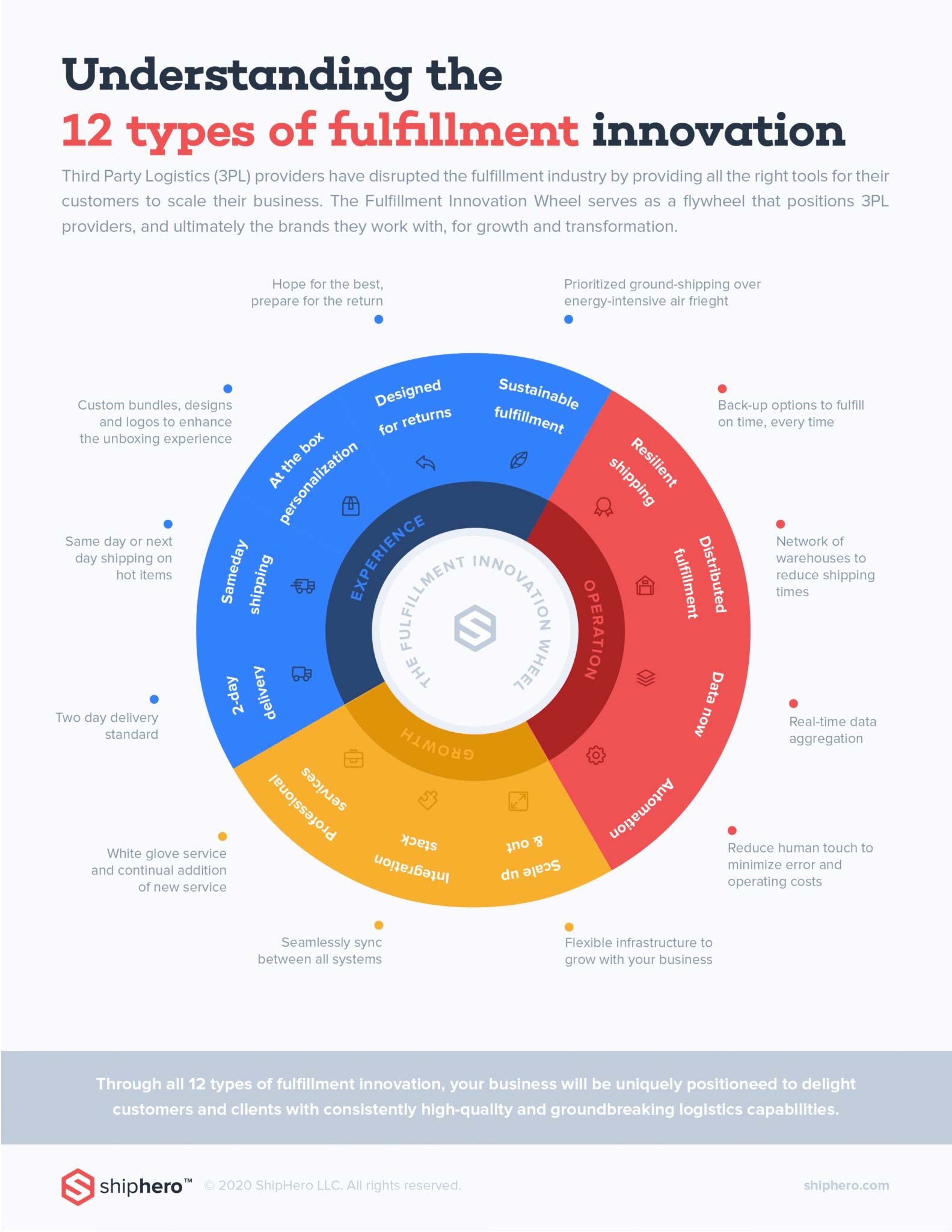
ShipHero recently launched The Fulfillment Innovation Wheel to help 3PLs understand what capabilities and service offerings they need to implement in order to be successful and to help online retailers and brands choose which 3PL is right for them by allowing them to ‘check the boxes’.
The Fulfillment Innovation Wheel listed a set of twelve (12) capabilities that fulfillment providers and logistics companies should implement to continually delight their customers and push themselves towards greater success and innovation.
The twelve capabilities are:
In this article, we will be diving into Capability #1: 2-Day delivery.
And be sure to stay tuned for future articles as we deep-dive into each capability.
Staying competitive in today’s eCommerce landscape is easy! From the moment when the customer clicks ‘Order’, you just need to be prepared to cover potentially hundreds of miles to deliver your products to their doorstep … in under 48 hours. Tick-tock!
2-day delivery has become the standard in eCommerce delivery, with major retailers like Amazon, Walmart, Target, and just about any business that wants to stay competitive all offering next-day delivery.
While the concept is simple, implementing 2-day delivery for your far-reaching customer base can be a huge undertaking. Not to mention, failing to meet this promise could result in irreparable damage to your credibility and brand.
Against the wishes of many environmentalists, the demand for speed and convenience has sky-rocketed during the COVID pandemic, with sustainability getting pushed to the wayside for more carbon-heavy transportations like air freight.
But will these carriers eventually have to pay the piper for their environmental footprint, and are there more sustainable options when it comes to 2-day shipping. Let’s dive in.
Let’s first demystify what happens from the moment you click “Buy Now” until the package hits your doorstep.
First, your order information hits an order management system, which automatically transfers data to the appropriate fulfillment center based on inventory levels, warehouse capacity, cost and distance.
Next, a warehouse worker will be assigned to the order, with explicit instructions on how to pick the items, pack them in a box, and label the package correctly. The standard for getting this process completed is typically 24 hours.
From there, the order management system calculates the best shipping method based on carrier availability and cost. Depending on distance from the fulfillment center, the carrier will be air or ground freight. These are typically cargo planes or eighteen-wheeler trucks.
Once delivered to the closest distribution center, the package enters ‘last mile delivery’. Based on your address and the orders of your fellow consumers, the optimal route is calculated for delivery speed performance, and in rare cases, based on energy efficiency.
Finally, once those cute little delivery trucks arrive at your address, the mail carrier huffs it up your front steps and drops your package at your door. All the while, customers have been given access to real-time updates and tracking information so they can be with their package virtually every step of the way.
Phew, k you do that now. The eCommerce giants are able to offset the massive costs of offering free 2-day delivery in order to jockey for market position and win more customers, and sustainability is always an afterthought.
Through proper planning and partnering with the right fulfillment provider, your business can offer affordable and sustainable 2-day shipping to compete with the eCommerce elites. How? So glad you asked!
Ultimately, keeping 2-day delivery costs low while minimizing your carbon footprint comes down to the successful implementation of the following capabilities:
Distributed Fulfillment means intelligently bringing inventory closer to your customers through a distributed network of fulfillment centers placed around the country and/or globe.
With the right Inventory Management System, you can forecast where your orders will come from and intelligently distribute your inventory accordingly.With this in place, you can minimize the distance in which your products must travel, which reduces delivery times and gives you more flexibility in shipping options.
Streamlined Pick-Pack-Ship means not a second goes to waste when orders are sent to your warehouse. Full-service Warehouse Management Systems guide warehouse workers through every step of the process to eliminate human error and expedite getting packages out the door.
Ground Priority is achieved when your inventory is properly located and your warehouse operations run smoothly, so that you can offer more affordable and sustainable ground shipping every time, as opposed to resorting to costly and carbon-intensive air freight.
Does your business have the right tools in place to offer affordable and sustainable 2-day delivery? If not, then you may find it hard to compete in the future, especially as more and more people elect for eco-friendly businesses with the same suite of capabilities.
If you’re already working with a fulfillment provider or 3PL, make sure that they’re well-equipped for the task. If not, maybe it’s time for a switch.
Our customers love that ShipHero can offer 2-day ground delivery anywhere in the contiguous United States at simple and transparent pricing. We attribute this success on the Fulfillment Innovation Wheel to Capability #1: 2-Day Delivery.
Stay tuned next as we cover Capability #2: Data Now! It’s my data, and I need it now! ShipHero.
Learn more about ShipHero's industry-leading warehouse management software.
Ode DeJoy
Postmaster General Louis DeJoy announced on Tuesday the 10-year plan for making necessary improvements to the USPS, including making delivery times… longer? Well, at least the post office hours will stay open… shorter?
Wut.
You heard that right. Beyond their adorable new vehicles which have already hit the streets, the 10-year plan, called Delivering for America, includes a much-needed $40 billion investments in modern package processing equipment and carrier devices, vital upgrades to post offices and uniforms, and implementation of new employee training which will help these overworked carriers from going postal. It will also dial down delivery time expectations for first-class mail from a 3-day standard... to a 5-day standard.
HOW COULD THEY?
I KNOW! Lawmakers are outraged and have already called to oust the PostMaster General for this plan. DeJoy notes in the plan that they have not been able to meet this 3-day standard for the past 8 years, but they expect to meet this 3-day approximately 70% of the time. They will be moving First-Class Mail from air transportation, which is costly, unreliable and carbon emission-heavy, to sustainable ground transportation.
Well, that’s good.
Maybe I <3 my mail carrier too much, but these changes sound necessary to improve the overall health and operations of the USPS in the long run. Not to mention, it shows a further shift towards sustainability in logistics operations, a common theme we’ve seen week after week.
Titanic 2
One of the largest container ships in the world has run aground in a sandstorm and blocked all traffic through the vital Suez Canal water passageway in Egypt, which CNN reports, accounts for approximately 30% of container ship traffic globally each day. Shipping delays and higher gas prices are predicted to affect consumers around the globe, as tug boats have been tugging their little hearts out around the clock to dislodge the titanic, 220,000-ton ship.
Running Train
Announced on Tuesday, the first rail network has connected the US, Mexico and Canada in a $29B deal between Canadian Pacific Railway and Kansas City Southern, in a move that seems to kick President Biden’s promise of the Second Great Railway Revolution. The Canadian Pacific Railway links east and west coasts between the US and Canada, while Kansas CIty Southern connects US, Mexico and Panama, with the major networks connecting on a single point at a joint facility in Kansas City, Missouri.
Building a Customer Loyalty Program… with Science!
“Be loyal to those who are loyal to you. And respect everyone, even your enemies and competition.” Who knew that customer loyalty programs could be summarized so perfectly by a man who can’t be seen… yes, it’s a John Cena quote. Check out our latest blog to learn how your business can build its own customer loyalty program… with science!
The Fulfillment Innovation Wheel: Resilient Shipping
Is your business sufficiently protected from supply chain risks like extreme weather events, supplier disruptions, and well... pandemics? If not, find out how with ShipHero’s Fulfillment Innovation Wheel series - Resilient Fulfillment.
Welcome to your eCommerce Science lesson on Customer Loyalty. Simply put, customer loyalty is that conditioned behavior of “human want thing, company has thing”.
You get the picture. In fact, a 2021 Customer Experience Trends Report just proved that we’re creatures of habit, with 3 in 4 shoppers making purchasing decisions based on their past experience. So how do you get your company into that equation? With a generous and truly engaging customer loyalty program, of course!
What is a Customer Loyalty Program? It’s a customer-facing program that aims to increase customer retention and motivate repeat purchases… which is a high-falootin’, fancy business school way of saying:Going the extra mile to really engage with your customers will keep them coming back for more than just your products (like when the waitress calls you “sweetie”.)
In this article, we’ll describe the benefits and best practices for each type of customer loyalty program so that you can start building a customer loyalty program of your very own.
Customer loyalty programs have been proven to inspire customer retention, drive customer referrals, and save your sales team some budget.
Inspire customer retention. While it’s always nice to see a familiar face, members of customer loyalty programs typically spend nearly 20% more than typical customers. Not to mention, existing customers are 50% more likely to buy a new product of yours.
Drive customer referrals. With loyalty programs that create community or competition, beyond traditional word-of-mouth, people will organically share your loyalty program efforts, contribute positive reviews, and even generate content of their own by way of UGC or ambassadorships.
Save costs: Companies must spend 500% more to convert a new customer compared to an existing one. For example, if you spend $100 flagging down an Average Jane from the street, giving her the business, and closing the sale; you’ll only need to spend $20 to close the sale with them next time.
There are six distinct types of customer loyalty programs used by major brands today.
Let’s dive into a description and best practices for each type. Keep in mind, every type can be used in combination with the other to create hybrid loyalty programs.
The points program allows customers to accrue points through various actions, and spend those points on rewards. It is a brilliant way to gamify the shopping experience, and is used by retailers with high volumes and inexpensive items, such as grocery stores, fashion outlets, or fast food chains (hi McDonald’s Monopoly).
You can start by creating a simple points systems, which has two components:
Offer relevant and personal rewards. Beyond product discounts, rewards should be something that truly resonates with your target audience, such as free tickets to a relevant event or cool swag.Consider using points program software like Smile.io, which allows you to build customized point systems for your online and physical stores.
The paid membership program invites customers to pay a “joining fee” for members-only club access and VIP benefits, where the perceived benefits of joining the program far outweigh the cost.
You can start by offering exclusive benefits, discounts and product releases to your paid members, and unless you’re already a recognizable brand with strong social proof, this program is best-suited when targeting existing customers.
Be sure to incorporate your business values into the program to build stronger relationships. If your business revolves around certain cause, like Toms for example, you could engage your membership base to feel closer to the contribution
Once your paid membership program is operational, ask your members for feedback and reviews, and widely advertise those perks to convert your non-members into paid members.
The tier rewards program offers another way to gamify engagement, and incentivizes customers to ascend tiers that reward with increasingly desirable perks e.g., Silver, Gold, Platinum, Uranium Status on airlines. This provides a satisfying experience, and even a little bragging rights, for your regular customers.
To get started, decide how many tiers you’ll offer based on your available perks. Keep the levels to a minimum or else customers will tire out climbing the seemingly never-ending tiers. Not to mention, customers at your top tier will have the greatest levels of customer retention, so don’t make it too challenging to get there. Aim for a solid distribution of customers at each tier.
Next, you’ll want to decide all the different conditions that a customer can climb tiers, whether it’s dollar amount spent, frequency/volume of orders, or some other form of engagement.
From there, map out available perks based on their value and assign them to each tier. You want to keep it simple and easily understood. Be sure to offer truly valuable and exclusive benefits for the higher tiers.
The Progress and Competition loyalty programs publicly issue engagement-related goals or competition, with rewards granted to the top performers. Common examples include Pelaton’s leaderboard, Trivia HQ, Nike Run Club’s public progress tracker, and more
When you publicly set a goal or issue a competition, there will be people that strive to win… it’s just human nature. What’s more, customers who believe they are close to achieving a goal or performing well in a competition become more committed to their efforts -- this is known as the endowed progress effect.
To get started, create fun and attainable goals or a challenging game that peaks people’s interest and beckons to their competitive instincts. The goals or game need not focus entirely on buying a product or even engaging in your company at all; rather, the best way to capitalize on this loyalty program is to position your product as the competitive edge you need to reach these goals and win the game.
Be sure to visually encourage progress and comparison with progress bars, leaderboard, and various nudge tactics.
The Community program strives to create a platform where your members can interact with other like-minded individuals to connect and share content, get access to exclusive benefits and events, and stay-in-the-know about your company (causing excruciating FOMO for those not-in-the-know).
To get started, find your target audience by leveraging existing social media platforms to develop a sense of community. Play around with concepts that create bonds not only between your company and customers, but among customers themselves.
Many companies have branded their base by calling them a cute pet-name (hi Barbs), or rallying behind a common cause. In fact, about 66% of customers are more willing to trust brands that take stances on social and political issues that resonate with them.
As long as you encourage discussion that is relevant to your brand, there is no wrong way to create a community-focused loyalty program.
The Subscription loyalty program, commonly known as “Subscribe & Save”, allows customers to subscribe to weekly, monthly or seasonal purchases and receive discounts upwards of 15% off. Notable examples are GNC, Trunk Club, Butcher Box, and any brand that ships offers recurring purchases or subscription boxes. (We cover the subscription model extensively in our blog.)
To get started, develop a pricing and bundle strategy that incentivizes customers to sign-up for repeat purchases. Examples include freemium options, early bird offers, free trials, bundles and more. From there, provide an easy way for customers to manage and even customize their subscriptions.
Subscription models have shown to yield better customer relationships, improved aggregate data, and more diversity in product offerings. Not to mention, it gives brands the creative freedom to understand how their customers would prefer to engage with their products and services.
By using one or all of the customer loyalty programs above, your company will offer exciting and fun ways to engage with your company, and incentivize repeat customers in the meantime.
While just about any eCommerce company can promise a lucrative subscription model or rewards program, the reality is that these are extremely complicated strategies to pull off without the right inventory management and order fulfillment processes to back them up.
In fact, most 3PLs and fulfillment providers simply don’t offer the customization options that eCommerce companies need to pull off loyalty programs.
That’s why you need to make sure you are giving your loyalty to the right fulfillment provider.That’s why more and more eCommerce companies rely on ShipHero’s advanced bundling and customization capabilities to power their loyalty programs with reliable 2-day shipping across the contiguous U.S.
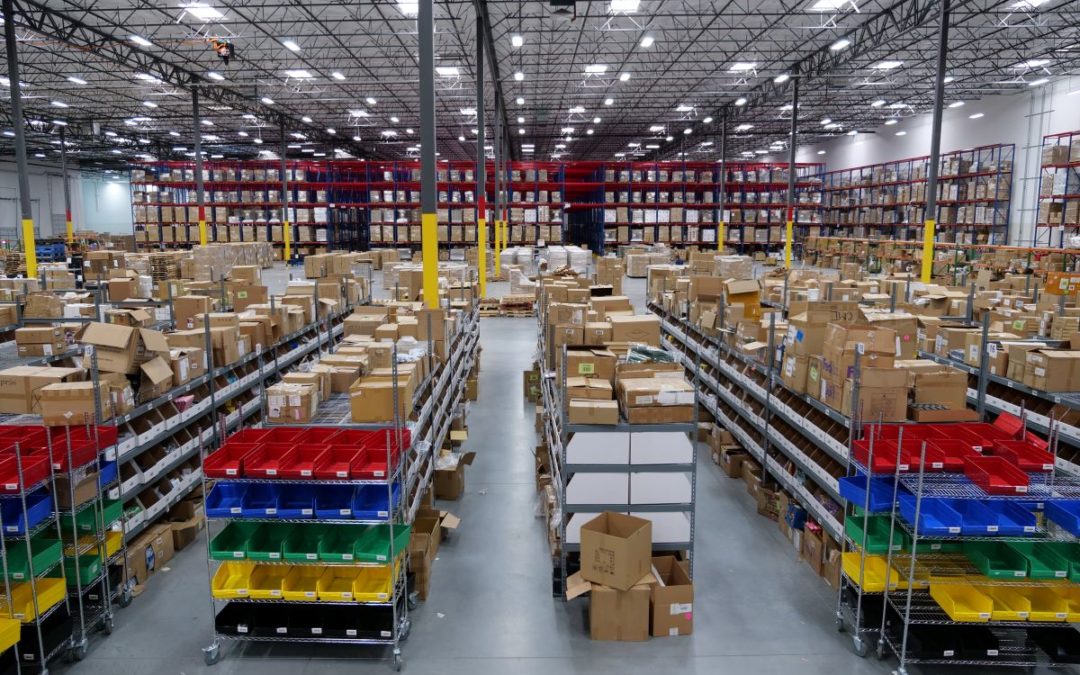
Third-party logistics (3PL) is one of the ways that a company can outsource order fulfillment. An eCommerce order fulfillment process starts when a customer submits the order and finishes when the product reaches their door.
What seems like a simple process can become quite complex depending on the storage location of your company's inventory, the customer's location, the size of the order and the timetable for delivery. It becomes even more complicated when you factor in the potential for returns.
Suppose you can't handle your eCommerce fulfillment in-house. In that case, it's probably time to outsource and let a third-party logistics company take over.
Keep reading to learn everything you need to know about 3PLs.
3PL companies are companies that offer various eCommerce logistics processes to online businesses. Some services they offer include warehousing, inventory management and order fulfillment.
3PL involves the business, the logistics provider and the shipping carrier. In simple terms, a 3PL provider offers logistics services to manage certain aspects of a company's shipping operations. 3PLs are renowned for their logistics industry expertise and can help companies better fulfill orders to keep their customers happy.
Some people think 3PLs and freight brokers are essentially the same. However, 3PL companies are more active than freight brokers because they take over your fulfillment operations. Meanwhile, freight brokers only connect you to shipping carriers without touching your products.
A 3PL becomes integrated into the company's inventory storage and transportation procedures. Rather than storing, packaging and shipping orders, companies hire a 3PL to manage the entire process. The 3PL owns or leases its storage and transportation assets to fulfill the client's orders remotely, ensuring you can focus on growing your business.
Third-party supply chain models first appeared in the 1970s when intermodal marketers took packages from businesses and brought them to rail stations for delivery. People developed 3PL software to help companies manage inventory and deliveries as the field grows. Nowadays, all kinds of businesses, from Fortune 500 to small businesses, use third-party logistics.
Here are the benefits of working with a 3PL company:
Third-party logistics companies often have connections in the sector, meaning they have better access to vendors and can negotiate higher discounts for you. By partnering with them, you can use their contacts and influence to reduce shipping supply and warehousing expenses, ultimately saving you money.
Many third-party logistics service experts have decades of combined experience in the industry. When you hire a 3PL company, you get access to this expertise to get insights on transport documentation, shipping regulations and other logistics issues. They can also answer your questions about how to increase operational efficiencies.
Running an in-house logistics division takes a lot of time and money. By hiring a 3PL company, you can instead focus on core business processes like developing marketing materials and improving sales channels. Better yet, you can do this without dedicating any internal staff or resources to run an in-house logistics division.
3PLs provide custom-made services based on your company's needs and performance. If your business grows and product orders increase, you can sign them for a more significant contract with more benefits. Conversely, considering downscaling your business, you can opt out of some of their services.
Working with a 3PL company helps you save time. You save time not only by streamlining various supply chain operations but also by being proactively aware of any potential issues in the supply chain. Addressing these issues early on means you don’t need to spend a lot of time fixing them after the damage is done.
Many 3PL companies offer all-in supply chain and logistics management, which means they handle your entire supply chain. This means your entire supply chain and logistics operation is handled by one party, reducing the chance of miscommunication and mistakes. It’s also more efficient since all the information flows within one organization instead of many.
Customers want to get their purchased items on time. Working with a 3PL company helps you get products to customers on time, increasing their satisfaction. Many 3PL companies also offer returns management, restoring customer satisfaction when they receive defective items.
As the name implies, 3PL involves three parties that help bring products to the market. Here are the three parties involved in the 3PL model:
The business is your company – you're responsible for producing goods and running the eCommerce business. Once people buy your products, you send the orders to your logistics company.
The logistics company is the intermediary between your company and the shipping providers. Third-party logistics companies offer many services, including warehousing, packaging and inventory management.
The shipper carries your products to physical stores or the buyers' doors. Major shippers include USPS, UPS and DHL.
A 3PL can scale and customize its services according to the client's specific needs. The client still retains some oversight when managing shipping operations. Before signing a contract, you can outline what services you want the 3PL to provide and what services you will maintain in-house. As your business grows, your 3PL provider can take over a significant role in expanding your supply chain and procurement operations.
Here's an overview of the services a 3PL typically provides:
3PL companies provide warehouse spaces to handle order fulfillment for multiple companies in one place. This improves efficiency and reduces costs because they don't have to switch between numerous warehouse locations to finish orders. Moreover, you don't have to lease warehouse space, buy forklifts, or rent trucks to handle your merchandise.
Managing inventory involves more than simply storing your company's products. Integrative technology also syncs your inventory with your online store in real-time, so you can track inventory and predict demand to avoid sell-outs. Your 3PL also helps organize items with multiple parts into proper categories, ensuring nothing is misplaced.
Most 3PL providers have fulfillment centers across the country to store your products. 3PL companies distribute your inventory across the country to ensure fast shipment times.
A 3PL automatically routes orders to fulfillment centers based on the customer's location. 3PLs use extensive automation to save hundreds and thousands of dollars on inventory distribution, raising their clients' profits.
Alongside storage, 3PL companies assign staff to pick products for each order and package them for delivery.
Once the products are picked and packaged, the 3PL forwards them to a shipping carrier for delivery. Different 3PLs work with other carriers, and a good 3PL will choose the one that offers the best price and delivery speed. Some 3PLs even work with local carriers for less than truckload (LTL) shipping for local orders.
By partnering with a 3PL, your company can offer expedited shipping options to your customers since fulfillment centers send out orders daily. 3PLs often negotiate discounts with carriers like FedEx, DHL, USPS and others to offer faster delivery speeds at a manageable cost.
In addition to handling the shipping process, a 3PL will also manage the tracing and tracking process. Customers will receive shipping information to track their orders throughout the fulfillment process.
Not only do 3PLs offer shipment services, but they can also provide reverse logistics to handle returns. A 3PL can provide customers with return labels to drop the item off with a carrier for return to the fulfillment center.
Again, when you sign a contract with a 3PL company, you can customize its services according to your business's needs. An experienced 3PL provider will be able to handle the logistics of the entire supply chain from when your customer submits their order to when it arrives on their doorstep.
So you can visualize what this looks like, here is an outline of the order fulfillment process from a 3PL provider's perspective:
A 3PL needs inventory to complete customer orders, so your first act should be moving inventory to their warehouse. Depending on your business size, your inventory may be divided into several fulfillment centers. Each 3PL has its process for receiving and storing inventory. Most providers can customize this service according to the client's needs.
Depending on the 3PL's software, your partner may get the orders automatically, or you may have to send them manually. After placing the order, the 3PL starts the order fulfillment process by packing the items at the warehouse and then passes it to the next stage of the supply chain for packaging.
Once the 3PL has picked up all ordered items, they are prepared for delivery.S
tandard shipping materials for your products include cardboard boxes, poly mailers, bubble wrap, packing tape and bubble mailers. The best 3PL company can balance package protection and small dimensional weight so your products arrive safely and within budget.
Some 3PL companies charge extra for packing material, but others fold the costs into the service fee. Depending on your working relationship, 3PL companies may also let brands customize their packaging.
After the products are prepared, they're handed off to a courier for final delivery.
Some 3PLs partner with specific shipping carriers, while other companies have a rotation of transportation services to get the best deals. Either way, 3PL partners are responsible for brokering deals with freight forwarders to bring you the best rates. The courier fleet usually picks items up from your 3PL partner's warehouses.
The order process doesn't always finish once the package is delivered to the customer's door. Specifically, product returns can get complicated if you manage inventory stock levels yourself. When you're working with a 3PL partner, they receive all returned products to be restocked, scrapped, or processed.
To make the return process more manageable, you can ask the 3PL company to provide shipping labels for every package. Customers can fill them out and return their packages if something goes wrong.
It should be clear by now that 3PL partnerships benefit companies, but how do you determine whether yours will? Keep reading to learn the signs that it's time to hire a 3PL.
3PLs are needed when you can't handle order fulfillment by yourself. Unless you're running a small retail business out of your garage with no more than a dozen orders a week, the chances are good that your company could benefit from hiring a 3PL provider. To help you decide, here is an overview of the advantages associated with working with a third-party logistics provider:
Still unsure whether hiring a 3PL provider is the next logical step for your business? Here are some of the top reasons to hire a third-party logistics provider:
There is nothing magical about the number “100” – the point is that your company is receiving more orders than you can efficiently manage in-house. Shipping a large volume of items per month means your team spends more time and effort fulfilling orders than doing core business tasks. Once you've reached over 100 shipments per month, it's a good idea to hire a 3PL company to support your operations.
Any retail company's goal is to have enough orders that it becomes necessary to increase inventory levels. Of course, when this happens, you'll need space to store all of that extra inventory. Rather than dealing with this predicament each time you add a new product to your store, turn over storage logistics to a 3PL.
Suppose you're currently managing your order fulfillment in-house. In that case, you may struggle to make it to the post office even once a day, let alone often enough to give your customers expedited shipping options. With a 3PL handling your order fulfillment logistics, you can suddenly offer one-day, two-day and maybe even same-day delivery.
Working with 3PL providers isn't cheap, but it could save you loads of time and money. Instead of spending a lot to lease storage space and build an in-house logistics division, consider hiring a 3PL so you can spend the savings on building your business. Additionally, 3PL services speed up product deliveries and give you a competitive advantage.
Every good business person is forward-thinking. From the moment you start your business, you should know where you want to go and how you want to get there. Suppose you expand your offerings throughout the country or around the globe. In that case, a 3PL can help you get there with inventory distribution services. For example, some 3PLs can leverage 2-day or overnight shipping to help eCommerce businesses keep up with Amazon and other giants.
Hiring a 3PL provider to manage your supply chain's logistics is smart if any or all of the signs above are coming into play. Before you start shopping around for a 3PL, however, you should take a moment to consider whether doing so is enough. You may want to consider taking things one step further and hiring fourth-party logistics service providers – keep reading to learn more.
First and foremost, you should know that 3PLs and 4PLs are professional, hired services that help businesses like yours plan and execute inventory management and order fulfillment logistics. You get much more flexibility than you would if you managed fulfillment in-house.
As you well know by now, a third-party logistics provider is a company that handles the logistics of your company's supply chain and order fulfillment processes. Depending on how much control you want to hand over to your 3PL, they can do everything from storing and managing your inventory to picking, packing and shipping your orders. They can even handle the returns management process for you.
A fourth-party logistics provider adds another element to the equation, combining various resources and technologies to optimize your supply chain's design and execution. You can still keep your 3PL to manage the day-to-day details of order fulfillment. Still, a 4PL will become the “control tower” that oversees supply chain management. They will supervise your 3PLs and any other resources or providers you use to ensure your supply chain operates smoothly, efficiently and cost-effectively. For businesses that want total supply chain visibility, a 4PL provider can be a great option.
The critical difference between a 4PL and a 3PL is that many 3PLs are asset-based – they own or lease equipment and warehouses that they use to provide services. As such, a 3PL is concerned with its costs and may not always seek the best deal for you if it means a better deal for them. In contrast, a 4PL's only concern is integrating and optimizing your supply chain operations.
A third-party logistics provider can offer many services, though many focus on specific supply chain solutions. As a business, this might mean hiring multiple 3PLs to fulfill your supply chain's different aspects – this is when hiring a 4PL may come in handy.
Here is a quick overview of the different types of 3PL providers you may come across:
As part of your transportation 3PL search, you need to consider several factors, including the company's location, where your customers are located, delivery timelines, shipping methods, service options and pricing and discounts. This type of 3PL deals with shipping inventory between locations.
The most common type of 3PL is warehouse and distribution-based. These providers handle the storage, shipment and returns of your orders. When considering a warehousing 3PL, you'll need to consider the number of locations and their geographical locations, the pricing model for storage, negotiated shipping rates, delivery insurance, daily cutoffs for order fulfillment and management tools.
Once your company expands beyond the eight or nine-figure mark in annual revenue, you may want to bring a financial 3PL on board to help you optimize your operations for the industry and to evaluate current trends. These 3PLs offer freight auditing, cost accounting, bookkeeping, tracking, tracing and inventory management.
Now that you better understand the different types of 3PL providers, you may wonder how much it costs to hire a 3PL. Third-party logistics pricing depends on the services you require and the scope. Several factors that determine 3PL pricing include:
In addition to considering these individual costs, you should also know that most 3PLs offer three pricing models. Here is a quick overview of their differences:
When choosing a 3PL provider, consider all aspects, including costs. Keep reading to receive some additional tips for selecting a 3PL provider.
If you've decided that hiring a third-party logistics provider is the next logical step in expanding your business, congratulations! Now comes the hard work – choosing the perfect provider to meet your business's current needs while offering room for growth.
Here are some simple tips to keep in mind when choosing a 3PL provider:
Naturally, you want to find the best 3PL provider for your company. That’s probably easier said than done, though. There are many pitfalls to avoid when choosing a 3PL company to work with.
Here, we’ll cover six mistakes you should be wary of when picking a 3PL company.
One of the goals of outsourcing fulfillment is saving money, but that doesn’t mean you should cheap out on a 3PL company. You shouldn’t choose a 3PL company just by choosing the one with the lowest upfront costs because it may cost you more in the long run.
Many 3PL companies can offer low upfront costs because they don’t use the latest technologies or provide less client support. If your chosen 3PL company isn’t doing its best to satisfy your logistics needs, your customer satisfaction may also suffer. Consider spending more upfront to gain long-term benefits instead of short-term savings.
Just like any partnership, you need to be clear about what you expect out of your 3PL partner. Here's what you should do before signing a deal:
Choosing a 3PL company with fulfillment centers close to you means you’ll have an easier time surveying your inventory and checking out its operations. But it’s even more important that your 3PL’s fulfillment centers be close to your customer base to reduce shipping time and costs.
3PL companies don’t understand your business unless you tell them, so you need to inform them of any changes in seasonal demand. They may have difficulty managing inventory if you don’t communicate when your products are most or least in demand. Remember to give your 3PL partner advanced notice of demand spikes to ensure they have enough inventory on hand to meet customer demands.
Communication is key when working with a 3PL partner, and sharing information relevant to your logistics operation is part of it. You need to trust your 3PL partner with essential information about your logistics operations, so they won’t be in the dark and can provide the best services.
Your interview with a prospective 3PL partner generally informs how they run their business. If the representative exhibits a customer-first attitude and goes out of the way to accommodate your needs, that can be a good sign of how they’ll treat your customers. Conversely, if the representative treats you badly, the company may do the same to your customers.
There are dozens of 3PL companies vying for your business, so choosing one is challenging. To help you decide, here are four premiere 3PL company options for your eCommerce and small business:
ShipHero is one of the best third-party logistics services for online retailers providing order fulfillment for more than 4,000 eCommerce businesses. Here are some of the benefits you'll get when partnering up with ShipHero:
ShipHero also integrates with major eCommerce platforms like Shopify Plus, BigCommerce, Shopify, Amazon and WooCommerce.
ShipBob is a third-party logistics company that helps you ship products worldwide. It promises shipping to all areas of the world through fulfillment centers in North America, Australia and Europe.
ShipBob offers these 3PL services:
ShipBob offers integrations with major eCommerce platforms like Shopify, BigCommerce and Squarespace.
Whitebox offers end-to-end 3PL services to help your products go from the factory floor to the buyers' doorstep. Whitebox even has an in-house advertising agency to help you market your business.
The services offered by Whitebox include:
FedEx Fulfillment is the 3PL subsidiary of FedEx, which offers third-party logistics to small businesses. It boasts excellent customer service and a resource hub to help new business owners learn entrepreneurship.
Here are the services you'll get from FedEx Fulfillment:
Choosing the right 3PL company can help you cut costs and improve efficiency. Follow these tips to pick the right 3PL provider:
Once you've narrowed your list to a few different 3PL options, it's time to start digging deeper to find the best match for your company. Before talking to any 3PL in-depth, ensure they have and sign a non-disclosure agreement to protect your company.
In addition to talking to the 3PL's representatives, you should also ask for references in the industry to determine whether the company has a solid track record and a positive reputation. Over time, it will become clear whether any of the 3PLs on your list are the right fit for your company or not.
Of course, the most important matter when choosing a 3PL partner is the value it offers. Find a 3PL company that caters to your order fulfillment needs at a reasonable price.
Finding the perfect third-party logistics partner that will keep your company's best interests in mind may not be a quick and easy process. Still, it is important that you do it right.
For help finding a 3PL provider, check out our online directory or contact ShipHero directly to learn how we can help you with fulfillment.

A 3PL is different from a fulfillment company in the services it offers. Most fulfillment companies only pack and ship your packages. Meanwhile, a 3PL company takes over your entire logistics operations, from warehousing to shipping. Many 3PLs even offer extra services like returns processing and inventory management.
3PL companies can help small businesses and large businesses alike. The scale of service is the major difference between 3PL for small and large businesses.
For small businesses, a 3PL company may only need to handle a relatively small amount of items with limited variety. Conversely, 3PLs working with large businesses may handle a wide range of products at larger volumes.
That said, the end result is still the same. Partnering with a 3PL increases your logistics efficiency to save money and get products to customers quicker.
Third-party logistics involves handing your logistics operations over to another company. A third-party logistics company usually offers warehousing, shipping and inventory management services.
The main difference between 3PL and 4PL is the number of parties involved. A 3PL company still works under your management to handle your inventory and shipments. In contrast, a 4PL company contracts different 3PL providers to take your products.
The main benefits of working with 3PLs are cost and time savings. You also gain access to their expertise. You don't have to train in-house logistics employees to handle warehousing and shipping.
Third-party logistics (3PL) is one of the ways that a company can outsource order fulfillment. An eCommerce order fulfillment process starts when a customer submits the order and finishes when the product reaches their door.What seems like a simple process can become quite complex depending on the storage location of your company’s inventory, the customer’s location, the size of the order, and the timetable for delivery. It becomes even more complicated when you factor in the potential for returns.Suppose you can’t handle your eCommerce fulfillment in-house. In that case, it’s probably time to outsource and let a third-party logistics company take over.Keep reading to learn everything you need to know about 3PLs.
3PL companies are companies that offer various eCommerce logistics processes to online businesses. Some services they offer include warehousing, inventory management, and order fulfillment.3PL involves the business, the logistics provider, and the shipping carrier. In simple terms, a 3PL provider offers logistics services to manage certain aspects of a company’s shipping operations. 3PLs are renowned for their logistics industry expertise and can help companies better fulfill orders to keep their customers happy.Some people think 3PLs and freight brokers are essentially the same. However, 3PL companies are more active than freight brokers because they take over your fulfillment operations. Meanwhile, freight brokers only connect you to shipping carriers without touching your products.A 3PL becomes integrated into the company’s inventory storage and transportation procedures. Rather than storing, packaging, and shipping orders, companies hire a 3PL to manage the entire process. The 3PL owns or leases its storage and transportation assets to fulfill the client’s orders remotely, ensuring you can focus on growing your business.Third-party supply chain models first appeared in the 1970s when intermodal marketers took packages from businesses and brought them to rail stations for delivery. People developed 3PL software to help companies manage inventory and deliveries as the field grows. Nowadays, all kinds of businesses, from Fortune 500 to small businesses, use third-party logistics.
Here are the benefits of working with a 3PL company:
Third-party logistics companies often have connections in the sector, meaning they have better access to vendors and can negotiate higher discounts for you. By partnering with them, you can use their contacts and influence to reduce shipping supply and warehousing expenses, ultimately saving you money.
Many third-party logistics service experts have decades of combined experience in the industry. When you hire a 3PL company, you get access to this expertise to get insights on transport documentation, shipping regulations, and other logistics issues. They can also answer your questions about how to increase operational efficiencies.
Running an in-house logistics division takes a lot of time and money. By hiring a 3PL company, you can instead focus on core business processes like developing marketing materials and improving sales channels. Better yet, you can do this without dedicating any internal staff or resources to run an in-house logistics division.
3PLs provide custom-made services based on your company’s needs and performance. If your business grows and product orders increase, you can sign them for a more significant contract with more benefits. Conversely, considering downscaling your business, you can opt out of some of their services.
As the name implies, 3PL involves three parties that help bring products to the market. Here are the three parties involved in the 3PL model:
The business is your company – you’re responsible for producing goods and running the eCommerce business. Once people buy your products, you send the orders to your logistics company.
The logistics company is the intermediary between your company and the shipping providers. Third-party logistics companies offer many services, including warehousing, packaging, and inventory management.
The shipper carries your products to physical stores or the buyers’ doors. Major shippers include USPS, UPS, and DHL.
A 3PL can scale and customize its services according to the client’s specific needs. The client still retains some oversight when managing shipping operations. Before signing a contract, you can outline what services you want the 3PL to provide and what services you will maintain in-house. As your business grows, your 3PL provider can take over a significant role in expanding your supply chain and procurement operations.Here’s an overview of the services a 3PL typically provides:
3PL companies provide warehouse spaces to handle order fulfillment for multiple companies in one place. This improves efficiency and reduces costs because they don’t have to switch between numerous warehouse locations to finish orders. Moreover, you don’t have to lease warehouse space, buy forklifts, or rent trucks to handle your merchandise.
Managing inventory involves more than simply storing your company’s products. Integrative technology also syncs your inventory with your online store in real-time, so you can track inventory and predict demand to avoid sell-outs. Your 3PL also helps organize items with multiple parts into proper categories, ensuring nothing is misplaced.
Most 3PL providers have fulfillment centers across the country to store your products. 3PL companies distribute your inventory across the country to ensure fast shipment times.A 3PL automatically routes orders to fulfillment centers based on where the customer resides. 3PLs use extensive automation to save hundreds and thousands of dollars on inventory distribution, raising their clients’ profits.
Alongside storage, 3PL companies assign staff to pick products for each order and package them for delivery.
Once the products are picked and packaged, the 3PL forwards them to a shipping carrier for delivery. Different 3PLs work with other carriers, and a good 3PL will choose the one that offers the best price and delivery speed. Some 3PLs even work with local carriers for less than truckload (LTL) shipping for local orders.
By partnering with a 3PL, your company can offer expedited shipping options to your customers since fulfillment centers send out orders daily. 3PLs often negotiate discounts with carriers like FedEx, DHL, USPS, and others to offer faster delivery speeds at a manageable cost.
In addition to handling the shipping process, a 3PL will also manage the tracing and tracking process. Customers will receive shipping information to track their orders throughout the fulfillment process.
Not only do 3PLs offer shipment services, but they can also provide reverse logistics to handle returns. A 3PL can provide customers with return labels to drop the item off with a carrier for return to the fulfillment center.Again, when you sign a contract with a 3PL company, you can customize its services according to your business’s needs. An experienced 3PL provider will be able to handle the logistics of the entire supply chain from when your customer submits their order to when it arrives on their doorstep.
So you can visualize what this looks like, here is an outline of the order fulfillment process from a 3PL provider’s perspective:
A 3PL needs inventory to complete customer orders, so your first act should be moving inventory to their warehouse. Depending on your business size, your inventory may be divided into several fulfillment centers. Each 3PL has its process for receiving and storing inventory. Most providers can customize this service according to the client’s needs.
Depending on the 3PL’s software, your partner may get the orders automatically, or you may have to send them manually. After placing the order, the 3PL starts the order fulfillment process by packing the items at the warehouse and then passes it to the next stage of the supply chain for packaging.
Once the 3PL has picked up all ordered items, they are prepared for delivery.Standard shipping materials for your products include cardboard boxes, poly mailers, bubble wrap, packing tape, and bubble mailers. The best 3PL company can balance package protection and small dimensional weight, so your products arrive safely and within budget.Some 3PL companies charge extra for packing material, but others fold the costs into the service fee. Depending on your working relationship, 3PL companies may also let brands customize their packaging.
After the products are prepared, they’re handed off to a courier for final delivery.Some 3PLs partner with specific shipping carriers, while other companies have a rotation of transportation services to get the best deals. Either way, 3PL partners are responsible for brokering deals with freight forwarders to bring you the best rates. The courier fleet usually picks items up from your 3PL partner’s warehouses.
The order process doesn’t always finish once the package is delivered to the customer’s door. Specifically, product returns can get complicated if you manage inventory stock levels yourself. When you’re working with a 3PL partner, they receive all returned products to be restocked, scrapped, or processed.To make the return process more manageable, you can ask the 3PL company to provide shipping labels for every package. Customers can fill them out and return their packages if something goes wrong.It should be clear by now that 3PL partnerships benefit companies, but how do you determine whether yours will? Keep reading to learn the signs that it’s time to hire a 3PL.
3PLs are needed when you can’t handle order fulfillment by yourself. Unless you’re running a small retail business out of your garage with no more than a dozen orders a week, the chances are good that your company could benefit from hiring a 3PL provider. To help you decide, here is an overview of the advantages associated with working with a third-party logistics provider:
Still unsure whether hiring a 3PL provider is the next logical step for your business? Here are some of the top reasons to hire a third-party logistics provider:
There is nothing magical about the number “100” – the point is that your company is receiving more orders than you can efficiently manage in-house. Shipping a large volume of items per month means your team spends more time and effort fulfilling orders than doing core business tasks. Once you’ve reached over 100 shipments per month, it’s a good idea to hire a 3PL company to support your operations.
Any retail company’s goal is to have enough orders that it becomes necessary to increase inventory levels. Of course, when this happens, you’ll need space to store all of that extra inventory. Rather than dealing with this predicament each time you add a new product to your store, turn over storage logistics to a 3PL.
Suppose you’re currently managing your order fulfillment in-house. In that case, you may struggle to make it to the post office even once a day, let alone often enough to give your customers expedited shipping options. With a 3PL handling your order fulfillment logistics, you can suddenly offer one-day, two-day, and maybe even same-day delivery.
Working with 3PL providers isn’t cheap, but it could save you loads of time and money. Instead of spending a lot to lease storage space and build an in-house logistics division, consider hiring a 3PL so you can spend the savings on building your business. Additionally, 3PL services speed up product deliveries and give you a competitive advantage.
Every good business person is forward-thinking. From the moment you start your business, you should know where you want to go and how you want to get there. Suppose you expand your offerings throughout the country or around the globe. In that case, a 3PL can help you get there with inventory distribution services. For example, some 3PLs can leverage 2-day or overnight shipping to help eCommerce businesses keep up with Amazon and other giants.Hiring a 3PL provider to manage your supply chain’s logistics is smart if any or all of the signs above are coming into play. Before you start shopping around for a 3PL, however, you should take a moment to consider whether doing so is enough. You may want to consider taking things one step further and hiring fourth-party logistics service providers – keep reading to learn more.
First and foremost, you should know that 3PLs and 4PLs are professional, hired services that help businesses like yours plan and execute inventory management and order fulfillment logistics. You get much more flexibility than you would if you managed fulfillment in-house.As you well know by now, a third-party logistics provider is a company that handles the logistics of your company’s supply chain and order fulfillment processes. Depending on how much control you want to hand over to your 3PL, they can do everything from storing and managing your inventory to picking, packing, and shipping your orders. They can even handle the returns management process for you.So, what is a fourth-party logistics provider, and how does it differ from a 3PL?A fourth-party logistics provider adds another element to the equation, combining various resources and technologies to optimize your supply chain’s design and execution. You can still keep your 3PL to manage the day-to-day details of order fulfillment. Still, a 4PL will become the “control tower” that oversees supply chain management. They will supervise your 3PLs and any other resources or providers you use to ensure your supply chain operates smoothly, efficiently, and cost-effectively. For businesses that want total supply chain visibility, a 4PL provider can be a great option.The critical difference between a 4PL and a 3PL is that many 3PLs are asset-based – they own or lease equipment and warehouses that they use to provide services. As such, a 3PL is concerned with its costs and may not always seek the best deal for you if it means a better deal for them. In contrast, a 4PL’s only concern is integrating and optimizing your supply chain operations.
A third-party logistics provider can offer many services, though many focus on specific supply chain solutions. As a business, this might mean hiring multiple 3PLs to fulfill your supply chain’s different aspects – this is when hiring a 4PL may come in handy.Here is a quick overview of the different types of 3PL providers you may come across:
As part of your transportation 3PL search, you need to consider several factors, including: the company’s location, where your customers are located, delivery timelines, shipping methods, service options, and pricing and discounts. This type of 3PL deals with shipping inventory between locations.
The most common type of 3PL is warehouse and distribution-based. These providers handle the storage, shipment, and returns of your orders. When considering a warehousing 3PL, you’ll need to consider the number of locations and their geographical locations, the pricing model for storage, negotiated shipping rates, delivery insurance, daily cutoffs for order fulfillment, and management tools.
Once your company expands beyond the eight or nine-figure mark in annual revenue, you may want to bring a financial 3PL on board to help you optimize your operations for the industry and to evaluate current trends. These 3PLs offer freight auditing, cost accounting, bookkeeping, tracking, tracing, and inventory management.
Now that you better understand the different types of 3PL providers, you may wonder how much it costs to hire a 3PL. Third-party logistics pricing depends on the services you require and the scope. Several factors that determine 3PL pricing include:
In addition to considering these individual costs, you should also know that most 3PLs offer three pricing models. Here is a quick overview of their differences:
When choosing a 3PL provider, consider all aspects, including costs. Keep reading to receive some additional tips for selecting a 3PL provider.
If you’ve decided that hiring a third-party logistics provider is the next logical step in expanding your business, congratulations! Now comes the hard work – choosing the perfect provider to meet your business’s current needs while offering room for growth.Here are some simple tips to keep in mind when choosing a 3PL provider:
Examples of 3PL Companies for eCommerce and Small BusinessesThere are dozens of 3PL companies vying for your business, so choosing one is challenging. To help you decide, here are four premiere 3PL company options for your eCommerce and small business:
ShipHero is one of the best third-party logistics services for online retailers providing order fulfillment for more than 4,000 eCommerce businesses. Here are some of the benefits you’ll get when partnering up with ShipHero:
ShipHero also integrates with major eCommerce platforms like Shopify Plus, BigCommerce, Shopify, Amazon, and WooCommerce.
ShipBob is a third-party logistics company that helps you ship products worldwide. It promises shipping to all areas of the world through fulfillment centers in North America, Australia, and Europe.ShipBob offers these 3PL services:
ShipBob offers integrations with major eCommerce platforms like Shopify, BigCommerce, and Squarespace.
Whitebox offers end-to-end 3PL services to help your products go from the factory floor to the buyers’ doorstep. Whitebox even has an in-house advertising agency to help you market your business.The services offered by Whitebox include:
FedEx Fulfillment is the 3PL subsidiary of FedEx, which offers third-party logistics to small businesses. It boasts excellent customer service and a resource hub to help new business owners learn entrepreneurship.Here are the services you’ll get from FedEx Fulfillment:
Choosing the right 3PL company can help you cut costs and improve efficiency. Follow these tips to pick the right 3PL provider:
Once you’ve narrowed your list to a few different 3PL options, it’s time to start digging deeper to find the best match for your company. Before talking to any 3PL in-depth, ensure they have and sign a non-disclosure agreement to protect your company.In addition to talking to the 3PL’s representatives, you should also ask for references in the industry to determine whether the company has a solid track record and a positive reputation. Over time, it will become clear whether any of the 3PLs on your list are the right fit for your company or not.Of course, the most important matter when choosing a 3PL partner is the value it offers. Find a 3PL company that caters to your order fulfillment needs at a reasonable price.Finding the perfect third-party logistics partner that will keep your company’s best interests in mind may not be a quick and easy process. Still, it is important that you do it right.For help finding a 3PL provider, check out our online directory or contact ShipHero directly to learn how we can help you with fulfillment.

Third-party logistics involves handing your logistics operations over to another company. A third-party logistics company usually offers warehousing, shipping, and inventory management services.
The main difference between 3PL and 4PL is the number of parties involved. A 3PL company still works under your management to handle your inventory and shipments. In contrast, a 4PL company contracts different 3PL providers to take your products.
The main benefits of working with 3PLs are cost and time savings. You also gain access to their expertise. You don’t have to train in-house logistics employees to handle warehousing and shipping.
ShipHero recently launched The Fulfillment Innovation Wheel to help 3PLs understand what capabilities and service offerings they need to implement in order to be successful and to help online retailers and brands choose which 3PL is right for them by allowing them to ‘check the boxes’.The Fulfillment Innovation Wheel listed a set of twelve (12) capabilities that fulfillment providers and logistics companies should implement to continually delight their customers and push themselves towards greater success and innovation.The twelve capabilities are:
In this article, we will be diving into Capability #6: Resilient Shipping. And be sure to stay tuned for future articles as we deep-dive into each capability.
Is your business sufficiently protected from supply chain risks like extreme weather events, supplier disruptions, and well... pandemics? COVID-19 has certainly had an immense impact on global trade and domestic supply chains, but this hasn’t been an isolated incident, with SARS, measles, swine flu, ebola and avian flu all resulting in similar yet less severe business interruptions at a global level. Moreover, domestic supply chains are frequently plagued by extreme weather events, supply shortages, and carrier delays.Supply chain resilience refers to a company’s ability to conduct normal business operations despite sudden disruptions or unexpected events that negatively affect supply chains and order fulfillment. Resilient supply chains are also able to quickly recover from outages and achieve pre-disruption levels of functionality. As an example, many FBA merchants use ShipHero for FBM to avoid stock outs, maintain emergency inventory stockpiles, and provide diversified fulfillment options. In this article, let’s uncover how businesses can build a resilient supply chain and delivery network.
To start building your roadmap towards supply chain resiliency, you need to know what a resilient supply chain looks like. According to a recent study, these are the five core principles of a resilient supply chain:
Are these five principles present when looking at your own supply chain? If you outsource your fulfillment, ensure that your fulfillment provider can guarantee a resilient supply chain with the above principles.If your business fulfills in-house or you are a 3PL provider, consider building in the following practices for a resilient supply chain.
Hope for the best, plan for the worst. Your business can minimize damage from supply chain risks with the following best practices:
By documenting your end-to-end fulfillment process, you have a powerful visual tool to understand your supply chain and identify any possible pain points. Consider creating a process diagram and list relevant people at each step.As for data, how does information flow through your supply chain? Is it automated? Or does it heavily rely on the copy/pasting of a single employee? By creating a full picture of how data flows through your supply chain, you can identify possible bottlenecks or dependencies that could inflict serious damage to your supply chain in times of crisis. Consider creating a process diagram of how data moves around your business (i.e., data flow diagram) and list relevant people at each step.
Is your inventory where it should be at any given moment? Proper inventory management helps you avoid surplus inventory gathering dust on warehouse shelves and accumulating storage fees, while guarding against stock-outs and shortages in certain regions. Not to mention, intelligently distributed inventory allows you to reduce shipping costs and decrease delivery times. Consider investing in modern inventory management software to get oversight and control of your inventory, or switch to a fulfillment provider, like ShipHero, that uses advanced warehouse management software across their network of fulfillment centers.
In times of crisis, stressful or crunch-time decision making is very susceptible to human error. Automation can eliminate human interference in your core business processes, while leaving room for intervention when needed. Consider implementing automation rules in your inventory management software; for example, automation rules can help place orders with the most cost-efficient suppliers when inventory hits certain levels, or automation can be used to choose the optimal delivery carrier when many face delays.
Do you have the ability to access and share supply chain information in real-time? Being able to access up-to-date information and reporting enables better decision-making and emergency planning. Consider implementing procedures and systems to get the right data to the right decision makers.
Product returns introduce a lot of complications in your supply chain, including unpredictable inventory levels, increased costs, and reduced conversions -- and this is amplified during situations of surging demand or delayed shipments. With a more effective return strategy (i.e., reverse logistics), your business will be more prepared for when the ship hits the fan. Consider designing your supply chain and inventory management process with returns built in, or switching to a fulfillment provider that offers return credit and advanced reverse logistics capabilities.
With the above best practices in place, your data-driven supply chain will be optimized for resiliency, and be able to quickly detect, respond to, and recover from any sudden supply chain disruptions.Our customers love that ShipHero provides a resilient and data-driven supply chain that can offer 2-day shipping anywhere in the contiguous United States at simple and transparent pricing. We also prioritize ground shipping, making for an eco-friendly supply chain. We attribute this success on the Fulfillment Innovation Wheel to Capability #6: Resilient Shipping.Stay tuned next as we cover Capability #1: 2-day Delivery! Get 2-day, today. ShipHero.
Learn more about ShipHero's industry-leading warehouse management software.
Hey theEre Packeteers, Happy FRiday from your hmble Packet writer! Did yuu take it easy this Saint Pattyricks’s day like I did?! Yuu celebrating Saint Josepph's tooday? NO I didn’t spend all my stimmy on whisky.. Hey I’m fine to write this, seriously I’mFINE. Gimme the laptop. I can tYpe.…
Even if you didn’t wear green, Americans were certainly seeing green this St. Patrick’s day when the second round of pandemic stimulus checks bagen to hit their bank accounts. The most recent $1,400 direct payment will help a lot of individuals pay for very basic necessities like rent, food and utilities. (Track your stimmy here.)
Economists believe that the stimulus checks could provide a much needed boost to the hard-hit retailer sector. Did that peak your interest? Well, it certainly didn’t for…
On Wednesday, the U.S. Federal Reserve announced that there will be no interest hikes until 2023, keeping prime interest rates near 0%. What does this mean? Borrowing money from banks will continue to be extremely cheap, which makes it easier for people to get the capital they need to start a business or make a major purchase. In the same announcement, the Fed increased their U.S. GDP estimate and lowered the unemployment estimate… so things are looking up for the economy?
Not to mention, vaccine production is ramping up, about 8% of the population has been vaccinated thus far, and the first American baby has been born with antibodies against COVID-19 after the mother received the Moderna vaccine whilst pregnant. Adorable and ground-breaking.
After 14 beautiful weeks at the helm of the Packet, I wanted to take a moment to thank all of the Packeteer subscribers that have joined us every Friday. I hope you enjoy reading it as I enjoy writing it, and if you ever have interesting topics to cover or want to connect, email us here
.…
SEe I TOLD you I could do it...
Bold title to lead in with, explain. This week, research papers have revealed for the first time that scientists have created living organisms that resemble human embryos. Using stem cells or reprogrammed skin cells, scientists were able to create clumps of cells that look just like pre-embryos.
It happened, in case you didn’t know why you've been late to everything this week. Thanks farmers.
We can rebuild it, we have the technology. We can make it better than it was. Better, stronger, faster… The next generation of supply chain is almost here, and it’s digital.Supply Chain 4.0 incorporates emerging technology — blockchain, AI, autonomous trucks, drones, 3D printing, augmented reality, and more — into every aspect of the supply chain, rendering it nearly unrecognizable from today’s capabilities.
What does the future of logistics hold? Check out our newest blog Futuristic Logistics & Emerging Tech to find out.
We can rebuild it, we have the technology. We can make it better than it was. Better, stronger, faster… The next generation of supply chain is almost here, and it’s digital.
Supply Chain 4.0 incorporates emerging technology -- blockchain, AI, autonomous trucks, drones, 3D printing, augmented reality, and more -- into every aspect of the supply chain, rendering it nearly unrecognizable from today’s capabilities.
More and more logistics start-ups are gaining ground in the warehousing and fulfillment industry through agile pricing and advancements in one or more emerging technology, like predictive inventory management and automated workflows powered by machine-learning algorithms.
Take ShipHero for example. Advancements in machine-learning powered supply chain forecasting and platform-based integration capabilities have allowed us to intelligently distribute inventory to lower shipping costs and delivery times. That’s why ShipHero has rapidly scaled to ship over $5 billion orders to date.
So, what else does the future of logistics hold? Let’s dive in to find out.
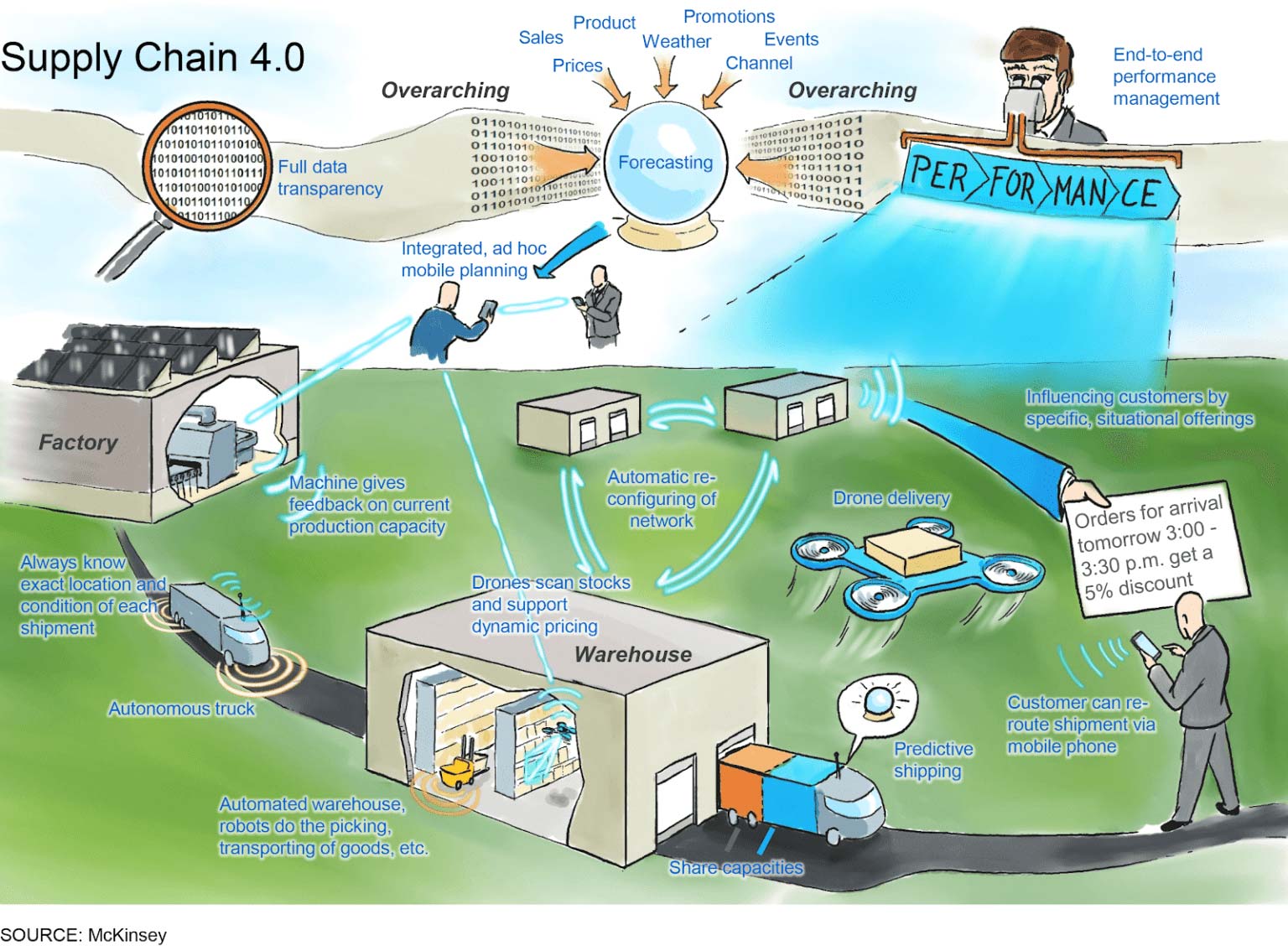
Warehousing operations like picking and packing orders will be extremely precise and lightning fast, not to mention much safer, thanks to augmented reality (AR).
AR headsets (think, Google Glass) could illuminate the most efficient route around a warehouse like a GPS right in front of your eyes, and clearly point to the exact items that you need to pick.
High-tech wearables are already incorporated into warehouse safety protocols to allow employees to signal for help and receive emergency assistance, and AR headsets with live-streaming capabilities would further improve the safety of employees while allowing employers to monitor and optimize productivity.
Long-distance trucking and last-mile delivery will become quicker and cheaper with the advent of autonomous trucks and drones.
Today, truck drivers are restricted to a limited amount of time on the road, rightly so to avoid tired driving, reduce accidents and mitigate dangerous driving. With the help of automated driving systems, it could help the trucker shortage and bring renewed interest to the profession, while allowing truck drivers to spend more time on the road.
Amazon Prime Air has shown that drones can deliver packages under 5 lbs in 30 minutes to select locations. Though not yet in operation, the drones will autonomously zoom through the skies to deliver the package to an outdoor delivery target. New transport concepts like drones or robots help companies improve that last-mile delivery for high-value packages.
There’s Print on Demand, and then there’s 3D Print on Demand.
By sharing design specs with a 3PL or fulfillment provider, retailers could repurpose their fulfillment centers as small-batch manufacturers that use 3D printers to create products in-house, thereby reducing shipping times for expedited orders.
This would allow 3PL and fulfillment providers to offer full-service supply chains to the growing number of online brands and ecommerce startups.
Blockchain may sound a bit vague or abstract in the supply chain space, but essentially this can be used to scan QR codes and track the journey of an individual product (rather than groups of SKUs) throughout the supply chain. Once scanned, relevant product data is automatically synced for all business systems simultaneously.
Real-time data flowing between your systems allows for precise inventory forecasting and restocking capabilities. More in-depth tracking of your inventory also helps utilize the ‘shared economy’ where Uber and local delivery providers can seamlessly deliver products on your behalf.
This advanced form of collaboration also allows companies to easily detect fraudulent products, locate lost or stolen goods, and identify sources of product damage at each step of the supply chain.
Platforms like Shopify and Amazon have allowed ecommerce merchants to access a wide-range of capabilities that they otherwise would have to invest in and build themselves. In terms of supply chain, by linking via API to a large number of carriers and providing customers with negotiated rates, smart fulfillment companies like ShipHero allow their customers to directly compare their options and select the best shipping method.
Supply chain today is nearly unrecognizable to the paper-based and manual processes of the past. With exponential growth, the supply chain of the future will be far more integrated and efficient to what we have today. Startups like ShipHero are beating traditional carriers by leveraging tomorrow’s technology for today’s business needs.
ShipHero recently launched The Fulfillment Innovation Wheel to help 3PLs understand what capabilities and service offerings they need to implement in order to be successful and to help online retailers and brands choose which 3PL is right for them by allowing them to ‘check the boxes’.
The Fulfillment Innovation Wheel listed a set of twelve (12) capabilities that fulfillment providers and logistics companies should implement to continually delight their customers and push themselves towards greater success and innovation.
The twelve capabilities are:
In this article, we will be diving into Capability #5: Sustainable fulfillment.
And be sure to stay tuned for future articles as we deep-dive into each capability.
Cut down your company’s waste, improve your brand image. Sounds like a win-win, doesn’t it? That’s the power of Sustainable Fulfillment -- eCommerce order fulfillment that minimizes the environmental impacts of your supply chain.
eCommerce waste is a much more serious problem than you think. In 2018, the EPA estimated that packaging accounts for about 30% of all household waste. Moreover, with packaging made from plastics, only 9% of all plastics has ever been recycled, with the rest ending up in our oceans, forests, and landfills.
Beyond the harm to the environment, inconsiderate packaging hurts your brand reputation as well. Think back to opening a large box to find a much smaller product inside, or individually-wrapped parts, and thinking “what a waste!”.
Poor packaging leads to brands being labeled as inconsiderate or wasteful, and in a world where GenZ-types and Greta Thunberg’s run wild, your company should avoid this image at all costs.
So, how can your company achieve Sustainable Fulfillment? The answer lies in using proper packaging, planning intelligent shipping, and bringing awareness to your customer base.
If you fulfill orders in-house, you can reference the list below to achieve Sustainable Fulfilment. If you use a 3PL or third-party fulfillment provider, be sure that they have taken the necessary steps to create Sustainable Fulfillment for your business.
Right-size packaging and eco-friendly packaging for your products is a necessary step towards Sustainable Fulfillment. More and more eCommerce businesses are using on-demand packaging for their products, and eliminating over-boxing by shipping the product in its original carton.
Right-size packaging means avoiding product packaging that is exorbitantly larger than the product itself, or eliminating excess materials or fillers.
Eco-friendly packaging means using recycled or renewable materials that are biodegradable or easily disposed of.
Your company may use large packaging with fillers to avoid damaging the product, but with breakthroughs in reusable and recyclable eCommerce packaging, you can avoid the damage while offering a great unboxing experience.
Companies like NoIssue exist to create sustainable, customized packaging.
Carbon emissions from transportation are another major source of waste in your supply chain. Last mile delivery and air freight make up a majority of carbon emissions in logistics, so transportation optimization and intelligent inventory management are significant ways of reducing your carbon footprint.
Transportation Optimization starts at the distribution center. By using Warehouse or Order Management Software (WMS/OMS) to route your orders correctly, your company can identify the most viable distribution center to ship orders in terms of delivery speed and cost. Additionally, last-mile delivery routes should be calculated to reduce mileage and ensure the most energy-efficient routes are selected. I
ntelligent Inventory Management means that your inventory is placed in the warehouse closest to your customers, also known as distributed fulfillment, to reduce shipping distance and costs. Also, using WMS/OMS to ensure that orders are picked, packed and loaded correctly helps to reduce returns, reroutes and expedited shipping.
Our clients have used the above two strategies to lower the carbon footprint of our clients fulfillment while still guaranteeing affordable two-day shipping, powered by ShipHero SaaS Warehouse Management Software.
Our clients use our proprietary inventory forecasting capability to intelligently distribute their inventory across our nationwide network of warehouses. From there, we help them prioritize ground-shipping and avoid wasteful air-freight and expedited shipping. Not to mention, our clients use our SaaS WMS to accurately pick, pick and ship orders all from their tablet or mobile device.
Once your business has adopted Sustainable Fulfillment, the final step is to educate your customers! If you use recyclable materials, let your customers know so they can ensure responsible disposal and feel part of the solution. By getting customers on board with your eco-friendly efforts, you can have a much wider positive impact on the environment as a business.
You should advertise the steps you’ve taken towards Sustainable Fulfillment, and consider using packaging inserts in your orders that explain why your business took these steps and what customers can do to help. Adding this packaging insert has little to no added disruption to your fulfillment process, and it is a phenomenal way to reduce waste and improve your brand.
Our customers love that ShipHero allows them to completely customize their boxing experience, including packaging, inserts, and materials. If your 3PL or fulfillment provider doesn’t offer this, then maybe it’s time for a switch. ShipHero has $5 billion in orders shipped to date, and we attribute this success on the Fulfillment Innovation Wheel to Capability #5: Sustainable Fulfillment.



.svg)