
.svg)

The goal of inventory control systems is to minimize costs while maintaining sufficient inventory to meet customer demand. It involves tracking inventory levels, forecasting demand, and making informed decisions about ordering, stocking, and shipping products.

.svg)
Struggling to maintain a balance called stock control, in your stockroom? Overstocking or running out of products to meet customer demands? It might be time to refine your inventory control system.
Inventory control systems focus on overseeing and managing a company’s stock to maintain the right amount of goods. The primary objective is to reduce costs while ensuring there's enough inventory to satisfy customer needs. This involves monitoring inventory levels, predicting demand, and making decisions about ordering, stocking, and shipping products.
Inventory control guarantees accounting precision by offering insights into a company’s inventory levels and cash flow. Accurate data allows businesses to make informed decisions about purchasing, stocking, and shipping. With precise records, businesses can determine the number of goods sold, gross profit, and net income.
Techniques like cycle counting and ABC analysis offer organizational inventory control techniques, helping businesses manage their stock levels efficiently. Proper practices, including safety stock and reorder points, ensure businesses have the right amount of products to meet customer demands without overstocking.
By diligently tracking inventory levels, businesses can spot discrepancies or quality issues. This ensures the quality reputation of a business and boosts customer satisfaction. Using Point-Of-Sale (POS) and Just-In-Time (JIT) inventory tracking systems ensures smooth inventory movement throughout the supply chain. Investing in such technologies provides insights into stock control and timely replenishment.
Manual data entry can lead to mistakes. These errors can result in incorrect stock levels, increased costs, poor inventory management and missed sales opportunities. An effective inventory control system, using barcode or RFID technology, can minimize these errors.
Setting up proper inventory control, can be resource-intensive. Regular stock counts, demand forecasting, and data analysis can be challenging for resource-limited businesses. However, investing in inventory management software can streamline the process, saving time and resources.
For businesses with intricate supply chains or multiple locations, maintaining visibility into raw materials and stock levels can be challenging. Collaborating with suppliers and implementing effective purchasing practices can help maintain visibility and ensure a smooth supply chain.
While inventory management oversees the entire inventory system, perpetual inventory control system focuses on ensuring accuracy and minimizing costs. It emphasizes optimizing stock levels for profitability.
This manual inventory account system involves regular physical stock counts. It's suitable for small businesses with limited products.
Designed for retail businesses, this system tracks real-time inventory levels, monitors sales, and reorders products automatically to meet customer demand.
This real-time system uses barcodes or RFID technology for tracking. It ensures accurate records and optimal stock levels.
A basic tool for small businesses, spreadsheets can also track inventory, stock levels and sales trends. However, they can be error-prone and lack real-time tracking.
Inventory control and inventory management systems are vital for product-based businesses. ShipHero’s Warehouse Management Software offers a comprehensive solution, providing real-time tracking, automated replenishment, and detailed analytics.
Lead time in inventory control refers to the duration between placing an order for goods and their actual arrival. It is a crucial metric as it influences various aspects of an inventory management system, including stock levels, order quantities, and safety stock calculations.
Several elements can impact lead time:
Businesses aim to reduce lead times to optimize inventory levels and reduce holding costs. Some strategies include:
Dead stock refers to various types of inventory items that have remained unsold for a lengthy period and are unlikely to be sold in the future. These items can tie up capital and occupy valuable warehouse space, preventing the storage of more profitable items. Moreover, the longer items remain in storage, the higher the likelihood they will become obsolete or spoil (in case of perishable items).
Several reasons can lead to the accumulation of dead stock:
To manage dead stock:
Understanding both lead time and dead stock is essential for effective inventory management. By managing these aspects, businesses can optimize their most efficient inventory control processes and ensure profitability.
It's the process of using inventory control procedures overseeing product quantity and location within a business, ensuring optimal stock levels while minimizing costs.
FIFO (first in, first out) are inventory control methods and LIFO (last in, first out) are inventory costing methods. FIFO sells the oldest items first, while LIFO sells the newest items first.
It involves managing stock levels effectively, tracking inventory accurately, forecasting demand, using efficient replenishment processes, and employing inventory control tools. Regular audits and data analysis are also essential.


.webp)
Explore the top 3PL companies in Canada and learn how third-party logistics providers play a vital role in optimizing supply chains. Discover the benefits of partnering with a 3PL, key services offered, and steps to start working with a 3PL in Canada.
.svg)
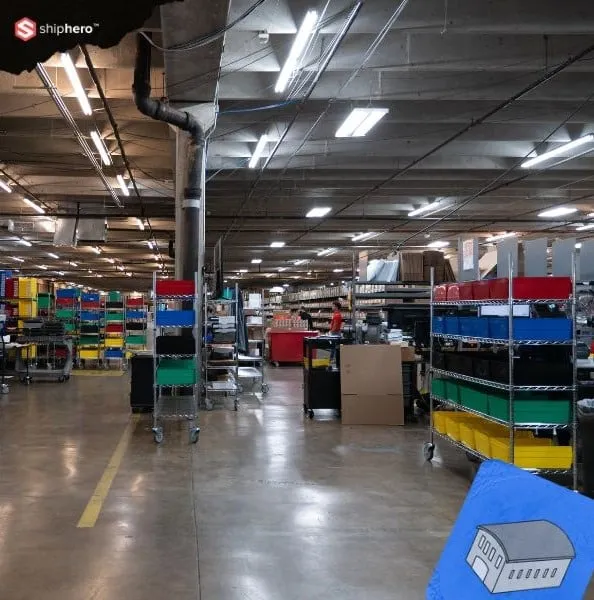
Discover the top 5 best third-party logistics (3PL) companies for your business needs, offering extensive networks, advanced technology, and superior customer service. Learn about the benefits of 3PL services, how to choose the right provider, and avoid common mistakes.
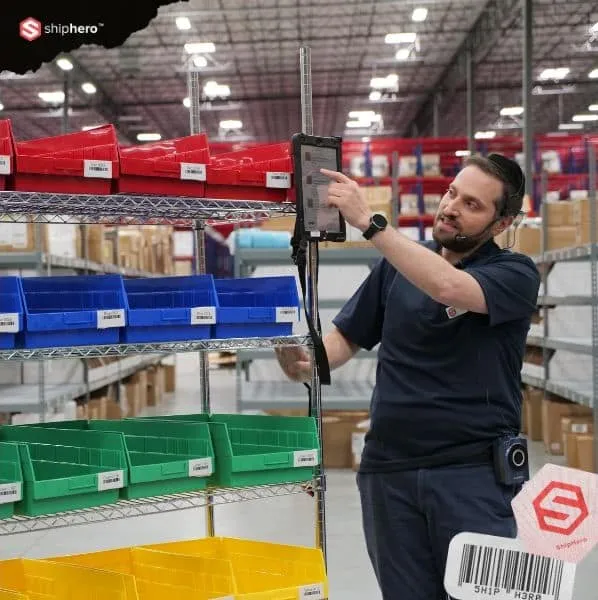
Discover the role, benefits, key features, requirements, and implementation of a 3PL Warehouse Management System (WMS) for optimizing warehouse operations. Learn about scalability, integration, real-time visibility, and customization options to choose the best solution for your business.

On September 1, 2026, Descartes Systems Group announced its acquisition of Extensiv for approximately $120 million. What was announced, what usually follows deals like this, and the questions Extensiv customers should put to their vendor before renewal.



.svg)



.webp)