
.svg)

An inventory report is an essential document that comprehensively accounts for a company's physical inventory. It offers a detailed description of each item, including its name, quantity, location, and condition.

.svg)
Inventory management is key to a company's operations. A critical part of this is making sure all products are accounted for. An effective inventory and inventory audit report helps in achieving this and minimizing errors that can harm the company's profits and brand.
An inventory report is a crucial document detailing a company's physical inventory. It lists each item, its quantity, location, and condition. This information helps companies understand their own inventory analysis, report stock levels, identify out-of-stock items, and decide the necessary restocking. This insight aids in knowing your company's assets and the profits tied to them.
Good, accurate inventory reporting is essential for smooth operations and high-quality customer service. Having a categorized inventory list with details about each item is invaluable for any business.
Grouping products based on attributes like type, size, color, or use helps understand stock levels and detect patterns. This grouping aids in allocating resources and maintaining popular items on the shelf, making ordering more efficient.
Accurate tracking of inventory items helps avoid over-ordering and excess inventory. It also helps identify slow-moving items, which can be liquidated to free up resources and reduce costs.
Accurate inventory reporting metrics impacts customer service directly. Knowing what products are available and their location is key to fulfilling orders quickly, which leads to satisfied customers.
Analyzing inventory data over time helps predict future inventory needs, preventing stockouts and reducing waste. This information can help calculate the exact amount you need to spend on new inventory.
Inventory reports come in several types:
Here's how to perform a monthly inventory report that helps you understand your inventory position effectively:
The inventory accuracy rate calculates the percentage of units correctly accounted for. It's a useful tool for understanding how well your company is managing its inventory.
Inventory turnover is a key metric in inventory management and provides valuable insights into a company's sales and purchasing effectiveness. It measures both how much inventory and often a business sells and replaces its inventory within a certain period, typically a year.
The formula for calculating inventory turnover is:
Inventory Turnover = Cost of Goods Sold (COGS) / Average Inventory
A high inventory turnover rate could suggest strong sales or effective inventory management. However, if the rate is too high, it might indicate inadequate inventory levels, which could lead to stockouts and lost sales. Conversely, a product inventory usage report with low turnover rate might indicate slow sales, excess inventory, or issues with product pricing or quality.
Understanding your inventory turnover rate allows for better stock control, aids in managing cash flow, and helps you make data-driven business decisions.
Understanding the cost of keeping unsold goods is critical for inventory management. This cost is sometimes hidden but contributes significantly to the total value of a company's expenses.
Keeping inventory has several costs:
Why should you care about the cost of keeping inventory? It informs decisions on how much stock to keep. If holding costs are high, you might want less inventory. But, if running out of stock means losing sales and making customers unhappy, holding more inventory could be worth the cost.
To sum up, knowing the cost of keeping inventory is essential for smart inventory management. You need to balance between having enough stock to meet demand and reducing the costs of keeping unsold goods.
Inventory valuation is crucial for accurately reporting a company's financial status and calculating the cost of goods sold - an essential component of the inventory turnover equation.
There are several inventory valuation methods, each with its benefits and drawbacks:
Selecting the right inventory valuation method depends on your business model, tax situation, and financial goals. It's a crucial decision that should align with your overall inventory management strategy.
Remember, effective management of inventory turnover and inventory valuation are key to maintain optimal stock levels, minimize costs, and maximize profitability. Understanding these concepts forms an essential part of a successful inventory management system.
Cycle counting is an ongoing process that counts a portion of the inventory at different times. Regular cycle counts help discover stock discrepancies early, allowing for prompt action.
Regular weekly and monthly reports on cycle counts offer real-time data on inventory and allow for better forecasting. They also help uncover cases of theft and damage, providing a chance to improve control measures.
Digital solutions are becoming more popular for inventory control. Today's systems offer dashboard views of inventory levels, barcodes for quick stock taking, free inventory report templates and automated processes to reduce human error.
Excel is a handy tool for inventory management. Templates in Excel format help monitor inventory effectively, for inventory managers with records of SKUs, cycle counts, and inventory discrepancies.
Employees play a vital role in inventory management. Regular training sessions should be held to educate them about the importance of inventory control.
Inventory accuracy is crucial to a company's success. By incorporating regular cycle counts, investing in technology, and educating employees, companies can optimize their product inventory and storage, enhance customer experience, and build a stronger brand reputation.


.webp)
Explore the top 3PL companies in Canada and learn how third-party logistics providers play a vital role in optimizing supply chains. Discover the benefits of partnering with a 3PL, key services offered, and steps to start working with a 3PL in Canada.
.svg)
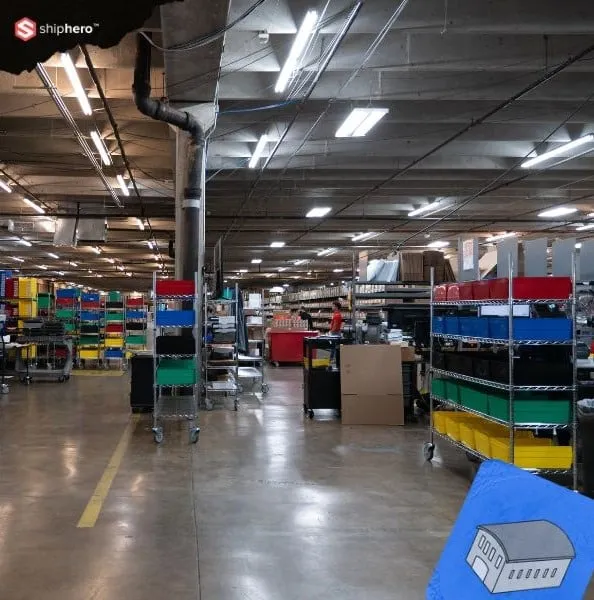
Discover the top 5 best third-party logistics (3PL) companies for your business needs, offering extensive networks, advanced technology, and superior customer service. Learn about the benefits of 3PL services, how to choose the right provider, and avoid common mistakes.

Discover the role, benefits, key features, requirements, and implementation of a 3PL Warehouse Management System (WMS) for optimizing warehouse operations. Learn about scalability, integration, real-time visibility, and customization options to choose the best solution for your business.

At the denser wall, average picking time per order fell from 40 seconds to 13, and orders that ran clean from start to finish rose from 18% to 97%. This is the companion to our Direct Pack + Pack-to-Light case study, from the same research.





.svg)



.webp)