
.svg)

Learn the key differences between perpetual and physical inventory methods, their advantages, and how to choose the right approach for your business.

.svg)
What happens when your inventory records don’t match what’s actually sitting on your shelves? Orders get delayed. Customers get frustrated. And your bottom line takes the hit.
That’s why your choice between perpetual inventory vs. physical inventory impacts your entire business. Inventory tracking is crucial for operations, profitability, and customer satisfaction; so, selecting the right method is essential.
In this guide, we’ll break down what each inventory method involves, how they differ, and when to use one over the other. That way, you reduce discrepancies and streamline inventory management better than ever.
Perpetual inventory is a system that involves continuous updates to inventory levels as transactions occur. Every time an item is sold, returned, or received, your inventory system logs that movement instantly.
This method relies on automated tracking systems, such as barcode scanners, RFID tags, and point-of-sale (POS) integrations, to track, record, and update inventory data in real-time.
Because it provides real-time stock information, you get instant visibility into your goods, making it easier to detect issues, avoid overstock and stockouts, and manage inventory purchases effectively. Plus, it reduces human error in stock counts by minimizing manual intervention.
Perpetual inventory is widely used in large-scale retail and warehouses due to its accurate, scalable, and technologically driven capabilities.
In fact, a study found that implementing an Electronic Inventory Management System (EIMS) in an oncology pharmacy business resulted in a 6.02% increase in inventory accuracy and a 98% improvement in inventory visibility. Perpetual inventory is the go-to solution for any company with high inventory turnover and complex operations.
In contrast, physical inventory is the old-school, manual approach. It requires manual counting at specific intervals, like once a month, quarterly, or annually, to assess inventory levels.
It doesn’t rely on live data or automation. Instead, it provides a detailed snapshot of your stock at a given moment. This method is especially common during audits, financial reconciliations, or when a business lacks integrated tech tools.
While it’s more labor-intensive, physical inventory is still used across industries for verification, loss detection, and ensuring accuracy in cases where tech may fall short.
The main difference between perpetual inventory vs. physical inventory is how and how often inventory data is collected, updated, and used to manage your operations.
Let’s take a look at how these differ from the other:
With perpetual inventory, your inventory records are updated automatically and continuously. Every item scanned in or out is instantly reflected in your system. It aligns inventory levels with sales in real-time.
Physical inventory, on the other hand, depends on scheduled counts. It could be cycle counting or a full audit, which happens at specific times, not continuously.
Perpetual systems give you real-time, dynamic data, but errors can occur due to incorrect scanning or software glitches. However, they allow for immediate detection of stock issues and quick adjustments.
Physical counts offer a precise, point-in-time assessment. However, once counted, your inventory data becomes outdated until the next count, resulting in gaps in visibility.
Perpetual inventory minimizes human effort. Technology, automation, and integration with other tools reduce the need for manual work.
Physical inventory is highly labor-intensive. Staff must physically count and verify each product, which increases the risk of human error. It also requires operational downtime.
Perpetual systems involve upfront costs for software, equipment, and training. But over time, they’re cost-effective. These systems reduce the need for manual labor and mistakes.
Physical inventory may seem cheaper at first, but labor, errors, and time lost during counting add up in your budget, affecting expenses, revenue, and even net income.
If you need fast answers, perpetual inventory gives you real-time, automated updates. In contrast, physical inventory can slow you down. You may need to pause warehouse activities to count, reconcile, and analyze your inventory, resulting in lost time and increased costs.
Small businesses with limited inventory might get by with manual counts. However, larger organizations, especially those with multiple warehouses, benefit significantly from real-time tracking, seamless integration, and scalable automation that support both inventory management and warehouse management.
The best type of inventory system depends on your company’s size, structure, and needs.
Here are things to consider:
Perpetual InventoryPhysical InventoryPros
Cons
Choosing between perpetual inventory vs. physical inventory isn’t one-size-fits-all. The right method depends on how your business operates, the resources you have available, and the complexity of your inventory.
Here’s how to decide what fits best:
Ensure that you combine this with an inventory control method to achieve a more efficient inventory management system.
If you’re looking for a reliable way to implement perpetual inventory without the tech headaches, ShipHero’s Warehouse Management Software is built to simplify inventory tracking with real-time updates, automation, and seamless integrations. Whether you're scaling fast or managing multiple locations, ShipHero helps you stay accurate, efficient, and in control.
Yes and no. Perpetual inventory can be more accurate due to real-time tracking, provided that processes are executed properly, as it offers ongoing visibility into stock levels. Physical inventory is accurate at the time of count but does not reflect live updates or losses occurring between counts.
Physical inventory counts should be performed at least annually to meet financial reporting and regulatory requirements. Many businesses also utilize cycle counting, which involves regularly counting subsets of inventory throughout the year, to maintain accuracy and minimize disruptions.
Yes. A business can use both perpetual and physical inventory systems together. Perpetual systems track inventory continuously, while periodic physical counts validate records, reconcile discrepancies, and support audits. Using both methods improves accuracy and balances real-time monitoring with verification.
Industries that benefit most from perpetual inventory include retail, e-commerce, manufacturing, and distribution. These sectors manage high-volume, fast-moving stock that requires real-time visibility to help avoid overstock and stockouts and maintain accurate records.

.webp)
Discover the role, benefits, key features, requirements, and implementation of a 3PL Warehouse Management System (WMS) for optimizing warehouse operations. Learn about scalability, integration, real-time visibility, and customization options to choose the best solution for your business.
.svg)

Explore the top 3PL companies in Canada and learn how third-party logistics providers play a vital role in optimizing supply chains. Discover the benefits of partnering with a 3PL, key services offered, and steps to start working with a 3PL in Canada.
Discover the top 5 best third-party logistics (3PL) companies for your business needs, offering extensive networks, advanced technology, and superior customer service. Learn about the benefits of 3PL services, how to choose the right provider, and avoid common mistakes.

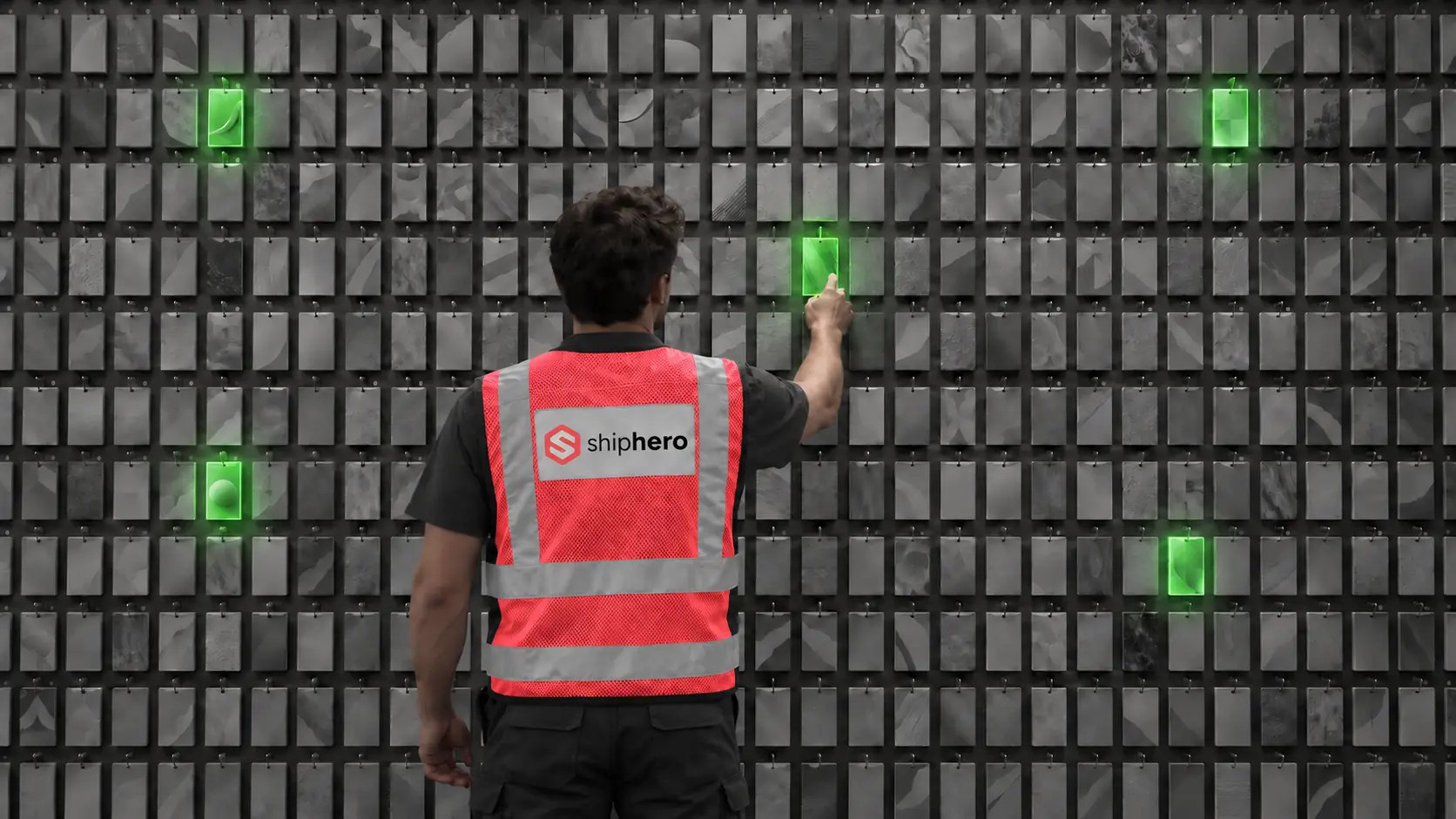
At the denser wall, average picking time per order fell from 40 seconds to 13, and orders that ran clean from start to finish rose from 18% to 97%. This is the companion to our Direct Pack + Pack-to-Light case study, from the same research.




.svg)



.webp)