
.svg)

Let’s stay in touch with the ShipHero Blog.


.webp)
The ShipHero Model Context Protocol (MCP) connects supported AI clients directly to your live ShipHero data, so warehouse teams can ask questions and get specific answers from their own account. It is built for day-to-day operational checks, including inventory levels, open orders, shipment status, holds, returns, purchase orders, and exceptions. For ShipHero customers, it is available at no additional charge and runs on existing API credits.
Every order, shipment, inventory movement, hold, return, and purchase order creates data inside ShipHero. Your warehouse information is right there, but getting to it can be a slow, complex process.
Before the ShipHero MCP, answering a specific operational question often meant logging in, finding the right report, applying the right filters, exporting data, or asking the one person on the team who knew where to look.
Even when the answer was simple, like a quick inventory check, it could turn into a 20 to 45 minute task. A customer question could sit half a day while someone pulled the right numbers. That delay adds friction to the floor. It slows decisions. It keeps teams waiting on data they already own.
The ShipHero MCP gives supported AI clients secure, read-only access to live ShipHero data.
That means operators can ask questions in plain English and get answers from their actual account, not from a generic help article or static knowledge base. A chatbot can tell you where to find a number. The ShipHero MCP can return the number itself.
It works with MCP-enabled AI clients, including Claude, ChatGPT, Cursor, and Codex. Connect it once, authenticate access, and your team can start asking operational questions from the AI tool they already use.
The workflow is simple:
The MCP does not replace ShipHero. It makes the data inside ShipHero easier to reach when your team needs a fast answer.
The ShipHero MCP is designed for everyday operational questions, such as:
If the data lives in your ShipHero account, the MCP gives your team a faster way to ask for it.
Speed matters, but safety matters too.
The ShipHero MCP is read-only by design. It can retrieve information from your account, but it cannot create orders, modify records, delete data, or change warehouse settings.
That gives teams a practical way to use AI for operational visibility without risking accidental account changes. Operators can ask. Managers can check. 3PL teams can answer client questions faster.
The data becomes easier to use, while the records stay protected.
For founders, the MCP can turn a quick inventory check into a simple question.
For operations leads, it can surface shipment status, holds, exceptions, and low-stock SKUs without digging through reports.
For 3PL operators, it can help answer client questions faster, using live account data instead of manual follow-up.
The result is a faster way to reach the information already inside ShipHero.
The ShipHero MCP is available to all ShipHero customers at no additional charge. It runs on existing API credits, so specific questions help keep usage efficient.
To get started, visit developer.shiphero.com or contact your ShipHero account representative.
ShipHero MCP is a read-only connection between supported AI clients and your live ShipHero data. It lets users ask operational questions in plain English and receive answers from their actual ShipHero account.
A chatbot usually answers from fixed, generic information. ShipHero MCP connects to live account data, so it can return specific answers about your orders, shipments, inventory, holds, returns, and other ShipHero records.
ShipHero MCP works with AI clients that support the Model Context Protocol, including Claude, ChatGPT, Cursor, and Codex.
No. ShipHero MCP is read-only. It can query data, but it cannot create, update, or delete records in your ShipHero account.
No. The MCP is built for operators and can be connected from a supported AI client in minutes. Developers may use more advanced tools for deeper analysis, but most day-to-day users can work directly with the MCP.
Yes. ShipHero MCP is available to ShipHero customers at no additional charge and runs on existing API credits.
Transitioning to a new Warehouse Management System (WMS) is a high-stakes decision that often triggers concerns regarding downtime, data integrity, and workforce adaptation. As warehouses prepare for 2026 growth, understanding these common hurdles—and the technical solutions that resolve them—is essential for a successful migration. This guide addresses the five primary barriers to adoption and how a high-velocity infrastructure ensures a seamless transition.
Warehouse operators frequently hesitate to upgrade due to perceived risks that can halt operations. These challenges typically include:
To clear these hurdles, a structured implementation strategy is used to prioritize data density and entity clarity.
In the competitive eCommerce landscape, staying stagnant with manual workarounds is often more costly than the transition itself. Moving to a high-velocity WMS converts your warehouse from a cost center into a growth engine by providing Labor Efficiency and ROI through automated routing and reduced authentication friction.
Because the platform is built for the floor worker, features like Workforce Hero allow seasonal temps and new staff to be authenticated and productive in under an hour.
No. High-velocity infrastructure increases visibility by providing Total Real-Time Control. Managers can monitor exactly what is in the Hospital queue and track replenishment in real-time from a single dashboard.
Before going live, a ground-up audit is performed using cycle counting tools. The system's architecture ensures that every movement on the floor is synchronized with sales channels instantly, maintaining 99.9% accuracy.
Picture a packer at Peak Season. A box is in front of them, a product in each hand, and somewhere on a cluttered desk there's a mouse they need to find to confirm the order. They look down. They hunt. They click. Then they do it again. Thousands of times a day.
That moment of friction is small. But it is never just one moment. Multiply it across your entire pack line, across an entire shift, and you are looking at a measurable and largely invisible drag on your total throughput.
Tap-to-Pack is a purpose-built hardware controller designed by ShipHero to eliminate digital friction at the packing station. It connects via USB-C, requires no drivers or additional software, and syncs automatically with the ShipHero WMS packing app. This new system is now available at the ShipHero Store.
Instead of navigating a screen with a keyboard and mouse, packers execute every high-frequency command — such as selecting box sizes, printing labels, finalizing orders, flagging exceptions — with a single physical tap on one of eight programmable buttons.
Key specifications:
Most warehouses are running 2026 operations on 1990s peripheral standards. The keyboard and mouse were designed for spreadsheets and emails, not high-volume fulfillment. When used at a packing station, they create three compounding problems:
The problem is not your people. It is the tools you are asking them to use.
Tap-to-Pack introduces a "Rodent-Free" packing standard: a workflow where the packer's hands stay on the product, their eyes stay on the work, and the software fades into the background.
The device guides the packer through two feedback systems:
ShipHero customers running Tap-to-Pack are already seeing a 90% reduction in on-screen interactions and a significant increase in the number of orders packed per hour, without adding headcount or changing their warehouse layout.
One of the hardest challenges in fulfillment is absorbing volume quickly, especially during Peak Season, when temporary staff need to reach target productivity fast.
Because Tap-to-Pack's interface is physical and intuitive, there is almost nothing to teach. Pick up the product, follow the light, tap the button. New packers can reach target productivity in minutes rather than hours.
The system is also modular:
Whether you are a growing DTC brand or a high-volume 3PL, Tap-to-Pack is designed so your hardware never becomes a ceiling on what your team can do.
Tap-to-Pack is a programmable, industrial-grade hardware controller that connects to the ShipHero WMS and allows warehouse packers to execute packing station commands, such as printing labels, selecting boxes, and completing orders. All with a single physical button press, eliminating the need for a keyboard and mouse.
The device connects via USB-C and syncs automatically with the ShipHero WMS packing app. It is a true plug-and-play solution: no drivers, no background software, and no manual configuration required.
Yes. Buttons are configurable for a range of packing actions, including Print Label, Complete Order, Select Box Size, and the Hospital function, which flags a problematic order and keeps the line moving without stopping to resolve it on screen.
The system is fully modular. Connect up to two additional 8-button hubs to the Main Hub for a total of 24 programmable buttons, supporting even the most complex multi-step packing workflows.
Tap-to-Pack devices require ShipHero Packing App v1.0 or higher. The current release is v1.1.0.
Imagine running a warehouse where orders are picked quickly, inventory is accurate, and all operations run smoothly without any errors or delays. Thanks to Artificial Intelligence, this can now become a reality with ease.
AI is transforming warehouse management by enhancing efficiency, intelligence, and the ability to meet the rapid demands of today’s eCommerce-driven market.
ShipHero is pioneering this revolution with its AI-powered warehouse solutions, setting new industry benchmarks. This article explores ShipHero’s AI Picking feature, highlighting how it’s transforming warehouse management and enhancing operational efficiency.
The integration of AI technologies, including machine learning, robotics, and predictive analytics, is revolutionizing warehouse operations, driving significant improvements in efficiency, accuracy, and overall performance. These innovations are optimizing processes across various areas, from inventory management to order fulfillment. Below are the key benefits of AI in warehouse management.
A combination of AI technologies is shaping smarter warehouse systems to help revolutionize warehouse management.
ShipHero has taken AI integration to the next level with its AI Picking feature, designed to significantly improve warehouse efficiency. This feature automates the picking process, reducing the reliance on manual labor and enhancing productivity in ways that were once thought impossible.
Let’s dive deeper into how ShipHero’s AI Picking works and the advantages it offers.
AI Picking optimizes warehouse operations in two key ways:
The AI Picking feature delivers a wide range of benefits:
The transformative power of AI extends far beyond just picking. AI is also revolutionizing other aspects of warehouse management, driving improvements in operational efficiency, inventory management, and safety.
AI automates tasks, reducing errors and increasing speed. Automated sorting and real-time inventory tracking ensure accuracy, while real-time monitoring helps managers adapt and ensure timely deliveries.
AI plays a vital role in maintaining accurate inventory levels. By leveraging predictive analytics, AI can forecast demand and optimize stock levels, helping warehouses avoid both stockouts and overstock situations. This leads to better inventory management and fewer disruptions in supply chains.
AI-driven systems can monitor warehouse conditions to ensure safety and compliance with industry regulations. These systems can analyze warehouse data and predict potential hazards before they occur, proactively reducing risks and ensuring a safer working environment.
AI technologies are playing a transformative role in the supply chain and logistics sectors by improving efficiency, reducing costs, and enhancing decision-making.
These intelligent systems effortlessly manage supply chain processes by using data to optimize operations, predict trends, and automate routine tasks. This ultimately reshapes everything, from how goods are moved to stored and delivered.
The future of warehouse management looks promising with greater automation and efficiency, but future warehouse digitization brings challenges, such as high upfront costs and the need for skilled personnel.
AI-powered drones, autonomous robots, and IoT integration are smart warehouse technologies that are revolutionizing warehouse operations. Drones will deliver goods quickly, while robots automate sorting and transportation, thereby reducing the need for manual labor.
IoT and AI integration will enable real-time monitoring and optimization of operations. Smart technology in warehouses is leading to fully automated systems that are faster, scalable, and need minimal human input.
While AI offers immense benefits, businesses must also consider certain challenges. High initial investments in AI technology, data security concerns, and the need for skilled personnel are just a few of the hurdles that must be addressed.
However, with a strategic approach, companies can eliminate the challenges and embrace AI’s full potential to boost accuracy in picking and improve overall warehouse operations.
AI minimizes error by automating tasks like inventory tracking, order picking, and sorting, ensuring greater accuracy and efficiency.
Yes, AI-driven predictive analytics can predict demand, track inventory levels, and improve supply chain efficiency by forecasting needs with greater accuracy to help businesses stay ahead of trends and market fluctuations.
AI solutions are becoming more cost-effective thanks to cloud-based services and subscription pricing models. These options make AI technology more accessible to small businesses, allowing them to take advantage of its benefits without large upfront costs.




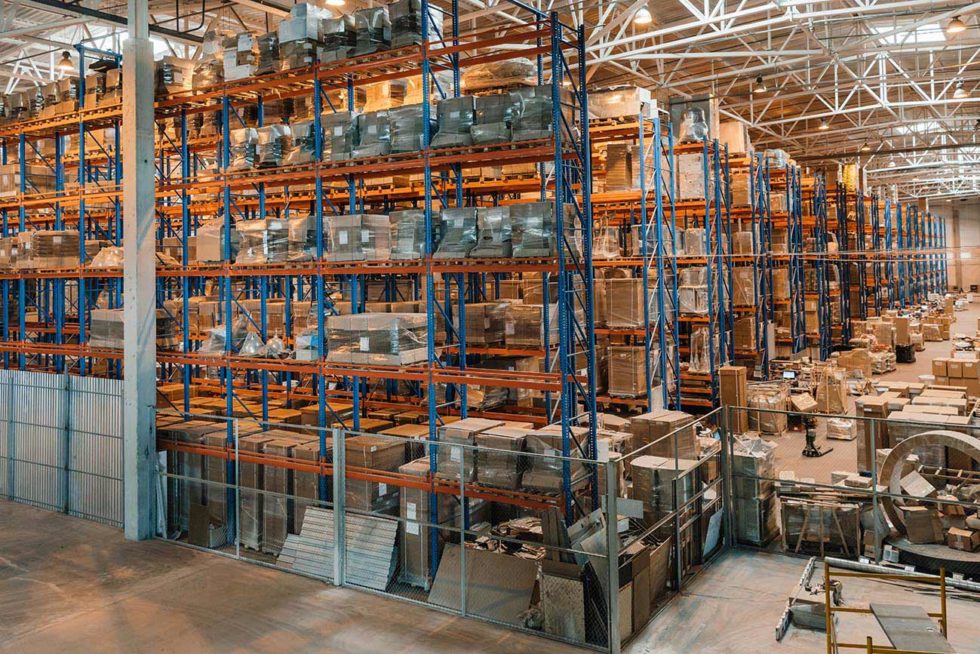
When it comes to ecommerce businesses, order fulfillment is the name of the game. The speed and accuracy with which you fill orders is one of the key factors in your long-term success. If you want to succeed you need to properly store and organize your inventory, so it can be picked, packed, and shipped with the greatest efficiency, speed, and accuracy.
That’s where warehouse optimization comes into play.
Warehouse optimization is not a process that should be implemented without careful thought. Before you can take steps to optimize your warehousing layout and process, you need to have a thorough understanding of what you’re currently working with and the limitations. Once you’re able to identify weaknesses and areas of unmet need, you can start getting into the details of optimizing your new warehouse layout.
In this article, we’ll walk you through the practical aspects of optimizing your warehouse layout starting with choosing the right warehouse space and brainstorming ideas for your ideal warehouse layout. We’ll also talk about how to implement your plan and provide tips for optimizing the different stages of the order fulfillment process.
The goal of any business is to grow – it’s really that simple. Depending what type of business you’re running, the steps you take to accomplish that growth may differ. What all successful ecommerce businesses have in common, however, is an efficient order fulfillment process and, in most cases, that means a warehouse with a layout optimized for maximum efficiency.
If your business has grown to the point where you are considering purchasing or leasing a warehouse space, congratulations! Before you make the switch, however, there are a few things to think about.
First and foremost, are you really ready to make the switch?
Before you start looking around for a bigger warehouse space, you need to be sure that you really need it and that you can afford to run it. It might make sense to move to a larger warehouse space, for example, if your sales have started to exceed your storage capacity for inventory. It might also make sense to move to a different warehouse if you’re expanding into a new market. Take the time to think about whether making a switch is really the smartest choice for your business and, if it is, the next step is to carefully choose a warehouse space.
The first thing you’re going to be looking for when evaluating warehouse spaces is, of course, size. You need a warehouse large enough to hold your current inventory and to leave room for growth without being so large that you sacrifice efficiency. After size, you need to think about the little details that will really make a difference in your day-to-day operations.
Aaron Rubin, CEO of Ship Hero, suggests that even the smallest details like the type of flooring matters. In an interview with EcommerceFuel.com Rubin said, “The next most important thing that people don’t think about is the floor. You want something with a smooth, not pitted concrete floor.” He goes on to say that cheap flooring can produce dust that covers your products and pitted floors can damage rolling carts.
Here are some of the other key elements to consider when choosing a warehouse space:
Now that you understand when the right time is to make the switch and what to consider when choosing, let’s discuss what to think about before you start planning your warehouse layout.

Once you’ve chosen your warehousing space, next comes the task of planning the layout. Before you start getting into the details of planning your warehouse layout, however, there are a few things you need to consider. First and foremost, why is it even important to optimize how your warehouse layout?
As mentioned above, the speed, efficiency, and accuracy with which you fill your orders will determine whether your business lives or dies. The order fulfillment process can be fairly complex, so you need to really think through the details for picking, packing, and shipping. If you want to maximize profitability, it all starts with proper warehouse planning. When planning your warehouse, you’ll need to set up certain areas to make sure that your picking and packing process goes smoothly.
Here are some of the areas you’ll need to work into your warehouse layout:
In addition to knowing which stations you’ll need and where to place them in your warehouse, you also need to plan around existing structures. For example, if your warehouse doesn’t have a loading dock, you’ll need to adjust your plan and create separate sections for inbound and outbound inventory. If there are walls or support structures in the middle of your warehouse, you’ll need to think carefully about the placement of your stations to prevent staff from having to navigate around them dozens of times a day which can reduce speed and efficiency.

Once you’ve thought through some of the details for optimizing your warehouse, next comes the stage in which you actually do the detailed planning. You’ve already thought about which stations you’ll need and whether there are any existing obstacles to work around – now is the time when you put those details together to actually map your layout for optimal efficiency.Here are some simple steps to complete as you start organizing your warehouse layout:
Throughout the planning process, it helps to have a clear objective in mind. Ask yourself what the main goal is that you want to accomplish by optimizing your warehouse layout. Do you want to maximize your use of space by optimizing your shelving and storage practices? Do you want to cut down on travel time by being mindful of how you arrange your inventory and packing stations? Do you want to increase your warehousing efficiency by cutting out unnecessary products and processes?
If you can identify the primary goal for optimizing your warehouse, it will help you make the right choice in all of the decisions you make along the way.
Creating a detailed warehousing plan is one thing, but implementing it is something else entirely. Optimizing your warehouse means optimizing the different stages in the order fulfillment process. Your primary goal at all times is to get the right products to the right customers in the shortest amount of time. Optimizing warehousing processes including receiving, picking, packing, and shipping is the way to do it.
Here are some simple tips for optimizing your warehouse operation along all the various stages of the order fulfillment process to ensure maximum efficiency:
When it comes to optimizing your warehouse flow, it all starts the moment your product enters the warehouse. When products are received, they are checked for damage, mis-picks, and quantity so your staff will need plenty of space to perform these tasks without impeding the in-flow of new inventory. To make receiving as quick and painless as possible, your warehouse should have a loading dock – this will save time as pallets can be loaded directly from the truck into the warehouse instead of being removed from the pallets and delivered in smaller loads. Having a loading dock versus not is the difference between a one-man job and a multi-person job. Don’t count on the delivery driver to help.
In this stage of the order fulfillment process, pickers receive orders and then pick the products for packing. Where you store your inventory, the type of shelving you use, the locations of your picking stations, are all factors that affect accuracy and efficiency. Here are some simple tips for optimizing your picking process:
Optimizing your picking process is not something you do once – you should be making adjustments as your business grows and your inventory changes.
This stage of the order fulfillment process needs to be completed as quickly and accurately as possible. The best place to start in optimizing this stage of the process is to place your packing location near the shipping location to minimize travel time. You should also limit the types of packing materials you use, so pickers are able to assemble each order efficiently.
It doesn’t matter how fast and efficient your picking and packing process is if your shipping provider can’t keep up. It pays to have connections with multiple providers, so you can offer your customers the best price on a variety of shipping speeds. Plus, if one of your providers falls through, you’ll always have a backup, so you don’t risk losing a sale. When it comes to optimizing your shipping process, have a designated shipping station so orders can be picked up, scanned in, and shipped out quickly all in one place.
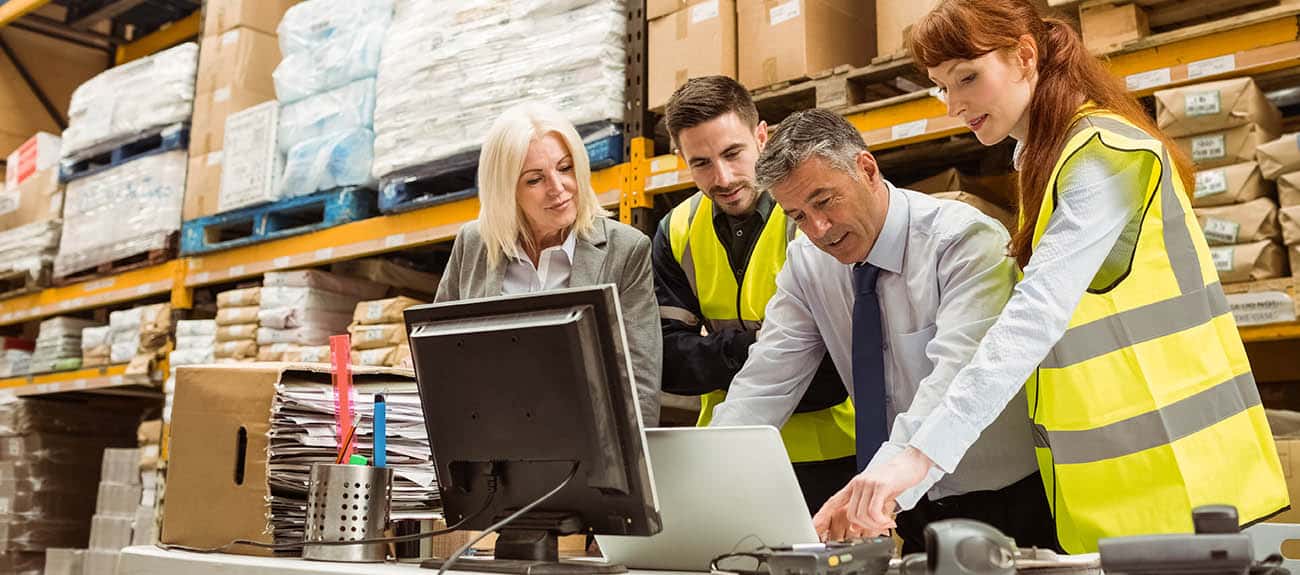
If you’re moving from in-house order fulfillment to purchasing or leasing a warehouse space for the first time, you’re in a great position. Starting from scratch may take time, but it gives you the opportunity to plan everything from the very beginning to optimize your layout and maximize profits. If you find yourself making adjustments to your warehouse layout as your business grows, you may face some limitations, but there are still things you can do to make improvements.
Here are some ways you can improve an existing warehouse layout:
In the short term, making these and other adjustments to your warehouse layout could be costly both in terms of time and money. Depending how much you need to change, you may even need to shut down operations for a few days. To minimize the damage and maximize your benefits, do all of your thinking ahead of time until you have a detailed plan that you can put in place as quickly and as efficiently as possible. Though you may lose money on the time it takes to incorporate these changes; if you do it right, the payoff will be well worth it down the line.
ShipHero provides outsourced, quality order fulfillment services. Find out more here.
.svg)

The world of ecommerce is a fickle one. At times, it seems completely random which sites survive, and which do not. In reality, however, it is the sites that plan ahead and take steps to keep up with the growth of their business that are the most likely to succeed.
The primary goal of any business is to grow, though there are certainly smaller goals you want to meet along the way. In the very beginning, for example, your first goal might be to break even – to start seeing positive cash flow after covering startup costs. From there, you want to see steady growth on a month-to-month basis and over the course of the year.
Ecommerce sales totaled $1.3 trillion in 2014 and are expected to grow by nearly 250% to a total of $4.5 trillion by 2021. If you hope to capture a slice of that pie for yourself, you need to set a strong foundation, build momentum, and prepare for future challenges. In this article, we’ll go into depth about the best ways to scale your ecommerce business both efficiently and effectively.
Though most ecommerce businesses start out small, you should always be thinking and planning ahead. With each business decision you make, ask yourself, “Is this strategy scalable?” This is particularly important when it comes to things like choosing your inventory and with creating and implementing a digital marketing strategy.
Here are some other tips to follow in the early days of your ecommerce business to ensure that you have a solid foundation on which to build:

Building your initial website can end up being easier than you might think. Particularly with the multitude of tools at your fingertips, such as Shopify. What is not so easy is turning that website into a successful, profitable, and scalable business. Though annual worldwide ecommerce sales are in the trillions, many new shops close their doors within the first few years. In order to scale your business for long-term growth, you’ll need to start out by taking certain steps to build and retain momentum. Here are 3 things you need to do:
Your website is the infrastructure for your online business, but you’ll never make any sales if no one sees your page. A strong digital marketing campaign is the key to building your online presence, driving traffic to your site, and converting visitors into paying customers. Here are some simple online marketing tips to get you started:
When it comes to ecommerce, digital marketing is not a one-and-done strategy – you’ll need to keep at it if you want your business to grow. There is no harm in starting out small but, as your business grows, you’ll want to start expanding your marketing strategy with it.
In the early stages of your business, you might be able to handle order fulfillment yourself or with a limited staff. As you start scaling your business, however, you’ll need to decide whether you want to invest in your own warehouse space or if you want to outsource the order fulfillment process to a 3PL provider.
A 3PL is a third-party logistics provider who takes over one, some, or all of the aspects of your order fulfillment processes. Hiring a 3PL means that you will no longer be responsible for storing your inventory, picking and packing your orders, arranging shipment with different carriers, and handling returns. This will free you up to focus on the other things that will help you scale your business.If you do choose to run your own warehouse, it is critical to choose the right warehouse management software.
When it comes to running a successful ecommerce business, the quality of your product matters greatly. What matters even more, however, is customer satisfaction. When it comes to the scalability of an ecommerce business, word of mouth marketing is gold. This all comes down to the ecommerce buying cycle. The buying cycle looks like this:
Since ecommerce products are not tangible, like they are in brick-and-mortar retail stores, the cycle is often time more drawn out. Consumers spend more time making a buying decision because they cannot see the product in person and because there are some many choices available to them. The way you can tackle both of these obstacles is by offering customers supreme customer service.
Take for example Zappos, the world’s biggest online shoe store. In 1999, before ecommerce really became mainstream, they were able to convince people to buy shoes online. How? Through incredible customer service. In fact, Zappos encourages their customer support team to make a connection with all customers. To put this in perspective, their longest customer support call clocked in at a whopping 10 hours and 51 minutes.
Every business is unique, so the steps you need to take to build your initial momentum may be different than the steps another company needs to take. Keep reading to learn some simple ways to start scaling your business in order to retain that momentum.

As we mentioned in the beginning, building and implementing a strong digital marketing campaign is the best way to establish an online presence and to start obtaining customers. As your business grows, you’ll need to think about logistics and how best to maximize efficiency while minimizing costs.Here are a 5 ways to do it:
Don’t feel like you have to implement all of these ideas at once. In fact, some of the ideas on this list might not work for your business at all. It is your job to know your business and to understand its potential – only you can decide how best to achieve your long-term goals and what tools and strategies to use along the way.
There are no guarantees in the world of ecommerce – a business that is thriving one day could tank the next. Though you cannot possibly predict every little thing that could affect your business, it pays to be thorough in the planning process if you hope to scale your operations down the road. Think carefully about building a strong foundation to create momentum in the early days of your business and always keep working to maintain that forward progress. Good luck!
ShipHero is one of the top providers of warehouse management software for ecommerce companies. See how we can help you here.
With each passing year, more brick-and-mortar retailers are taking their businesses online. In 2017, ecommerce accounted for roughly $2.3 trillion in sales and is projected to exceed $4.5 trillion by 2021. Every year, ecommerce accounts for nearly 10% of retail sales, but that number is expected to grow by as much as 15% each year.Since the internet has become readily available and due to the COVID-19 pandemic, more customers than ever are shopping online rather than in stores. Ecommerce retailers have the opportunity to cash in on this rising trend by providing customers with what they really want – easy access to the products they want, fast shipments, and excellent customer service. To keep your customers coming back time and time again, you need to ensure that your orders are fulfilled quickly, accurately, and efficiently.Optimizing your ecommerce fulfillment strategy is the key to minimizing your costs while maximizing profits and meeting customer expectations. Keep reading to learn more about the challenges facing ecommerce businesses and to receive some tips and tricks for creating a global ecommerce order fulfillment strategy that works for your business.
In the early years of ecommerce, the competition was low, products were flying off shelves, and the potential for profitability was high. Over time, technology has become more affordable, ecommerce platforms have made it easy to start an online business, and the world of ecommerce has become crowded with online retailers of all sizes. Opening and running a successful ecommerce business is no easy task, especially with monsters like Amazon controlling a significant portion of the market.Competition is one of the biggest challenges any ecommerce business has to face. Still, there are other factors to consider, particularly when it comes to planning and executing your order fulfillment strategy. Here are some of the biggest challenges facing ecommerce businesses today:
Understanding and accounting for the challenges listed above is a big step toward ensuring your online business’s success. If you want your business to succeed in the long term, you need to make sure that you have a solid foundation to build from, and that means creating and executing a successful order fulfillment strategy.
Order fulfillment is the backbone of any ecommerce business. Rather than offering a particular service, you’re selling goods and products directly to the customer (aka D2C). The strategy you use to fulfill customer orders affects everything from profit margin to customer satisfaction, so it’s something you need to think about carefully.Before getting into the details about different order fulfillment strategies, let’s quickly review the various stages involved in the order fulfillment process:
As you can see, order fulfillment is a multistage process, and there is room for error every step of the way. Choosing and utilizing a solid order fulfillment strategy determines both the immediate and long-term success of your business. Keep reading to learn more about the different fulfillment options available for ecommerce businesses.
Every company is unique, so the order fulfillment strategy that works best for one company might not be ideal for yours. Before getting into the details about choosing the correct order fulfillment strategy for your business, let’s take a look at some of the options.Here are some of the most popular ecommerce order fulfillment strategies:
Now, let’s take a closer look at each of these strategies.
Also known as in-house fulfillment, direct fulfillment is a strategy in which the business fills orders itself. This strategy is generally the starting point for smaller and at-home companies, though it also works for massive corporations with the funds to run their warehouse operations. Direct fulfillment looks different depending on the size of a business. You could be fulfilling orders from your garage or using a fulfillment center to ship out hundreds of orders a day. Here are some of the pros and cons:
This is an order fulfillment strategy in which you pay for fulfillment as your orders generally come from the vendor or manufacturer itself. When a customer places an order, it goes directly to the dropshipper who picks, packs, and ships the product on your behalf. You are then charged for that order. This strategy works well with ecommerce businesses that prefer not to own any inventory themselves, but it does require a certain degree of marketing expertise. Here are some of the pros and cons:
Also known as 3PLs, third-party logistics involves handing over the details of order fulfillment to a third-party provider. Your company will still be responsible for purchasing or producing your inventory, but you’ll be relying on another company to store, pick, pack, and ship it. When your customer places an order, the order goes to the 3PL who picks the item from its storage location in their warehouse, then packages it and ships it to the customer. Here are some of the pros and cons:
Now that you have a better understanding of the different options for order fulfillment, you’re ready to start thinking about the best option for your business. Though the three most popular strategies described in the previous section work for most companies, you may find that a combination of different methods works best for you. You also need to think about making the transition from one strategy to another as smoothly as possible, so you don’t have to shut down operations altogether.
The first factor to consider when choosing an order fulfillment strategy is inventory. If your business designs and manufactures its products, a direct order fulfillment strategy or 3PL partnership may work best. This is because dropshipping is best for companies that don’t produce or own inventory. Your business’s size and the number of products you sell are the determining factor between choosing a direct order fulfillment or 3PL strategy. For smaller companies with a limited inventory, you may be able to handle order fulfillment in-house until your sales volume and inventory grow to the point that you have the ability (and margins) to hand over operations to a third-party provider.
Another factor to consider when choosing an order fulfillment strategy is scalability. You need to think about the current size and state of your business and your hopes for the future. The supply chain for ecommerce stores is complex, and hiring the right experts can be time-consuming. Companies like Amazon and Nike can handle fulfillment in-house because they’ve spent billions optimizing their supply chain and sales channels. Unless you have millions in capital, it’s going to be challenging building a fulfillment network that offers Amazon Prime levels of transit times and shipping speeds.If you expect your business to grow quickly or if you hope to expand into additional markets, a 3PL provider may be the way to go. Many 3PL providers have multiple warehouses and distribution centers which can give you access to new markets without significantly increasing your costs.
Technology is another vital thing to think about when it comes to order fulfillment. If you plan to handle order fulfillment in-house, you’ll need some kind of order management system (OMS) software to organize customer data and process orders. This kind of software can be expensive, especially for large-scale operations where different stages of the fulfillment process are automated. If you’re worried about the upfront cost to purchase this kind of technology, choosing a dropshipping or 3PL order fulfillment strategy may be best.It’s also essential to have integrations between your technology. For example, if you use a warehouse management system (WMS), it must integrate with your ecommerce platform to sync order and inventory data, so orders are processed efficiently. Otherwise, customers could add products to their shopping carts and place orders for out-of-stock products.
Finally, you need to think about providing your customers with the best value when choosing your order fulfillment strategy. Customers want to find what they are looking for easily, pay a reasonable price, and receive their orders as quickly and accurately as possible. For small operations where you have time to prepare and process orders yourself, direct fulfillment is a cost-effective option. For more prominent companies with extensive inventories, however, drop-shipping or 3PL fulfillment may be the best way to speed order processing, reduce errors, and offer faster as well as more affordable shipping options.There may not be a clear right or wrong answer when it comes to choosing an order fulfillment strategy. You’ll need to think carefully about your business in its current state and consider the direction you want to go in the future. Factoring in these details, along with customer satisfaction and profitability, will help you make the right choice for your business.
Once you’ve chosen your order fulfillment strategy, all that is left is to implement it. Unfortunately, that is easier said than done. You'll need to make the transition as quickly and efficiently as possible so there are zero hiccups in your daily operations. Here are some tips for making the transition:
There are plenty of ecommerce fulfillment services available today. But ShipHero stands out. We work with over 4,000 ecommerce businesses to handle fulfillment. Here are some of the benefits of working with ShipHero as your 3PL.
Tired of losing sales to Amazon because you don’t offer 2-day shipping? With ShipHero, you can offer 2-day delivery and overnight delivery to compete with Amazon and other enterprise ecommerce companies. With our shipping discounts, 2-day shipping can be a powerful way to improve conversion rates, make more sales, and keep your customers happy.
Distributed fulfillment is a proven method to decrease shipping costs and improve transit times. For example, if you’re based in Los Angeles, the cost of shipping an order to New York is going to be much more expensive than shipping an order to San Francisco. With ShipHero’s distributed fulfillment, your inventory is split among our network of fulfillment centers. When an order is placed, it goes to the fulfillment center closest to the customer. You’ll save money on shipping costs, and orders will be delivered faster.
ShipHero supports a wide variety of ecommerce platforms, including Shopify, Shopify Plus, BigCommerce, WooCommerce, Amazon, and others. The integrations are simple to activate and are a great option for companies selling on multiple platforms. For example, if you sell on Amazon and Shopify, we’ll handle fulfillment for orders from both platforms. All the order data is available in one platform so you won’t have to fumble through multiple apps to track everything.
ShipHero believes in transparency. Unlike other 3PLs that nickel-and-dime you with hidden fees, our pricing model is simple and easy to understand. Our single shipping rate includes picking, packing, packaging and postage and is a flat fee for the lower 48 states and we don’t lock you into long-term contracts.ConclusionThe key to maximizing profits and efficiency with your ecommerce business is to choose the right order fulfillment strategy. The speed, accuracy, and efficiency with which you fill your orders directly impact customer satisfaction, which also impacts your bottom line. Take what you’ve learned here to evaluate your current order fulfillment strategy to see whether there might be room for improvement and, if there is, put the tips you’ve received to work.
Every year, consumers drag themselves out of a post-Thanksgiving stupor to hit the stores for Black Friday. With some stores now opening as early as noon on Thursday and offering online promotions through the following Cyber Monday, Thanksgiving has become one of the biggest commercial holidays of the year.
According to Amazon, the five shopping days starting with Thanksgiving itself, nicknamed the “Turkey 5,” broke U.S. records this year with consumers purchasing millions more products than they had the year before. Adobe Analytics experts have revealed that e-commerce sales alone hit a record $8 billion this Cyber Monday alone, making it the biggest shopping day in U.S. history
.Sales figures are the most obvious way to capture a glimpse of the commercial significance of holiday shopping days like Cyber Monday, but it paints a limited picture. To grasp the true scope of this shopping extravaganza, it is interesting to view the shipping data for Cyber Monday purchases.
Let’s take a closer look at some of the sales data for Cyber Monday 2018 and how it correlates with data from the top shipping carriers in the U.S.
While some families spend their post-turkey hours settled into their easy chairs watching Thanksgiving Day football or sleeping off their third helping of pumpkin pie, others load the kids into the minivan as soon as they finish their last bite and head out to hit the mall.
And then there are the online shoppers. Those savvy savers who avoid the long lines, taking advantage of holiday deals from the comfort of their La-Z-Boys.
According to Adobe Analytics, Thanksgiving Day shopping totals about $3.7 billion online with Black Friday sales totaling over $6 billion. The real money is spent on Cyber Monday – what Adobe has dubbed “the largest shopping day in US history.” John Copeland, head of Marketing and Customer Insights at Adobe announced that Cyber Monday sales topped $7.9 billion with $2 billion coming in from smartphones, an all-time high.
Financial figures aside, Amazon recently released a report of the types of products that sold on Cyber Monday 2018. Across the “Turkey 5,” Amazon customers alone ordered more than 180 million items. On Black Friday alone, customers ordered over 4 million toys and electronics through the Amazon mobile app and customers around the world purchased more than 18 million toys and over 13 million fashion items over the course of the weekend.
Not only did Cyber Monday 2018 reveal a record number of sales, but Akamai has released data on conversion rates for mobile and desktop devices. Conversion rates for mobile devices averaged 2.72% with desktops averaging around 5.12%. Bounce rates were up as well, with mobile devices bouncing 34.71% and desktops 25.74%.
Every holiday season, retailers and customers rely on shipping carriers to get their purchases where they need to go. Shipping carriers hire countless seasonal employees and offer extra initiatives like Sunday delivery to help manage the increased load. They also release shipping deadlines to help consumers make sure their domestic and international shipments arrive in time for the holiday.
During the holiday season as a whole, shipping carriers struggle to keep up with the growing number of holiday sales and the challenge peaks on major shopping days like Cyber Monday. While private carriers like FedEx and UPS shoulder a significant portion of the holiday load, the United States Postal Service takes the biggest piece of the pie.
Here is an overview of the percentage of Cyber Monday 2018 shipments divided by carrier:
Though Cyber Monday is widely regarded as an American commercial holiday, online purchases made on this day travel around the world. According to 2018 Cyber Monday shipping data, the majority of purchases made in the U.S. were shipped domestically but another 9 international shipping destinations made the list. Here is an overview of Cyber Monday 2018 shipments divided by country:
The beauty of online shopping is that customers can purchase from any online store no matter where they are physically located. Some states carry a larger piece of the pie, of course, based on factors such as population and demographics. Here is an overview of the percentages of Cyber Monday 2018 shipments divided by state:
Each year, more brick-and-mortar businesses close their doors or take their sales online to meet their customers where they are. Modern technology has made it easier than ever for consumers to find the products they want without setting foot outside the comfort of their own homes.
As holiday sales break records year after year, however, one thing remains constant – someone has to deliver those millions of purchases. Shipping carriers make use of modern technology themselves to streamline the shipping process, and they take steps to prevent holiday delays as much as possible. FedEx hires 55,000 seasonal employees each year, and UPS hires some 100,000 over the period of several weeks while also increasing hours and extending shifts for regular employees to manage the increased holiday load.
The world of consumerism is constantly changing, and it falls on the shoulders of shipping carriers like USPS, FedEx, and UPS to carry the burden of that change. Even as the world changes, however, U.S. consumers will still expect their packages to arrive on time and shipping carriers will do their best to meet these demands. 3PL software companies like ShipHero help your business find the best and cheapest carrier shipping options.
*Data based on an analysis of over 100,000 shipments during Cyber Monday 2018.
Our co-founder Nicholas Daniel-Richards answered all - or, well, almost 30 - questions about ShipHero, shipping, fulfillment, and nearly everything else ecommerce-related on AMAFeed. Read the adapted text here:
We offer a comprehensive cloud based WMS/OMS solution that's easy to use. If you want to add a 3PL (or 3PLs plural) to extend your existing capability or outsource all fulfllment, use ShipHero Marketplace.Our goal is simple. Make it easier for ecommerce businesses to win at fulfillment.
No qualifications - what is a fit for the business. Goes without saying it should be an ecommerce business (we have a number of customers who sell online and in store as well).If the business needs help with inventory, order management and shipping and wants to do this in-house, then ShipHero SaaS is worth a look.If the business is looking to outsource for ecommerce fulfillment, then ShipHero Marketplace is worth a look.
Brilliant question. My answer may surprise you. It depends on the volume of sales. Our software for managing your own warehouse starts at $500 a month, which will be too much cost for a business shipping a few items a week.If you're an early stage startup, shipping lower volumes, without the complexity of many products (SKUs) and the requirements of a warehouse team etc I would recommend ShipStation - they're a perfect get started solution.ShipHero is designed for businesses that are starting to see 50+ orders per day, the complexities of keeping inventory correct, want an effective method to automate order actions and priorities, keep shipping costs low, offer returns, minimize errors etc.Of course, with ShipHero Marketplace, you also have the option of just outsourcing fulfillment either partly or entirely, which is another perfect solution for when you need to scale.
ShipHero software is used to ship everywhere indeed, infact, we're constantly impressed on where products are being shipped to.While we don't "ship", we enable the process of making sure the order is fulfilled and then the correct shipping label is generated and used. Important to know that international shipping means dealing with customs which means getting all of the customs information correct.ShipHero allows you to set at a product level, the customs value, description or even if it should be included on the invoice (or not), making the international shipping process easier.
ShipHero does indeed support drop shipping. How's that for a simple answer?
We do 2 things.1. ShipHero WMS/OMS software - you can use this to manage your own warehouse.2. ShipHero Marketplace - you can use this to find the perfect outsourced warehouse to handle the goods for you.
Absolute frustration when scaling ecommerce!! Why is it the sales channel has fantastic options (Shopify FTW), but inventory, orders and shipping is such a process? The challenge isn't so much when you're shipping 10-30 orders per day (not to say it's easy, but you can get away with the inefficiencies a lot more), it's more when you grow beyond that. We started ShipHero on the premise of solving the problem of going going paper, and needing to track who did what in the warehouse. There's a huge gap between paper based systems, and various apps being stitched together and a multi-million dollar enterprise platform that takes years to build. Seemed like the perfect opportunity to solve these challenges, while tackling a seemingly stale and stubborn industry.Now we're nearly 6 years in, we're tackling the issue of fulfillment overall. Sure, many ecommerce businesses are looking to manage inventory and orders better, only because they can't find a good outsource solution.3PLs are typically not great. Not great to find, not very easy to integrate with and not very transparent. Thus, ShipHero Marketplace.Our perspective is, make working with oursourced 3PLs easier (think AirBnb for warehouses!) and more ecommerce businesses owners can focus on what they do best - marketing, story telling and selling great products and services. Let someone else deal with all that fulfillment stuff!As you can tell, the passion isn't going away :)
Typically, the root cause of pain around inventory and fulfillment is the inventory software itself. So you want to start with a solid solution that allows you to maintain accurate inventory - which means it needs to be tied into your ecommerce channel(s), recieving, shipping process and as a double bonus - returns restocking. If you were using ShipHero, you would connect to your ecommerce stores, shipping carriers and you're ready to go as far as seeing your inventory and incoming orders (loaded from your store) as well as having the ability to ship them.Some important questions to consider when managing inventory.
Interesting thought. Obviously, factors such as distance, the destination country and product will have huge factors on feasibility. Thinking technically, it's quite possible (although customs clearance may be a bottleneck), however, not sustainable and probably very costly. This is actually a topic we spend a lot of time thinking about at ShipHero, and is one of the reasons why we believe having a mulitple warehouse strategy is the best approach. Basically, keep your product closer to your customers, reducing distance, time and cost for shipping.That said, it's quite a challenge to have your product located near your customers - especially in different regions of the world. We're obsessed with solving that with ShipHero Marketplace - making it easier to put your product around the world.We're also working an inventory forecasting feature that can take sales history, sales campaign information and forecasted demand modelling to recommend where product should be so you don't even need to figure that part out.So, in short - overnight shipping internationally is complicated, expensive and while shipments could be shipped overnight. We're betting the easier approach will be to have product located in warehouses closer to customers.
We see companies who have traditionally been b2b focus in the past (fewer but way larger wholesale orders, typically freight shipping) exploring or shifting to direct to consumer fulfillment. In those cases, they already have a good understanding of running a warehouse, and basically need to transform processes and figure out customer support. In most of these cases, it's about finding the right technology platform.For businesses that have not run a warehouse or dabbled in fulfillment, there's a lot a ground to cover, but it can be summed up in a few categories.
There are a bunch of fantastic write-ups on this topic, most recently Shopify posted The Beginner's Guide to Ecommerce Shipping and Fulfillment which gets into a lot more detail than me - a really great read.
It's interesting. When we first started out, we had less features and were rather scrappy in how we looked at our offering vs the competition. Several years later, with more features and more platform ability I would say, and bear with me - we don't really have a direct competitor. Yeah, there are many apps, plugins, solutions large and small aimed at helping ecommerce businesses with inventory, or printing shipping labels, or printing barcodes - however, try getting all that running on in a single solution. Not so easy. Add on top of that, something that would give you the flexibility to work with 3PLs, not easy at all unless you build something.For inventory management, we are often finding ourselves compared to Cin7 and SkuVault. For Shipping label generation, ShipStation and Shipworks. For 3PL fulfillment, ShipBob, 3PL Central and Flex. Our approach differs from what these companies provide - but everyone has a fit, for example, ShipStation is worth consideration (at least as of writing this answer) for fresh businesses starting out and need to get a few shipments out.So yeah, I guess we have a lot of competition if you looked at the number of companies that have the word "ship" in their name! The problems we are solving for scaling ecommerce businesses who need to be smart about fulfillment and our approach seems to be something a lot of ecommerce businesses prefer, and we're thankful for that while continuing to add more value each and every day.
Because our customers are ecommerce businesses, we don't receive complaints from consumers buying products and wanting shipments! That said, we have seen a few common mistakes ecommerce businesses can make when shipping orders, which are easy to avoid.
Started in my home office in the fall of 2012. It then took another 2 years or so for us to reach that point where we felt this could be a business we could grow out.Ironically, speed of success is something that we're very mindful of - in some ways we've worked hard to make sure we don't grow too fast as we don't want to drown ourselves with too many customers at once, while trying to build a product that's reliable and valuable.Everyday we're learning something new, and we feel like we're just getting started still - all good things to keep the team focused and passionate about our objectives :)
Well, it started when we had just finished the ascent of Mount Everest and we were 2 glasses of scotch in and - oh right, that's fiction :) Ok, the real story. Myself and Aaron were fixated on the problem we were going to solve. "Make ecommerce fulfillment easy for ecommerce businesses". One of the core premises of our solution was, how can you know who in your warehouse team is awesome, and who might be slacking?Thinking about this further, a lot of what helps motivate people to do great work is recognition and to know you're making a difference. On the flip side of that, underperformers in a team can be quite toxic to the rest of the team trying to do a great job. So with this in mind, our focus was quite clear. We're going to help companies discover their best employees, while at the same time, help companies that use ShipHero have happy customers!We needed to have some relevance to our industry in the name, and the word warehouse seemed a tad boring. So after much real scotch and brainstorming, and our fair share of truly horrific ideas, we ended up with what sounded about right.ShipHero!That said, we feel our brand is not about the story of ShipHero. Because we're the software that powers great brands, the best stories about how we're solving problems are the stories of the brands using our software. It's not about us, it's about the ecommerce business owners and empoyees who get up everyday to run successful businesses. We're glad to be a part of this, to make a difference and solve some real problems. So yeah, that's our brand.
If you're using a 3PL from ShipHero Marketplace then yes! There are fantastic 3PLs that offer customer support for your customers.
Couple of recommendations. You could start googling, researching, calling and generally spending a lot of time trying to find a 3PL (anyone who has had to find one will share the stories). Or and forgive the self promotion, you could use a new service the ShipHero team just launched to help you find an outsource fulfillment partner. Think of it as AirBnb for warehouses... https://marketplace.shiphero.com
All reputable ecommerce platforms run very secure platforms. The best companies also invest a lot of resources and time into keeping their platforms secure, and share this information so you can learn more. Here's more on Shopify: https://www.shopify.com/pci-compliantOver $123 billion dollars was spent on ecommerce sites this past quarter alone! Credit Card companies have also improved how fraud is detected and disputes are resolved. My recommendation would be to have a very easy to read policy on your security practices (if you're using Shopify, you can point to the Shopify writeup for example).
We do not have lot tracking or expiration date tracking as of this AMA! These features are in the works and planned for release later this year.
Simply put, you need to be where your customers are - both in the device they use, and the context of their user experience. You don't want to lose out on customers who may see something to buy on instgram using their mobile device, to be forced to then use another device (would they even have a desktop / laptop? prolly not) to then seperately make a purchase.Something we focused on when starting ShipHero was creating a comprehensive set of tools for mobile devices. Designed and built to look and feel like typical smart phone apps. This makes it easy to do things in the warehouse such as fulfil orders, create shipping labels, cycle count inventory, receive purhase orders or even print / scan barcode labels. By making things easier, people are less prone to making mistakes, leading to a better performing warehouse.
It's quite a question. "Better" comes in a few flavours. Probably the toughest area to compete with Amazon on is speed - going up against the amazing machine that is Amazon distribution centres is tough. That said. Couple of ways we are seeing customers create a better customer experience.Lets talk about speed. In order to ship fast, you need to do a couple of things.
Communication. Getting something in 2 days without any communication or tracking link is a worse experience vs having something delivered in 3 - 4 days with great communication. Sending a shipping notification as soon as that order is fulfilled with a tracking link is easy (especially using ShipHero of course. I am ridiculous.).Lastly, here's a big area of advantage you have over Amazon.Branded Experience.Sure, if we're buying light bulbs, general commodity type products, getting something loosely packed in a brown Amazon box is fine, because you wanted it fast and cheap. However, if you're buying something that's not the cheapest or fastest, you're most likely buying into the the brand experience.We wrote some tips on this recently - 4 ways to give your ecommerce customers a memorable unboxing experience.The basic takeway being, you have the opportunity to brand and personalize what your customer receives, make it special and not so generic. That's right, a superior experience vs Amazon, something memorable and more valuable.
Two major topics on this question.1. Marketing & Sales.This is a big big subject, with many great resources out there. I recommend you looking at the Shopify blog for great insight and resources, BigCommerce also has fantastic resources (and we have a few stories on the ShipHero blog as well).2. Fulfillment & Customer SupportThis topic I can talk to with a bit more insight. Though again, check out the ShipHero Blog for some interesting insight.Most typical mistakes we see being made from a fulfillment perspective are:
Intentional or not, you raise a very pointed question in your question. What is shipping? I've been asked if I can help advise on the actual management of ships (the floaty things), of which I can't, though I play a mean game of battleship... The world of "shipping" is large and diverse - otherwise known as logistics, and there are many smart people out there that specialize in many areas.What I can talk to is both shipping as an ecommerce business (managing inventory, prioritizing order flows and of course, printing those shipping labels) or, what I would consider to be more of a Shipping company in the context of ecommerce - a 3PL.. For those interested, the wikipedia definition of 3PL.Hopefully, this is what you're asking about. So, challenges come in all sizes depending on a few factors:
Those being the most typical challenges, it will come down to what you're good at, have assets in, connections etc. That said, even great 3PLs (I've been lucky to work with some brilliant 3PLs while building ShipHero) struggle with finding the right customers. The warehouse space, people and tech while not trivial challenges, are easier to solve than the where do you get new customers challenge. When you're small, you will take smaller customers with lower volume. As you grow and hopefully scale, the smaller customers are harder to maintain if your processes and overheads and not super efficient.To scale, you need to reach larger customers, and you need to be more efficient with the time spent with evaluating customers. Typically, larger customers require integrations with their techology and need transparency of inventory and orders in real-time. What we've seen the smartest 3PLs do is really hone in on process and efficiency of operation. Use a platform that gives their customers access to the data they need in real-time and most importantly, solve the customer aquisition struggle problem. Turns out, that's exactly what the ShipHero team is obsessed about - we're seeing more and more individuals and existing businesses that are building shipping companies (3PLs) to serve ecommerce businesses because of the tools and marketplace created by ShipHero.
That's a difficult question for me to answer, I will need to delegate that. I kid! It can be difficult to delegate if the approach to delegation is more task oriented - at least in my opinion and experience.hat I mean by that is, most of us, me included, do a much better job and feel more invested when we're given objectives or tasks in areas we can own. For me at least, what has worked well is sharing the vision and goals of what you're trying to do. Instead of "can you do x", more, "we need to do x, and this is why. I need your help, can you take this on?".Of course, this also is about personality - but in most cases, giving someone a clear objective with an option to take ownership and work with you to accomplish tasks versus simply telling someone to do tasks will typically result a happier team member, better outcome and more willingness to go beyond what you originally expected.
Fabtastic question. Myself and Aaron (other co-founder and what I like to call big brain) are very involved, we need to be as we still have so much to do. My day to day is mainly focused on answering questions on what we offer, doing demos with new leads, visiting customers warehouses and growing our team. We've built a profitable business, and are 25 people as of this moment - so there's opportunity as you scale to give team members ownership of roles and tasks.For example, this time last year I was working support chat all day. Today we have much smarter people covering support and I can focus on annoying you on #AMA along with other efforts to talk about ShipHero and help customers. ShipHero and providing value to our customers is our absolute focus.
Firstly - "professional" seems a bit rich for me :) I've been all over the place career wise, following what seems to be the randomness of opportunity that comes your way. That said, everything I've done has been centered around technology and an early obsession with solving problems and building products. Over the years, as I've grown up (shudder the thought) that obsession morphed into what looks great and ultimately, what drives a positive customer experience.Talk about randomness though. My last full-time gig before focusing on ShipHero was working at the NBPA (National Basketball Players Association), leading the digital efforts and working with various NBA players who are very passionate and involved in technology startups.I was without a doubt, the worst basketball player around. I'll stick with building things that solve problems and bring value to people I think :)
Something I have honestly struggled with. Startup life, at least in my experience is about freedom to choose what you prioritize, however the struggle is what to prioritize! I start my day by writing out the key objectives I want to get done for that day. I respond to emails and have a quick 10 minute standup meeting with my team. Then, several hours seem to fly by! and before you now it, it's 2pm. I have a stop and reflect for 10 mins around this time, see how I'm doing on my objectives and get back into it. Stop around 7pm. Typically most nights there are calls with customers in other parts of the world (different timezones) and the catchup of emails etc from the day. Most nights I put a hard stop in around 10pm, and will every now and then get a glass of wine in :)One bit of advice I have is this. It's easy to work, and work you will. That said, you need to make sure you're getting some time to yourself. This does wonders for productivity and overall health. Be sure to take care of yourself! I also never bother with wifi (outrageous!) on planes, and use that time to be disconnected and either sleep or read.
It seems like there's so much happening right now that's truly exciting.What I'm excited about:
So many things coming - and I'm barely scatching the surface :)
You can chat with us directly over at shiphero.com or shoot us an email at hello@shiphero.com
Nashua Nutrition began humbly in 2003, in a 350 square foot nutrition store inside a local gym. Today, it is a booming, multimillion dollar company housed in a 15,000 square foot facility. We sat down with owner Eric Godshall to discuss their success
Nashua Nutrition’s core customers were gym members who liked the convenience of purchasing reasonably-priced, nutritional products at the gym. While running the small store, our founder Glenda Godshall worked hand-in-hand with a nutritionist at the gym to help people improve their eating habits and lose weight. She used a line of medical-grade food products as part of the nutritional regime, which allowed clients to eat regularly while reducing their caloric intake and speeding up their metabolism. As Glenda continued to counsel those seeking to lose weight, she realized how many individuals were misinformed or uneducated about safe, sustainable weight loss.
So, she decided to build a website to advertise these high-protein, medical-grade products to those struggling to lose weight. It wasn’t long before the website was generating substantial traffic, and people from all over the country were purchasing the products online. As business grew, Glenda brought in several more lines of medical-grade nutritional products, as well as bariatric-specific vitamins, which enabled Nashua Nutrition to become a “one stop shop” for weight loss and bariatric needs.
In our early stages, we relied heavily on PPC ads (Google, Bing, etc.). It also helped that we focused on providing the lowest price and superior customer service! Additionally, to remain competitive in our rapidly growing market, we have started adding value to our customers’ experience through social media, informational blogs, and loyalty programs. By implementing these programs, we are becoming a weight loss and bariatric resource for information as much as an ecommerce store. When a customer comes to our site to receive valuable information, they are more apt to purchase from us. We want our customers to be loyal to us as much as we are loyal to them.
As I imagine is typical of any small business, we’ve had our fair share of challenges and obstacles. They’ve ranged anywhere from restrictive vendor policies to not having adequate space for expansion. When we started to outgrow our warehouse, we would try to minimize the floor space needed. This was done by staggering our ordering, optimizing our box deliveries, and getting creative on stock picking locations. When we would hit an obstacle, we always found a way to adapt to the situation. Constant monitoring of our industry, it’s trends and competition, have allowed us to keep in touch with our customers’ needs and fulfill them to the best of our ability.
Absolutely. With the invention of Amazon Prime, customers are expecting to get free shipping and 2 day delivery. In order to try to compete in the Amazon world, we have lowered our free shipping minimums and use expedited shipping methods when it makes sense.
We realized that the systems we were using were antiquated and were not allowing us to work efficiently. Since we moved to a much larger location, we knew that our existing methods and software wouldn’t work. We were looking for a single system that could handle all aspects of our warehouse and order fulfillment. After much research we came across ShipHero which turned out to be the perfect fit for our company.
There are 3 core features that have greatly increased our efficiencies and savings:
To continue expanding our product offerings as well as our sales channels. We see some major shifts in the weight management industry and we plan on being on the forefront of these changes.
Keep up with current technologies. By using newer technology such as ShipHero, we have been able to greatly increase our efficiencies and cost savings.Eric & Glenda Godshall combined their skill sets and founded Nashua Nutrition. Both Eric and Glenda have a strong interest in fitness, weight management and exercise in addition to Business Management degrees. With Eric’s prior IT experience and Glenda’s nutritional counseling experience, the husband and wife team built Nashua Nutrition into a market leader in the weight loss and bariatric consumer segment.
Originally posted on Startup Nation image credit The Radio ScoutBecause customers have come to expect fast, free shipping for nearly everything (thank you, Amazon Prime), e-commerce startups are under a lot of pressure to meet these expectations. And, while there are several things that they can do to compete, e-commerce merchants can encourage repeat visits by exceeding their customers’ expectations in other ways.One effective tactic is to create a memorable “unboxing” experience. If you are familiar with this e-commerce term, you may envision YouTube videos of excited influencers opening packages with drama and flair, enticing their viewers to purchase the same items with a coupon code listed in the comments. And, while this is definitely an effective marketing tool, it is not what we are referring to here.Creating a memorable unboxing experience for your customer is important because it is just that: an experience.Our memories are based on our experiences, and they define our beliefs, opinions and feelings. So, if a company can create a memorable (and positive!) experience for its customers, it begins to establish a relationship resulting in future purchases and customer loyalty – both of which are essential for lasting success.Retailers like Amazon offer customers what they need, when they need it. When you order a package of light bulbs because you don’t want to put on pants to go to CVS, they arrive in two days, in a branded box, with several plastic bubbles to ensure they arrive in tact. It’s great for your utilitarian needs.But, let’s say you want to splurge on something a bit more special. Maybe you are looking for a set of unusual earrings that you can’t find at the department store or a finely-crafted belt that your old-fashioned dad would deeply admire. When emotion and desire drive a purchase decision more than the utilitarian “need,” user experience becomes an essential component.When a customer invests the time and effort to search for the perfect gift, it’s an emotional process. So, if the merchant you purchase from acknowledges this by making the purchase special, perhaps by adding a few sheets of tissue paper or red ribbon on the box, you feel grateful. You will remember this experience (and it’s not because you saved a few bucks or because your order came a day earlier than expected).This is the kind of experience you want to create for your customers; one that impresses them, that they will share with others, and that will keep them coming back to your e-commerce shop.Fortunately, there are several ways to do this:
Don’t take the Amazon route and tape a cardboard box with branded tape. Instead, stamp the box with a memorable graphic, cover it in playful text, or mark cutouts that enable customers to repurpose the box in fun or useful ways.Once the customer opens the box, impress them with custom packaging. Startup company, Sheets and Giggles,does this by placing all orders in cloth knapsacks made out of the same eucalyptus fabric that their bedsheets are made from. By doing this, they demonstrate pride in their product, care for the customer’s interaction with the product, and a generous spirit that is rarely found among companies focused primarily on the bottom line.
Whether you acknowledge them as first-time or return customers, include your customer’s names on the materials in the package or show some personality. This can be done by using messaging like, “Nice to meet you” for a first-time customer or “Hello again!” for a return customer.The key to adding that extra touch at scale is to keep it simple. As long as it’s relevant and it comes across as authentic, it will elevate the experience of your brand every time.
Everyone appreciates a promo code for a future order, but few of us are delightfully surprised by them. Instead, we toss them into a coupon drawer where we (usually) forget about them. But, if you have ever purchased something from an Etsy seller, chances are pretty good you were charmed to discover various unexpected items included in your order, such as quirky magnets, fun stickers or unusual candies. The previously mentioned Sheets and Giggles also make their customers feel special by including at least one unexpected gift with each order, such as sleep masks, slippers, T-shirts and coasters. They also occasionally include a more expensive item, such as a robe. Imagine how you would feel if you received such an unexpected bonus in your order!
Telling a story about humble beginnings or about an unusual place where the product came from builds rapport with the customer. The item is no longer an item in a box, but rather, it has a history and a life.Another tactic is to include a detailed “inspected by” note in the box, which also humanizes the process necessary to get the product to the customer. Some e-commerce entrepreneurs have claimed that doing this reduces their number of returns, because customers are less likely to complain about a package that was inspected prior to shipping.Some retailers have done so well with their packaging that the package itself is worth something. An obvious example is Tiffany’s, the blue boxes of which are often found listed on eBay. But whether or not a retailer’s packaging finds intrinsic value, it’s experiential value is undeniable and an indispensable component to an online startup’s efforts in retaining loyal customers.Nicholas Daniel-Richards is the co-founder of ShipHero, a cloud based software platform for desktop and mobile designed to manage inventory, fulfillment, shipping and returns for growing businesses.
Originally posted on Home Business Magazine
Small business owners are faced with a difficult decision when it comes to reaching a larger audience online: either they can invest valuable resources in marketing in order to drive customers to their ecommerce store, or they can opt to sell on marketplaces where customers go already.
There are several marketplaces that retailers can utilize in order to reach new customers and increase their online sales. These range from targeted niche platforms such as Jane or Etsy, to all-encompassing behemoths such as Amazon, Walmart and even Ebay. While most of us are aware of Amazon and Walmart’s online presence, Amazon undeniably dominates ecommerce. However, Walmart has been investing millions to improve it’s online marketplace and is the most likely outlet to compete for Amazon’s clients. Still, many retailers default to using the Amazon marketplace without considering Walmart as a viable option to sell their goods.
However, there are several downsides to going this route. Amazon not only charges the retailer to list the items (unless the seller plans to post fewer than 40 listings), but they also take a percentage from every sale made. These costs can quickly add up, especially if a seller lists a large number of products on the site.
Another drawback is the issue of returns. Amazon makes a profit just from the items being listed and sold, so if a customer returns an item, it is at no cost or loss to Amazon. Amazon has built an experience aimed at the customer, not the seller, making it difficult for sellers to manage customer expectations, even when it comes to a returns policy that favors the customer. This means that customers are able to return items months after they purchased them – sometimes for no discernible reason – at the expense of the seller.
Many retailers have also encountered cutthroat competitors on Amazon, who often resort to a myriad of unscrupulous practices in order to derail others successfully selling similar products. These range from posting bogus negative reviews to undercutting a competitor on price by offering counterfeit items. These practices run rampant largely because Amazon has such a low barrier to entry into it’s marketplace. Sellers don’t go through any kind of screening process in order to participate, needing merely to sign up prior to listing their products.
These are just a few reasons that many retailers have started to look elsewhere to post their listings – and one viable platform is the revamped Walmart.com. Walmart.com is the third largest internet retailer and it’s ecommerce sales are projected to surge 40% this year. The retailing giant has also spent billions on ecommerce fulfillment centers and boasts over 110 million unique visits a month. And, many retailers will find that the Walmart marketplace is simply a better place to sell their products. Here’s why:
Admittedly, the Walmart audience doesn’t entirely overlap with Amazon’s. Depending on your product, this can be the determining factor for whether or not you use Amazon’s marketplace to sell your items or opt for affiliating with Walmart. However, retailers whose products are buried under thousands of competing products will find the newcomer’s space amenable to increased sales and reduced competition.
Originally posted on Startup Nation.4 Ways to Etsy-fy Your Customer ExperienceThere are two types of online shopping experiences: the fast and free necessity purchase - often completed on the Amazon app while waiting in a long line behind several couponers - and the personalized boutique purchase. The shopper seeking the first option just wants to buy their product and receive it as quickly as possible. But the shopper that is seeking the latter type of online experience often ends up on sites such as Etsy, a marketplace that features handmade, personalized, or otherwise difficult-to-find items created by skilled artisans. Customers looking for this experience are not so concerned with shipping fees or fast delivery because they are paying for craftsmanship and personalized care. Much like receiving an unexpected handwritten thank you note from your niece in the mail, these shopping experiences make you feel connected to the person or store that you purchased from. And as a result, you remember the store and return to buy again - or you may tell the stranger next to you at the checkout line about your experience.Since it can be a challenge for small businesses to compete with the fast, free shipping that most online customers have come to expect (link to previous Startup Nation article), one viable option is to “Etsy-fy” your customer’s experience. The sellers on Etsy are masters at making their customers feel special, whether by including quirky extras to each package, wrapping the items in unusual wrapping, or adding a handwritten note expressing their gratitude for every order. Etsy sellers have proven that, no matter the product or the size of your company, each package can be personalized in order to build strong relationships with your customers. And when you build this type of connection, you increase the odds that you will inspire customers to return to your store.Return customers are more valuable than new customers for a couple of reasons. For one, they don’t cost as much, needing far less in marketing efforts to return to your store. They are also more likely to purchase during holiday seasons and spend more per order, because you’ve established a relationship built on trust. For this reason, it is crucial for ecommerce businesses to invest in personalizing shipments. Even more established companies can effectively do this by automating the personalization process so that fulfillment and shipping are not delayed.A few ways you could “Etsy-fy” your customer experience:
In a digital world, the personalized note stands out as a unique and special feature. That handwritten note included in your order - most often from the Etsy store owner you just purchased from - adds to the magical moment when you open your box! It isn’t just an order you placed online - fulfilled and sent by robots - it’s an experience thoughtfully created by an individual who is actually grateful to have created it for you. Such an experience leaves an impression. But obviously, it is not possible for most larger-scale businesses to include handwritten notes in order to recreate this impression. So, smart ecommerce companies have tried to emulate this experience in a couple of ways. Some opt to employ businesses that actually handwrite notes to customers! While this may not be a viable option to include with all of your orders, it is possible to do this for specific products or perhaps for repeat customers. Another option for ecommerce businesses wanting to include handwritten notes is to use 3d printers or even dedicated handwriting printers (https://www.axidraw.com/) to recreate notes that look like they were written by hand.
There are a number of factors you can use to personalize a box “unopening experience.” Add elements such as colored tissue paper, a simple novelty toy, or even an extra treat (when was the last time you received an order with a surprise chocolate bar!?). To make sure you can scale these kind of tasks for each order shipped, create simple rules that are easy for the packer to follow. For example, you can use a specific packing material color based on the order shipping state or include an item based on the day of the week the order will arrive at the shipping address.It doesn’t take much, but finding a way to add just a little something special to your orders can make a huge impact in the number of return customers your store receives, and in turn, the number of sales your store makes.Nicholas Daniel-Richards is the co-founder of ShipHero, a cloud based software platform for desktop and mobile designed to manage inventory, fulfillment, shipping and returns for growing businesses.
Originally posted on Entrepreneur.com on 4/19/18.Small business owners are faced with a difficult decision when it comes to reaching a larger audience online: either they can invest valuable resources in marketing, or they can opt to sell on platforms that most people use regularly, such as Amazon. On Amazon, ecommerce owners can make their items available to a massive audience that they would never be able to reach under normal circumstances.However, there are several downsides to going this route. Amazon not only charges the retailer to list the items (although sellers listing under 40 products can do so free of charge), but they also take a percentage from every sale made. These costs can quickly add up, especially if a seller lists a large number of products on the site.Another drawback is the issue of returns. Amazon makes a profit just from the items being listed and sold, so if a customer returns an item, it is at no cost or loss to Amazon. Amazon has built an experience aimed at the customer, not the seller, making it difficult for sellers to manage customer expectations, even when it comes to a returns policy that favors the customer. This means that customers can insist on refunds without returning the items or offering an explanation for their dissatisfaction.These are just a few reasons why ecommerce owners will want to encourage the customers they obtain through Amazon to purchase directly from their online stores for subsequent purchases. A few ways to motivate direct purchases are to:
Other companies include inserts that encourage customers to register their new product directly on the company’s website. These companies usually offer incentives for registration, such as free items, discounts for future purchases, or warranties. Often, if the buyer puts the effort into registering a product, they will likely come directly to the company’s website for subsequent purchases and product registrations.This works especially well for products that may require consumable parts, such as filters or other components that need to be replaced over time. For instance, I was really impressed with the inserts that accompanied a water carbonator I recently purchased online. Not only did I receive a thoughtful note with a free sample of lime flavoring (who doesn’t like that!), I was also offered a discount for an automatic replacement cartridge subscription service. I didn’t think twice about signing up.
Most customers do not leave reviews unless they are outspoken or, in the worst case, very unhappy. But, retailers who make a personal connection with their customers increase their chances of receiving positive reviews. Companies can also make this connection by sharing their story in the follow up emails. They can share how they got started, how they make their product, and how, as a small company selling on Amazon, they rely on positive customer reviews for their continued success. Incentives, coupled with compelling stories, resonate with customers and inspire positive reviews.
One of the best examples I’ve seen of this is from a company that sells action and fantasy character-themed kits for children's birthday parties. This retailer uses Amazon to fulfill orders for basic party kits, such as the princess-themed one that includes hats, balloons, plates, and cups for five kids. But, the extra place-settings and coordinating accessories are only available directly at the party store. It’s genius, because anyone who has thrown a party for a five-year-old princess knows that she will absolutely have more than five attendees - and she most certainly needs all of the accessories.Although Amazon’s policies present a number of issues for ecommerce owners, Amazon’s ability to reach a wide audience is invaluable for those seeking to expand their customer base. Once new customers discover your product on Amazon, you have the opportunity to create a unique experience for and personal relationships with your customers, which can result in direct purchases from your sales channel. Nicholas Daniel-Richards is the co-founder of ShipHero, a platform that helps growing businesses manage inventory, eliminate fulfillment errors, and reduce shipping costs. He has worked across many industries, and has collaborated with Anna Wintour on the launch of Vogue.com, Pete Cashmore on the mobile launch of Mashable, and most recently, NBA players Steph Curry, Lebron James and Chris Paul on various projects as the Chief Digital Officer of the National Basketball Players Association.



.svg)