
.svg)

Compare the three main eCommerce fulfillment strategies (direct fulfillment, dropshipping, and 3PLs) and learn how ShipHero can support your growth.

.svg)
With each passing year, more brick-and-mortar retailers are taking their businesses online. In 2017, ecommerce accounted for roughly $2.3 trillion in sales and is projected to exceed $4.5 trillion by 2021. Every year, ecommerce accounts for nearly 10% of retail sales, but that number is expected to grow by as much as 15% each year.Since the internet has become readily available and due to the COVID-19 pandemic, more customers than ever are shopping online rather than in stores. Ecommerce retailers have the opportunity to cash in on this rising trend by providing customers with what they really want – easy access to the products they want, fast shipments, and excellent customer service. To keep your customers coming back time and time again, you need to ensure that your orders are fulfilled quickly, accurately, and efficiently.Optimizing your ecommerce fulfillment strategy is the key to minimizing your costs while maximizing profits and meeting customer expectations. Keep reading to learn more about the challenges facing ecommerce businesses and to receive some tips and tricks for creating a global ecommerce order fulfillment strategy that works for your business.
In the early years of ecommerce, the competition was low, products were flying off shelves, and the potential for profitability was high. Over time, technology has become more affordable, ecommerce platforms have made it easy to start an online business, and the world of ecommerce has become crowded with online retailers of all sizes. Opening and running a successful ecommerce business is no easy task, especially with monsters like Amazon controlling a significant portion of the market.Competition is one of the biggest challenges any ecommerce business has to face. Still, there are other factors to consider, particularly when it comes to planning and executing your order fulfillment strategy. Here are some of the biggest challenges facing ecommerce businesses today:
Understanding and accounting for the challenges listed above is a big step toward ensuring your online business’s success. If you want your business to succeed in the long term, you need to make sure that you have a solid foundation to build from, and that means creating and executing a successful order fulfillment strategy.
Order fulfillment is the backbone of any ecommerce business. Rather than offering a particular service, you’re selling goods and products directly to the customer (aka D2C). The strategy you use to fulfill customer orders affects everything from profit margin to customer satisfaction, so it’s something you need to think about carefully.Before getting into the details about different order fulfillment strategies, let’s quickly review the various stages involved in the order fulfillment process:
As you can see, order fulfillment is a multistage process, and there is room for error every step of the way. Choosing and utilizing a solid order fulfillment strategy determines both the immediate and long-term success of your business. Keep reading to learn more about the different fulfillment options available for ecommerce businesses.
Every company is unique, so the order fulfillment strategy that works best for one company might not be ideal for yours. Before getting into the details about choosing the correct order fulfillment strategy for your business, let’s take a look at some of the options.Here are some of the most popular ecommerce order fulfillment strategies:
Now, let’s take a closer look at each of these strategies.
Also known as in-house fulfillment, direct fulfillment is a strategy in which the business fills orders itself. This strategy is generally the starting point for smaller and at-home companies, though it also works for massive corporations with the funds to run their warehouse operations. Direct fulfillment looks different depending on the size of a business. You could be fulfilling orders from your garage or using a fulfillment center to ship out hundreds of orders a day. Here are some of the pros and cons:
This is an order fulfillment strategy in which you pay for fulfillment as your orders generally come from the vendor or manufacturer itself. When a customer places an order, it goes directly to the dropshipper who picks, packs, and ships the product on your behalf. You are then charged for that order. This strategy works well with ecommerce businesses that prefer not to own any inventory themselves, but it does require a certain degree of marketing expertise. Here are some of the pros and cons:
Also known as 3PLs, third-party logistics involves handing over the details of order fulfillment to a third-party provider. Your company will still be responsible for purchasing or producing your inventory, but you’ll be relying on another company to store, pick, pack, and ship it. When your customer places an order, the order goes to the 3PL who picks the item from its storage location in their warehouse, then packages it and ships it to the customer. Here are some of the pros and cons:
Now that you have a better understanding of the different options for order fulfillment, you’re ready to start thinking about the best option for your business. Though the three most popular strategies described in the previous section work for most companies, you may find that a combination of different methods works best for you. You also need to think about making the transition from one strategy to another as smoothly as possible, so you don’t have to shut down operations altogether.
The first factor to consider when choosing an order fulfillment strategy is inventory. If your business designs and manufactures its products, a direct order fulfillment strategy or 3PL partnership may work best. This is because dropshipping is best for companies that don’t produce or own inventory. Your business’s size and the number of products you sell are the determining factor between choosing a direct order fulfillment or 3PL strategy. For smaller companies with a limited inventory, you may be able to handle order fulfillment in-house until your sales volume and inventory grow to the point that you have the ability (and margins) to hand over operations to a third-party provider.
Another factor to consider when choosing an order fulfillment strategy is scalability. You need to think about the current size and state of your business and your hopes for the future. The supply chain for ecommerce stores is complex, and hiring the right experts can be time-consuming. Companies like Amazon and Nike can handle fulfillment in-house because they’ve spent billions optimizing their supply chain and sales channels. Unless you have millions in capital, it’s going to be challenging building a fulfillment network that offers Amazon Prime levels of transit times and shipping speeds.If you expect your business to grow quickly or if you hope to expand into additional markets, a 3PL provider may be the way to go. Many 3PL providers have multiple warehouses and distribution centers which can give you access to new markets without significantly increasing your costs.
Technology is another vital thing to think about when it comes to order fulfillment. If you plan to handle order fulfillment in-house, you’ll need some kind of order management system (OMS) software to organize customer data and process orders. This kind of software can be expensive, especially for large-scale operations where different stages of the fulfillment process are automated. If you’re worried about the upfront cost to purchase this kind of technology, choosing a dropshipping or 3PL order fulfillment strategy may be best.It’s also essential to have integrations between your technology. For example, if you use a warehouse management system (WMS), it must integrate with your ecommerce platform to sync order and inventory data, so orders are processed efficiently. Otherwise, customers could add products to their shopping carts and place orders for out-of-stock products.
Finally, you need to think about providing your customers with the best value when choosing your order fulfillment strategy. Customers want to find what they are looking for easily, pay a reasonable price, and receive their orders as quickly and accurately as possible. For small operations where you have time to prepare and process orders yourself, direct fulfillment is a cost-effective option. For more prominent companies with extensive inventories, however, drop-shipping or 3PL fulfillment may be the best way to speed order processing, reduce errors, and offer faster as well as more affordable shipping options.There may not be a clear right or wrong answer when it comes to choosing an order fulfillment strategy. You’ll need to think carefully about your business in its current state and consider the direction you want to go in the future. Factoring in these details, along with customer satisfaction and profitability, will help you make the right choice for your business.
Once you’ve chosen your order fulfillment strategy, all that is left is to implement it. Unfortunately, that is easier said than done. You'll need to make the transition as quickly and efficiently as possible so there are zero hiccups in your daily operations. Here are some tips for making the transition:
There are plenty of ecommerce fulfillment services available today. But ShipHero stands out. We work with over 4,000 ecommerce businesses to handle fulfillment. Here are some of the benefits of working with ShipHero as your 3PL.
Tired of losing sales to Amazon because you don’t offer 2-day shipping? With ShipHero, you can offer 2-day delivery and overnight delivery to compete with Amazon and other enterprise ecommerce companies. With our shipping discounts, 2-day shipping can be a powerful way to improve conversion rates, make more sales, and keep your customers happy.
Distributed fulfillment is a proven method to decrease shipping costs and improve transit times. For example, if you’re based in Los Angeles, the cost of shipping an order to New York is going to be much more expensive than shipping an order to San Francisco. With ShipHero’s distributed fulfillment, your inventory is split among our network of fulfillment centers. When an order is placed, it goes to the fulfillment center closest to the customer. You’ll save money on shipping costs, and orders will be delivered faster.
ShipHero supports a wide variety of ecommerce platforms, including Shopify, Shopify Plus, BigCommerce, WooCommerce, Amazon, and others. The integrations are simple to activate and are a great option for companies selling on multiple platforms. For example, if you sell on Amazon and Shopify, we’ll handle fulfillment for orders from both platforms. All the order data is available in one platform so you won’t have to fumble through multiple apps to track everything.
ShipHero believes in transparency. Unlike other 3PLs that nickel-and-dime you with hidden fees, our pricing model is simple and easy to understand. Our single shipping rate includes picking, packing, packaging and postage and is a flat fee for the lower 48 states and we don’t lock you into long-term contracts.ConclusionThe key to maximizing profits and efficiency with your ecommerce business is to choose the right order fulfillment strategy. The speed, accuracy, and efficiency with which you fill your orders directly impact customer satisfaction, which also impacts your bottom line. Take what you’ve learned here to evaluate your current order fulfillment strategy to see whether there might be room for improvement and, if there is, put the tips you’ve received to work.
.webp)
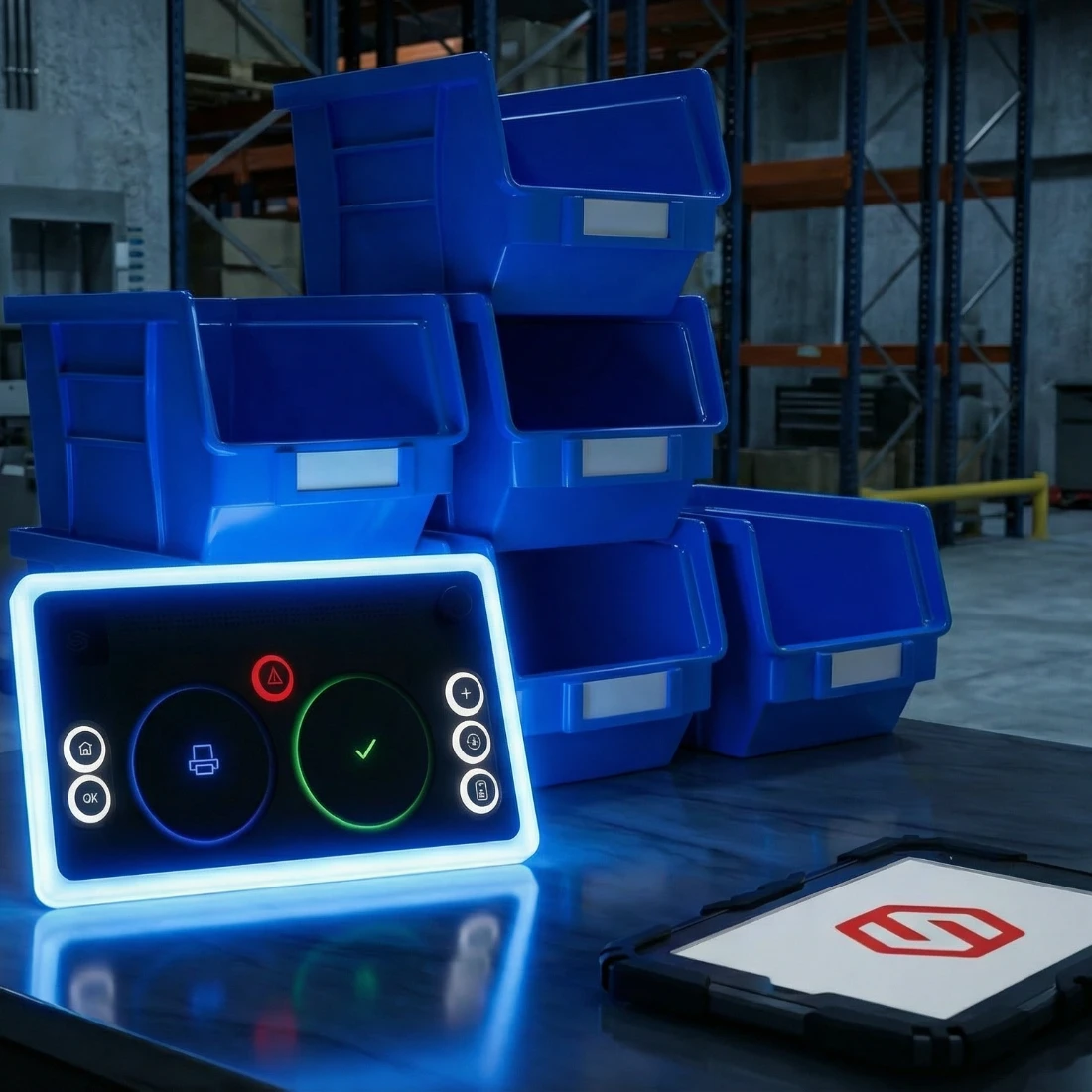
Why Keyboards Are Killing Your Pack Line (And What to Do About It). Stop losing throughput to keyboards and mice. ShipHero's Tap-to-Pack replaces screen navigation with an 8-button industrial controller built for 99.9% packing accuracy.
.svg)



.svg)



.webp)