
.svg)

Explore the future of warehouse efficiency with this detailed guide on automated picking systems, trends, and innovations for 2026.
.svg)
While your team is still walking aisles, your competitors are cutting pick times in half with automation. Guess who’s shipping faster and stealing market share?
Automation isn't the future anymore. It's the present. For growing eCommerce brands or fulfillment centers under pressure to deliver faster, cheaper, and more accurately, automated warehouse picking systems are no longer a luxury. They're a necessity.
In this guide, you'll learn how automated picking systems work, the types available, how to choose the right one, and how ShipHero can help you streamline fulfillment processes with confidence.
Automated warehouse picking systems use software, robotics, and real-time data to locate, retrieve, and prepare items for shipment, without relying solely on human labor. Instead of employees walking long distances and manually selecting items, automated systems bring items to workers or direct them with tools like lights, voice commands, or mobile robots.
For example, in the eCommerce space, brands use Goods-to-Person (GTP) systems to increase operational efficiency and efficiently handle large catalogs of SKUs. In retail, where seasonal order surges can overwhelm manual processes, automated solutions help companies double their picking speed and maintain consistent fulfillment even during peak demand.
The process is surprisingly seamless:
This flow is driven by smart software that integrates with warehouse management systems and supports key warehouse processes, including picking, packing, and tracking real-time inventory.
Want a deeper look at the tech behind it? Read this guide on warehouse automation software.
There’s no universal solution for warehouse automation. The best picking system depends on your space, order volume, and the variety of products you offer. Some work better for high-SKU, high-volume operations; others are ideal for smaller, more focused setups. Below, we break down the top systems and which warehouse types they’re best suited for.
GTP systems deliver inventory directly to a stationary picker, eliminating walking marathons. This setup enhances inventory management, reduces physical strain on workers, and improves worker safety.
It also optimizes order accuracy by minimizing human error. By minimizing walking time and keeping pickers in one place, GTP systems significantly boost pick rates while also cutting down on labor fatigue.
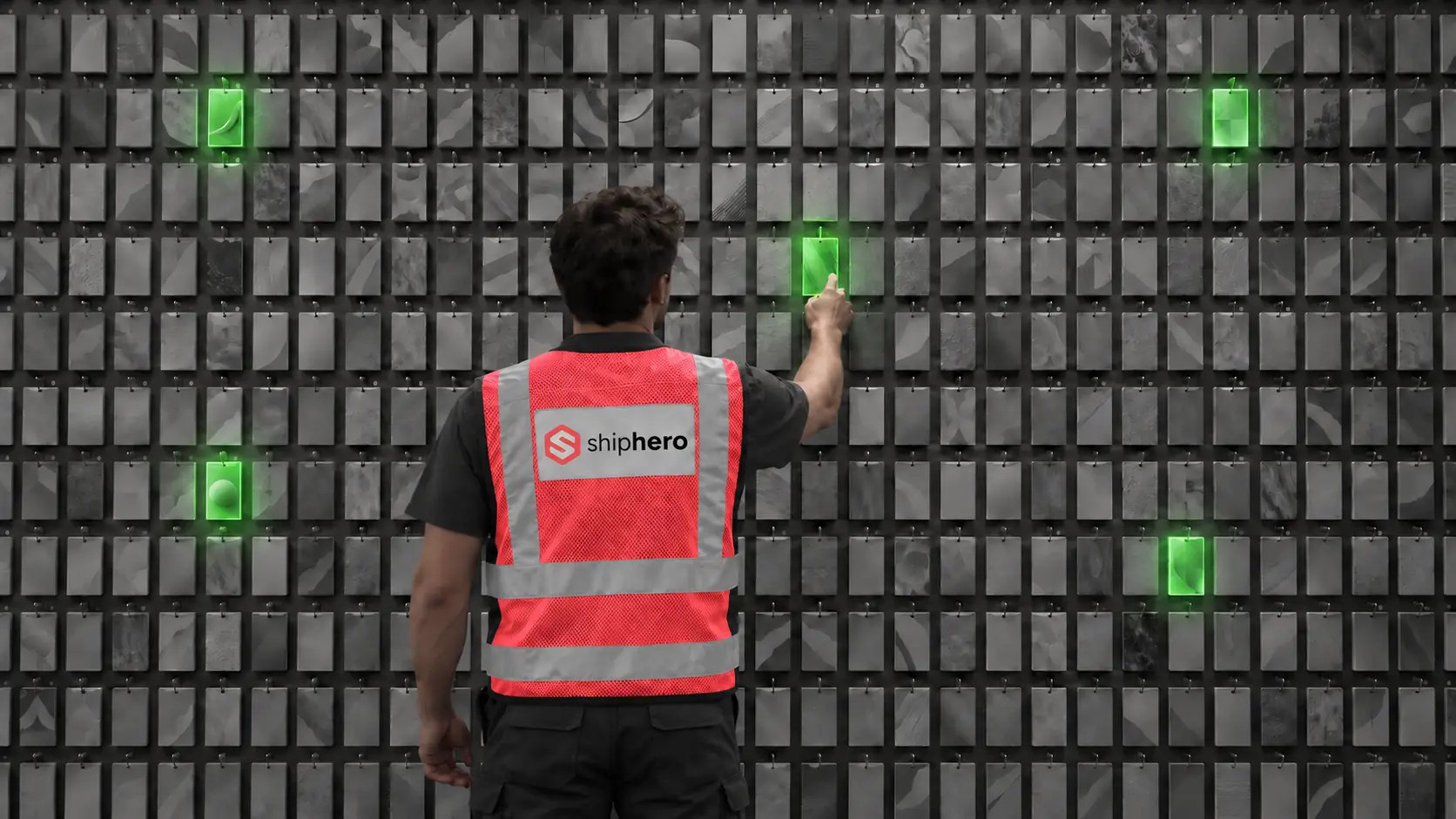
Pick-to-Light is an automated solution that uses LED light bars to guide workers to the right location for picking items, enhancing accuracy, speed, and efficiency while reducing errors.
When paired with Pack-to-Light and Receive-to-Light, your entire workflow is streamlined. Pack-to-Light ensures precise packing, while Receive-to-Light optimizes inventory storage and retrieval. Together, these technologies simplify inventory management, reduce labor costs, and accelerate fulfillment.
At ShipHero, we offer all three solutions, Pick-to-Light, Pack-to-Light, and Receive-to-Light, under one roof, seamlessly integrating with your existing systems to optimize warehouse operations. The combination can help boost efficiency by 20% while also cutting costs by up to 30% for batches of 10 to 30 orders.
Pickers wear headsets and follow voice commands to locate items, like a GPS for your warehouse. This hands-free approach automates repetitive tasks, shortens training time, and reduces picking errors, even in noisy environments. It also improves accuracy, even in noisy environments where traditional methods might fall short.
AMRs, or autonomous mobile robots, navigate the warehouse floor independently, delivering items or bins to human workers or packing stations.
Unlike fixed systems, AMRs offer greater flexibility and adapt to varying warehouse sizes, support scalable operations, and offer the flexibility to grow without major infrastructure changes. They’re also highly scalable, which makes them a smart choice for warehouses looking to grow or adjust operations without major infrastructure changes.
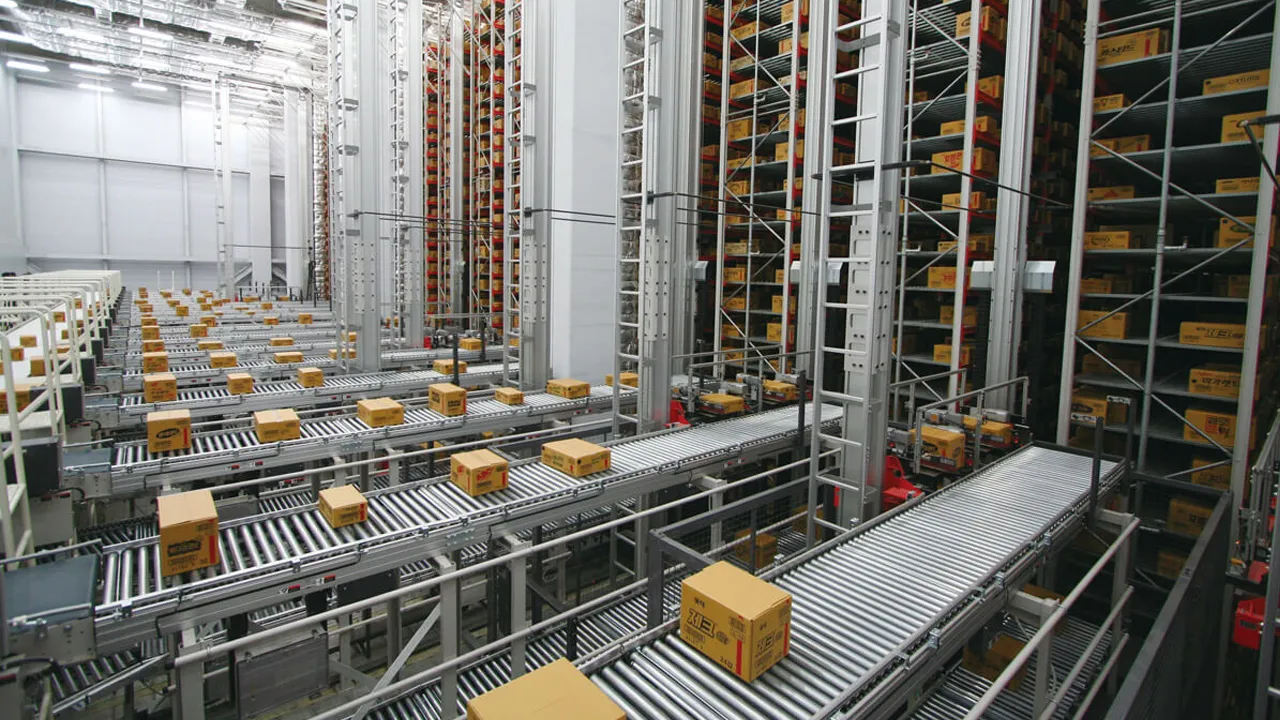
These are high-tech racking systems equipped with robotic cranes or shuttles that automatically store and retrieve inventory. They’re especially well-suited for large warehouses with high inventory turnover, where speed and space efficiency are critical.
Businesses that need to maximize vertical storage find these systems invaluable, and industries such as pharmaceuticals, automotive, and electronics often benefit the most from their precision and scalability.
Still not convinced? The real-world benefits speak for themselves. Automation significantly reduces human error, particularly in fast-paced warehouse environments where accuracy is crucial. It also speeds up fulfillment, often cutting pick times in half or more.
By streamlining operations, businesses can lower labor costs by either reducing headcount or reassigning team members to more valuable tasks.
By transitioning to automation, companies often see dramatic improvements in efficiency and cost savings. For example, automation can reduce warehouse labor costs by up to 60%, allowing businesses to reallocate resources and scale more effectively.
It’s not always smooth sailing when implementing automated picking systems. One of the biggest hurdles is the high initial investment, as hardware, software, and integration can come with a steep upfront cost.
Staff training is another challenge, as teams need time to learn how to use the new technology effectively. There can also be short-term disruption; installation and onboarding may temporarily slow down operations. But the long-term gains are often worth it.
For example, James Enterprise struggled with paper-based picking and processing delays before switching to ShipHero’s Warehouse Management System.
The transition required workflow changes and staff training, but with proper planning, such as going paperless, reorganizing their layout, and utilizing smart pick paths, they boosted productivity by 38%. New hires cut their pick time from 55 to 34 seconds in just five days, proving that smart automation pays off.
Finding the right automated picking system starts with understanding your specific needs. Warehouse size plays a big role, as larger spaces often benefit most from solutions like AMRs or AS/RS that can cover more ground efficiently. If your business manages a high variety of SKUs, systems like GTP or voice picking can offer the flexibility and accuracy you need.
For those working with tighter budgets, starting with light-based or voice-guided systems can provide a solid foundation without breaking the bank. Regardless of your starting point, scalability is crucial; your system should be able to grow in tandem with your business. Partnering with ShipHero ensures you get expert, customized guidance and future-proof solutions designed specifically for your operation.
Implementing warehouse picking automation isn’t just about installing new tech; it’s about doing it strategically. To get the most out of your investment and avoid common pitfalls, follow these proven best practices:
Best Practices for Successful Warehouse Picking Automation
For example, Black Wolf Nation and its 3PL arm, ONE23 Fulfillment, partnered with ShipHero to scale their operations. By adopting ShipHero's warehouse management software, they increased their order volume from 10,000 to over 25,000 per month in less than a year. This strategic implementation allowed them to efficiently manage growth and expand into the 3PL space.
Most companies see a return on investment within 12 to 24 months, depending on the system and order volume.
Yes. Many automated systems are designed to be scalable and cost-effective, which makes them ideal for small warehouses. Solutions like Pick-to-Light and voice picking can start small and expand as your operation grows.
Yes. Advanced systems feature adjustable grippers, sensors, and packaging logic to safely handle delicate or irregularly shaped products.
.webp)
Discover the role, benefits, key features, requirements, and implementation of a 3PL Warehouse Management System (WMS) for optimizing warehouse operations. Learn about scalability, integration, real-time visibility, and customization options to choose the best solution for your business.
.svg)
Explore the top 3PL companies in Canada and learn how third-party logistics providers play a vital role in optimizing supply chains. Discover the benefits of partnering with a 3PL, key services offered, and steps to start working with a 3PL in Canada.
Discover the top 5 best third-party logistics (3PL) companies for your business needs, offering extensive networks, advanced technology, and superior customer service. Learn about the benefits of 3PL services, how to choose the right provider, and avoid common mistakes.

At the denser wall, average picking time per order fell from 40 seconds to 13, and orders that ran clean from start to finish rose from 18% to 97%. This is the companion to our Direct Pack + Pack-to-Light case study, from the same research.




.svg)



.webp)