
.svg)

Wrong-bin picks down from 1 in 8 orders to nearly 1 in 120. The error reduction held at every station size. The picking time saving, up to 36%, depended on station size.
.svg)
A picker moves faster when they don’t have to think about where anything is. That is the entire idea behind Pack-to-Light, and it sounds obvious until someone asks how much. “Faster” is cheap to claim. So a team at ShipHero spent six rounds measuring it on video, across real production stations and controlled lab replicas, with a stopwatch running on some 350 orders
The tests were conducted in very specific settings: Direct Pack stations. This type of pack station puts inventory in bins right around the packing table, allowing one person to pick and pack each order in a single spot. No need to walk to a separate picking area.
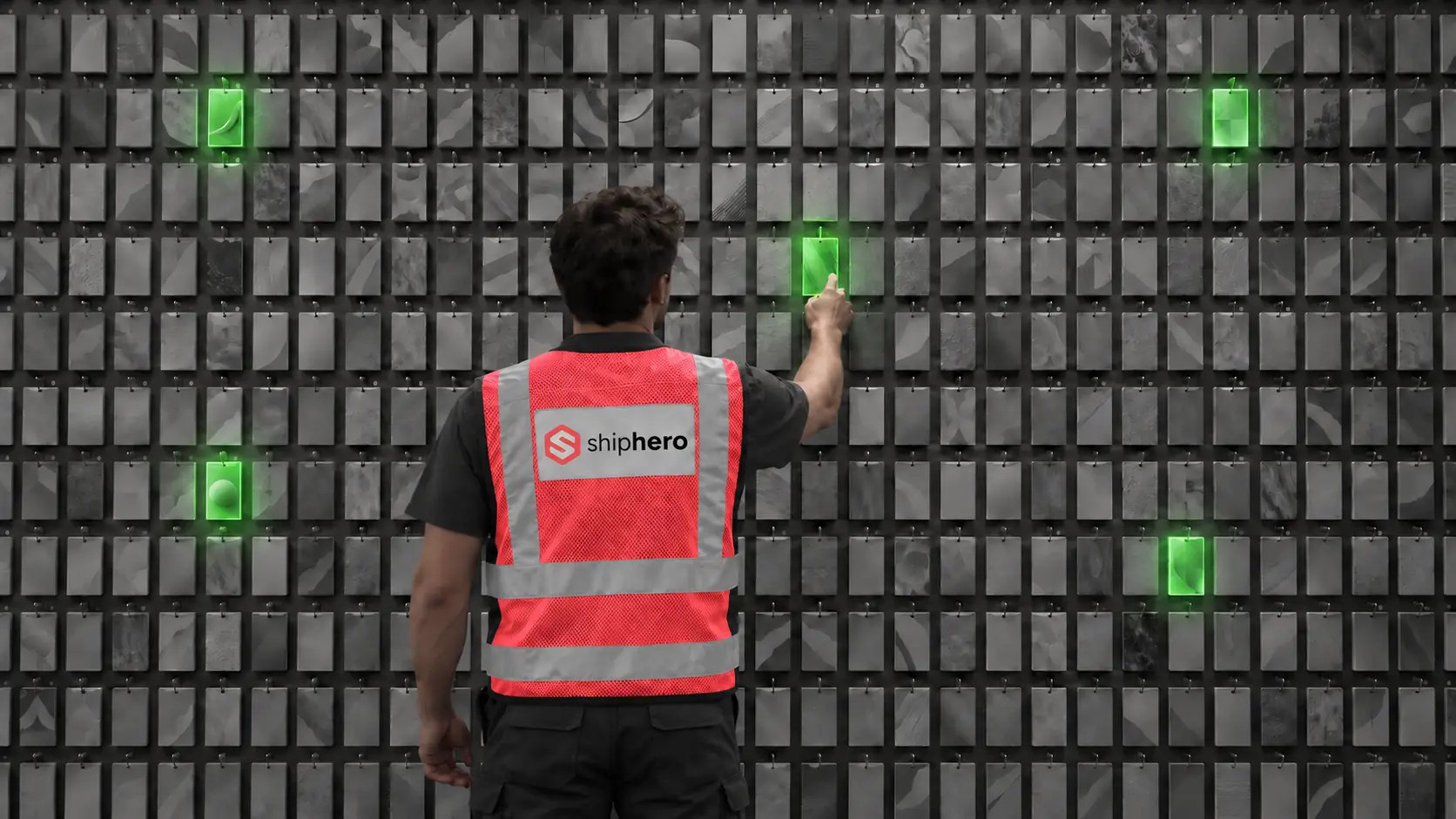
The ShipHero Pack-to-Light tool adds LED lights to those bins. When an order opens, every bin it needs lights up. The picker goes to a lit bin, picks the item, and its light goes out, then they move to the next lit bin, until none are left. If an order needs several units of the same item, the light alternates colors until the picker has them all. The picker doesn’t need to read the order screen: they just follow the lights.
Timing whole orders, lights on against lights off, produced nothing usable. That’s because the time a picker spends boxing, wrapping and labeling varies widely from order to order, burying the difference the lights made. So instead of timing whole orders, the team counted steps. Once the walking effect was clear, time came back in, now with packing carved out of the measurement entirely.
Every comparison was the same picker, at the same station, working real orders with the lights on versus off. At every station, each bin held a single product. And for the purposes of this study, one order line corresponds to one location visited.
The study tested six rounds, run at ShipHero’s Dallas warehouse and in the Buenos Aires Lab (*):
Regarding density, all the tested stations have one location per square foot. There’s one exception though: because of its particular setting, Company 3 ranges from 15 to 20 locations per square foot, which completely changes the picture. Since this article focuses on standard pack stations, we analysed the impact of higher densities in a separate study: Card Walls + Pack-to-Light Case Study: Picking Time Dropped by up to 67%.
The clock started the moment the order was on screen and the picker was free to act on it, not the moment they began walking. Those are rarely the same instant. An order often opens while the picker is still closing the previous box.
That detail decides the result. The seconds a picker burns reading the screen and memorizing locations are precisely what the lights delete, so a stopwatch that starts any later measures everything except the point.
Without lights, a picker works from memory. They must read the screen, hold three or four locations in their head, walk, forget one, walk back and check. While it is not possible to show this on a stopwatch, all of it shows up on video.
The rounds tested 146 lights-off orders and about 120 lights-on orders, showing that:
With lights, missed items dropped to about an eighth of the rate, though not to zero.
Also, with lights on, 92% of orders ran clean from start to finish. Without lights, 31% did. In the other 69%, the picker’s memory failed and got patched on the fly, mid-order, while the clock ran.
And with lights on, order-to-order times varied 2.5 to 3 times less than without them. And lost orders, where a picker spends 30 to 70 seconds hunting for a single location, never happened with them. That means picking became both faster and more predictable, which makes a station's output easier to plan.
At Company 1’s large station, on a typical order:
Behind those numbers sits a pattern that is held across all six rounds. Every order gets a base saving of 2 to 2.5 seconds, which is the skipped screen read. On top of that comes a per-line saving that grows with the size of the station. At small stations, roughly 43 to 75 sq ft, a picker who knows the layout cancels that per-line saving almost entirely. At a large one they can’t, because no picker reliably holds 160 bin locations in memory.
Two consequences follow:
Folded into each station’s real order mix, using full order cycles from production data:
At the large station, that works out to roughly 20 to 35 minutes of picker time freed every day. A small station adds only a few minutes on top, since its orders are mostly single-line. That gain can be taken as more orders out the door or as time given back.
At Company 2’s compact station the per-line saving disappears completely. Every location is fewer than three steps away, the picker can see the whole station at a glance, and the screen can be re-checked without walking back, so timewise, working from memory costs almost nothing. It still costs accuracy, which is where the lights earn their place here.The time win is just the base saving, about 2.5 seconds per order, whatever its size. The error reduction did not shrink with the size of the station. Without lights the picker still stopped to re-check the screen about once an order, on average. With lights, not once.
Bin density turned out not to matter across the densities standard stations run, which is around one pick location per square foot. Packing the bins more tightly made no difference to picking times. Walking distance and station familiarity did.
Six rounds at real stations, roughly 350 orders coded on video, and the findings point the same way:
The reason this is worth spending money on is not only the seconds. A station that produces more without anyone new being hired and without a bin being moved, that is capacity bought with hardware instead of headcount. Plus, it arrives without the ramp-up time a new hire needs.
The error side compounds that.
A mispick that reaches a customer costs a replacement shipment, a support conversation and the customer’s confidence, all of which sit downstream of a mistake that took two seconds to make. And because the lights close the gap between a veteran and someone new, the operation gets less fragile exactly when it is under the most pressure, which for most warehouses equals to Peak Season.
Packing is the other half of the cycle, now 40% to 50% of it at every station measured. But that issue already has an answer: Tap-to-Pack, ShipHero’s hardware controller that takes about 8 seconds off every order.
Lights on the pick side and a controller on the pack side act on different parts of the same cycle, increasing the overall efficiency.
(*) A note on names: the companies whose stations were tested are referred to here as Company 1, Company 2 and Company 3. Their operations were the real-world environment for the measurements, not a research partnership, so we describe their stations without identifying them.
.webp)
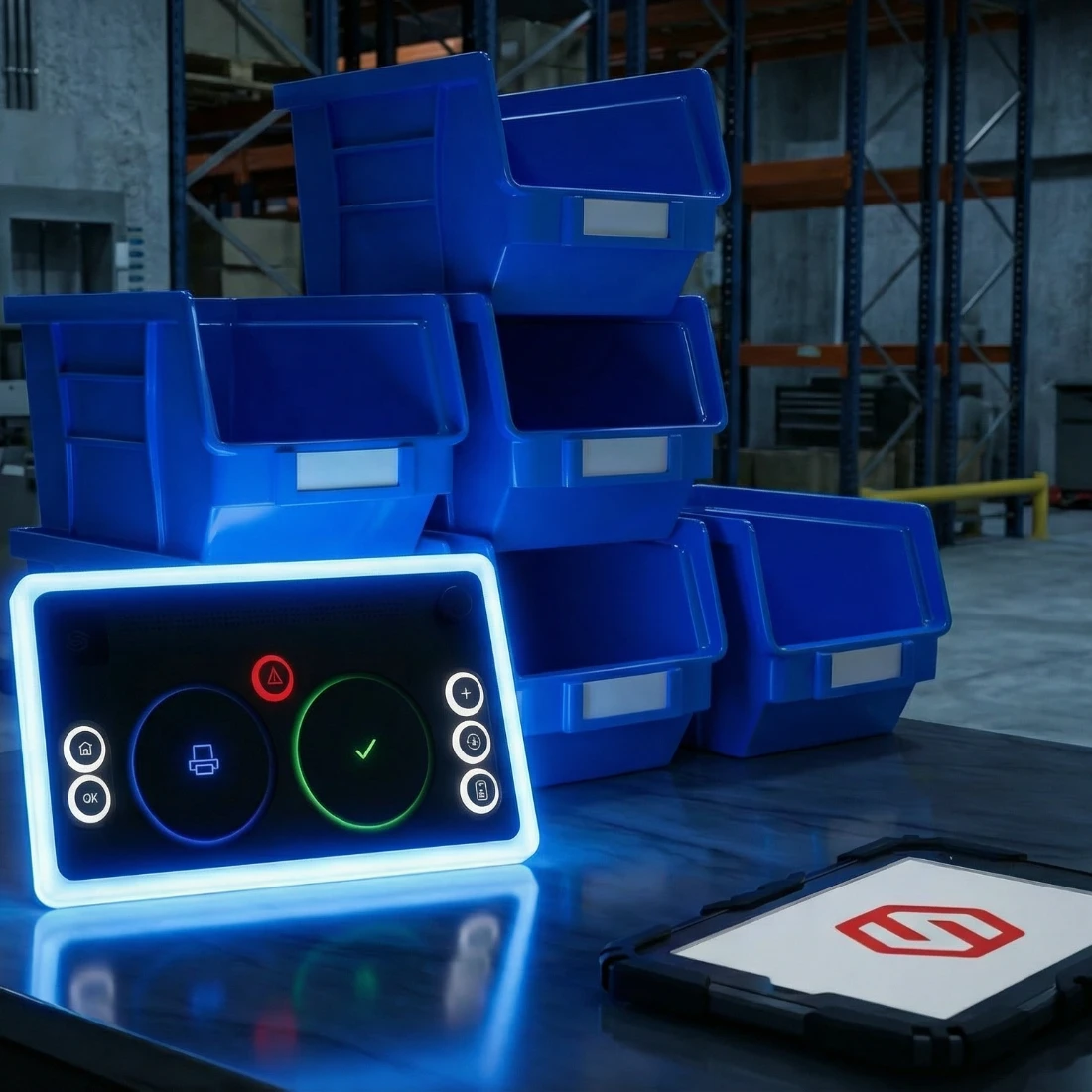
Why Keyboards Are Killing Your Pack Line (And What to Do About It). Stop losing throughput to keyboards and mice. ShipHero's Tap-to-Pack replaces screen navigation with an 8-button industrial controller built for 99.9% packing accuracy.
.svg)

At the denser wall, average picking time per order fell from 40 seconds to 13, and orders that ran clean from start to finish rose from 18% to 97%. This is the companion to our Direct Pack + Pack-to-Light case study, from the same research.
At the denser wall, average picking time per order fell from 40 seconds to 13, and orders that ran clean from start to finish rose from 18% to 97%. This is the companion to our Direct Pack + Pack-to-Light case study, from the same research.
On September 1, 2026, Descartes Systems Group announced its acquisition of Extensiv for approximately $120 million. What was announced, what usually follows deals like this, and the questions Extensiv customers should put to their vendor before renewal.



.svg)



.webp)