
.svg)

The incumbent President of the United States made quick work in demonstrating to our citizens and the rest of the world exactly what our country’s priorities will be for the next four years and beyond. Within his first week of taking office, President Joe Biden enacted a long list of executive orders that sought

.svg)
The incumbent President of the United States made quick work in demonstrating to our citizens and the rest of the world exactly what our country’s priorities will be for the next four years and beyond. Within his first week of taking office, President Joe Biden enacted a long list of executive orders that sought solutions to the pressing issues stemming from the COVID-19 pandemic, immigration, and climate change.
Sustainability has been of great importance to the Biden administration since his Vice Presidency, and continued to be a main aspect of his campaign during the 2020 election, so it came as no surprise when President Joe Biden signed an executive order to initiate his plan to combat climate change through a Clean Energy Revolution and Environmental Justice.
No matter who you voted for, it’s time to get acquainted with his stance on climate change, what measures the government will be taking to lower our carbon footprint, and how the logistics industry will be impacted. In essence, it comes down to carbon emissions and the railroad.
Under Biden’s leadership, the United States rejoined the Paris Agreement on climate change, which calls us to determine a reduction target for emissions and direct our federal agencies to execute on that promise.
For example, US agencies have been directed to purchase American-made, zero-emission vehicles, and suspend new oil and natural gas leases on public lands in hopes to conserve at least 30% of federal lands and waters over the next ten years.
The Biden Plan for a Clean Energy Revolution and Environmental Justice also promises to make major public investments in automobile infrastructure, including 500,000 electric vehicle charging stations, while accelerating R&D on battery technology and battery production. This is sure to increase production and widespread use of EV vehicles, buses, and trucks for transportation.
Sustainability
As the current pandemic situation unfolds, sustainability in the supply chain has gone by the wayside as urgency and necessity push for speed and reliability in shipping. But even still, some shoppers opt to use the Amazon Day feature to try and offset their purchases with their rationale being, if they have to come here, at least let them bring more than one thing. Post-COVID however, sustainability will be sure to resume as a large priority for consumers and retailers once more.
For fulfillment providers, retailers will push for low-carbon and zero-carbon (if not negative) emissions throughout the supply chain. There will be a push for clean transportation options, namely electric vehicles (EV) including electric trucks for long-distance shipping, whereas air freight has the worst carbon emissions.
Although it remains unclear what Environmental Justice specifically entails, we don’t find it out of the realm of possibilities that a national carbon tax could be introduced similar to Canada, Britain or some US states, or rather an incentivized stimulus for low-emitting companies. If enacted, a carbon tax could make logistics companies like Amazon rethink their air-heavy fulfillment strategy and make way for 3PLs that are built on sustainable practices.
But where, WHERE, are these sustainable transportation methods coming from?, you may have shouted into your computer screen. Well, toot toot, the answer to that falls on…
Biden’s plan aims to spark “The Second Great Railroad Revolution”, a push to modernize US rail infrastructure, which will ensure that we have the cleanest, safest, and fastest rail system in the world — for both passengers and freight.
A US Rail Revolution will not only reduce pollution, by working with Amtrak and private freight rail companies to further electrify the rail system, but also provide workers with “good, union” jobs and stimulate investment in communities better linked to major metropolitan areas. In order to streamline the loan process and make capital more available for the railway industry, Biden has tapped existing federal grant and loan programs at the US Department of Transportation.
Multi-modal
Currently, fulfillment is dominated by ground travel, with long-distance trucking and last-mile delivery vans. Although rail freight can carry 400 times what a single truckload can with much fewer emissions, the current process for fulfillment by rail is too complex and downright costly. However, Biden’s plan could be the answer for this.
By modernizing rail freight and designing it for today’s eCommerce world, rail freight could once again become a viable option, and 3PL providers that account for this shift could disrupt the logistics industry entirely by cornering the multi-modal transportation space.
Multi-modal transport (also known as combined transport) is the transportation of goods under a single contract, but performed with at least two different modes of transport, often performed by contracted sub-carriers. The carrier responsible for the entire carriage is referred to as a multimodal transport operator, or MTO.
So, any 3PL that can become the leading MTO could position themselves to become the 4th major player in logistics and fulfillment, with UPS and Fedex at capacity, and Amazon weighed down by its traditional infrastructure.
We’re no fulfill-osophers, but we do predict that a smart logistics provider like ShipHero, one built to scale through agility, will be perfectly positioned to quickly claim market share and delight their customers with sustainable shipping and multi-modal options.
Through use of already existing clean energy and green technologies, the logistics industry can lead the way towards sustainable practices in eCommerce supply chains. Moreover, the pandemic-caused boom of eCommerce has given rise to a plethora of opportunities and growth in the fulfillment space; and where money goes, progress follows.
Investments to improve fulfillment practices driven by big data and blockchain will be the spark necessary for companies to derive ROI from their sustainable practices, and effectively contribute to Green Joe’s climate plan.
Learn more about ShipHero's industry-leading warehouse management software.
.webp)
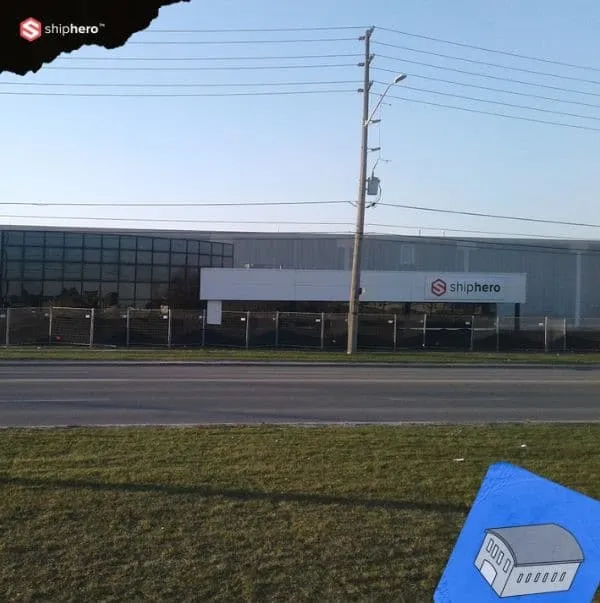
Explore the top 3PL companies in Canada and learn how third-party logistics providers play a vital role in optimizing supply chains. Discover the benefits of partnering with a 3PL, key services offered, and steps to start working with a 3PL in Canada.
.svg)
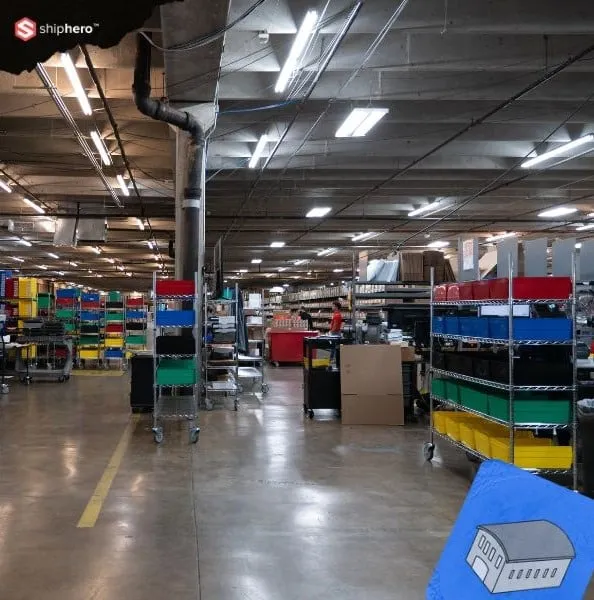
Discover the top 5 best third-party logistics (3PL) companies for your business needs, offering extensive networks, advanced technology, and superior customer service. Learn about the benefits of 3PL services, how to choose the right provider, and avoid common mistakes.
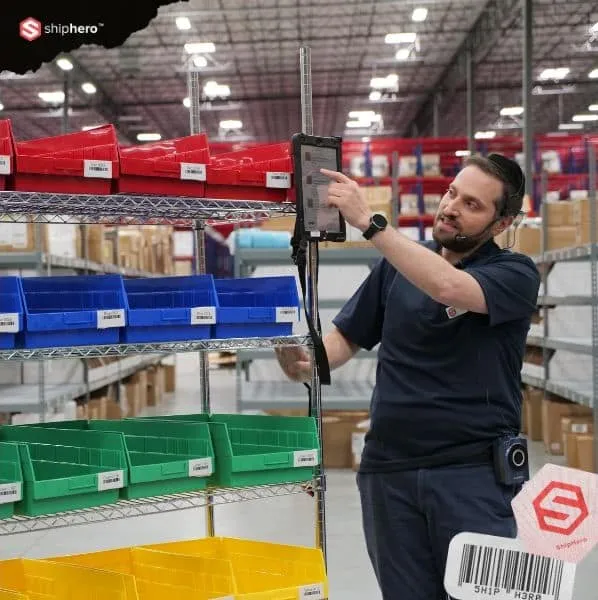
Discover the role, benefits, key features, requirements, and implementation of a 3PL Warehouse Management System (WMS) for optimizing warehouse operations. Learn about scalability, integration, real-time visibility, and customization options to choose the best solution for your business.

On September 1, 2026, Descartes Systems Group announced its acquisition of Extensiv for approximately $120 million. What was announced, what usually follows deals like this, and the questions Extensiv customers should put to their vendor before renewal.




.svg)



.webp)