
.svg)

Let’s stay in touch with the ShipHero Blog.


.webp)
The ShipHero Model Context Protocol (MCP) connects supported AI clients directly to your live ShipHero data, so warehouse teams can ask questions and get specific answers from their own account. It is built for day-to-day operational checks, including inventory levels, open orders, shipment status, holds, returns, purchase orders, and exceptions. For ShipHero customers, it is available at no additional charge and runs on existing API credits.
Every order, shipment, inventory movement, hold, return, and purchase order creates data inside ShipHero. Your warehouse information is right there, but getting to it can be a slow, complex process.
Before the ShipHero MCP, answering a specific operational question often meant logging in, finding the right report, applying the right filters, exporting data, or asking the one person on the team who knew where to look.
Even when the answer was simple, like a quick inventory check, it could turn into a 20 to 45 minute task. A customer question could sit half a day while someone pulled the right numbers. That delay adds friction to the floor. It slows decisions. It keeps teams waiting on data they already own.
The ShipHero MCP gives supported AI clients secure, read-only access to live ShipHero data.
That means operators can ask questions in plain English and get answers from their actual account, not from a generic help article or static knowledge base. A chatbot can tell you where to find a number. The ShipHero MCP can return the number itself.
It works with MCP-enabled AI clients, including Claude, ChatGPT, Cursor, and Codex. Connect it once, authenticate access, and your team can start asking operational questions from the AI tool they already use.
The workflow is simple:
The MCP does not replace ShipHero. It makes the data inside ShipHero easier to reach when your team needs a fast answer.
The ShipHero MCP is designed for everyday operational questions, such as:
If the data lives in your ShipHero account, the MCP gives your team a faster way to ask for it.
Speed matters, but safety matters too.
The ShipHero MCP is read-only by design. It can retrieve information from your account, but it cannot create orders, modify records, delete data, or change warehouse settings.
That gives teams a practical way to use AI for operational visibility without risking accidental account changes. Operators can ask. Managers can check. 3PL teams can answer client questions faster.
The data becomes easier to use, while the records stay protected.
For founders, the MCP can turn a quick inventory check into a simple question.
For operations leads, it can surface shipment status, holds, exceptions, and low-stock SKUs without digging through reports.
For 3PL operators, it can help answer client questions faster, using live account data instead of manual follow-up.
The result is a faster way to reach the information already inside ShipHero.
The ShipHero MCP is available to all ShipHero customers at no additional charge. It runs on existing API credits, so specific questions help keep usage efficient.
To get started, visit developer.shiphero.com or contact your ShipHero account representative.
ShipHero MCP is a read-only connection between supported AI clients and your live ShipHero data. It lets users ask operational questions in plain English and receive answers from their actual ShipHero account.
A chatbot usually answers from fixed, generic information. ShipHero MCP connects to live account data, so it can return specific answers about your orders, shipments, inventory, holds, returns, and other ShipHero records.
ShipHero MCP works with AI clients that support the Model Context Protocol, including Claude, ChatGPT, Cursor, and Codex.
No. ShipHero MCP is read-only. It can query data, but it cannot create, update, or delete records in your ShipHero account.
No. The MCP is built for operators and can be connected from a supported AI client in minutes. Developers may use more advanced tools for deeper analysis, but most day-to-day users can work directly with the MCP.
Yes. ShipHero MCP is available to ShipHero customers at no additional charge and runs on existing API credits.
Transitioning to a new Warehouse Management System (WMS) is a high-stakes decision that often triggers concerns regarding downtime, data integrity, and workforce adaptation. As warehouses prepare for 2026 growth, understanding these common hurdles—and the technical solutions that resolve them—is essential for a successful migration. This guide addresses the five primary barriers to adoption and how a high-velocity infrastructure ensures a seamless transition.
Warehouse operators frequently hesitate to upgrade due to perceived risks that can halt operations. These challenges typically include:
To clear these hurdles, a structured implementation strategy is used to prioritize data density and entity clarity.
In the competitive eCommerce landscape, staying stagnant with manual workarounds is often more costly than the transition itself. Moving to a high-velocity WMS converts your warehouse from a cost center into a growth engine by providing Labor Efficiency and ROI through automated routing and reduced authentication friction.
Because the platform is built for the floor worker, features like Workforce Hero allow seasonal temps and new staff to be authenticated and productive in under an hour.
No. High-velocity infrastructure increases visibility by providing Total Real-Time Control. Managers can monitor exactly what is in the Hospital queue and track replenishment in real-time from a single dashboard.
Before going live, a ground-up audit is performed using cycle counting tools. The system's architecture ensures that every movement on the floor is synchronized with sales channels instantly, maintaining 99.9% accuracy.
Picture a packer at Peak Season. A box is in front of them, a product in each hand, and somewhere on a cluttered desk there's a mouse they need to find to confirm the order. They look down. They hunt. They click. Then they do it again. Thousands of times a day.
That moment of friction is small. But it is never just one moment. Multiply it across your entire pack line, across an entire shift, and you are looking at a measurable and largely invisible drag on your total throughput.
Tap-to-Pack is a purpose-built hardware controller designed by ShipHero to eliminate digital friction at the packing station. It connects via USB-C, requires no drivers or additional software, and syncs automatically with the ShipHero WMS packing app. This new system is now available at the ShipHero Store.
Instead of navigating a screen with a keyboard and mouse, packers execute every high-frequency command — such as selecting box sizes, printing labels, finalizing orders, flagging exceptions — with a single physical tap on one of eight programmable buttons.
Key specifications:
Most warehouses are running 2026 operations on 1990s peripheral standards. The keyboard and mouse were designed for spreadsheets and emails, not high-volume fulfillment. When used at a packing station, they create three compounding problems:
The problem is not your people. It is the tools you are asking them to use.
Tap-to-Pack introduces a "Rodent-Free" packing standard: a workflow where the packer's hands stay on the product, their eyes stay on the work, and the software fades into the background.
The device guides the packer through two feedback systems:
ShipHero customers running Tap-to-Pack are already seeing a 90% reduction in on-screen interactions and a significant increase in the number of orders packed per hour, without adding headcount or changing their warehouse layout.
One of the hardest challenges in fulfillment is absorbing volume quickly, especially during Peak Season, when temporary staff need to reach target productivity fast.
Because Tap-to-Pack's interface is physical and intuitive, there is almost nothing to teach. Pick up the product, follow the light, tap the button. New packers can reach target productivity in minutes rather than hours.
The system is also modular:
Whether you are a growing DTC brand or a high-volume 3PL, Tap-to-Pack is designed so your hardware never becomes a ceiling on what your team can do.
Tap-to-Pack is a programmable, industrial-grade hardware controller that connects to the ShipHero WMS and allows warehouse packers to execute packing station commands, such as printing labels, selecting boxes, and completing orders. All with a single physical button press, eliminating the need for a keyboard and mouse.
The device connects via USB-C and syncs automatically with the ShipHero WMS packing app. It is a true plug-and-play solution: no drivers, no background software, and no manual configuration required.
Yes. Buttons are configurable for a range of packing actions, including Print Label, Complete Order, Select Box Size, and the Hospital function, which flags a problematic order and keeps the line moving without stopping to resolve it on screen.
The system is fully modular. Connect up to two additional 8-button hubs to the Main Hub for a total of 24 programmable buttons, supporting even the most complex multi-step packing workflows.
Tap-to-Pack devices require ShipHero Packing App v1.0 or higher. The current release is v1.1.0.
Imagine running a warehouse where orders are picked quickly, inventory is accurate, and all operations run smoothly without any errors or delays. Thanks to Artificial Intelligence, this can now become a reality with ease.
AI is transforming warehouse management by enhancing efficiency, intelligence, and the ability to meet the rapid demands of today’s eCommerce-driven market.
ShipHero is pioneering this revolution with its AI-powered warehouse solutions, setting new industry benchmarks. This article explores ShipHero’s AI Picking feature, highlighting how it’s transforming warehouse management and enhancing operational efficiency.
The integration of AI technologies, including machine learning, robotics, and predictive analytics, is revolutionizing warehouse operations, driving significant improvements in efficiency, accuracy, and overall performance. These innovations are optimizing processes across various areas, from inventory management to order fulfillment. Below are the key benefits of AI in warehouse management.
A combination of AI technologies is shaping smarter warehouse systems to help revolutionize warehouse management.
ShipHero has taken AI integration to the next level with its AI Picking feature, designed to significantly improve warehouse efficiency. This feature automates the picking process, reducing the reliance on manual labor and enhancing productivity in ways that were once thought impossible.
Let’s dive deeper into how ShipHero’s AI Picking works and the advantages it offers.
AI Picking optimizes warehouse operations in two key ways:
The AI Picking feature delivers a wide range of benefits:
The transformative power of AI extends far beyond just picking. AI is also revolutionizing other aspects of warehouse management, driving improvements in operational efficiency, inventory management, and safety.
AI automates tasks, reducing errors and increasing speed. Automated sorting and real-time inventory tracking ensure accuracy, while real-time monitoring helps managers adapt and ensure timely deliveries.
AI plays a vital role in maintaining accurate inventory levels. By leveraging predictive analytics, AI can forecast demand and optimize stock levels, helping warehouses avoid both stockouts and overstock situations. This leads to better inventory management and fewer disruptions in supply chains.
AI-driven systems can monitor warehouse conditions to ensure safety and compliance with industry regulations. These systems can analyze warehouse data and predict potential hazards before they occur, proactively reducing risks and ensuring a safer working environment.
AI technologies are playing a transformative role in the supply chain and logistics sectors by improving efficiency, reducing costs, and enhancing decision-making.
These intelligent systems effortlessly manage supply chain processes by using data to optimize operations, predict trends, and automate routine tasks. This ultimately reshapes everything, from how goods are moved to stored and delivered.
The future of warehouse management looks promising with greater automation and efficiency, but future warehouse digitization brings challenges, such as high upfront costs and the need for skilled personnel.
AI-powered drones, autonomous robots, and IoT integration are smart warehouse technologies that are revolutionizing warehouse operations. Drones will deliver goods quickly, while robots automate sorting and transportation, thereby reducing the need for manual labor.
IoT and AI integration will enable real-time monitoring and optimization of operations. Smart technology in warehouses is leading to fully automated systems that are faster, scalable, and need minimal human input.
While AI offers immense benefits, businesses must also consider certain challenges. High initial investments in AI technology, data security concerns, and the need for skilled personnel are just a few of the hurdles that must be addressed.
However, with a strategic approach, companies can eliminate the challenges and embrace AI’s full potential to boost accuracy in picking and improve overall warehouse operations.
AI minimizes error by automating tasks like inventory tracking, order picking, and sorting, ensuring greater accuracy and efficiency.
Yes, AI-driven predictive analytics can predict demand, track inventory levels, and improve supply chain efficiency by forecasting needs with greater accuracy to help businesses stay ahead of trends and market fluctuations.
AI solutions are becoming more cost-effective thanks to cloud-based services and subscription pricing models. These options make AI technology more accessible to small businesses, allowing them to take advantage of its benefits without large upfront costs.




Move over Air Bud… Humphrey the French Bulldog may not be able to sink a three pointer, but he can sell dog accessories while saving the planet like it's nobody’s business. Except, it is his business! Enter: Spotted By Humphrey -- a specialty dog boutique with a playfully curated selection of thoughtfully-designed, well-made, premium dog accessories, which comes along with a promise of net-neutral climate emissions.
Spotted By Humphrey - “with its quirky name for a shop that has the personality to match” - is a community-driven online destination for dog parents around the world who are looking to find something special and unique for their dogs.
Humphrey aka Spotted Humphrey (@spottedhumphrey) has over 120K followers on Instagram, and is the inspiration behind the business, as founders Sandy and Yong-Soo Chung (also Humphrey’s parents) wanted to create a shop that would make the experience of shopping for your dog just as fun and community-oriented as Humphrey’s Instagram.
Naturally, social media plays a key element in the shop’s marketing strategy; however, both Sandy and Yong-Soo believe that their success largely comes from establishing a strong operational foundation, which ultimately creates a better experience for their customers.
Having founded his own ecommerce shop Urban EDC Supply prior to the launch of Spotted By Humphrey, Yong-Soo leveraged his existing ecommerce experience to establish Spotted By Humphrey, which Sandy has taken on and grown organically ever since. Yong-Soo eventually founded an all-encompassing ecommerce brand accelerator with the first ever net-negative carbon emitting 3PL in the industry, so every shipment that goes out actually benefits the planet instead of harming it.
"Frustrated by the lack of accountability and execution, I decided to take fulfillment in-house. First, we used another WMS other than ShipHero. It was slow, we had a lot of mis-shipments, and it was difficult tracking inventory. When I finally stumbled upon ShipHero, it was a game changer. The software was intuitive to use and it had a lot more features that made it easier to streamline our fulfillment operations."
-- Yong-Soo, Founder and CEO of GrowthJet
Yong-Soo utilizes ShipHero’s warehouse management software across his ecommerce brand accelerator, GrowthJet, along with his two internal brands, Spotted By Humphrey and Urban EDC Supply, a boutique everyday carry shop. So we asked Humphrey and Yong-Soo to ‘sit, stay and roll over’ what made ShipHero the right choice for his business.
ShipHero: Humphrey, tell us about your business(es).
Humphrey: OUAF OUAF!
SH: Ah, I don’t speak French. Yong-Soo, care to translate?
Yong-Soo: “In a nutshell, GrowthJet is an ecommerce brand accelerator with two internal brands, Urban EDC Supply (launched 2015) & Spotted By Humphrey (launched 2018).
Urban EDC Supply is an everyday carry shop with a strong focus on the EDC and knife community. We collaborate with world-renowned designers like Jesper Voxnaes to create stylish and functional everyday carry gear for our community of gear enthusiasts. Taking a page out of the streetwear clothing culture, weekly drops feature a limited supply of exclusive goods that sell out within hours, and sometimes minutes, or even a few seconds. While there’s a wide range of goods available for sale, some of these high-end collectibles can sell for as much as $2,000.
Spotted By Humphrey is a specialty dog boutique inspired by our french bulldog, Humphrey. As of today, Humphrey has 120k followers (@spottedhumphrey) on Instagram. We wanted to create a shop that would make the experience of shopping for your dog fun and community-oriented. Sandy and Humphrey made an appearance on the first episode of Shopify’s “Guess My Hustle” series (produced by Portal A, an award-winning digital studio), as well as Shopify’s “New Money” series (episode titled, “How To Make Money In The Million Dollar Dog Accessories Industry”).
Having built two fast-growing brands, in 2019, several colleagues approached us asking about our product photography, our fulfillment operations, and other e-commerce related ops questions. We decided to build and launch GrowthJet as the backbone infrastructure support to grow e-commerce brands. We've been growing very quickly through word-of-mouth ever since.”
SH: During your journey, you went from using a third party logistics (3PL) provider to fulfilling on your own. What was the catalyst for this switch?
Yong-Soo: “When I launched Urban EDC Supply back in October 2015 from my one-bedroom apartment in San Francisco, I did a tremendous amount of research on finding the best 3PL. After weeks of digging in, I settled on a 3PL that was based here in the Bay Area, and one that had the best reviews and ratings.
Unfortunately, I had one of the most frustrating experiences with this particular 3PL. I lost close to $5,000 worth of inventory due to negligence by the fulfillment staff. There was one particular instance where one of the employees opened up the box that was being shipped to my customer, took the item out, and then shipped out an empty box to my customer in Alaska. It turns out that this particular employee's last day was the next day. When confronted with this news, the employee never returned to collect his final paycheck the next day.
Frustrated by the lack of accountability and execution, I decided to take fulfillment in-house.
SH: Sounds like they were in the doghouse, eh Humphrey?
Humphrey: RUFF!

SH: Too true, too true. So when you were searching for WMS solutions, what were your main fulfillment goals?
Yong-Soo: “When we took fulfillment in-house and launched GrowthJet, the main goals were to improve order accuracy through proper barcoding, speed up the process of fulfillment, and generally, have more accountability and insight into our shipment data.
For us, the [most important criteria] was our ability to have an open dialogue with our fulfillment center. When we needed something, calling a phone number and being greeted by a "voice mailbox is full" message is never fun. Neither is sending out an urgent support email and not receiving a response for over a week. So for GrowthJet, we made it a point to be transparent and open to communication. Also, the ability to flex and work collaboratively with the 3PL is an important part of what we do at GrowthJet.”
SH: And why did you choose ShipHero?
Yong-Soo: “First, we used another WMS other than ShipHero. It was slow, we had a lot of mis-shipments, and it was difficult tracking inventory. When I finally stumbled upon ShipHero, it was a game changer. The software was intuitive to use and it had a lot more features that made it easier to streamline our fulfillment operations.
Integrating ShipHero was relatively easy, especially with one of the Solutions Engineers Matt D. helping us.”

First, we used another WMS other than ShipHero. It was slow, we had a lot of mis-shipments, and it was difficult tracking inventory. When I finally stumbled upon ShipHero, it was a game changer. The software was intuitive to use and it had a lot more features that made it easier to streamline our fulfillment operations.
SH: Every ShipHero customer is assigned a Solutions Engineer to help simplify the onboarding and integration process because we look after our customers, dawg.
Humphrey: ...
SH: So what was your inspiration for the climate neutral pledge, and how do you plan to become a Carbon Negative 3PL?
Yong-Soo: “When we launched GrowthJet, we realized how bad the waste and carbon footprint is for logistics and fulfillment. We think a lot about ecosystems not only for the environment, but the entire lifecycle of every item that comes through our warehouse including packaging materials, pallets, used equipment, etc.
We want to reduce as much as possible, then reuse, then recycle what we can before we decide to throw something away. Even then, we offset the carbon footprint of our garbage by purchasing carbon credits through ClimateNeutral.org.
On top of our Climate Neutral certification, we will be implementing our own tree-planting initiative in 2021. As far as we know, we will be the first carbon negative 3PL in the world. This means that for every package we ship out for our brand partners, we're actually helping our planet fight against climate change. Counter-intuitive, isn't it?
SH: Planting trees to help climate change, care to comment Humphrey?
Humphrey: BARK!
SH: Surprisingly on topic. And what has been the response from your customer base?
Yong-Soo: “Overall, the response from our brand partners has been very positive. They love and appreciate our proactive commitment to saving our planet, rather than being part of the problem. We're also different from most 3PLs in that we're more selective about who we bring on as a partner. We want to make sure we're aligned on values first and foremost. Like any relationship, it's a two-way partnership. We have a bias for thinking long-term so we want to make sure there's a fit first before making a long-term commitment.”
SH: Finally, how has your business been impacted by the COVID-19 pandemic and lockdowns?
Yong-Soo: Our business actually saw an increase due to COVID. With e-commerce getting a huge boost, we were fortunate to be in a position of leverage during the pandemic. Of course, there were additional costs such as PPE equipment and being more cognizant of social distancing within the warehouse, but all in all, we feel very lucky to come out of the pandemic stronger than before.
SH: Amazing, thank you for sharing your story and allowing us to write this case study. Humphrey, final thoughts?
Humphrey: WOOF WOOF!

Follow Humphrey and the Spotted By Humphrey’s journey at their website and Instagram.
Website: https://spottedbyhumphrey.com/
Humphrey’s Instagram: https://www.instagram.com/spottedhumphrey/
Spotted By Humphrey Instagram: https://www.instagram.com/spottedbyhumphrey/
Want to be featured in our case study?
If you would like to share with us stories about your ecommerce experiences, whether it’s how you started your business, what opinions you have on the stories we share, or if you just feel like venting… we’re here for you.
Shoot us an email and you could be featured on an upcoming Case Study, our critically-acclaimed weekly news segment The Packet, or if you’re lucky, you could be invited to join one of our many Podcast episodes!
.svg)
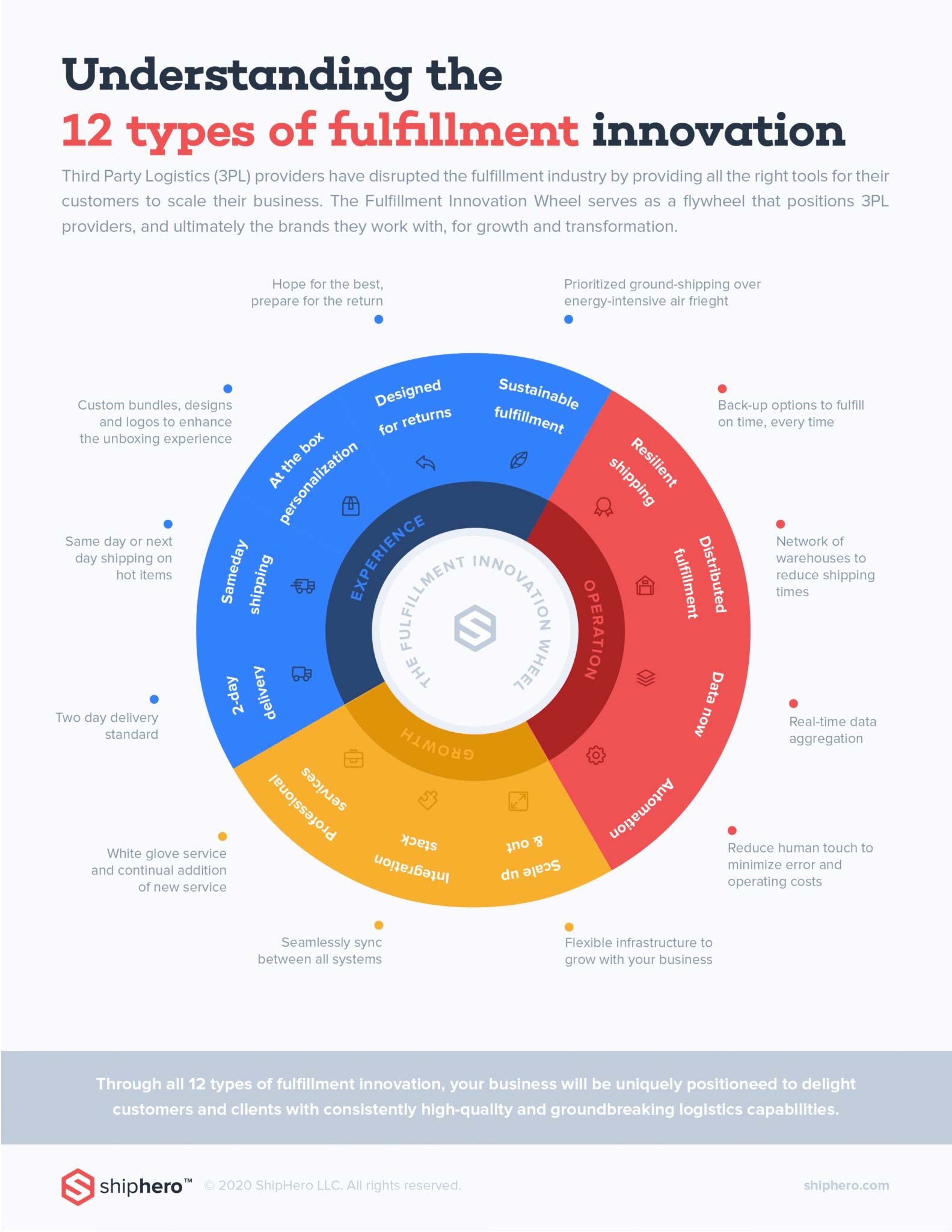
ShipHero recently launched The Fulfillment Innovation Wheel to help 3PLs understand what capabilities and service offerings they need to implement in order to be successful and to help online retailers and brands choose which 3PL is right for them by allowing them to ‘check the boxes’.The Fulfillment Innovation Wheel listed a set of twelve (12) capabilities that fulfillment providers and logistics companies should implement to continually delight their customers and push themselves towards greater success and innovation.The twelve capabilities are:
In this article, we will be diving into Capability #9: Automation. And be sure to stay tuned for future articles as we deep-dive into each capability.
The mundane, the menial, the humdrum, the everyday monotony… these are the types of business activities that should and could be automated. Why spend your valuable time copy and pasting shipping information across your systems? Or manually inputting return information? Or constantly checking inventory levels? Let automation work for you!As a business owner, your fulfillment provider should also understand that your time is your most valuable resource. If you are just starting out, you may be able to manually handle it all on your own. But when your business grows bigger and bigger, and the orders are rolling in, you risk spreading yourself too thin, giving yourself no time to get your head above water and focus on your business’s long-term strategy. If you get to the point where the everyday tasks of your fulfillment process seems to be your only focus, it’s definitely the right time to switch to a fulfillment provider that can automate these for you.
For that reason, ShipHero has partnered with Alloy to unlock smart automations that improve inventory control and warehouse operations with just a few clicks, while integrating ShipHero with 60+ apps to improve the fulfillment experience and grow your business. The few example recipes below from ShipHero’s automation cookbook give you a glimpse at the power of automation between workflows, and may enlighten you to possibilities you never thought possible. Recipe: Send reorder emails or Slack notifications to staff for low inventory in ShipHeroOur workflow automates reorder emails to be sent to staff when there is low inventory in ShipHero. This ensures that your team can restock inventory at a reasonable pace and without over-stocking, and is a great way to organize the flow of customer traffic and inventory.Recipe: Tag Shopify orders based on ShipHero delivery dateThis workflow tags Shopify orders based on the ShipHero delivery date. This means that all orders are tagged by date allowing you to view which days are busy and how many orders are expected to ship out weekly. Tagging orders is a good way to stay organized especially when your store is expanding globally and there are multiple orders placed on the same day.Recipe: Set a ShipHero threshold to notify store owner of low inventoryThis workflow notifies you when your inventory is low in ShipHero. For instance, inventory levels are updated regularly and you receive inventory levels for each inventory item. When stock is low, you receive a notification. Immediate notifications to store owners are key to restocking your inventory and satisfying your eager customers. These notifications can be sent through Slack and email.Recipe: If an order is still unfulfilled in ShipHero after 2 days, email meThis automation will schedule a workflow after 2 days. Then, it will check to see if the order is unfulfilled for greater than or equal to 2 days. This will trigger an email notification to the store owner. This frees you up from constantly checking the fulfillment status of your orders.Recipe: Automate fulfillment for Gorgias returns requests in ShipHeroThis workflow automates fulfillment for Gorgias return requests in ShipHero. When a customer requests a return on Shippo, a Gorgias request is immediately created and sent. This frees up time from going back and forth between Shippo and Gorgias and ensures no information is lost.Recipe: Cancel ShipHero scheduled delivery if there is a Gorgias requestWith this automation, customers can send in a support ticket for a cancellation request. Once your team marks it as a canceled order, an email is sent to the ShipHero fulfillment team so they won’t fulfill the order.Recipe: Send ShipHero delivery updates via Klaviyo SMSSMS messages can have open rates as high as 98% and you’re not limited to using them for promotional campaigns. With this workflow, you can send delivery updates to customers through a text message to leverage higher open and engagement rates.In addition to the above, Alloy also has delivery update automations for Omnisend SMS, PostScript, SMSBump, and Tone, and more integrations are created all the time.Our customers love the automation capabilities that ShipHero provides. We attribute this success on the Fulfillment Innovation Wheel to Capability #10: Automation.Stay tuned next as we cover Capability #6: Resilient Shipping! Viva la resilience. ShipHero.
Learn more about ShipHero's industry-leading warehouse management software.
ShipHero recently launched The Fulfillment Innovation Wheel to help 3PLs understand what capabilities and service offerings they need to implement in order to be successful and to help online retailers and brands choose which 3PL is right for them by allowing them to ‘check the boxes’.
The Fulfillment Innovation Wheel listed a set of twelve (12) capabilities that fulfillment providers and logistics companies should implement to continually delight their customers and push themselves towards greater success and innovation.
The twelve capabilities are:
In this article, we will be diving into Capability #12: Professional services.
And be sure to stay tuned for future articles as we deep-dive into each capability.
If you want to grow your business, your Warehouse Management Software (WMS) needs to keep up by collecting and processing more data, offering users more capabilities and automation, and providing more customizable reports and integrations. As WMS grow more and more powerful with each iteration, naturally so does its complexity. That’s why business owners who want to get the most out of their WMS are turning to Professional Services offered by their fulfillment provider.
App developers try to make WMS interfaces as easy to use as possible, and often take a one-size-fits-all approach to developing their solution. When that doesn’t cut it for your business, Professional Services are the perfect way to custom-fit the solution to your exact specifications.
ShipHero customers can select a wide range of customization services that include (but are not limited to):
Everyone makes mistakes! Professional Services are the easy way to get you right back on track with your WMS.
For error correction, ShipHero offers:
Sometimes you just need an expert opinion. Warehouse process and development experts stand at the ready to help you figure out the tough problems.
ShipHero’s experts are available to provide:
So, does your fulfillment provider give you the attention and service that you need? Whether you need a quick fix over the phone or a more hands-on approach with our onsite visits, ShipHero helps its customers any way they can through their extensive list of Professional Service. Not only that, ShipHero maintains a community of customers that all chip in to help each other.
It’s this white-glove approach to service that brings an average of 100 new signups for our fulfillment service per day, and we attribute this success on the Fulfillment Innovation Wheel to Capability #12: Professional Services.
Stay tuned next as we cover Capability #11: Integration Stack! Integrate-ful for your business. ShipHero.
Learn more about ShipHero's industry-leading warehouse management software.

The incumbent President of the United States made quick work in demonstrating to our citizens and the rest of the world exactly what our country’s priorities will be for the next four years and beyond. Within his first week of taking office, President Joe Biden enacted a long list of executive orders that sought solutions to the pressing issues stemming from the COVID-19 pandemic, immigration, and climate change.
Sustainability has been of great importance to the Biden administration since his Vice Presidency, and continued to be a main aspect of his campaign during the 2020 election, so it came as no surprise when President Joe Biden signed an executive order to initiate his plan to combat climate change through a Clean Energy Revolution and Environmental Justice.
No matter who you voted for, it’s time to get acquainted with his stance on climate change, what measures the government will be taking to lower our carbon footprint, and how the logistics industry will be impacted. In essence, it comes down to carbon emissions and the railroad.
Under Biden’s leadership, the United States rejoined the Paris Agreement on climate change, which calls us to determine a reduction target for emissions and direct our federal agencies to execute on that promise.
For example, US agencies have been directed to purchase American-made, zero-emission vehicles, and suspend new oil and natural gas leases on public lands in hopes to conserve at least 30% of federal lands and waters over the next ten years.
The Biden Plan for a Clean Energy Revolution and Environmental Justice also promises to make major public investments in automobile infrastructure, including 500,000 electric vehicle charging stations, while accelerating R&D on battery technology and battery production. This is sure to increase production and widespread use of EV vehicles, buses, and trucks for transportation.
Sustainability
As the current pandemic situation unfolds, sustainability in the supply chain has gone by the wayside as urgency and necessity push for speed and reliability in shipping. But even still, some shoppers opt to use the Amazon Day feature to try and offset their purchases with their rationale being, if they have to come here, at least let them bring more than one thing. Post-COVID however, sustainability will be sure to resume as a large priority for consumers and retailers once more.
For fulfillment providers, retailers will push for low-carbon and zero-carbon (if not negative) emissions throughout the supply chain. There will be a push for clean transportation options, namely electric vehicles (EV) including electric trucks for long-distance shipping, whereas air freight has the worst carbon emissions.
Although it remains unclear what Environmental Justice specifically entails, we don’t find it out of the realm of possibilities that a national carbon tax could be introduced similar to Canada, Britain or some US states, or rather an incentivized stimulus for low-emitting companies. If enacted, a carbon tax could make logistics companies like Amazon rethink their air-heavy fulfillment strategy and make way for 3PLs that are built on sustainable practices.
But where, WHERE, are these sustainable transportation methods coming from?, you may have shouted into your computer screen. Well, toot toot, the answer to that falls on…
Biden’s plan aims to spark “The Second Great Railroad Revolution”, a push to modernize US rail infrastructure, which will ensure that we have the cleanest, safest, and fastest rail system in the world — for both passengers and freight.
A US Rail Revolution will not only reduce pollution, by working with Amtrak and private freight rail companies to further electrify the rail system, but also provide workers with “good, union” jobs and stimulate investment in communities better linked to major metropolitan areas. In order to streamline the loan process and make capital more available for the railway industry, Biden has tapped existing federal grant and loan programs at the US Department of Transportation.
Multi-modal
Currently, fulfillment is dominated by ground travel, with long-distance trucking and last-mile delivery vans. Although rail freight can carry 400 times what a single truckload can with much fewer emissions, the current process for fulfillment by rail is too complex and downright costly. However, Biden’s plan could be the answer for this.
By modernizing rail freight and designing it for today’s eCommerce world, rail freight could once again become a viable option, and 3PL providers that account for this shift could disrupt the logistics industry entirely by cornering the multi-modal transportation space.
Multi-modal transport (also known as combined transport) is the transportation of goods under a single contract, but performed with at least two different modes of transport, often performed by contracted sub-carriers. The carrier responsible for the entire carriage is referred to as a multimodal transport operator, or MTO.
So, any 3PL that can become the leading MTO could position themselves to become the 4th major player in logistics and fulfillment, with UPS and Fedex at capacity, and Amazon weighed down by its traditional infrastructure.
We’re no fulfill-osophers, but we do predict that a smart logistics provider like ShipHero, one built to scale through agility, will be perfectly positioned to quickly claim market share and delight their customers with sustainable shipping and multi-modal options.
Through use of already existing clean energy and green technologies, the logistics industry can lead the way towards sustainable practices in eCommerce supply chains. Moreover, the pandemic-caused boom of eCommerce has given rise to a plethora of opportunities and growth in the fulfillment space; and where money goes, progress follows.
Investments to improve fulfillment practices driven by big data and blockchain will be the spark necessary for companies to derive ROI from their sustainable practices, and effectively contribute to Green Joe’s climate plan.
Learn more about ShipHero's industry-leading warehouse management software.
ShipHero recently launched The Fulfillment Innovation Wheel to help 3PLs understand what capabilities and service offerings they need to implement in order to be successful and to help online retailers and brands choose which 3PL is right for them by allowing them to ‘check the boxes’.
The Fulfillment Innovation Wheel listed a set of twelve (12) capabilities that fulfillment providers and logistics companies should implement to continually delight their customers and push themselves towards greater success and innovation.
The twelve capabilities are:
In this article, we will be diving into Capability #11: Integration Stack.
And be sure to stay tuned for future articles as we deep-dive into each capability.
These days, all you need to start an online business is a laptop and a dream. With just a few clicks, more and more people are chasing their entrepreneurial passions by leveraging eCommerce platforms like Shopify, Wix and Squarespace, which provide all the software solutions that they need to get their business up and running.
Online businesses today are piecemealed together by a whole assortment of cloud applications, created by different app developers with different methodologies, to accomplish a specific task, e.g, returns, transactional emails, shipping labels, etc. However, without a way to tie them all together, the benefits from the expertise are lost when the entrepreneur is forced to spend enormous effort in navigating from one app to another, figuring out how to transfer information between all of their tools.
So, the eCommerce platforms like Shopify are not inherently powerful in and of themselves; rather, the real power of these platforms lies in their ability to integrate seamlessly with multiple solutions, tying in expertise from a whole plethora of applications that are otherwise customized to do one, specific thing.
Similarly, fulfillment providers need to be able to integrate seamlessly into your business, not to mention offer automation tools to speed up your workflows, leaving you time to focus on what really matters.
Retailers have come to expect that their fulfillment provider integrates into the platforms and applications that they are already using, allowing them to transfer data cross-applications and simplify their business processes. However, this is often no easy task.
Only 3PLs and fulfillment providers that are born from agile methodologies and built to scale can offer the wide-ranging integration methods that retailers demand. Without them, they will only slow down your business and as the old adage goes: time is money.
ShipHero’s integration marketplace offers a suite of valuable integrations that make it easy to connect our customers to a long list of shipping carriers and ecommerce platforms. As seen with our recent integrations with Alloy and Returnly, ShipHero is constantly expanding our capabilities and partnering with companies so that our customers have the very best options when it comes to easy, one-click integrations.
Along with our direct integrations, we also have over 20 partners that provide integrations and systems expertise, as well as an open API so that users can code their own integrations and webhooks if it’s not already on our list.
Our customers love the integration that ShipHero provides. We attribute this success on the Fulfillment Innovation Wheel to Capability #11: Integration Stack.
Stay tuned next as we cover Capability #12: Professional Services! At your service, professionally. ShipHero.
Learn more about ShipHero's industry-leading warehouse management software.
Give the young and prude a moment to leave… great. *cue retro adult film music -- bom chicka wow wow*On this featured NSFW customer story by ShipHero AfterDark, we deep-dive into our customer (not like that): The Horny Stoner, a brand that caters to empowered babes that aren’t afraid to express their individuality, or as Founder and CEO Ana Dee affectionately refers to them… Bud Sluts, discreetly providing novelty items from peace pipes to dildos, from grinders to butt plugs, and just about everything that goes in between. Ana Dee takes immense pride in authentically sharing her entrepreneurial journey, proving to up-and-comers that anything is possible. Working as a dancer at a local strip club, Ana Dee saved up $2,000 (“no regrets!”) to start the foundation for her brand. Her businesses took off rapidly, and she went from using a spare room in her house to owning and operating a North Carolina warehouse, powered by ShipHero WMS.
"My team went with Shiphero because there isn’t any other software on the market that is the all-in-one package that easily integrates with Shopify. Not to mention the speed it has to cater to small businesses like our own, with the potential to grow with us when 10,000 SKUs grows to 100,000."Ana Dee- Founder and CEO of Horny Stoner
Since the Horny Stoner has long been satisfied with ShipHero’s all-in-one package (or so she tells us), we just had to tie her down for an interview and study her case. Without a taxi cab in sight, Ana Dee confessed all the juicy details about how she started her successful business and why she chose ShipHero to fulfill her customer’s desires, and packages. ;)~ShipHero: Ana Dee, tell us about your business.Ana Dee: “I refer to my empire as ‘The Mothership.’ Alien Outfitters is my first brand, which led to the birth of my two new sister stores, The Horny Stoner and Blades For Babes. We sell a wide range of clothing/accessories, adult toys and tobacco products, and fashionable knives within our online web stores...After shipping orders out of my upstairs rec room for three years, I ended up renting container units at a local fulfillment center. And within six months, we were busting at the seams and slowing down the fulfillment process with the number of orders we had. I knew in my gut it was time to handle the fulfillment ourselves. I am very hands-on with my customers’ entire unboxing experience*. I knew I had to get my own warehouse to truly keep our customer experience sustainable by having more control over our fulfillment process. Not only that, but I wanted to provide employment opportunities that diverse individuals don’t have.”*Talking about her customized unboxing experience, every Horny Stoner order is jam-packed with pink stardust and shipped out of their North Carolina warehouse. Early on, Ana successfully identified her target market in the Bud Sluts, and the company was converting sales at a dizzying pace. However, she found that having to integrate multiple platforms just to ship a single order was making her fulfillment process much more complicated than necessary.SH: What was your fulfillment process like before ShipHero?Ana Dee: “Pre-Shiphero was honestly a shipping sh*t storm... Groovepacker was the system we used to ensure the correct items were picked. The process lagged, the backend was a mess, but it was the only option I could afford at the time. As far as label printing, Shipstation provided a lot for the price point. Still, as we grew, it lacked the automation our stores required, such as combining orders, removing drop-ship items, and packing slip customization. I grew more and more frustrated when the bulk of my time was manually doing things that the platforms couldn’t execute.Our problems seemed like simple fixes, yet you would put in ticket request after ticket request to software companies who didn’t care about changing their systems. Most of the time, we wouldn’t get a response for weeks at a time, which just caused delay after delay. As the tiny problems stacked, I couldn’t grow my business because I simply didn’t have the time.”SH: Naughty, naughty platforms. Did you… spank them?Ana Dee: “If you call raising hell via email with the developers, then yes.”

SH: So when it comes to a fulfillment provider, what’s, like, your type?*twirls hair in fingers*Ana Dee: “When searching for a fulfillment partner, it’s imperative to hop on a call and really see what the process looks like. As we got quotes from other companies, we noticed the lack of excitement they had or the lack of resources we needed. We saw that Shiphero cost a pretty penny for a small business, but let’s face it, you get what you pay for. Shiphero had in-depth videos that trained us before we even had the hardware in our hands.”SH: Speaking of hardware in your hands, what was the integration process like with ShipHero? Was it… good? You enjoyed it too, right?Ana Dee: Well with consent from both parties, our first time integrating with ShipHero was… a blast. [retelling the story] So it’s the peak of a pandemic, post-Black Friday, and we find the perfect warehouse that hasn't hit the market yet. Miraculously, we purchased the building within 2 weeks and moved in within 48 hours. Now it was crunch time [to fulfill holiday sales].Shiphero had a simple online document that provided us with EXACTLY what computers, scanners, and other accessories needed to make this happen. Being an entrepreneur, you are built to solve problems, so we made it happen with the natural ability to move fast. Within seven days, we had the process down and hired three more packers who had the pull and packing process down the same day they were hired. I still look back and can’t believe this was possible, but the reality is that Shiphero made it possible. Any other software would have hindered our success and ability to hit our numbers before the year was over.”
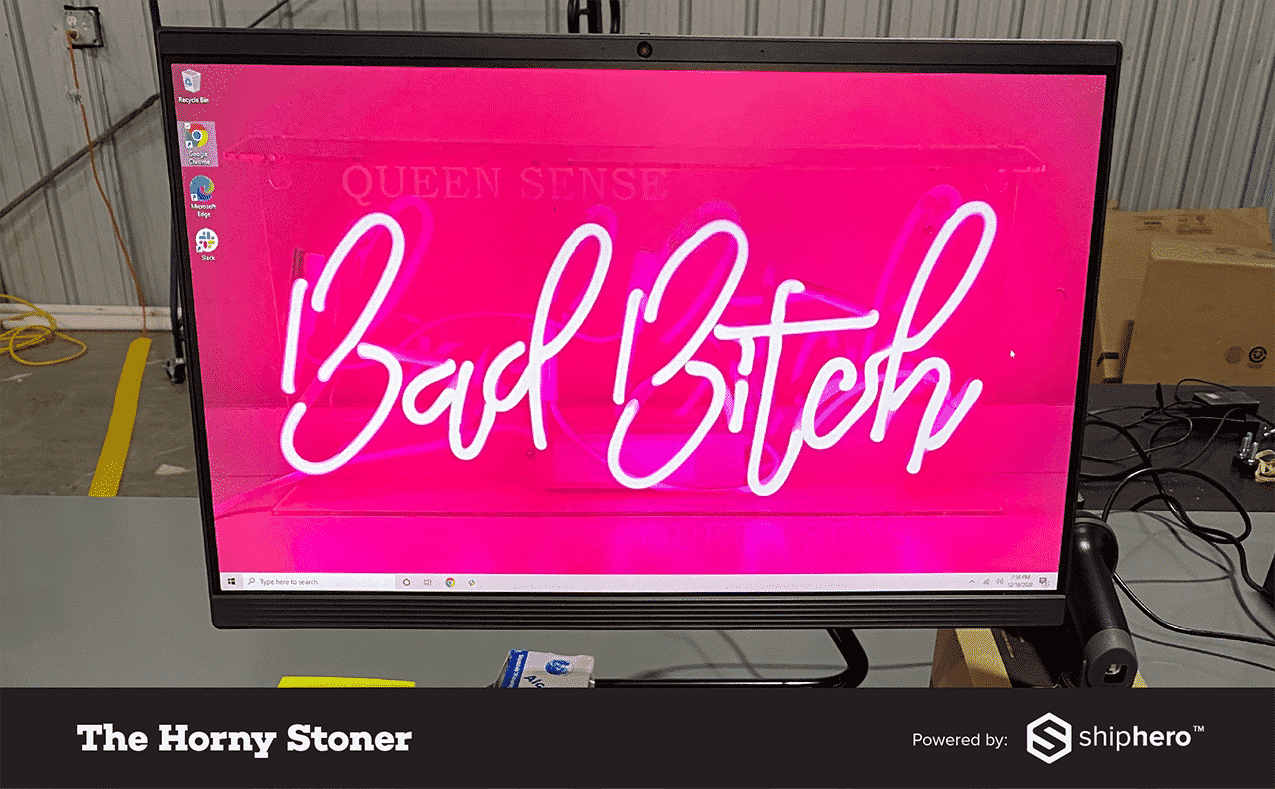
"Within seven days, we had the process down and hired three more packers who had the pull and packing process down the same day they were hired. I still look back and can’t believe this was possible, but the reality is that Shiphero made it possible."
SH: Well, pulling packages is sort of our specialty. What would you say the biggest advantage and disadvantage of ShipHero has been for your business?Ana Dee: “The advantage with Shiphero, hands down, is the accuracy for pulling and packing orders. There is a zero chance you will pull the wrong product in an order. Shipping the correct products removes human error, saves money, and creates happy returning customers. The speed of the barcode readers allows us to move efficiently, getting an order fulfilled within 60 seconds.Thus far, the only disadvantage is that I haven’t dove into the system’s other capabilities, such as creating kits for our products and getting our returns portal set up.”SH: Wait til you see our back end capabilities. Anyway, how has your business been impacted by the COVID-19 pandemic and lockdowns?Ana Dee: “It was pretty clear that everyone was staying home, had a lot of time on their hands, and felt stressed about the pandemic. I didn’t understand the power our products had until our customers needed them most.It’s a no-brainer that adults were partaking in 18+ activities as time went by. We all certainly needed to take a load off. The Horny Stoner saw a 400% increase in sales. On the contrary, as sales went up, products were selling out.There was no way I could keep up, because even our suppliers couldn’t. We were getting calls and emails about shipping delays and lack of resources left and right. 90% of international suppliers couldn’t even give us a date when they would be up and running again, let alone 50% of them closing down for good.But, when things go south, I try to find the silver lining. In this case, I wanted to provide jobs for people who lost them. So I found smaller brands who had stock. I bargained with sellers I found on Etsy to purchase their whole supply, which helped them eliminate stale inventory and minimize their financial hardship during Covid. The other side, too of course, was ensuring our employees were safe to be in a space together.SH: Amazing, and what’s next for you and the Horny Stoner?Ana Dee: Purchasing a warehouse is not something everyone in their lifetime gets to do, and I want to make this experience memorable for myself, my employees, and our followers. They have been on this journey with me since day one and now they get to indulge in our next chapter here.So now that I have this big hunk of space, it’s no surprise that it will be full of glitter and neon lights in no time.”

Follow Ana Dee and the Horny Stoner’s journey at their website and Instagram. https://hornystoner.com/https://www.instagram.com/thehornystoner/Want to be featured in our case study? If you would like to share with us stories about your ecommerce experiences, whether it’s how you started your business, what opinions you have on the stories we share, or if you just feel like venting… we’re here for you. Shoot us an email and you could be featured on an upcoming Case Study, our critically-acclaimed weekly news segment The Packet, or if you’re lucky, you could be invited to join one of our many Podcast episodes!

By all accounts, gig workers are redefining the American Dream. To date, over one third of Americans take advantage of the Gig Economy to enjoy the freedom of setting their own work schedule and chasing projects that resonate with their passions.
While US regulations are finally catching up to the speed at which the Gig Economy continues to grow, more and more major companies are adding freelancers and gig workers to their workforce at varying positions and ranks, up to about two thirds of major companies currently. And 80% of companies are planning to make the switch to independent work in the coming year.
Specifically, several sectors like the warehouse and ecommerce fulfillment industry are ramping up their use of gig workers due to the flexibility and expertise that they provide. Not only that, gig workers in these industries are constantly being offered full-time work if they need more stability. There’s just too much work in ecommerce fulfillment right now.
Greater acceptance of remote work has proven to be a win-win situation for gig workers. That’s because their work can now transcend the boundaries of where they can physically show up to work, and at the same time, the demand for work that does require in-person attendance is only skyrocketing.
With the advent of staffing platforms like Indeed and AngelList, it’s never been easier for businesses to find and team up with quality and trusted independent workers. This has led to many predictions that virtual organizations and solely-online retailers will continue to rise through the consistent employment of gig workers.
76% of gig workers claim satisfaction in their work life, despite the pressure to continually find projects. But perhaps it is this pressure, rising to the challenge, designing a personal work style and life, that entices gig workers to this style of work in the first place.
Today, 15% of independent workers have side-gigs, and with services like Indeed and ecommerce platforms like Shopify that allow people to market and sell their services and goods like never before, this proportion is sure to grow.
We at ShipHero are seeking gig workers to become Gig Heroes at our warehouses as Pick-and-Packers and fulfillment specialists, because we value the expertise and flexibility that they bring to a work environment. We are currently hiring experienced warehouse team members to join our team to help us pick, pack & ship orders in our 150,000 sqft warehouse in our network in Pennsylvania. You'll be part of a team that helps ship over $5 billion of e-commerce orders a year, and there’s always options for full-time employment.
Learn more about ShipHero's industry-leading warehouse management software.
Welcome to Episode 10 of We're Just Human! Today's guest is Andrew Marshall, the head of operations and finance at Pacific Northwest Components, a business that’s focused on making great quality bicycle components that don’t cost a fortune. Prior to @PNWComponents, Andrew worked in logistics operations for some of the largest automobile supply chains in the world, and then experienced Tesla, with some notable differences.
Oh and that article Andrew references when talking about how you can take your standard mountain bike and do some upgrades: https://www.pnwcomponents.com/blogs/news/how-to-upgrade-an-old-bike
View this post on Instagram
A post shared by ShipHero (@weareshiphero)
If you enjoyed this episode subscribe to our IGTV or YouTube channel to catch the next one.
If you’re interested in being a guest on our new podcast, Objects!, please contact John Wakim at pitch@shiphero.com.
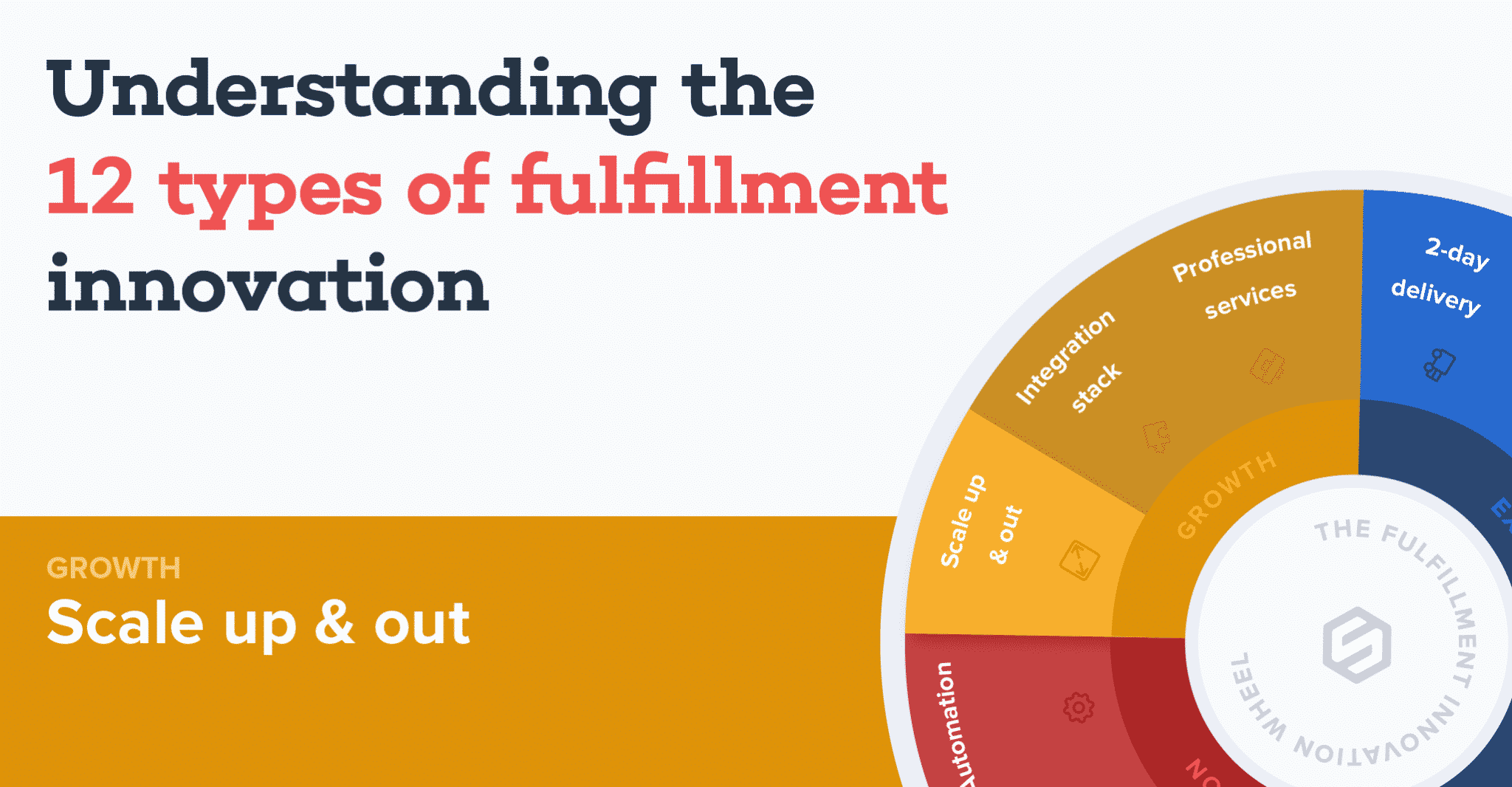
ShipHero recently launched The Fulfillment Innovation Wheel to help 3PLs understand what capabilities and service offerings they need to implement in order to be successful and to help online retailers and brands choose which 3PL is right for them by allowing them to ‘check the boxes’.
The Fulfillment Innovation Wheel listed a set of twelve (12) capabilities that fulfillment providers and logistics companies should implement to continually delight their customers and push themselves towards greater success and innovation.
The twelve capabilities are:
In this article, we will be diving into the Capability #10: Scale Up and Out.
And be sure to stay tuned for future articles as we deep-dive into each capability.
Your business constantly strives for growth. Whether it’s new customers, new markets, new products, your quest for innovating and providing more value seemingly never ends. Shouldn’t you ask the same of your fulfillment providers?Without clear-cut criteria and a well-executed strategy for growth, your fulfillment provider could slow your business down. As we saw with this global pandemic, traditional shipping carriers like FedEx, UPS, and even Amazon could not scale quickly enough to meet the soaring demands of the eCommerce boom. Conversely, FaaS providers and third-party logistics (3PL) companies like ShipHero that were built for scale, equipped with agile development processes and defined expansion strategies, not only experienced tremendous growth and innovation but were able to deliver for their customers when others could not. We attribute this success on the Fulfillment Innovation Wheel to Capability #10: Scale Up and Out.
First and foremost, through real-time data monitoring and executive reporting, your fulfillment provider should get the right data to the decision-makers, so that they can make the best possible decisions when it comes to expansion. Let the data tell you when it’s time to expand, because over-expansion is a kiss of death all on its own.Make sure you are tracking the data that tells the real story, like ‘Miles Travelled per Order’ or ‘Time to Fulfill’; whatever it may be for your business. Remember, locking in new warehouses to your network is expensive and very difficult to undo, so you need to ensure that there are no simple fixes for your current fulfillment capacity. At ShipHero, we have clearly defined criteria that informs us when it’s time to expand our operations. We know it’s time to expand when one of the following happens:
If you are a 3PL or FaaS provider, be sure to collect the right data and set clear-cut goals for expansion. If you are a customer looking to outsource fulfillment, make sure that your fulfillment provider has these in mind, and can grow as quickly you do.Want to learn more? Some content from this article was borrowed from our previous article: Warehouse Buying 101: A Guide to Scalability, where we dive deeper into the expansion strategy that launched us to become trusted by over 4,000 ecommerce brands and 3PLs every day, in just under a year.
Stay tuned next as we cover Capability #12: Professional Services! At your service. ShipHero.
Learn more about ShipHero’s industry-leading warehouse management software.

In a slew of Executive Orders signed during his first week on the job, President Biden aims to tackle climate change through his plan for a Clean Energy Revolution with Environmental Justice. In so doing, Biden has set up several councils and initiatives specifically focused on administering environmental justice and creating green jobs to fulfill his plan.
I’m not saying President Joe Biden is Captain Planet, I’m just saying that I’ve never seen them in the same room at the same time...

President Biden’s plan aims to conserve at least 30% of the United State's lands and waters by 2030. The plan also calls for a pause on new oil and gas leases on public lands and waters, while taking steps to increase offshore wind energy production 100% over the next ten years.
The plan also promises to make major public investments in automobile infrastructure, including 500,000 electric vehicle charging stations, while accelerating R&D on battery technology and battery production. This is sure to increase production and widespread use of EV vehicles, buses and trucks for transportation.
Besides him famously commuting to work daily on trains, earning him the nickname “Amtrack Joe” (which would be a sweet rapper name), Biden’s infrastructure plan also promises to usher in the next great railway revolution.
“Biden will make sure that America has the cleanest, safest, and fastest rail system in the world — for both passengers and freight”, reads his Plan. “Biden will work with Amtrak and private freight rail companies to further electrify the rail system, reducing diesel fuel emissions.”
Heavy investments on the railway system will lead to millions of “good, union jobs” for many Americans and breathe new life into America’s middle class. Way to go, Amtrack Joe.
While nobody can be certain what the future will hold, we predict that logistics companies will be forced to move away from transportation systems that carry a heavy carbon footprint (think: air freight) and move towards a more eco-friendly option.
Currently, multi-modal transportation systems that incorporate freight are too complex and downright costly, but Biden’s plan could turn the tides and make freight a viable option once more.
What do you think?? Will freight be a viable option for the future of logistics? Let us know your thoughts by emailing us here.
Besides checking off “climate change” on his presidential to-do list, President Biden also has the COVID-19 pandemic response to deal with. President Biden has ordered 200 million vaccines to be distributed equally between Pfizer/BioNTech and Moderna, in an effort to reduce reliance on vaccines coming from other countries.
WE CALLED IT! Last Packet you may recall our prediction of the impending global fashion craze launched by the elegant and stunning Bernie Sanders walking the Red.. er.. Blue Carpet. Now Bernie Sanders merch has Sold Out on the Bernie Sanders official website, and all proceeds are going to a good cause.
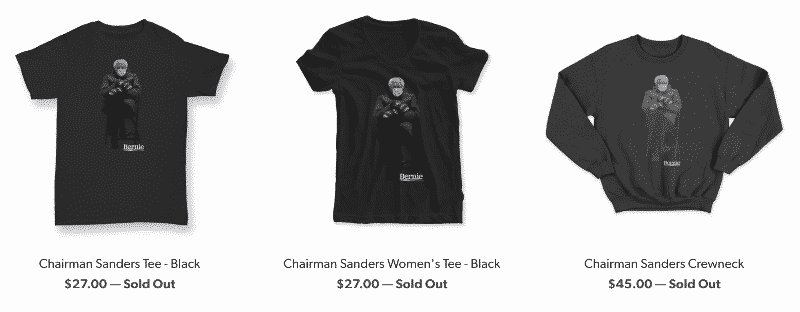
“...all of the money that’s going to be raised – which I expect will be a couple of million dollars – will be going to programs like ‘Meals on Wheels,’ that feed low-income senior citizens,” Sanders said.
In a trend that just continues to prove the growing importance of political merchandise, the Bernie Sanders meme has taken a viral turn, being featured in everything from album covers to Japanese anime. What is it with Anime artists and Sanders men?
We start our The Fulfillment Innovation Wheel series by explaining Capability #4: Designed for Returns.
Plain and simple, customers have come to expect a quick and easy return process. Can’t you just hear them shout “It’s 2021! why can’t this be easier?!” into the ear of your poor customer service rep? That’s why a growing number of businesses, led by Amazon and Walmart eCommerce, have taken the customer-centric approach by offering generous return policies and a frictionless return process.
Find out how your business can offer a frictionless return process and bolster your customer loyalty.
Stay tuned as we break down each of the twelve capabilities. Next we will discuss Capability #10: Scale up and out.
In the first of our Shipping Method Explained series, we dive into dropshipping. In this article, we weigh the pros and cons, and discuss when it’s right for your business. Stay tuned as we cover 3PLs and logistics providers next.
We were overjoyed by the fabulous submissions from our wonderful and extremely attractive Packet community. While we engage with these businesses to squeeze every last juicy detail from them to share, we continue our search for more businesses that want to tell their story. If you would like to share with us stories about your ecommerce experiences, whether it’s how you started your business, what opinions you have on the stories we share, or if you just feel like venting… we’re here for you.
Shoot us an email and you could be featured on an upcoming edition of The Packet, or if you’re lucky, you could be invited to join one of our many Podcast episodes or featured on our Blog!
Check out the packets you missed here and Subscribe below so you don't miss the next one!



.svg)