
Shiphero Blog

5 Ways an Integrated WMS Reduces Errors

It can seem that managing a warehouse is a full-time job for at least 100 people. For many smaller eCommerce businesses, devoting that type of people power and resources to one aspect of their operation just isn’t feasible. That’s why it’s so important to implement a
Tablet displaying text '5 Ways an Integrated WMS Reduces Errors' with ShipHero logo on black background.

In this article
h2
h2
h3
h3

By:  Aaron Rubin, CEO and Founder of ShipHero

‍It can seem that managing a warehouse is a full-time job for at least 100 people. For many smaller eCommerce businesses, devoting that type of people power and resources to one aspect of their operation just isn’t feasible. That’s why it’s so important to implement a strong, robust and fully functional Warehouse Management System (WMS). And it will also save you money, time and frustration.

Warehouse Management System Explained

First, let’s talk about what a WMS can do. Primarily, it manages every aspect of your warehouse operation. This includes receiving inventory, counting and storing inventory, laying out the warehouse and picking and packing. It manages everything that happens from the time a customer places an order to the time the order is placed on a truck for shipping.

That is a big lift, which means the software needs to not only work flawlessly, but people in the warehouse must be willing to learn the system and capitalize on all that functionality.

Managing so many things also means that having WMS will close the gaps in your processes. Gaps where errors, revenue or wasted effort might escape. And this is the real beauty of WMS - it saves you time and money and makes the entire customer experience just that much better.

Ways WMS Reduces Errors

So, what is that magic that WMS performs? How is it possible for a software system to address physical and logistical problems, like mis-picks and inventory errors? Let’s find out.

  1. Provides Inventory Management: If you’ve ever worked at a brick and mortar retail store for a large company, there are the two dreaded times a year when inventory must be counted. It’s a nightmare, have no doubt. Tracking down barcodes for the smallest tchotkes, scrambling to find the last piece of clothing to make sure it’s all counted. And it all happens while the store is closed, meaning you were probably pulling an all-nighter. With a warehouse management system your inventory is tracked daily, down to the last barcode and managed as shipments are received. Because inventories and manifests are reconciled on an ongoing basis, it is easy to keep track of all of your product and even easier to keep inventory levels up-to-date in your point-of-sale system. This enables you to sell the products you have (earning revenue), to not sell the products you don’t have (losing revenue), and re-order the products you need to as soon as they run low. The less down time between replenishments, the quicker you can make a sale and make money. To be clear, you will still need to run inventory counts, but it will be so much easier.
  2. Provides Fail Safes and Backups: Inventory managed with barcodes makes it easier to pick, pack and prep for shipment. It also means that there are fail safes built into the system to reduce errors. With ShipHero, our pick and pack functionality is mobile. Warehouse employees take their order (on a mobile device) to the bin that has been identified (via the mobile device) and pick the product, scanning it before preparing it for shipment. It is then scanned again before it is packed, ensuring that the right order was picked. This reduces a multitude of errors. In fact, some of our clients see a 99% reduction in mis-picks and mis-ships. This is a huge cost savings and also helps to build customer loyalty. Customers aren’t happy when they’re anticipating a delivery and open the package to receive the wrong item. Accuracy is key and warehouse management software can help you meet that challenge.
  3. Provides Storage Optimization: The data gathered by a warehouse management system is invaluable to not only your warehouse team, but the entire organization. One of the most overlooked opportunities is warehouse layout. By analyzing your pick, pack and ship data you’ll quickly be able to see what products are the most popular, which products are most often shipped with others and the length of time it takes to pick orders. This gives you the chance to completely rearrange how the warehouse is laid out, bringing popular items closer, group like items together and in general, making it easier for your pickers and packers to do their jobs efficiently.
  4. Provides Better Forecasting: Managing your warehouse efficiently means that you have a much better picture, all the time, of what is needed, what’s working and what needs improvement. Knowing this information is already a huge step toward reducing errors. It’s also a big step towards enhancing other areas. One such benefit from this organization is your relationship with suppliers. Ordering and restocking will no longer be “hair on fire” scenarios - you’ll now be able to communicate your needs to your suppliers far in advance of when you actually need the product, meaning you won’t need to lean on this 3rd party for favors or miracles because you were unable to accurately forecast. It will make your business life much more smooth and enable you to forge lasting supplier relationships.
  5. Provides Peace of Mind: Maybe this isn’t the biggest error reducer, but knowing that you have a well-run warehouse filled with employees who know how to manage it will save you time and anxiety, especially when busy seasons or holidays roll around. You’ll no longer have to cross your fingers and hope that everything runs smoothly; now you’ll know with confidence that you have the systems and tools in place for your team and your business to succeed.

Major Benefits, Major Commitment

It’s true that Warehouse Management Software can do everything listed above, but there is some responsibility on you. Adopting and implementing WMS takes time and patience, and requires that you and your employees buy into all the benefits this new technology will afford you. In many cases, this may mean ditching the old “tried and true” methods that so many long-time warehouse employees rely on. There could be some resistance to a paperless picking process or hesitancy about how to use the new technology.

Make sure you’ve set aside the time and patience to handle the challenges that will come with transition. While the benefits far outweigh the obstacles, it’s still important to set everyone’s expectations. However, based on past experience, ShipHero is confident that you won’t regret making the change.

Schedule a meeting today with our experts to learn more about our WMS software built for ecommerce brands & 3PLs looking to run their best warehouse and how ShipHero works to ensure that organizations invest in the solutions that match their needs, to improve productivity, revenue, and success.

Click HERE to Schedule a Meeting Today

Aaron Rubin, Founder & CEO

‍ShipHero

‍About the author:  Aaron Rubin is the Founder & CEO of ShipHero. He is responsible for planning and executing the overall vision and strategy of the organization. Rubin’s greatest strengths are leadership, change management, strategic planning and a passion for progression. He is known for having his finger on the pulse of ShipHero’s major initiatives, his entrepreneurial spirit, and keen business acumen. His leadership of ShipHero is grounded in providing excellent customer service that drives improved business operations. His passion for ShipHero comes from the culture and his ability to have an impact on the lives of employees, customers, partners, and investors.

Follow Aaron on Twitter&LinkedIn.

the process

Explore more of our features

Large commercial building with ShipHero logo, fenced yard, and power lines against clear sky.Shiphero logo on a grey background
April 2, 2024

Best 3PL Companies in Canada You Should Know About

Explore the top 3PL companies in Canada and learn how third-party logistics providers play a vital role in optimizing supply chains. Discover the benefits of partnering with a 3PL, key services offered, and steps to start working with a 3PL in Canada.

Read more
Arrow icon
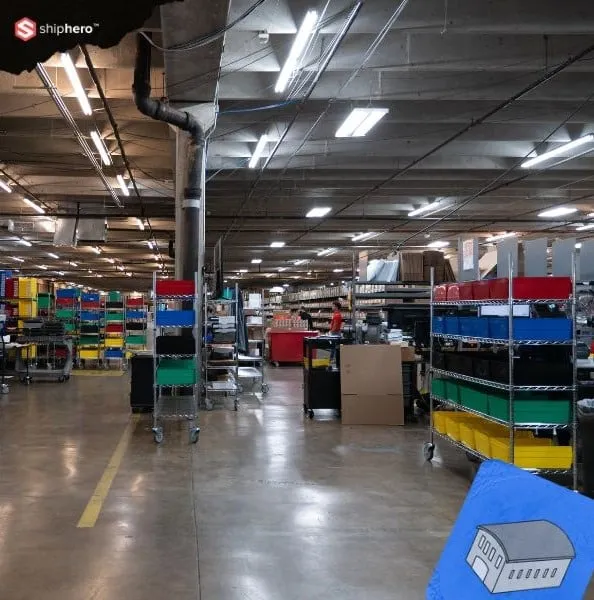
Wide view of an indoor warehouse with shelves, colorful bins, and a worker in the background.Shiphero logo on a grey background
April 2, 2024

Top 5 Best Third-party Logistics (3PL) Companies

Discover the top 5 best third-party logistics (3PL) companies for your business needs, offering extensive networks, advanced technology, and superior customer service. Learn about the benefits of 3PL services, how to choose the right provider, and avoid common mistakes.
Read more
Arrow icon
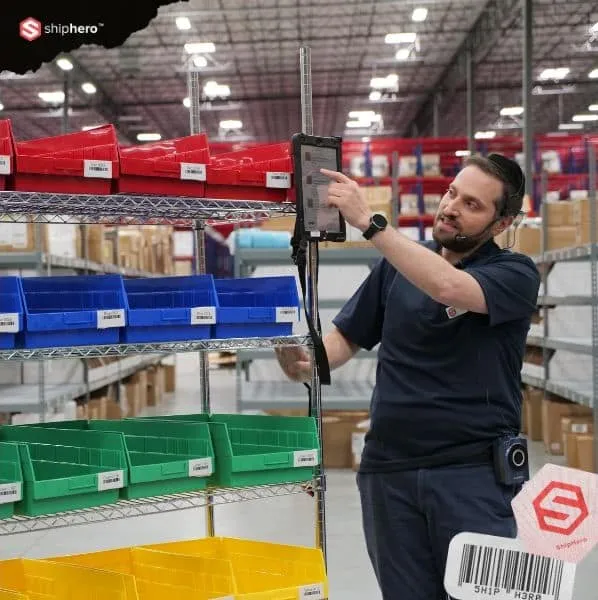
Warehouse worker using a mounted tablet to manage inventory bins in red, blue, green, and yellow on metal shelves.Shiphero logo on a grey background
April 2, 2024

What is a 3PL Warehouse Management System?

Discover the role, benefits, key features, requirements, and implementation of a 3PL Warehouse Management System (WMS) for optimizing warehouse operations. Learn about scalability, integration, real-time visibility, and customization options to choose the best solution for your business.

Read more
Arrow icon
Shiphero logo on a grey background
September 1, 2026

Descartes Acquires Extensiv: What It Means for 3PLs

On September 1, 2026, Descartes Systems Group announced its acquisition of Extensiv for approximately $120 million. What was announced, what usually follows deals like this, and the questions Extensiv customers should put to their vendor before renewal.

Read more
Arrow icon
Shiphero logo on a grey background
September 1, 2026

Compare Extensiv vs ShipHero | The Best Alternative

How does ShipHero’s Warehouse Management System stack up against Extensiv’s (a.k.a 3PL Central) Warehouse Manager? Learn more about ShipHero, its features and how it differs from 3PL Central.

Read more
Arrow icon
Shiphero logo on a grey background
August 24, 2026

AI-Friendly WMS, Security-First: How to Evaluate Agent Access to Your Warehouse Data

Read-only by default, opt-in read-write. Scoped credentials. Field-level PII control. Revocable tokens. How to evaluate whether a WMS is safe to connect an AI agent to.

Read more
Arrow icon