
.svg)

Let’s talk about the data reporting and insights that will make or break your business. Business operations and logistics enjoys the rather large benefit of being highly calculable, and therefore predictable.

.svg)
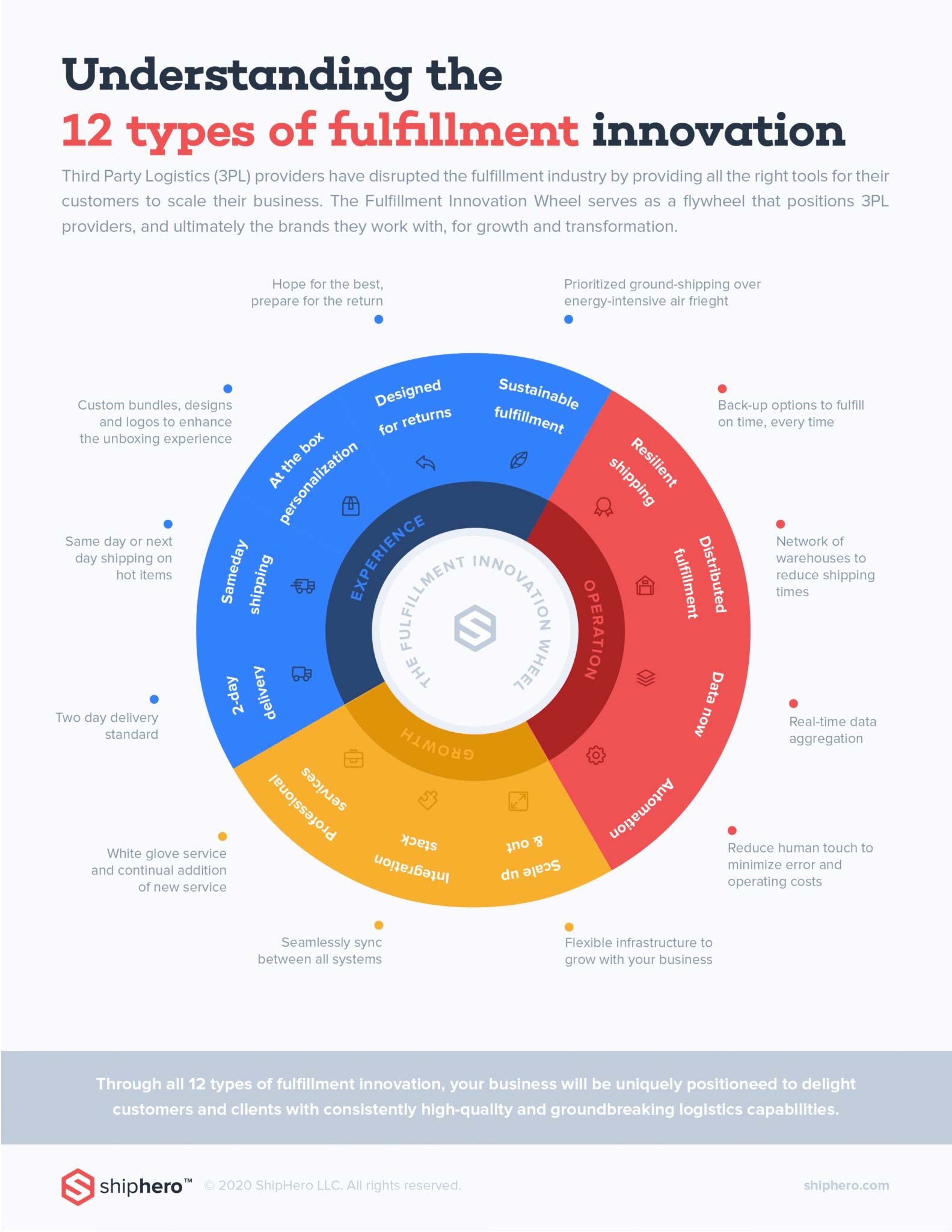
ShipHero recently launched The Fulfillment Innovation Wheel to help 3PLs understand what capabilities and service offerings they need to implement in order to be successful and to help online retailers and brands choose which 3PL is right for them by allowing them to ‘check the boxes’.
The Fulfillment Innovation Wheel listed a set of twelve (12) capabilities that fulfillment providers and logistics companies should implement to continually delight their customers and push themselves towards greater success and innovation.
The twelve capabilities are:
In this article, we will be diving into Capability #8: Data Now.
And be sure to stay tuned for future articles as we deep-dive into each capability.
Now that that’s out of the way, let’s talk about the data reporting and insights that will make or break your business. Business operations and logistics enjoys the rather large benefit of being highly calculable, and therefore predictable.
Of course with the infrequent exception, building a resilient and optimized supply chain is made possible through accurate data collection, in-depth analysis and reporting, and intelligent predictions to beat the competition.
In this article, we’ll dive into:
Your warehouse operations can be broken down into four disciplines: Inventory Management, Operations, Shipments, and Production Efficiency.
Inventory Management involves keeping your product in stock, replenishing when you’re out, handling stale inventory and more. Reporting asks how you can do this more efficiently and with less waste.
Operations is the day-to-day functioning of the warehouse, such as getting products safely delivered out of the warehouse (i.e., the pick-pack-ship process); it is also managing errors or mis-picks as well as FEFO/FIFO workflows. Reporting allows you to optimize warehouse capacity.
Shipments is the process of delivering packages from the warehouse to your customers door in the cheapest and most time-effective manner. Reporting helps you see where you spend too much or take too much time.
Production Efficiency is the performance of your employees, if they are adhering to policies, how quickly they can perform their task, etc. Reporting helps you increase productivity and identify rockstars.
The goal of your reporting should explicitly improve certain aspects within each of the four disciplines, commonly referred to as Key Performance Indicators (KPIs). A KPI is a very specific data point that your business will track and set SMART goals against.
For example, Time to Deliver is a very specific data point that your company can track to see the health of their Shipments processes. By measuring the duration between the product leaving the warehouse and arriving at the customer for each order, you will be able to understand how your business compares to the competition and customer expectations.
You should also set SMART goals for each KPI to continually improve your supply chain. SMART goals are:
Understand every element of your warehouse at work by setting KPIs that have tangible benefits to your business, whether it’s reduced costs, increased efficiency, or improved customer experience.
Reference below for a non-exhaustive list of reports that ShipHero typically creates for their customers:
Once you set your KPIs and important data points, you must now collect the right information to accurately track progress towards your goals. Many companies use software tools to automatically track and analyze KPI progress, but many startups implement manual counting and calculating on an Excel spreadsheet to yield the same results.
To begin building a robust data pipeline, you should ask the question “what do I need to know?” for each KPI.
In the Time to Deliver example, you need to know when the package was shipped out and when the package was delivered. But for the complete picture, you should also track how much the journey cost, who the carrier was, if there was any delay, etc. to be able to identify root causes of problems and create plans to improve the number going forward.
This may sound simple at first, but as your order complexity and business processes start to grow, finding automated solutions for KPI tracking and optimization is necessary. That’s why many companies turn to ShipHero’s WMS that gives powerful reporting capabilities with a simple click of the button.
Data analysis and reporting not only tells the current health and progress of your organization, but should also be used to make future-forward and long-term choices. This of course comes with a level of risk, depending on the quality of information.
In the example of Time to Deliver, if you determine that your product deliveries are arriving too late or over-budget, and you want to meet the 2-day delivery standard, then you can use reporting to make better inventory distribution decisions, like relocating inventory to closer warehouses.
Make sure you are getting the right reports into the hand of the right decision-makers so they can make the right choices. Nothing should be left to chance.
The amount of reports you can generate is virtually endless, so make sure you are starting with your SMART goals in mind. From there, ask yourself “what do I need to know” for each KPI and start collecting those data points. After the reports and KPIs are tracked, ensure your management team has proper visibility to be able to make intelligent business decisions.
Does your business have the right tools in place to offer affordable and sustainable 2-day delivery? If not, then you may find it hard to compete in the future, especially as more and more people elect for eco-friendly businesses with the same suite of capabilities.
If you’re already working with a fulfillment provider or 3PL, make sure that they’re well-equipped for the task. If not, maybe it’s time for a switch.
Our customers love that ShipHero can offer 2-day ground delivery anywhere in the contiguous United States at simple and transparent pricing. We attribute this success on the Fulfillment Innovation Wheel to Capability #8: Data Now.
Stay tuned next as we cover Capability #2: Same Day Shipping! It’s my data, and I need it now! ShipHero.
Learn more about ShipHero's industry-leading warehouse management software.

.webp)
Explore the top 3PL companies in Canada and learn how third-party logistics providers play a vital role in optimizing supply chains. Discover the benefits of partnering with a 3PL, key services offered, and steps to start working with a 3PL in Canada.
.svg)
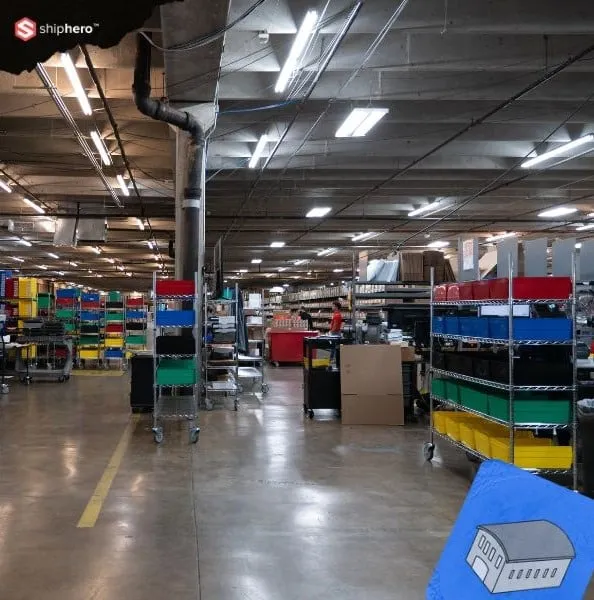
Discover the top 5 best third-party logistics (3PL) companies for your business needs, offering extensive networks, advanced technology, and superior customer service. Learn about the benefits of 3PL services, how to choose the right provider, and avoid common mistakes.
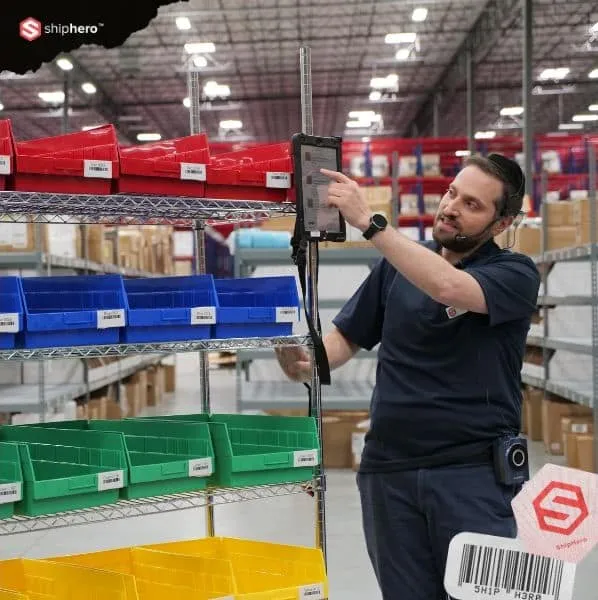
Discover the role, benefits, key features, requirements, and implementation of a 3PL Warehouse Management System (WMS) for optimizing warehouse operations. Learn about scalability, integration, real-time visibility, and customization options to choose the best solution for your business.
On September 1, 2026, Descartes Systems Group announced its acquisition of Extensiv for approximately $120 million. What was announced, what usually follows deals like this, and the questions Extensiv customers should put to their vendor before renewal.




.svg)



.webp)